What's the difference?
Hybrid campers tread the line between caravan comfort and camper trailer-manoeuvrability and are touted as somewhat of a new thing; almost an evolution of comfort as more people look for a perfect camping experience.
But camper-trailers like the Cub Longreach LE prove that the concept has been around for decades.
It hasn't always been called the Longreach, but this high-walled, super-sized, off-road camper-trailer was one of the first to offer caravan-like comfort and space in a product that'll go anywhere off-road*. (* In terms of reasonable use and having obviously scrutinised your camper's warranty conditions before setting off to make sure you're covered for that sort of usage.)
The 2019 LE takes the comfort levels even further, so we grabbed one for a night to check it out.
Australia is experiencing a mass extinction event.
Like the dinosaurs before them, and hopefully not the bees in the near future, the sub-$20,000 car is nearing the bitter end.
An evolutionary dead-end, as higher emissions and safety regulations relegate older models (read Mitsubishi Mirage) to the great scrap-heap in the sky and prevent newer ones (read Honda Jazz) from leaving their local markets.
For you, this means there are quite literally a handful of brand-new vehicles left in Australia which wear before-on-road price-tags under the magic $20,000 number.
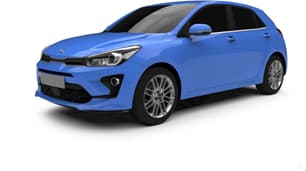
One of them is the car we’re looking at for this review: The Kia Rio S, with the catch being you’ll have to be happy changing gears yourself.
So, is this most basic Rio worth your while, or is it best left as a puzzling fossil for future generations to study? Let’s have a look.
This isn’t the camper for everyone – my guess is that plenty of people look at this and find it too sparse, too basic. I kinda get it.
But there are very few campers which offer the same amount of open, internal space, or that are as easy to set up.
That the Longreach, albeit with a few different names, has lasted so long on the Cub Campers' product roster is a testament to its versatility and ability to accommodate a small family on off-road camper trips.
It's arguably one of the forerunners of the hybrid camper scene, and it's now starting to evolve with campers' desires for more comfort.
The Rio S Manual is a fun-to-drive little car with a big practicality and multimedia offering in a segment rapidly heading towards extinction.
While some elements of the drive experience are reminiscent of budget cars from 10-20 years ago, Kia makes up for it by wrapping the Rio in a contemporary looking and feeling package, ready for the buyer who needs no frills and demands no nonsense. Until the manual transmission goes the way of the dodo, there is almost no better option.
For a rear-fold camper-trailer, the space inside couldn't be more practical. The long body and high sides mean that when the camper is open and set up, it has a lot more space than most. Behind the bed, for instance, there is enough space for Cub to have fit a small dinette.
The dinette has cushioned benches for two and a swivel table that can also become a counter over the rear floor area.
The camper's length also means that the rear floor area is massive. It is easily big enough to lie a couple of kids on, or if your nest is empty, to set up some camp chairs and a table to enjoy a covered living area.
It is still a rear-fold camper-trailer, though so, despite the fact it has nearly twice the space of other hybrid-style campers, it's very sparsely furnished. There's no internal kitchenette or anything like that.
I'd argue the key reason to buy the Rio at this end of the market is that it has the most space and largest cabin relative to its rivals, bar maybe the Suzuki Baleno.
All-round practicality is great, with front passengers scoring a low, sporty seating position with a high roof, and so much width in the cabin it almost feels like the Rio belongs in the next segment up.
Storage options up front include a large bottle holder and bin in each of the doors, dual cupholders next to the handbrake up front, and a large storage tray underneath the climate unit. Unlike the Yaris or Mazda2, the Rio features a small armrest console box, which gives a small lift to the ambiance of the cabin.
Back seat passengers are treated to great space for this segment, which feels nice and open courtesy of the large rear windows. At 182cm tall, I have airspace for my knees behind my own driving position, as well as relatively healthy headroom and ample width, which is again more like a car in the next segment up.
Rear passengers don’t get adjustable air vents, but there is a single USB port, a single pocket on the back of the passenger seat, and small bottle holders in each of the doors.
Perhaps the Rio’s biggest drawcard is its boot capacity, which at 325 litres is one of the largest in the city car class. Unlike the Yaris, Mazda2, or Suzuki Swift, the Rio will actually accept the CarsGuide three-piece luggage set with the rear seats up, although the rear view was obscured by the medium case.
Thanks to the boxy roofline, the Rio offers a cavernous 980L with the rear seats folded down, and despite its abundance of room, maintains a space saver spare wheel under the floor.
Cub Campers are famously good to tow, and even the largest of them lives up to the reputation.
As big as it is, the Longreach LE is quite light thanks to the effort Cub puts into engineering. As a result, it's not a strain, even for older dual-cabs like the D22 Navara.
And because it isn't any higher or wider than a modern SUV, there was very little wind-drag or buffeting as we cruised along the highway.
Cub developed the camper's Australian-made and -designed independent, coil-spring suspension and the set-up yields excellent ride in any conditions.
For the LE, Cub has added an extra shock-absorber each side to improve its performance even on the most corrugated roads.
An AL-KO off-road ball hitch is standard but can be upgraded to the Click-Lock version if you'd prefer that or need a more low-profile hitch.
In reverse, the long drawbar makes it an easy camper to manoeuvre around a campsite, plus it has enough size that the tow-vehicle driver never really loses sight of it while positioning it.
A six-speed manual with a tiny non-turbo engine is an absolute oddity in today’s new car market, but as a result of its rudimentary approach, there’s something refreshingly honest about the Rio S.
The engine requires a wringing to extract the desired result, and a lot of action on the gears, as six speeds proves to be quite a few to work your way through before you achieve cruising speed.
As so much interaction is required with the transmission, I wish it was tighter when it comes to the clutch which feels a bit doughy at the best of times.
The Rio is very organic, though, with next to no electrical assistance for any of its interaction points offering the driver a high level of control.
The steering is direct, but as a result of a cheaper rack (with less teeth compared to this car’s Stonic relation), it feels simple and brittle when it comes to feedback.
The same criticism can be levelled at the suspension, which errs on the side of firm. This attribute combines with the low seating position to make even this most basic Rio an absolute hoot in the corners.
But it can be a little crashy over every-day potholes and corrugations, despite the abundant amount of rubber cladding the 15-inch steel wheels.
Visibility is superb out of this little car’s big windows, making you feel in control of your surroundings (necessary in the multi-lane confines and tight parking conditions of a city), and ergonomics in the cabin are absolutely on-point with the large touchscreen elements easy to reach and the instruments taking a basic no-nonsense form.
While noise levels are okay at urban speeds, they pick up above 80km/h, making the Rio more unpleasant to drive over long distances than, say, the more upmarket-feeling Yaris.
The Rio does find its place in this price bracket as a fun-to-drive, but predictably rudimentary experience, for the niche audience of drivers seeking an entry-level car who are still able to shift gears themselves.