What's the difference?
Cub Campers is Australia’s oldest camper-trailer manufacturer and one of the oldest businesses in the caravan and camping industry, having just celebrated 50 years of operation in 2018.
The company can lay claim to inventing the soft-floor camper trailer, pioneering the rear-fold and championing off-road campers when everyone else was concerned with the on-road market. Amongst all that, though, it was late to the game when it comes to forward-fold campers, not releasing the Frontier until early in 2016, well after the flood of Chinese manufactured versions became immensely popular. So why did Cub wait so long and was it worth it?
Feels like lately all the Mercedes-AMG buzz has been at the smaller end of the scale.
Most recently, the screaming GLA 45 S has arrived in Australia, pumping out more kilowatts and newton-metres than any compact SUV has a right to.
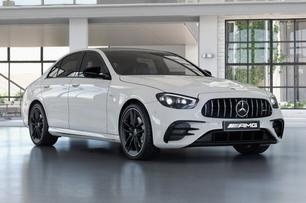
But here, we're doubling the cylinder count to eight, arranging them in a vee, and lighting the wick on AMG's powerhouse mid-size sedan, the recently upgraded E 63 S.
While the ferocious twin-turbo V8 and the rest of this beast's powertrain are unchanged, the car has been brought up to speed with some aero-focused styling tweaks, Merc's latest 'Widescreen' digital cockpit, as well as the MBUX multimedia system, and a tricky new multi-function sports steering wheel.
All in all, the Frontier is the best forward-fold camper on the market, although it is also the most expensive. If you were making a buying decision purely based on features, you’d probably look elsewhere, but if you are prepared to pay a little more because this camper-trailer is Australian made, you get a very functional camper that’s easy to set up, reliable, strong and light.
The E 63 S fills its niche in AMG's Australian line-up perfectly. More mature than the brand's four-cylinder hatches and SUVs, but not as overbearing as some of its bigger sedan, GT and SUV stablemates. And its ability to seamlessly switch between serene comfort and dynamic performance has nailed the objective for this 2021 update.
The real appeal of a forward-fold camper-trailer is the internal configuration. Because the bed folds out over the front of the camper, the trailer body is configured with a wrap-around lounge and dinette area, that also converts into a bed. It brings a certain level of caravan comfort to a camper-trailer-sized package. Cub’s execution is quite good. The lounge is comfortable and the dinette table is highly adjustable up and down or around and around. It converts into a bed more simply than any other on the market I’ve seen.
The downside of the forward-fold concept is the quantity and access of storage. Very little of the internal storage is easy to get to, and in truth there’s very little of it. That’s what happens when you put a couch in a trailer, sorry. There are hatches under the seats, but even they are limited by the slide-out kitchen and battery box across the back, plus, they’re not as easy to get to as a drawer. It’s the same in every manufacturers version, though. However, the Frontier has one unique features that makes it stand out – a series of pigeon holes under the foot of the bed which provide the only easy-to-access internal storage in any forward-fold I’ve come across so far.
At just under 5.0m end-to-end the E-Class sits in the upper range of the mid-size luxury spectrum. And almost 3.0m of that is accounted for by the distance between the axles, so there's plenty of space inside.
The driver and front passenger are provided with heaps of room to breathe, and there's a surprising amount of space for those in the back as well.
Sitting behind the driver's seat set for my 183cm (6'0”) position I had more than adequate head and legroom. But access to and from the back is a struggle for full-size adults.
The rear doors open out a long way, but the limiting factor is the size of the aperture, necessitating excessive contortion of the head and limbs to fold in and out of the car.
Connectivity runs to two (power-only) USB-C sockets in the front centre storage bin, as well as another USB-C (for power and multimedia) and 12-volt power outlet in the centre console.
Speaking of the front centre storage bin, it's a decent size and has a padded split lid so it can double as an armrest. There are two cupholders in the front console, a generous glove box, as well as long door compartments with recesses for large bottles provided.
There's a pair of USB-Cs along with another 12-volt socket in the back, sitting under the climate control panel with adjustable vents in the rear of the front centre console. Nice.
The fold down centre armrest incorporates a lidded (and lined) storage box as well as two pop-out cupholders. Again, there are bins in the doors with room for smaller bottles.
The boot offers 540 litres (VDA) of volume, and is able to swallow our three-piece hard suitcase set (124L, 95L, 36L) with room to spare, or the substantial CarsGuide pram, or the largest suitcase and pram combined! There are tie-down hooks to help secure loads, too.
Don't bother looking for a spare of any description, a repair/inflator kit is your only option. And the E 63 S is a no-tow zone.
The Frontier is quite good under tow. Cub designed and manufactures its own coil-spring independent suspension and has paid quite close attention to the balance and dynamics of the trailer.
As it’s not overly heavy, it’s not a handful, even on the beach, and behind the Mitsubishi Triton I tested it with, it was barely a struggle. On the road, the camper is well behaved, easy to see over and around and because it’s not very long, it’s not very daunting.
AMG's major goal with this upgrade of the E 63 S was to maintain its dynamic response and ferocious performance, but dial in the extra comfort customers had said they wanted.
So, the 4Matic+ AWD system has been fine-tuned for more smoothness as has the Comfort option in the dynamic set-up. But we'll investigate that shortly.
First, that 4.0-litre turbo V8 in the nose is claimed to slingshot this roughly 2.0-tonne sedan from 0-100km/h in just 3.4 seconds, and it feels every bit that fast.
With 850Nm available from 2500-4500rpm and nine gear ratios to help keep you operating in that Goldilocks band, mid-range thrust is monumental. And thanks to the bi-modal sports exhaust it sounds beautifully brutal.
The nine-speed auto's wet clutch, as opposed to a conventional torque converter, is designed to save weight and optimise response. And while some will tell you an auto with one input shaft is never going to be as fast as a dual-clutch with two, shifts are rapid and direct. The wheel-mounted shift paddles are larger and set lower, as well.
The AMG 'Ride Control+' suspension with multi-chamber air suspension and adaptive damping is amazingly good. The underlying set-up is by multi-links front and rear, and despite riding on big 20-inch rims wrapped with low-profile, high-performance Pirelli P Zero rubber (265/35 fr - 295/30 rr) the Comfort setting is incredibly... comfortable.
Slip into 'Sport' or 'Sport+' and the car immediately feels tauter but far less compliant and forgiving. An impression reinforced by the engine, transmission, and steering shifting to a more buttoned-down mode at the same time.
The standard dynamic engine mounts play a big part here. Able to make a soft connection for maximum comfort, but switch to a rigid link when required.
But no matter which mode you're in, the car is well damped and feels beautifully balanced in quick cornering. And the E 63 S's electro-mechanically-assisted variable-rate steering is progressive, feelsome, and accurate.
The 4Matic+ AWD system is built around an electromechanically controlled clutch connecting the permanently driven rear axle (with locking diff) variably to the front axle.
Torque distribution happens imperceptibly, the big V8 putting its power down emphatically, with various electronic systems tieing up the loose ends as you aim up for the next corner.
There's even a 100 per cent RWD Drift mode available in the Race setting, but without a race circuit at our disposal this time around that'll have to wait for another time.
The optional ceramic brakes feature huge rotors and six-piston front calipers, and stopping power is immense. And the good news is they operate quickly but progressively at normal pottering around town speeds. No warming up required to get them in an optimal temperature zone (as can be the case with other ceramic set-ups).