What's the difference?
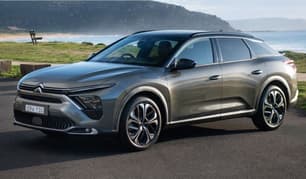
The all-new Citroen C5 X is different. It takes just one look at the car to realise that.
It’s partly an SUV, has more than a hint of wagon to it, and it’s nothing like the old Citroen C5s of years gone by. That’s no bad thing - because this is the sort of Citroen that people who have never even heard of the brand will likely pay attention to
The brand has shaken off its ‘quirky and French’ vibes for a more ‘modern European’ look, and let me tell you - this is a very interesting car. Read on to find out all the stuff you want to know, plus the things you need to know.
Hybrid campers are no longer a new development in caravanning and camping. We've been seeing trailers like them, in some form or another, for nearly two decades.
The concept is straightforward: hybrid campers offer some of the best comforts of a caravan (solid walls, proper beds, little to no set-up time) with the best aspects of camper trailers (light, small, rugged and able to be towed nearly anywhere).
Although Blue Tongue Campers has been a leader in the traditional camper-trailer market for more than a decade, its first hybrid has been a long time coming. First chance we got, we hooked it up and headed out to Wee Jasper to see what it's about.
This is a new take on the Citroen station wagon, and it’s an impressive one at that. It may not tick all the boxes, but it is a comfortable and practical car, with stunning design, decent equipment and a pretty agreeable price tag.
Now, just get that plug-in hybrid version in at a reasonable price please, Citroen.
Note: CarsGuide attended this event as a guest of the manufacturer, with meals provided.
Given that Blue Tongue is a relative latecomer to the hybrid caravan market, it’s done its homework.
For $50,000, the HX15 is a great value, highly capable off-road camper with a comprehensive list of features to keep it self-contained and self-sufficient when you're camping.
That it includes an island bed, 2000-watt inverter, grey-water tank and enough battery capacity to free camp almost endlessly, is a testament to all that.
The Citroen C5 X is almost as big as a Subaru Outback, and similar in size to a Kia Stinger. So it ought to have a bit of family-friendliness packed in.
Starting at the back, there’s a 545-litre boot capacity, with the kick-action, electronically controlled tailgate that you can also use the keyfob to open. It is a low, wide, quite squared-off aperture, meaning loading bulky items in should be a breeze. Just note that the roofline does taper down towards the rear, so bigger things will need to be pushed towards the seat backrests.
Or, if you’re really acting like a delivery van, you can drop the rear seats down to allow 1640 litres of cargo capacity. There are boot-mounted releases to drop the seats down, and there’s a floor mat in the boot, under which is a space saver spare wheel.
Back seat occupants are decently catered for. I’m 182cm/6’0” tall and I managed to sit behind my own driving position with plenty of leg and foot room - however, the sunroof does create a bit of a hump in the ceiling that you might bump your head on, and those with big feet or small children might want to take note that the sills in the door openings are very tall. A child could easily trip over them if they were clambering in the back in a rush.
Children will be covered with a pair of ISOFIX child-seat anchor points in the window seats and three top-tether restraints, too. There are map pockets, door pockets with bottle holders, a pair of USB-C charge points and directional air vents, too.
However, it wouldn’t be a French car without some kind of quirky cup holder situation, and the back seat has none - there’s no flip-down armrest to speak of. But the seat is exceptionally cushy.
Front seat impressions are good - and cup holders are present. They’re big ones, too - large enough for a big cuppa or a bottle of water, even, And there are door pockets with bottle holsters as well.
There’s an opening centre armrest box with a USB-C charge point, and in front of the interestingly designed recessed gear selector and parking brake, there’s another storage spot with a wireless phone charger, too. Nice.
Seat comfort up front is very good, with lots of adjustability (eight-way electric for the driver, six-way electric for front passenger) and heated front seats as well.
Scoring a big tick from me is the fact there are physical dials and buttons for the air conditioning and ventilation controls. But they’re in that glossy black finish, which shows fingerprints so much that it makes you feel self-conscious of being a walking germ farm.
The big touchscreen multimedia system has a few buttons and knobs, too - though the menus on screen do take some getting used to. It is highly customisable, so if you bought one you’d set it and forget it, but on first impression I struggled to get to grips with some of the nuances of the menus.
It does, however, have wireless or wired Apple CarPlay and Android Auto (with the media-feed USB-C port under the controls) and it goes full screen, too, while leaving enough space for other crucial elements. The graphics are nice and high-definition, and the 360-degree camera display puts the “surround” view units in Peugeot models to shame.
There’s also a configurable driver info screen, and a crisp and lovely head-up display as well.
A lot of these hybrid campers are little more than expensive metal boxes with a large bed inside, although the Blue Tongue is a little more than that.
It has a fold-out extension from the driver's side of the camper, which contains the queen-sized bed. By expanding sideways, rather than rearwards, Blue Tongue's managed to create access around the bed from three sides. The upside is, no one ever has to climb over the other, or shuffle along it, to get in. It's a feature almost unique in the genre.
Considering the XH15 also fits a small shower and toilet cubicle, cosy dinette, a small sink, bunk bed and heaps of storage, it's quite a practical little space that doesn't feel as cramped as it sounds.
The dinette lounge is good for the occasional meal away from the bugs, while the bunk above it folds up to improve access. And even if you're not travelling with a child, it makes a great shelf.
The en-suite, if we can call it that, is naturally compact. With its own toilet and shower plumbed into the grey-water tank, this is a fully self-contained camper, which is becoming increasingly more important at many free and remote bush camps.
If comfort is your main priority when it comes to your new car, then the Citroen C5 X (or any Citroen, really) should suffice.
The brand says that comfort is one of its defining features - a pillar of why Citroen exists, if you will - and as the flagship model in the brand’s lineup, this should represent the ultimate in comfort.
And it does.
The seats - with triple-layer foam - play a big part. They’re wider than most seats and, while they don’t hold you in place like the buckets in a sports car, this isn’t a sports car.
It also has acoustic glass front and rear to help make it feel more serene and ‘cocoon-like’ inside. There’s barely any wind noise, and just a touch of road roar over coarse-chip roads, but it’s far from noisy in the cabin.
Further, it glides along with relative comfort over bumpy sections of road, with the so-called Suspension with Progressive Hydraulic Cushioning all-but eliminating road surface intrusion into the cabin.
The suspension has hydraulic cushions at the ends of the springs and dampers (but before the bump stops) that are designed to delete the little bumps in the road surface, while also helping lessen the impact of larger imperfections like potholes. And, with the launch being held in Sydney on yet another wet day, the suspension did a spectacular job.
You can still feel the 19-inch wheels moving around a bit when you sink into a pockmark, but the way it feels from the driver’s seat is very good. I didn’t get to play passenger on this launch drive, but the seat of the pants vibe I got was that all occupants will be cosseted nicely.
That tendency towards relaxed movement is reflected in the handling of the car, too. It’s not a corner carver. You can engage Sport mode - which adapts the powertrain (engine and transmission calibration and sensitivity) and also the steering weight, if you really want to.
On the engine - it is perky enough in Sport mode and can do the 0-100km/h sprint in 8.1 seconds, according to Citroen.
This powertrain should really be categorised in the ‘comforting’ rather than ‘compelling’ category. It’s not a bad engine - but you can feel the weight of the car is holding it back, and it particularly feels a bit sluggish from a standing start. I also noticed a bit of vibration through the car under full-throttle acceleration, too.
But honestly, unless you were trying to duck through a gap in traffic, you’re not likely to spend much time with your foot pinned to the boards in this car.
I love and admire that this isn’t a car designed to be sporty. It isn’t trying to be that. The PHEV version will be more of a driver’s tool, with an adaptive suspension system and more power and torque. But honestly, I’d be happy with the C5 X as it is, because it’s just a lovely car.
The 15-foot off-roader is well balanced behind our tow car. At tare, there's 150kg on the ball, which gives it room to move up once a load is added. We carried a load of camping gear, nearly 200 litres of water and the fridge, all of which helps add stability to the combination.
Towing the XH15 along the highway, it tracked beautifully and even with soft, off-road suspension it didn't wobble around. Onto the narrower, winding roads into Wee Jasper, it was compliant and followed without incident.
When the drive became a bit challenging, such as when we had to navigate steep, loose tracks into our campsite, the camper's high-clearance, angled cutaways and off-road hitch made sure none of its underbody scraped or bumped on the ground.
It rides on coil-spring, independent suspension with dual-shock absorbers each side and this is a robust, well-proven system, which is really great when roads become a little rougher.