What's the difference?
Remember when electric vehicles were the next big thing? Well they still are, it's just that hybrids are making a huge comeback and have entered a new era of the super hybrid. These are plug-in hybrids with enormous driving ranges and Chery’s just arrived Tiggo 9 Super Hybrid is one of these.
The Tiggo 9 is a large seven-seater SUV that competes with the likes of plug-in versions of the Hyundai Palisade and GWM Tank 500, only for less money.
The value is excellent, but how does the Tiggo 9 score in other areas such as the way it drives, its practicality and safety, or its styling and interior feel?
We found out in this first Australian drive.
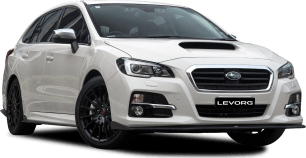
Need proof that the humble wagon is now the domain of the enthusiast? Subaru tells us the top-spec performance oriented STI Sport is its best-selling variant.
The Levorg is an odd one indeed, a seemingly unnecessary addition to Subaru’s wagon-heavy range in a world where mass consumerism has shunned low-slung bodies in favour of pumped up SUV-types. Practicality be damned.
The trouble with appealing to enthusiasts though, is you’d better get it right, or you’ll face a backlash. So, does the Levorg have what it takes to build one of those money-can’t-buy hardcore fanbases?
I took the Levorg STI for a spin around the heart of Subaru country in the Kosciuszko National Park at the height of winter to find out.
The Chery Tiggo 9 Super Hybrid is outstanding in many ways, especially value and the way it drives. I can only stress the importance of charging this vehicle frequently, however, otherwise it will go from super hybrid to super fuel consumer.
The Levorg STI Sport is a niche car that flies so close to true greatness. It’s a bucket load of fun… but not fun enough for the true enthusiast. A practicality, equipment and safety hero… but too brutal to be cross-shopped with an SUV… It’s an awesome car that’s just too narrow in its appeal to find a large audience. One thing is for sure – it will be interesting to see what Subaru does next with the Levorg badge.
Chery has crafted a superb-looking SUV here. Sure, the design isn’t ground-breaking or unique, but styling is beautiful from the large grille and multi-spoke wheels to the chrome framed windows and smooth lines of the tailgate.
Our car was painted in 'Aurora Green', which looks stunning in the sunlight. There’s also 'Cosmic Black', 'Star White' and 'Technical Grey'.
The cabin is super modern and luxurious looking, with only a few physical buttons for the hybrid system and climate control. The leather seats are a lovely high-end touch, and while the level of refinement is not up there with the likes of Audi and Lexus flagships the build quality appears to be good.
The Tiggo 9 stretches 4800mm end to end and is 1930mm wide. That classifies it as a large SUV, albeit not an enormous one. A fairly short wheelbase of 2750mm means the cabin space isn’t as voluminous as you might have thought.
I love the Levorg’s design. It’s slick, low and mean, and also unmistakably Subaru. It also plants itself right next to the WRX in the brand’s stable with that utterly ridiculous and unnecessary bonnet scoop, which does actually lead to a massive intercooler and thus is at least, functional.
The entire front of this car borrows so much from the boy-racer camp it’s just exciting to look at and, like any hot wagon should be, it’s party in the front and business in the back, with a paired-back rear end and side profile which says it’s ready for the family haul during the week.
The only giveaways from the rear are the chunky dual exhaust pipes and the almost aftermarket-style alloys which in our test car’s case were body-coloured.
Just like its WRX sedan brother though, the Levorg’s exterior design does lag a little behind the brand’s all-new Impreza and Forester ranges with it’s last-gen fittings exposing it’s last-gen underpinnings (rumor has it a new Levorg is on the horizon…).
The Levorg’s interior is as plush as it is chunky, with nice soft leather-trimmed bits placed along the doorcards and transmission column, as well as on the thick, purposeful steering wheel. Again, pundits who have helmed a WRX in the last few years will be familiar with all the fittings in here.
There’s little to give away the fact that the Levorg is older than the rest of Subaru’s range, it’s a modern dash design. It also suffers from Subaru’s obsession with screens as you have a TFT screen in the dash cluster, a information display in the binnacle atop the dashboard and a 7.0-inch multimedia touchscreen embedded in the centre stack. It’s just too much information from too many angles.
I will say I love the design of the analog instrument cluster, with its red highlights and the multimedia screen is definitely one of the better ones, with an easy-to-use interface and flawless phone mirroring (for Apple CarPlay at least).
It’s a symmetrical, cosy and aesthetically pleasing place to be.
The Chery Tiggo 9 is not overly large and with a relatively short wheelbase the cabin room is adequate but not outstanding. I’m tall at 189cm, but there is still room for me to sit behind my driving position and headroom is good, too. That said, the cabin floor is high which raises the knee height for second row passengers.
The third row is really just for children and for those occasional but unpredictable times when as a parent you’re suddenly thrown into having to transport more kids home or to parties.
Cabin storage is good with door pockets and cupholders front and back, while a large storage area under the centre console is great for loose items or even a handbag or small backpack.
The wireless charger is perfectly situated on top of the console and features a grippy soft surface.
I would have liked more physical dials and buttons for climate and the stereo, which are accessed through the central screen.
Boot space, according to Chery, is larger than it looks, with the manufacturer saying with the third row up there is 143 litres of cargo capacity and with five seats in place it's 819 litres.
Why buy a wagon? Well, for a start, you’ll be getting generally much better boot space than a hatchback or a small SUV (with the handling appeal of a car), but I’m willing to bet if you’ve read this far, you already knew that.
The Levorg’s boot, for example, offers up 489-litres (VDA) with the second row up or 1413L with the seats down. For a bit of perspective, that’s a good 47-litres more (with the seats up) than a mid-size Mazda CX-5.
It’s a big, flat practical space, too with tie-down hooks, and under the boot floor, there is a space-saver spare wheel.
Moving to the second row, passengers will get decent, but not stellar rear legroom as well as good headroom, but where the Levorg shines is the sculpted rear outboard seats which are comfortable to sit in.
The door trims continue the soft-touch surfaces, and have a single 500ml-sized bottle holder on each side.
The middle passenger sadly loses out on legroom due to the large raised tunnel for AWD running gear underneath, and there are no vents, with rear passenger amenities limited to dual USB power outlets and a drop-down centre armrest.
Front occupants score 500ml bottle holders in each door card, a big glove box, a decently-sized centre console box, dual-cupholders in the transmission tunnel and a huge binnacle under the climate controls, where a 12-volt, dual USB and AUX ports exist.
Visibility out of the Levorg is excellent thanks to big rear vision mirrors, a deceptively tall windscreen and the naturally wide aperture of a wagon rear window.
Ergonomics are pretty good for front passengers too, with sporty, supportive seats and dial controls in all the right places (fan speed, temperature, volume, and tuning).
What you will miss out on over Subaru’s SUV range is the easy entry and exit that comes with a taller ride height. You’ll really need to drop yourself into the Levorg’s low-set seats.
There is only one grade in the Chery Tiggo 9 Super Hybrid line-up - the Ultimate - and it lists for $59,990. It’s remarkably affordable compared to many rivals and the value is outstanding.
As you might imagine the Ultimate is fully loaded with features.
There are leather seats - powered adjustable, massaging, heated and ventilated in the front, while the second row outboard seats are heated and ventilated, too.
There are big screens - a 15.6-inch media display and a 10.25-inch digital instrument cluster as well as a head-up display. There’s Apple CarPlay and Android Auto, sat nav, a 12-speaker Sony sound system and digital radio.
There are LED headlights and tail-lights, 20-inch alloy wheels, a panoramic glass roof, privacy glass and a power tailgate.
The Levorg is expensive. This is not the kind of wagon you’ll be cross-shopping with your value-spec Impreza hatch for example.
We’re talking $52,440 for the top-spec car as tested here. You can get a seriously good mid-size SUV for that money.
A risk of building such a niche vehicle perhaps, and to be fair, it’s not one that Subaru is targeting volume with.
A sad state of affairs for the small wagon playing field, the list of Levorg competitors in this size bracket is seemingly limited to the Skoda Octavia RS 245 ($49,990), Mazda6 Atenza wagon ($51,190), or perhaps the Peugeot 308 Allure Touring ($27,990).
The Levorg’s natural advantage here is that it’s shares its underpinnings with the performance focused WRX (to go with the look), and so is unique among its wagon competitors.
Do you at least get good spec for your money? Well let’s see – you’ll get great kit from the base Levorg up, with our STI scoring 18-inch alloy wheels (with a WRX-esque design), full LED automatic and steering responsive front lighting, dual-zone climate control, an electric sunroof, a 7.0-inch multimedia touchscreen with Apple CarPlay and Android Auto connectivity, as well as built-in nav and DAB+ digital radio, leather interior trim with sports seats, heated front seats and an eight-way power adjustable driver’s seat with memory function, and keyless entry with push-start.
The STI differentiates itself from the 1.6-litre Premium variant by way of a body kit including stamped exhausts and highlight trims, as well as a re-tuned set of coil springs in the suspension.
It’s a lot of gear, and it’s all standard, taking the fight to competitors even without the fact that every Levorg also has all-wheel drive with torque vectoring and Subaru’s comprehensive 'EyeSight' safety suite which you can read more about in the safety section of this review.
So, the Levorg is pricey when stacked up against an SUV, sure, but when stacked up against wagon rivals, is actually impressively equipped.
This section starts out sounding actually very good. Powering the two most expensive Levorg spec levels is a 2.0-litre turbo boxer engine, producing a strong-sounding 197kW/350Nm, power outputs that once would have been in V6 territory.
Where the enthusiast audience is let down though is the rather pedestrian continuously variable transmission (CVT) auto which the engine is mated to.
There’s no option of a manual here, nor is there a more performance-oriented dual-clutch, even in our top-spec car.
All Levorgs use Subaru’s own all-wheel drive system which includes torque vectoring on 2.0-litre variants.
The Tiggo 9 Super Hybrid is a plug-in hybrid. There’s a fuel tank for petrol (95 RON minimum) and a charging flap for you to fill up the 34kWh battery.
Super hybrids are so-called because of their relatively big batteries and longer ranges. Chery says on a full 70-litre tank and charged battery the Tiggo 9 Super Hybrid has a range of 1250km (NEDC). The WLPT range isn’t given but while it will still be impressive it would be less than the NEDC. The same goes for the electric-only range of 170km (NEDC).
If you keep the battery charged, fuel consumption is outstanding. In our short time with the car the trip computer was reporting an average 1.4L/100km, which is exactly the manufacturer's claim.
I noticed that once battery charge fell below 20 per cent the fuel economy worsened to 7.1L/100km.
The battery has a 71kW DC charging capacity however and will fill up fast. But you will have to top up frequently to get the good fuel economy.
An unfortunate side-effect of the Levorg’s slightly older 2.0-litre engine architecture is a minimum fuel requirement of mid-grade 95 RON unleaded to fill its 60-litre tank.
The Levorg STI’s claimed/combined fuel figure comes in at a not-low 8.7L/100km, against which we scored 9.6L/100km blasting around back-country roads in the Kosciuszko National Park for several days.
It’s a high fuel use figure, but at least a semi-realistic one given the type of driving we were doing. Again, with a more enthusiast audience, a few extra litres here and there won’t shake potential buyers, but there is better to be had elsewhere from lower-capacity engines.
The Chery Tiggo 9 Super Hybrid drives silently and smoothly with strong acceleration just like an electric car for the most part while in the city at lower speeds.
Hills and higher speeds call on the engine to help but even then the transition is almost imperceptible.
A comfortable ride with well set up suspension, light and accurate steering make for an impressive and effortless driving experience.
There are downsides, like the brake pedal feel. As in many hybrids there’s a ‘wooden’ sensation and I felt I needed to depress the brake pedal harder and longer to pull up at times. This is a heavy vehicle at 2200kg and brake response could be better.
The active safety tech is also intrusive, as is the case with so many cars these days, but the alerts and warnings can be turned off.
The Levorg is great fun to drive, but it still falls short of that stenciled red ‘STI’ badge that lives on its front and rear.
I’ll explain. There’s plenty of power on offer here, it’s just how you’re able to use it. When you’re as close to the ground as you are in the Levorg it should be engaging, with maximum driver input and minimum interference.
The trouble is the CVT takes that idea of control out of your hands. It’s rubbery and unnatural, and a bit dull when you’re pushing the otherwise-tightly tuned chassis around corners.
It’s a shame because everything else is so close to excellent. The steering is superb, direct and with just the right amount of weight to it, and when you’re enjoying the Kosciuszko National Park’s best B-roads you can really feel all the grip delivered by the torque vectoring all-wheel drive system. It’s a blast and very reminiscent of the WRX.
Setting the drive computer to 'Sport Sharp' mode tightens up throttle response and keeps the CVT revving harder. This is best enjoyed using the paddle-shifters to bring the revs up in corners and hold them for longer in the straights, allowing the Levorg to behave as closely to a normal auto as possible.
It’s the best way to drive it, but demands the right road. It’s also a little less fun because there’s no penalty for getting it wrong. Rev too hard or drop the 'gear' too low and the computer will simply switch the transmission back to auto mode.
The suspension is a lot of fun on a back road, but decidedly less so around town. In the case of the STI with its extra firm springs, it’s best described as brutal, crashing low and hard over road imperfections. It also allows far more sound into the cabin than in other Subaru products, with tyre roar picking up at freeway speeds or on coarse bitumen.
Don’t get me wrong. I enjoyed the Levorg’s drive experience more than I had even expected to, but it’s not for everyone and won’t please the die-hard enthusiast either.
The Chery Tiggo 9 Super Hybrid hasn’t been assessed by ANCAP yet, but the safety tech is in abundance with everything from AEB, front and rear cross-traffic alerts with braking, lane keeping assistance and blind-spot warning.
For child seats there are three top tether anchor points and two ISOFIX points in the second row only.
There are also 10 airbags onboard.
I’ve mentioned the intrusive safety alerts in the driving section, and while they can be turned off, they can also be life saving.
The Levorg beats out most competitors, and even most mid-sizers at this price with Subaru’s awesome EyeSight safety suite, which is genuinely different from the solutions put forward by other brands.
On the active safety front, this means that you score auto emergency braking (AEB) with brake light detection and forward collision warning (FCW), lane keep assist (LKAS) with lane departure warning (LDW), blind spot monitoring (BSM), rear cross traffic alert (RCTA), and active cruise control.
Unsurprisingly on the basis of that active suite which is still one of the most comprehensive in the price bracket, let alone the class, the Levorg has carried a maximum five-star ANCAP safety rating since 2016.
Expected refinements also include stability controls (with the added benefit of torque vectoring). There are also three top-tether and two ISOFIX child-seat mounting points across the rear seats.
The Chery Tiggo 9 Super Hybrid is covered by a seven-year, unlimited-kilometre warranty, while the battery has an eight-year unlimited-kilometre warranty.
There’s also roadside assistance and capped price servicing for seven years at $3174, or an average of $453 per year.
Chery's national dealer network consists of 86 sites, including 21 in Melbourne, 20 in Sydney and 12 in Brisbane.
Subaru offers a five-year/unlimited km warranty across its entire range, which is on-par with competitors, including the Octavia and Mazda6.
Like the Skoda, Subaru also offers the ability to buy service plans in three- or five-year packages at the time of purchase, doing so includes other benefits including a free service hire vehicle and three years of roadside assist.
The 2.0-litre Levorgs, including our STI cost between $319.54 and $671.85 per six-monthly 12,500km service interval for a total cost of $4,540.92 for the life of the five-year warranty.
That breaks down to an average cost of $908.18 which is actually very expensive considering the Octavia RS costs less than half that at $340 per year, and it’s a European car.