









Entirely fair, it was not. However, as inappropriate as it may be, the vast majority of these tanks on wheels – the truly large 4WD brigade of which the new Nissan Patrol is definitely one – exist and operate in urban environments.
Without taking sides in that particular argument, it is true that vehicles such as the Nissan Patrol have serious shortcomings in a city environment. Their sheer size – while comforting to those riding in them – can be intimidating and impractical when it comes to negotiating spaces meant for more mainstream vehicles.
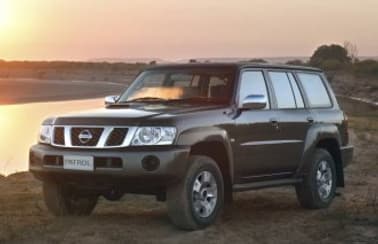
Well aware of the Patrol's genesis as an in-the-wild workhorse – and very good in that role it is – Nissan's designers have done everything that they can to civilise the latest model. Externally it is difficult to reconcile the fact that every body panel has been changed. It just doesn't look like it.

The impression is still one of a large shoebox with the corners slightly – only slightly – rounded.
Step inside and it is immediately obvious where the polish has been applied. The surface finishes are cleaner, the materials of a higher grade, the seats more comfortable and there are more spaces to store that extra bit of personal gear.
Electric seat adjustment and a cruise control are two definite concessions to the Patrol's life in the city. The overall impression is now more one of loungeroom than tool shed. With the full complement of seven seats there is not much space left inside the vertical-split rear doors for luggage. That changes when the third row of seats are folded up against the side windows.
The test vehicle was a mid-range ST manual with the tried and tested 4.2-litre turbo diesel.
A driver's airbag is standard but a passenger bag is only available as an option on the ST, standard on the ST-L. The same goes for anti-lock braking on the four-wheel discs – standard on ST-L, optional on ST.
It appears at first glance one of the imponderables of life as to why Nissan persists with a pair of turbo diesels – the 4.2 and its 3.0-litre sibling – when both produce almost identical power and torque outputs.
According to Nissan, the 4.2 is the best choice for those planning the retirement tow around Australia, yet both have very similar rated towing capacities – 750kg without trailer brakes, 3200kg (3.0-litre) and 3500kg (4.2) braked in manual trim.
The advantage of the in-line six over its smaller stablemate is at the lower end of the rev range – a crucial distinction for towing.
It delivers its torque earlier despite both engines having maximum grunt at the same 2000rpm level. Fuel economy is not bad for a 2440kg vehicle with figures for the Patrol hovering around 12.4l/100km of mixed city and highway running.
At that level, the 95-litre main and 30-litre sub tanks will give you a fairly good range. The five-speed manual gearbox has slow changes but feels indestructible.
Where the surfaces are smooth, the ride is complian. But similar speeds over broken surfaces or rougher roads can have the live axle front and rear suspension at odds with the steering. It is just a by-product of the strength of the Patrol's architecture but something you need to be prepared for.
Related cars for sale on CarsGuide
See more Nissan Patrols for sale View cars for saleNissan Patrol 2005: St (4X4)
| Engine Type | Diesel Turbo 6, 4.2L |
|---|---|
| Fuel Type | Diesel |
| Fuel Efficiency | 11.6L/100km (combined) |
| Seating | 7 |
| Price From | $23,870 - $29,480 |


Pricing Guides
Range and Specs
| Vehicle | Specs | Price* |
|---|---|---|
| Dx (4X4) | 3.0L, Diesel, 4 SPEED AUTOMATIC | $6,380 - $8,910 |
| St (4X4) | 3.0L, Diesel, 4 SPEED AUTOMATIC | $17,050 - $21,890 |
| St-L (4X4) | 3.0L, Diesel, 4 SPEED AUTOMATIC | $8,800 - $12,320 |
.jpg)


.jpg)
.jpg)
.jpg)
.png)
.jpg)
.png)
.jpg)
.jpg)
.png)
.png)


