









A 600ml carton of Farmers Union Iced Coffee's worth of diesel was about all that was left ... although the driver had consumed a fair bit more milk-coffee product than that.
The Cruze filler pipe had been returned to full with 59.29 litres at the end of 1000km, meaning we had gone close to the CDX turbodiesel automatic coughing and expiring on the roadside. But it didn't - we had done 1000km of real-world driving on a tank of fuel.
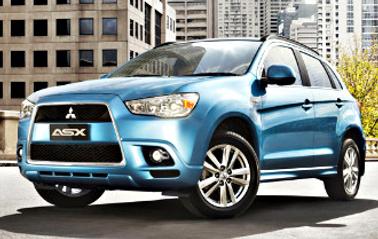
Former rally champion Ed Ordynski also completed the feat in a Mitsubishi ASX SUV, a manual turbodiesel model. The little SUV was expected by the SA rally driver to be more fuel efficient and it was - at 4.6 litres per 100 (according to its trip computer) it was one litre better for every 100km.
THE CARS

The Cruze and ASX were two vehicles picked because of diesel availability and the high-volume nature of the breeds. The Cruze will soon be rolling down the line at Elizabeth in petrol and diesel form - the CDX model we were given had been bumped up to ECO tyre pressures of 39psi/270kpa, up on the 32 psi/220kpa suggestion.
Ed O was hoping to get a diesel five-speed manual but that was not happening - we were given the six-speed auto, which he had doubts about - "I reckon you could get a manual Cruze down to the same level as the ASX. Autos are definitely less efficient, they absorb power for a start.
"In reality, the difference can be 20 per cent - on paper a Cruze should be as good if not better than the ASX, same weight but larger engine in the Cruze - the but the ASX was better I think largely because of the manual," he says.
The long-time Lancer Evo driver opted for wheel-time in the ASX, a base-model diesel six-speed manual, not quite up to the pace of his former mounts but much more likely to go the distance on a tank of fuel.
THE JOURNEY
Cars and drivers arrived at an Adelaide CBD service station just before dawn and proceeded to have fuel tanks filled to the brim and last-minute caffeine supplies stowed for the drivers.
The retired rally ace was espousing the virtues of manuals versus automatics - weight, gear selection, anticipation of terrain - over the two-way as we headed north towards the Copper Coast towns of Kadina and Wallaroo, about 160km into the journey.
Careful throttle use and reading the road and early morning traffic mean both vehicles trip computers were below six litres per 100km before Grand Junction road in the city's north.
While the ASX happily trundled along near the highway speed limit in sixth gear, the manual shift mode of the Cruze's six-speed automatic would not allow top gear to be selected until mid-90km/h, even on a downward run.
Sticking with fifth gear proved to be a better option, the 1:1 ratio keeping the two-litre turbodiesel humming along at a decent speed, without sending the trip computer beyond six litres per 100km. If we were to hit the 1000km tank target, we had to stay below that number.
The ASX with Ed O at the wheel was below five and didn't come back above that number for the entire trip, despite being less aerodynamic and a few kilos heavier - although the Ordynski frame is shorter and leaner than that behind the wheel of the Cruze, so the Holden product (which was also carrying 10 litres of emergency diesel rations as well) might have tipped the scales a little more than the Mitsi during this trip.
Getting off the main highway and onto single-lane country roads, bo th cars were happily trundling along despite wind and unseasonal rain. The outskirts of Port Pirie was the first stop - around 250km travelled - and the Cruze had been using fuel at a rate of 5.3 litres, while the ASX was cruising at 4.2.
Turning east towards Jamestown and the fringes of the Southern Flinders Ranges and the wind and rain continued to provide conditions that would really test the cars touring range.
The ASX was becoming unruly in the face of headwinds gusting in some cases to 30k m/h, which when teamed with long gradual climbs put pressure on the drivers trying to keep frugal figures on the dash displays.
There was no stopping for Cornish pasties at Burra as we carried on past the 400km mark towards the Riverland, crossing the swelling River Murray waterway using the Cadell ferry and shortly thereafter passing the halfway mark.
A stop for sustencance in Waikerie - about 530km into the journey - and then a turn south to follow the rising River Murray gave us no respite fr om the wind or rain as we headed for Blanchetown on the Sturt Highway, 570km away from our starting point in the Adelaide CBD.
Ploughing through rainstorms and headwinds, both cars maintained sub-6 readings - the ASX in the region of 4.5 and the Cruze 5.5 litres per 100km as we passed the 700km mark near Murray Bridge.
The weather worsened as we continued to follow the river south through the 730km point at Wellington and on to Milang, marking 780km travelled as we pulled up for more coffee and food on the edge of Lake Alexandrina.
"The ASX was more adversely effteced by that, it was 0.3 litres/100km worse off - we did what you need to do into a headwind and that was reduce the speed a little." Ordynski says there's a big fuel use penalty once you exceed 90km/h.
"Over 90 starts to take an exponentially larger amount of fuel, if you allow a little bit more time for the journey, there's a big saving to be had, as long as you're not a nuisance to other road users," he says.Short hops followed through to Goolwa, Victor Harbor and on to the southern tip of the Fleurieu Peninsula at Cape Jervis, taking us through some of the steepest terrain yet.
The Range Road journey from Victor Harbor also took the retired rally driver past some roads that featured prominently in his early career as a rally driver. Several nostalgic UHF broadcasts on the 1970s rally scene on the south coast - with many victories for a young Ed Ordynski - accompanied the journey through to Cape Jervis.
Distance travelled to this point is 890km and only stops for drinks and chips - no fuel. The hilly country - as well as southerly winds of up to 20km/h for the afternoon - did little to help our quest in the final stages of the drive, but with concentration we were able to keep 5.6 litres per 100km on the Cruze trip computer and 4.6 on the ASX.
The distance to empty figure was becoming of more interest as we headed north again, via Myponga, Meadows and Clarendon - the last number (with about 40km to go) was 80km to empty. The low fuel light (which had been burning for some time) was soon joined by the trip computer giving up on the numbers and prompting me to FILL FUEL.
Running down through the southern foothills to complete our 1000km journey at - funnily enough - a service station, we returned the tanks to full. The 60-litre tank in the Mitsubishi had nearly 15 litres left to go, while the Cruze was almost on fumes. But after thirteen hours of "real-world" driving, the target had been reached.
"I would drive like that with people on board and not be embarrassed - you could argue there's a road-safety component as well. You win on fuel use and emissions as well, 2kg of CO2 for every litre of fuel, you win on maintenance and longevity of the vehicle by driving it kindly as well, it's hard to see a downside,'' he says.
Ed Ordynski's fuel-efficient driving tips
Level 1: Overall factors
1. Plan when you need to use your car to avoid unnecessary journeys.
2. Plan your journey to avoid peak hour and congested roads.
3. Take a little time to learn about the way your car operates for best fuel efficiency.
4. Measure your fuel consumption and take pride in reducing it.
5. Choose an energy efficient vehicle.
Level 2: Anyone can try.
1. Concentrate on driving smoothly and anticipate traffic flow to conserve momentum.
2. Keep tyre pressures at maximum recommended on the placard.
3. Have your car serviced at correct intervals and keep wheel alignment at manufacturer specifi cation.
4. Avoid any excess weight in the vehicle and remove accessories which affect the aerodynamics (e.g. roof racks).
5. Choose a manual transmission and learn to drive it properly for optimum fuel efficiency.
Level 3: Conserving every drop - the hard-core methods.
1. Avoid use of airconditioning and keep windows closed.
2. Do not use cruise control but do focus on keeping a constant speed and conserving momentum.
3. Drive at low speed - most cars are at their most efficient at around 75km/ h in top gear.
4. Switch off engine if going to be stopped for more than 10 seconds.
5. On highways, keep your wheels on the ridges, not in the bumpy troughs made by trucks i.e. keep left, it's safer too!
6. Drive off as soon as the engine is started, especially from a cold start.
7. With diesel engines, minimise throttle percentage at all times, using the tallest gear with the least throttle opening.
8. With petrol engines, minimise engine revs, regardless of throttle position, using the talles t gear the engine will allow without harshness.
9. If you must drive an automatic, learn how to encourage it to stay in tall gears with the torque converter locked as much as possible.
10. If you drive an automated manual, drive it in manual mode in the most efficient manner for the engine characteristics.
11. Wear shoes that allow you to control the most subtle movements of the accelerator.
12. Steer smoothly on the correct line through corners to avoid using energy from unnecessary angle on th e front wheels.
13. Allow the car to gradually reduce speed up long hills.
14. Avoid bumps and potholes.
15. If stuck in a long line of traffic on highways, take a break.
16. Take a break if extreme weather is encountered.
17. Drive without distractions.
18. Study the technical aspects which influence how your car best
Related cars for sale on CarsGuide
See more Mitsubishi ASXs for sale View cars for saleMitsubishi ASX 2011: (2Wd)
| Engine Type | Inline 4, 2.0L |
|---|---|
| Fuel Type | Unleaded Petrol |
| Fuel Efficiency | 7.7L/100km (combined) |
| Seating | 5 |
| Price From | $5,500 - $7,810 |
| Safety Rating |
|


Pricing Guides
.jpg)


.jpg)
.jpg)
.jpg)
.png)
.jpg)
.png)
.jpg)
.jpg)
.png)
.png)


