









Some come standard in upper specification offerings, others are steeply priced options. There also are off-the-shelf brands available at auto stores which can be fitted to most cars.
Driving a range-topping Toyota Camry Azura, given a cosmetic spruce up last September, re-ignited interest in SatNavs. They've been around for a while now and come to the fore in unfamiliar areas. Although, programming them is still a bit of a cumbersome exercise.
There are inherent short-comings such as do they, in fact, take the most direct route if instructed and is the mapping up-to-date?

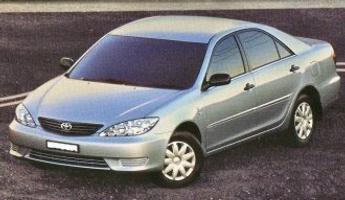

Running around in the Azura begged the question as to whether SatNavs are being used to their best potential.
With traffic in the southeast corner becoming busier by the day there is a piece of software which should become standard on all SatNavs.
It is a system which instantly informs the driver of traffic problems and then suggests routes to avoid the congestion.
In Europe it is linked to the local traffic management branch and pinpoints problems and comes up with caution icons at the locations they occur on the screen.
Mercedes-Benz taxis in Germany have had this system for quite a few years now.
What jogged the memory on this was that the directional map in the Azura automatically identifies where occupants can satisfy their hunger. It comes up with knife and fork icons, like the ones on road signs, outlining where the nearest food outlets are.
Approaching the Brisbane CBD on the expressway the city grid map was a maze of knives and forks.
A more useful function, particularly in peak hour would be to identify a road blockage and suggest alternate routes.
Radio traffic reports tend to be irregular and can be inaccurate, often misreading situations at critical times in peak hour.
Toyota says it will arrive with the next step in SatNav operations within the next few years. A system called G-book, similar to the program in the German taxi, is being refined and developed.
As well as incorporating the traffic monitoring mode, occupants will be able to access data such as the stock market.
In the meantime the Azura is a comfortable jigger cushioned with leather, comfort, smooth ride, great handling and a punchy V6. It is a slice of Lexus-like luxury but it's not for one minute remotely cheap.
Try $49,100, which is a $110 rise after the Camry range was freshened in September last year. For the slight price rise the Azura gained extra equipment including a $1500 Toyota Link system that can pinpoint the car's location or put the occupants in contact with a call centre. It is dependent on mobile phone operating coverage and the availability of GPS location information.
With the Camry there is a willing engine that pushes out a healthy 145kW in the luxury sport model. The same 3-litre V6 is in the Sportivo which has less plushness in the cabin but offers equal dynamics.
Fuel consumption in the heavier Azura with the sweet four-speed automatic transmission finished up about 13.2litres/100km following this 500km test.
The Sportivo was around 12litres/100km on a similar test on the same roads.
These fuel figures are a little on the steep side over the claimed factory figures which are 9.9litres/100km for the Sportivo and 11.2/100 for the Azura.
Brakes on both models are sound with a more progressive pedal, installing greater confidence in the all disc system. Refined, sporty and sound.
Looks are subjective but if you have no qualms with slab sides, the Camry is anything but a non-emotive badge in the ilk of white goods.
Related cars for sale on CarsGuide
See more Toyota Camrys for sale View cars for saleToyota Camry 2005: Azura
| Engine Type | V6, 3.0L |
|---|---|
| Fuel Type | Unleaded Petrol |
| Fuel Efficiency | 11.2L/100km (combined) |
| Seating | 5 |
| Price From | $5,170 - $7,590 |


Pricing Guides
.jpg)


.jpg)
.jpg)
.jpg)
.png)
.jpg)
.png)
.jpg)
.jpg)

.png)
