What's the difference?
This is the most affordable plug-in hybrid available in Australia – as this review is published – but it’s got a lot more going for it than just that.
The 2026 BYD Sealion 5 is a mid-size SUV wearing a BYD badge that has been thrust into the public’s awareness by the popular BYD Shark 6 – as well as by widespread criticism of brand's less popular aftersales shortcomings through much of 2025.
It’s also a plug-in hybrid that is showing up as the nation faces a fuel crisis, despite many remaining sceptical of going ‘full EV’.
The Sealion 5 has a long list of features, of course, plus a claimed four-figure driving range. Is this BYD too good to be true?
We grabbed the entry-level Essential to find out.
Driving the first-generation Mercedes-AMG A 45 in 2013 was an intense, noisy, brutal experience and I loved every bone-shaking, ear-bleeding moment of it.
But I’m older now, married and have children, and while this is also an intense, noisy, brutal experience I now prefer cars to be less like a 24-hour, seven-day-a-week continuous cage fight. So, I was surprised to find the new-generation A45 S has grown up a bit, too.
So, like me, is the new Mercedes-AMG A 45 S 4Matic+ not as quick as it used to be, and does it have a dad bod, now, too? Far from it. If anything, it’s matured into the serious weapon of a hot hatch it was always supposed to be.
While the BYD Sealion 5 lacks the polish of some more established plug-in hybrids, it has a seriously compelling price advantage over some competitors. It makes a base-model Mitsubishi Eclipse Cross PHEV feel positively outdated and it’s $13,800 cheaper.
BYD's lack of ANCAP rating for the Sealion 5 and the uncertainty around it still being a new brand are downsides, even if BYD is quickly moving past the latter. But being the most affordable PHEV available while having this much showroom appeal is bound to work in the Sealion 5’s favour, just don’t expect a dynamic masterpiece once you’re out on the road.
The Mercedes-AMG A 45 4Matic+ may have grown up a bit in that it’s not as noisy or uncomfortable as the first-generation version which arrived in 2013, But if anything, its more portent than ever. Superb Mercedes-AMG craftmanship, outstanding performance and good value as far as bang for your buck goes.
The BYD Sealion 5, from the outside, is inoffensive but also uninspiring. That’s likely not such a bad thing for a mid-size SUV – it’s rare you’re hearing someone talk about how beautiful the Mazda CX-5 or Toyota RAV4 is.
Its quartet of colour palette options comes in on the safe side, too. Aurora White is standard, Atlantis Grey, Harbour Grey and Cosmos Black are cost-options.
Our test car is Atlantis Grey, which is interestingly quite blue.
The relatively upright shape is a slight departure from the more ‘aquatic’ silhouettes of BYD’s line-up, but the front grille and light layout are decidedly in step with the brand’s oceanic design language. There’s a bit going on, you could say.
The slimline tail-lights are the rear, especially from a three-quarter angle to the side, look attractive and help break up the rear without looking messy.
The Sealion 5’s design is overall net-good, but it’s inside where the mid-sizer feels like you’re getting plenty for your dollar.
The seats, despite the leather fakery, feel like decent material, and the layout uses buttons and physical controls cleverly without feeling outdated.
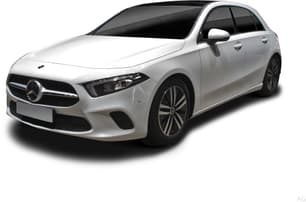
When I went to pick up the Mercedes-AMG A 45 S 4Matic+ I walked right past it and then like that lost and confused John Travolta in Pulp Fiction internet memes, wandered around before asking where the car was.
That’s because I was looking for something with a gigantic spoiler on the roof and probably hi-vis green with stripes. But the car assigned to me was the A 45 S in its standard form, and the styling is subtle enough for it disappear into a crowded car park like James Bond into a lavish dinner party.
But like Bond, chances are the A 45 S is the most hardcore person in the room, it just doesn’t walk in announcing it to everybody.
Look closely and you'll see that the A 45 S is not just another small prestige car. There’s the 90mm quad exhaust poking out of the chunky diffuser, the giant 'Panamericana' grille, and the angry looking front apron.
Then, there are the 19-inch matt black alloy wheels wrapped in low-profile Michelin rubber and enormous brake discs with their red calipers, all barely contained by the pumped up front wheel guards which are much bigger than those on a regular A-Class.
The cost option my test car wore was the 'Mountain Grey Metallic' paint, but if anything it made the A 45 look even more covert.
The cabin is small but luxurious and sporty with two-tone leather upholstery (the red and black 'Lugano' leather in my test car is a no-cost option), there’s the microfibre-clad AMG steering wheel, brushed aluminium trim, metal-trimmed pedals and the large display panel (it’s actually two screens joined) is also standard.
The A 45 S is a hatchback measuring 4445mm in length, 1850mm wide and 1412mm tall. Not keen on a hatch but want something with similar dimensions? The CLA 45 S is the A 45 S’s four-door twin-under-the-skin and is just as much of a weapon.
And if you want your A 45 S to look more aggressive, you can option the 'AMG Aero Package' which will see a giant rear wing fitted to the roof.
Or you can buy the Edition 1 version of the A 45 S which includes the big spoiler and shouty design bits to makes sure everybody knows you’re the assassin in the room.
To actually interact with the interior is, at times, another story. BYD’s tech interface is generally easy to manage, but could be simpler when it comes to navigating menus for the sake of driver distraction.
While larger text and buttons would be welcome, the multimedia system is easy to use when parked, and the functionality is impressive for the price point.
Winning more points for the Sealion 5, though, are the physical controls – buttons and the traditional gear selector – which make the cockpit much more intuitive while on the move.
Ergonomically, though, the adjustment between the steering wheel and driver’s seat could do with some work, as I found it difficult to find a truly comfortable driving position. This is coming from someone 178cm tall, a very normal height in Australia.
Better adjustability on the steering column would be helpful, as it’s something I’m not sure I’d ever get totally used to.
Visibility and physical space inside the Sealion 5 is impressive, though. The car is 4738mm long, 1869mm wide and 1710mm tall, and the roof and window lines don’t swoop too aggressively towards the rear.
There are low window shoulders even into the rear, so light isn’t at a premium, though under-leg support could be better on the pew.
It’s otherwise un-cramped. The 2712mm wheelbase means decent legroom for second-row folk, plus behind the 60/40 split-fold seats there’s 463 litres of space for luggage. That becomes 1410L with the seats folded.
There’s unfortunately no spare tyre, just a tyre repair kit.
Along with good performance and handling, part of the appeal of hot hatches is that they’re practical… to a degree. The A 45 S is a small car, but it has four doors, five seats and a boot.
The cabin is small, no doubt about it, but even at 191cm tall I had plenty of room while driving, the seating position is perfect actually, although sitting behind my driving position saw my knees just touching the seat back.
Headroom is getting limited back there, but I still had space. Could you get away with the A 45 S as a family car? I had my family in it for a while, but there’s just the three of us and my son is pre-school-aged. So, a young, small family, yes… until it starts to grow.
Cabin storage is good with two cupholders in the rear centre fold-down armrest along with small door pockets and seat-back nets. Up front there are another two cupholders, giant door pockets, a big split-opening centre console bin and a tray for the wireless charger big enough to fit an iPhone 11 Pro Max.
Boot space is good at 370 litres. The big shiny CarsGuide suitcase fitted in easily (see images) and apart from the wide-opening of the boot, another hatch power of practicality is that you can fold the rear seats down to open up more cargo carrying space, and in the A 45 S’s case that’s 1210 litres.
I’ve mentioned the wireless charger but there are also four USB-C ports (two up front and two in the rear), back seat passengers also have directional air vents, which is another bonus, along with dark tinted windows (welcome when my son was sitting back there in his car seat).
The BYD Sealion 5 Essential kicks off from $33,990 before on-road costs, four big ones less than the Premium ($37,990). We’re focusing on the Essential today, but don’t think that means a shallow list of features.
As you’d expect from BYD if you’ve been paying attention to the Chinese brand in its emergent years, the Sealion 5 comes with more than $34K would normally get you – a 10.1-inch central multimedia touchscreen, an 8.8-inch driver display, synthetic leather upholstery, dual-zone climate, a six-speaker sound system, wireless Android Auto and Apple CarPlay, USB-A and -C ports front and rear, digital radio and keyless entry.
On the outside, LED headlights and tail-lights are the same for both variants.
Both also have 18-inch wheels, not unwelcome for the benefits of on-road comfort.
Consider that the most popular SUV in the country, the Toyota RAV4, costs at least $45,990 without the benefit of a plug-in drivetrain (yet) and comes with, on paper, a more sparse list of features.
The closest PHEV competitors are still more pricey, including the Geely Starray ($37,490) and Chery Tiggo 7 ($39,990), and arguably lack the brand power BYD has come to enjoy.
The new Mercedes-AMG A 45 S 4Matic+ lists for $93,600. Coming standard are the 19-inch matt black alloy wheels, the quad exhaust and chunky diffuser, Panamericana grille and AMG front apron, the red brake calipers, small roof-top spoiler and privacy rear glass.
Inside, the A45 S comes standard with sport seats and tone-tone leather upholstery – there’s ‘Yellow cut’ leather with contrasting yellow top stitching (or in the case of our car the no-cost option of red and black Lugano leather), and an AMG Performance steering wheel clad in 'Dinamica' microfibre.
Also standard is the large landscape display which is actually two 10.25-inch screens; one for the digital instrument cluster and another for the media system.
There’s also Apple CarPlay and Android Auto, sat nav, a Burmester stereo, 'Mercedes Me' (voice recognition) assistant, digital radio, wireless phone charging, power adjustable and heated front seats, dual-zone climate control, ambient lighting, proximity key, LED headlights and a panoramic sunroof.
The only feature I felt was missing was a head-up display, which needs to be optioned.
In the first year of sale (until the end of 2020) an Edition 1 version of the A 45 S will be sold. Listing for $101,690 the limited edition comes with a tougher look thanks to the addition of the AMG aero package which fits the giant rear wing, along with 19-inch twin-spoke matte black alloy wheels, door decals and AMG performance seats. Oh, and it only comes in 'Sun Yellow.'
Rivals to the Mercedes-AMG A 45 S 4Matic+ come in the form of Audi’s RS3 Avant, the BMW M2 or, and this may seem like an odd suggestion, the Tesla Model 3 hatch. The latter is a pure electric vehicle but has a 0-100km/h time of 3.4 seconds and an output of 335kW… just saying.
Sitting under the A 45 S 4Matic+ in the A-Class range is the A 35 4Matic for a list price of $69,300. The A35 doesn’t come with the big Panamericana grille and the 2.0-litre engine has a lower output but still packs an impressive 225kW/400Nm.
The Sealion 5’s front wheels are driven by a combined maximum of 156kW thanks to a 1.5-litre four-cylinder petrol engine (145kW/300Nm) and a permanent magnet synchronous motor (72kW/122Nm).
BYD claims a 0-100km/h sprint of 7.7 seconds for the Sealion 5 Essential, four tenths faster than the Premium despite only a 61kg difference in kerb weight.
There may be hot hatches out there which look wilder than the Mercedes-AMG A 45 S 4Matic+ but do they have the most powerful four-cylinder engine ever to go into a mass-produced car? Nope, but the A45 does: it’s a 310kW/500Nm turbo-petrol four.
It doesn’t sound as angry and gravelly as the previous A 45’s engine but it has more grunt (an extra 30kW/25Nm) and is claimed to catapult the hatch from 0-100km/h in 3.9 seconds.
The '4Matic' part of the name indicates the hatch is all-wheel drive and the '+' means it’s a more sophisticated version of the system which allows all of the drive to be sent to one axle, if need be.
What need would that be? The need to drift, of course, which should be up there with other human rights such as clean air, fresh water and free speech.
Yep, the A 45 S comes with 'Drift Mode' (for the racetrack, of course), along with a 'Launch Mode' for perfect-every-time transitions to warp speed.
Changing gears gunslinger-fast is an eight-speed dual-clutch automatic transmission.
With a charged 12.9kWh lithium iron phosphate (LFP) battery and a full 52-litre (95 RON minimum) fuel tank, BYD reckons the Sealion 5 Essential can cover 1001km under NEDC testing, which is optimistic. It claims 71km can be done on EV power alone.
Not only due to the lenient nature of NEDC testing (WLTP is more common and usually results in lower ranges), but the reality is that once the battery is flat, the engine is doing a lot more work.
Charging is slow, limited to 3.3kW (AC only), which should take between 4 and 5 hours to charge from the lower end of the gauge for the battery size. Given most PHEV owners will do this overnight at home, that’s certainly not the end of the world.
Claimed consumption figures are 1.2L/100km with more than 25 per cent battery charge, or 4.5L/100km when it dips below that.
Realistically you could do sub-50km trips and use no fuel, or never plug your Sealion 5 in and see fuel consumption soar. In any case, anything close to 1001km in a single run is extremely unlikely.
Mercedes-AMG says the 2.0-litre, turbo-petrol, four-cylinder in the A 45 S should use 8.9L/100km after a combination of open and urban driving.
My fuel test saw me drive 131km of urban and country roads, plus some motorway sections, and needed 16.9L of premium unleaded petrol to fill the 51-litre tank back to full.
That comes to 12.9L/100km, which is thirsty, but my driving style may have contributed significantly to that high figure.
You might expect a car at this price, regardless of its drivetrain, to be underwhelming from behind the wheel.
That, then, makes it even more pleasantly surprising that the BYD Sealion 5 is actually rather competent. Not massively exciting or dynamic, but certainly not a disappointment.
The Sealion 5 is, save for a couple of arguably minor annoyances, quite easy to get used to and drive.
Firstly, when making proper use of its electric power, the drivetrain provides enough shove for its intended use. It’s not overly powerful, but you won’t have trouble overtaking. It’s the same with most of the inputs, the steering is light but not completely numb – again about right for how the Sealion 5 will be driven.
Perhaps its biggest departure from expectations based on other cars from China is its suspension is on the stiffer side of things, but again it’s not unruly or too rugged. In fact, it does provide a better sense of control than many of its compatriots.
Again, the biggest issue with the Sealion 5 day-to-day is its driving position, the steering column adjustment isn’t up to scratch and there’s not really a perfectly comfortable seating position (I’m a very standard 178cm).
On long trips, you might also find the engine gets quite noisy once the battery power is gone as it works hard to pull the mid-size SUV along under acceleration.
Its driver-assist systems are, you might be pleased to hear, on the calmer side of things – BYD is getting better at calibrating its safety features and I didn’t find myself rushing to switch it all off as quickly as usual.
It can still be a bit too persistent in its lane-keeping, but it’s a big improvement on the way things were.
I wasn’t lying in the introduction to this review. The previous A45 was a pretty intense driving experience. The ride felt brutal, the exhaust note screamed and crackled like somebody had set a wheelie bin full of fireworks alight.
And then there was the sweating. I seemed to sweat a lot driving it and there was nothing wrong with the climate control, that just happens to me when I’m under pressure and excited.
So, has the new-generation A 45 S 4Matic+ gone all soft and quiet on us? No, but things have been toned down a tad.
The exhaust note is not as gruff or loud, and even in 'Sport +' and 'Race' mode it’s still quiet enough to pull into a driveway at night without making enemies of your neighbours.
And the ride is also not as harsh, although even in 'Comfort' mode my wife still found it verging on too firm.
The performance and dynamics, however, felt as sharp as ever.
Acceleration is supercar quick at 3.9 seconds. My gawd, you needed a Ferrari F40 to do that in the mid-’80s, and even now the new Mercedes-AMG GT S supercar gets there only a tenth of a second earlier, and it has a twin-turbo V8.
Top speed for the A 45 S is electronically limited to 270km/h. But hot hatches aren’t really about straight-line speed, they’re more about bent-line speed. You know, corners.
So, I took the A 45 S on the twisty roads I take anything that calls itself sporty. The agility of the A 45 S is outstanding thanks to a rigid chassis that handles a change in direction as quickly and easily as you can turn your head.
The brakes bite hard when they have to, and the all-wheel drive hatch scrambles tenaciously out of corners.
A racetrack is really the best place to truly test a serious sports car's limits and our own James Cleary did just that when he drove the A 45 S at its international launch.
As a daily driver, though, for somebody who occasionally likes to get into it on a curvy road the A 45 S is comfortable enough to live with, but hard enough to remain engaging and dynamic when you get the chance to have a squirt.
There’s no ANCAP rating for the Sealion 5, but the list of safety kit isn’t lacking on paper.
BYD lists seven airbags ,including full-length side-curtain bags and an important centre airbag, plus there’s a whole suite of tech that’s, as noted, better behaved than past driver-assist systems from BYD.
The Essential only misses out on a surround-view parking camera and front parking sensors, both arguably important safety features for parents, but the rest of the list is the same as the Premium including adaptive cruise control, lane-keep and lane departure assist, traffic sign recognition, blind-spot monitoring, rear cross-traffic alert with rear AEB (as well as front AEB, of course) and tyre pressure monitoring.
The Mercedes-AMG A 45 S 4Matic+ received the maximum five-star score when it was tested by ANCAP in 2018.
The safety equipment list is impressive. Along with nine airbags and a 360-degree camera there’s advanced safety tech such as AEB with cross traffic function, blind spot warning, lane keeping assistance, lane change assistance, auto parking and adaptive cruise control.
For child seats there are three top tether points and two ISOFIX mounts across the second row. Small hatches are the easiest cars to put top tether seats in thanks to the good access to the hook point. I fitted my son’s car seat into the back of the A45 S without any problems.
BYD has a six-year/150,000km warranty, which is probably more than you’d need in terms of distance but is behind many competitor brands’ timelines – seven to 10 years is becoming the norm, even if it’s conditional.
An eight-year/160,000km warranty covers the battery, which is about par for the industry.
Servicing for the first five proper services ranges from between $285 and $930, plus there's a free check-up six months into ownership and a total cost over the span of $2355 – an average of $471 per service.
BYD has just over 100 dealerships in Australia, so finding one for servicing shouldn’t be too challenging.
The Mercedes-AMG A 45 S 4Matic+ is covered by a five-year/unlimited kilometre warranty.
Servicing is recommended at 12 month/20,000km intervals. Servicing is capped at $850 for the first year’s visit, $1200 for the next and $1600 for the third.