What's the difference?
We appear to have reached a tipping point in the acceptance of electric vehicles in this country. The early adopters have made their switch but the technology has become more widely accepted, so now carmakers need to woo buyers with conventional means.
That means the tried and tested methods for making any car more appealing to a customer - lower cost and more equipment.
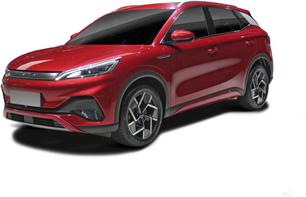
No car demonstrates this better than the BYD Atto 3, which is one of the most popular electric vehicles in Australia. But after an initial surge of buyers happy for a more affordable EV, BYD needs to find fresh ways to attract new customers.
So, for this updated 2024 Atto 3, BYD has made it cheaper and added some key new equipment, while retaining its previous strengths in terms of value and technology.
Hyundai's Ioniq range is nothing if not a flex in the face of Toyota.
Sure, Toyota has a dominating position in the Australian market, with its well-received range of hybrid models, but what happens after hybrid? Hyundai takes on the blocky Prius formula with not only a directly competing hybrid model, but a plug-in and a fully electric version, too.
This expansive range is as though Hyundai is trying to demonstrate it's ready for any future, near or far, and guess what, Toyota? Anything you can do; the Korean juggernaut thinks it can do better.
These cars aren't really designed to sell so much as they are offerings for early adopters, but a few years after its launch, with a host of rivals set to take it on, and an entire sub-brand based on the Ioniq just around the corner, is Hyundai's top-spec Ioniq electric worth a look? I took one for a week to find out.
BYD hasn’t made dramatic changes to the Atto 3 for 2024, but has it done enough to lure in more buyers?
The additional equipment, namely the larger infotainment screen and new tyres, will certainly help make the Atto 3 more appealing. And the technology behind EVs is more understood by the average motorists, so the barriers to making the switch to electrification are dropping.
But the single biggest factor is likely to be the price. At a time when inflation (and other reasons) is driving the cost of new vehicles up, having your updated model go in the wrong direction will only help make potential buyers take notice.
Especially when you consider Toyota’s closest rival to the Atto 3, the bZ4X, starts at $66,000, while the Tesla Model Y is priced from $55,900, making both significantly more expensive propositions. Heck, the cheapest Toyota RAV4 hybrid model starts at $42,260, only marginally cheaper than the Atto 3 Standard Range.
So, if BYD can make its value argument strongly it will help lure more new buyers to take the plunge into the world of EVs.
Just like the Kona EV, Hyundai's Ioniq is still one of the best EV options on the market today. It strikes an excellent balance by offering significantly more range and better energy consumption than the more affordable Nissan Leaf or MG ZS EV, while providing the familiarity of the Hyundai spec and drive experience at a price only a little higher than a top-spec Prius.
Its relatively high score is a product of these factors, but also the way in which its interactivity offers the early adopters the engagement they will be searching for.
In a couple of words, not really. At least when it comes to the exterior design.
In fact, the biggest design change for 2024 is actually the colour of our test car, the new Cosmos Black. Apart from that, the rest of the Atto 3 is unchanged visually, which is becoming something of a trademark for EVs, at least from newer brands like BYD and Tesla.
Instead of worrying about adding a new grille, different headlights or an alternative alloy wheel design, brands like BYD are focusing on updating batteries, the technology and other software enhancements to keep their models fresh.
The only exterior change is at the rear, where the previous 'Build Your Dreams' lettering has been replaced by a simple 'BYD' badge.
As for the interior design, kudos to BYD for not following Tesla down the cost-saving-disguised-as-minimalist-design path, but personally the design aesthetic and the variety of colours and trims used aren’t to my taste, but I can see why others may love it. The ‘guitar string’ door pockets are likely a particularly polarsing design choice.
BYD has added a new interior option, with a black/blue trim for the examples finished with grey and black exteriors, while white and blue painted cars get a blue/grey interior.
The Ioniq follows in the footsteps of eco hatches before it. You'll note this car's similarity in profile to the Toyota Prius, both shaped as such to secure low drag figures and therefore better economy and longer range.
While the Ioniq is a little more sedate than the wacky angles of the current Prius, there's no getting around the fact it's not exactly a cool shape. You could say it's interesting, perhaps, in the way it warps the low-drag box to Hyundai's styling cues, but dorky nonetheless. The LED headlights help lift it a little, but the filled-in grille and small 16-inch wheels hardly lend this car extra street cred.
The Ioniq is more a proof of concept for early adopters who care a little less about the way the car looks and a little more about its drivetrain and technology, which is clearly the focus here.
This can be seen in the Ioniq's interior, which has been re-worked for its most recent update. The digital features are impressive, with the floating 10.25-inch screen now totally dominating its dashboard.
I also like how the brand has given the instrument cluster a more modern design, with a cool floating bridge element over the top to eliminate glare, and, as always, Hyundai has made ergonomic use of its excellent switchgear and tidy steering wheel from the i30 and Kona ranges.
The climate unit has lost its tactile dials, replaced by touch-panel controls, and the lack of a transmission under the centre console has allowed plenty of negative space for the brand to play with, in this case a huge storage bay. There are also elements from more recently launched Hyundai models, which help to tidy the centre space up further, like an upright wireless-charging bay and shift-by-wire drive selector, which all looks very modern and neat.
It's a step towards things to come from the newly minted Ioniq sub-brand, which will do a lot more of this stripped-back, space-saving stuff with its next vehicle, the Ioniq 5 SUV. For now, though, the Ioniq is good as a half-step into the future. It's not as outlandish as a Tesla Model 3, for example, and will better suit a buyer looking for something a bit more familiar that still has a futuristic edge.
The Atto 3 remains classified as a ‘Medium SUV’ but blurs the line between mid-size and small in terms of dimensions, especially inside. It’s not in the same size game as the Toyota RAV4 or Mitsubishi Outlander, but is close in size to the likes of the Honda ZR-V and Mazda CX-5.
While there’s a few key practical storage spaces, there aren’t as many as some newer rivals, which does suggest the Atto 3 design is starting to date or just wasn’t well thought-out enough in the first place; such as putting all the switchgear in the centre console rather than on the dashboard.
This was probably done, at least in part, to accommodate the rotating touchscreen, which seems like a poor design and practicality choice to me. Especially the new one, which at 15.8-inches when rotated to the portrait mode it starts to interfere with your vision and the layout is more user-friendly in landscape mode - both when using the native multimedia system or your smartphone connection.
Space is respectable in the back seats, and there’s both a USB-A and USB-C port for charging devices. While out the back the boot measures 440 litres, which is a respectable amount of space for an SUV this size, but there’s only a tyre repair kit instead of a spare wheel.
As mentioned, there's actually quite a lot of space in the Ioniq cabin, and the design has been further stripped back with its most recent updates.
The front seat seems a bit high for a hatch, although ergonomically everything is correct for the driver, with a good amount of adjustability in the seat back and wheel.
The big, bright multimedia touchscreen is easy to use, and the single centrally mounted volume dial is welcome, but I do sorely miss the dials for adjusting fan speed and temperature. Touch-panel controls, to me at least, are always inferior.
As already mentioned, the centre-console area under the climate unit has been almost entirely deleted for the electric variant, granting the driver a little more knee room, and leaving a deep rubberised bay for loose objects, maybe even small bags. This area also houses two 12v power outlets and one USB port. The centre console has been re-worked to include a smart, space-saving upright wireless-charging bay for your phone, the shift-by-wire console, and controls for the heated and ventilated seats. This area also hosts two large bottle holders, and a large centre-console box.
As is usual with Hyundai models, there's also a large bottle holder in the door, alongside a practical bin.
Rear passengers are treated to decent legroom, about on par with what you'd expect in a hatchback. Headroom is a little limited, both for getting in and out, with the descending roofline, so if you have family or friends taller than my 182cm height, they might be less than pleased.
The rear-seat area gets bottle holders in the doors and in the drop-down armrest, although there are no power outlets, just dual adjustable air vents.
The hatch body of the Ioniq makes for a decent boot volume of 357 litres, enough for a large pram or, in the case of my testing, the largest of the CarsGuide luggage cases, with ease. Hyundai gives you a little satchel to tidily store the standard powerpoint to Type 2 charging cable. A Type 2 to Type 2 cable, which you will need to charge at public outlets (up to 7.2kW) is not included.
As we just mentioned, price has been a critical tool for carmakers looking to keep demand for EVs rolling along as the early adopters fade, and BYD is not immune from this. Earlier in 2024 the Atto 3 Extended Range, the model we’re testing here, started at $50,011 before on-road costs. Then in April 2024, BYD announced a drive-away deal for $45,990 for pre-registered demos.
Now this updated model is priced from $47,499 (plus on-road costs), which is a jump up from the sale price, but is more than $3500 cheaper than the Atto 3 was at the start of 2024. Meanwhile, the Standard model is priced from $44,990 (plus on-road costs), which is also a saving of more than $3000 on the previous model.
The key difference between the Standard and Extended Range models are the batteries, so the specification is similar. Both variants are equipped with LED headlights, power tailgate, synthetic leather upholstery, power-adjustable front seats, 5.0-inch digital instrument panel and in-built satellite navigation.
One of the big ticket item changes for 2024 is the upgraded 15.8-inch multimedia touchscreen, which comes with BYD’s signature trick - rotating between portrait and landscape modes. This is upsized from 12.8-inch in the old model. Wireless Apple CarPlay and Android Auto are now standard too.
On the one hand, forking out over $50k for a car which looks like this is a tall order. On the other hand, there is no other electric car that really falls into this price bracket, and when you think about it, it's only a few thousand dollars more than a top-spec Prius.
The aggro never-EV types will argue you can have a very good hot hatch, like say, Hyundai's own i30 N for less, but then this car really is for those early adopters who are after a slice of future drivetrain tech rather than a complete value offering.
In the context of the EVs currently available in our market, the Ioniq shines. Yes, it is more expensive than rivals like the Nissan Leaf or MG ZS EV, but it also offers more range than either of those, at 311km measured to the more accurate WLTP standard.
This is short of Tesla's Model 3 standard range, but also more than $10k more affordable, and as I discovered on my week of testing; 311km, and it really is 311km, is plenty for a predominantly urban commuter to get by with either routine maintenance charging, or a once-a-week stop at a DC charger.
So, value then? As this car has probably the minimum electric range you really want for an Australian city at a price only a little above rivals which fall short, it's in quite the sweet spot.
Oh, you probably want to know about equipment, too. Our Ioniq electric Premium scores familiar equipment from the facelifted Hyundai i30 range, including a 10.25-inch multimedia touchscreen with Apple CarPlay and Android Auto connectivity, built-in sat-nav integrated with charging-station distances, a 7.0-inch digital dash cluster, eight-speaker premium audio system, 16-inch alloy wheels, LED headlights and DRLs, single-zone climate control, leather-appointed interior trim with heated and cooled front seats, a heated steering wheel, auto-dimming rear vision mirror, wireless phone charger, opening sunroof, and keyless entry with push-start ignition.
It's a good array of items, and we'll touch on this car's fully equipped safety suite later. The only notable omissions for now are the lack of a holographic head-up display and the lack of dual-zone climate control.
As with the design there isn’t much to say about what’s powering the Atto 3 because it’s the same as the 2023 model. Both the Standard and Extended Range use the same front-mounted electric motor, which makes 150kW/310Nm and drives the front wheels through a single speed transmission.
With 0-100km/h times of 7.9 seconds and 7.3 seconds respectively for the Standard and Extended Range, the Atto 3 won’t shove you back in your seat, but it has adequate performance for a mid-size SUV.
The Ioniq electric has a single motor on the front axle producing 100kW/295Nm. It's the least powerful EV in Hyundai's range, but still out-punches cars like the Toyota Prius on raw power. It drives the front wheels via a single reduction-gear transmission, and the Ioniq electric also has re-worked regenerative braking for its most recent update.
This is powered by a huge-for-its-size 38.3kWh lithium-ion battery pack under the floor.
The Standard Range has a rated driving range of 345km (WLTP) from a 49.92kWh ‘Blade’ lithium-iron phosphate (LFP) battery while the Extended Range’s bigger 60.48kWh unit increases that to 420km.
Charging is capped at 70kW (DC) for the Standard and 80kW (DC) for the Extended.
One of the major hurdles for EV brands is convincing people that they won’t run out of charge every day. At 420km the Extended Range Atto 3 will get most people through multiple days of commuting, so even with public charging you shouldn’t worry about range anxiety.
Those drivers with commutes longer than 420km per day should be looking at something other than an electric car (and probably a job closer to home).
The huge 38.3kWh battery pack and official combined energy consumption of 15.7kWh/100km, grants the Ioniq electric an impressive 311km (WLTP) range. As already mentioned in the pricing section, this lets the Hyundai electric hatch strike a good balance for urban commuters, however, under our mostly urban testing, it's an even better story.
For context, electric cars are far more efficient when operating in an urban scenario than they are on the open road. This is because they can regenerate energy more often and are less susceptible to losses from drag. The Ioniq has a superb regenerative-braking system, which can be completely customised to the user's preference. Want to drive it with no regen braking (like a normal car)? You can. Want to have the full eco experience, and have the car's motor bring it to a halt even without using the brake pedal, thereby maximising the amount of energy recouped? You can absolutely do that, too.
For most of my week, I stuck the Ioniq in its maximum regenerative setting and was very impressed to find it return an efficiency rating of 12.3kWh/100km. Not only is this number well below its claim, it's by far the most efficient electric car I have driven, and the only one I haven't tried yet is the brand-new MG ZS EV.
Colour me very impressed. The Ioniq charges via the most popular socket, the European Mennekes Type 2 combo. On DC, the Ioniq can charge as fast as 100kW allowing for a charge time of 54 minutes from empty to 80 per cent. On AC, its max charge input is a frustratingly low 7.2kW, making for a charge time of six hours and five minutes (more expensive rivals will charge at 11kW or even the max 22kW), while from a 240v wall outlet (~2.3kW) it will charge in 17 hours and 30 minutes.
My single charge session was at a council-supported clean-energy Tritium charger with a max output on DC of 112kW. It charged my Ioniq from about 35 to 80 per cent in 32 minutes, and cost around $7.
Driving the updated Atto 3 feels… fine. Nothing special or class-leading, but within the expectations buyers should look for in a mid-size SUV. Which is meant as a compliment to BYD, as it is still a relatively new brand in this very competitive market and there are certainly some noticeably worse rivals in this same segment.
The Atto 3 may not be the most comfortable, most powerful or most dynamic mid-size SUV, but it’s a perfectly nice thing to drive and it will get you from Point A to Point B quietly and smoothly.
Another of the major changes for 2024 is BYD’s decision to ditch the fantastically named, but not very good Atlas Batman tyres, replacing them with Continental rubber. The Atlas tyres were a major drawback on the old model, lacking grip and detracting from the driving experience, with the new ‘Contis’ solving those problems.
The Ioniq's familiar Hyundai switchgear makes it largely feel like the brand's i30 from behind the wheel, and this is a very good thing. This car is immediately ergonomic and user friendly, although the seating position is a little high, preventing it from feeling particularly sporty.
The Ioniq emits a pleasant choral tone at low speeds, which enhances the perception you're steering something from the near future. It also helps alert pedestrians nearby, which was one of my pet peeves about the silent Tesla Model 3. The noise is interesting enough that you'll have people peering closely at it to figure out what's going on. It even gets louder as you accelerate, as though the motor is making it and it's not entirely artificial. Cool.
This EV is silky smooth to drive and accelerate. Like other Hyundai electric cars, it doesn't have the unleashed electric torque of a Tesla, but it feels well attuned to driving around in an urban scenario, with viscous acceleration and regenerative braking. I was surprised to discover how heavy it feels, though.
I was expecting it to be heavier than its hybrid or PHEV counterparts but compared to the hybrid Prius I drove only a week or two prior, the electric Ioniq feels obese.
Upon closer examination, the Ioniq electric weighs 200kg more than the Prius, at 1575kg. It doesn't sound outrageous but it's enough to have this little car's suspension wallowing and occasionally crashing over bumps that wouldn't bother its hybrid versions or, indeed, the Prius.
This is perhaps emblematic of the issues facing smaller EVs like this. To get more than 300 kilometres of range, they need a lot of heavy batteries. Manufacturers can better hide this with the existing heft and better suspension travel of SUVs. The Kona EV, for example, feels less hefty than this little hatch.
Regardless, the electric motor dispatches with the Ioniq's weight easily when you really want to accelerate, and while it doesn't provide the hold-on-for-dear-life acceleration of Teslas, it's more than enough for a daily commuter. Unlike the Prius, the Ioniq does genuinely feel pretty sporty in the corners, thanks to steering that's on the heavier side, and a firm, responsive damper tune.
The regenerative braking is particularly good on the Ioniq. Using paddle-shifters usually reserved for changing gears, the Ioniq instead lets you alter the amount of regenerative braking available. Feel like coasting a bit faster? Flick the Regen braking off. Feel like maximising economy and range? Max it out in the drive mode of your choosing, and you can use it as essentially a ‘single pedal' car (you can go or stop by using the throttle alone).
It even has an auto mode, which I found to be pretty intuitive. Paired with a few different display options to let you get superior feedback on how you're tracking with battery usage, it's brilliant, and more electric vehicles should take note.
So, this is an eco-focused electric car that is reasonably engaging to drive if a little heavy. Most importantly for the electric era, it's highly interactive, helping you really understand how your inputs are affecting its battery usage, and how you can better drive it to maximise range.
In terms of safety, both Atto 3 variants get a comprehensive list of both passive and active safety features, enough to score a five-star ANCAP rating.
There’s airbag coverage for all occupants, 360-degree parking cameras, adaptive cruise control, autonomous emergency braking, forward and rear collision warning, blind spot detection, lane departure warning, lane keeping assist, rear cross-traffic alert, rear cross-traffic brake and door open warning.
Most of these systems behaved themselves during our testing, although the forward collision warning did seem overly sensitive at times, and sounded alarms over potential accidents that simply weren’t a problem. Still, compared to some modern brands, the BYD systems performed well.
The Ioniq electric comes with the full suite of Hyundai SmartSense safety features, with active items including freeway-speed auto emergency braking (detects vehicles up to 180km/h, detects pedestrians up to 70km/h), lane-keep assist with lane-departure warning, blind-spot monitoring with rear cross traffic alert, adaptive cruise control, driver-attention alert, and auto high-beam assist.
This is backed by the usual stability, brake, and traction systems, as well as seven airbags (the standard dual front, side, and head array, plus a driver's knee) securing the Ioniq a maximum five star ANCAP safety rating dating back to its launch in 2018. It scored highly across all categories.
BYD offers a six-year/150,000km warrant for the vehicle, with eight years/160,000km coverage for the batteries.
Service intervals are every 12 months of 20,000km and while a minor service is only $165, every second visit is more expensive, ranging from $498 to more than $600. There may be less oily bits under the bonnet but there’s still a cost to owning an electric car.
Hyundais are all covered by a competitive five-year and unlimited-kilometre warranty, which includes 12 months of roadside assist. The roadside assist is topped up for an additional 12 months with every genuine service, and the battery pack in EV models like the Ioniq is covered for eight years or 160,000km.
Hyundai's service pricing is amongst the best in the business, and with less moving parts, the electric Ioniq is the cheapest in the range with the first five services for the life of the warranty fixed at just $160 per 12 monthly or 15,000km interval.