What's the difference?
We appear to have reached a tipping point in the acceptance of electric vehicles in this country. The early adopters have made their switch but the technology has become more widely accepted, so now carmakers need to woo buyers with conventional means.
That means the tried and tested methods for making any car more appealing to a customer - lower cost and more equipment.
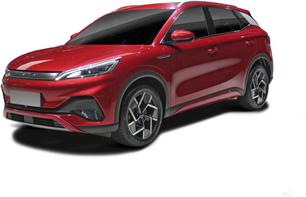
No car demonstrates this better than the BYD Atto 3, which is one of the most popular electric vehicles in Australia. But after an initial surge of buyers happy for a more affordable EV, BYD needs to find fresh ways to attract new customers.
So, for this updated 2024 Atto 3, BYD has made it cheaper and added some key new equipment, while retaining its previous strengths in terms of value and technology.
Hybrid campers tread the line between caravan comfort and camper trailer-manoeuvrability and are touted as somewhat of a new thing; almost an evolution of comfort as more people look for a perfect camping experience.
But camper-trailers like the Cub Longreach LE prove that the concept has been around for decades.
It hasn't always been called the Longreach, but this high-walled, super-sized, off-road camper-trailer was one of the first to offer caravan-like comfort and space in a product that'll go anywhere off-road*. (* In terms of reasonable use and having obviously scrutinised your camper's warranty conditions before setting off to make sure you're covered for that sort of usage.)
The 2019 LE takes the comfort levels even further, so we grabbed one for a night to check it out.
BYD hasn’t made dramatic changes to the Atto 3 for 2024, but has it done enough to lure in more buyers?
The additional equipment, namely the larger infotainment screen and new tyres, will certainly help make the Atto 3 more appealing. And the technology behind EVs is more understood by the average motorists, so the barriers to making the switch to electrification are dropping.
But the single biggest factor is likely to be the price. At a time when inflation (and other reasons) is driving the cost of new vehicles up, having your updated model go in the wrong direction will only help make potential buyers take notice.
Especially when you consider Toyota’s closest rival to the Atto 3, the bZ4X, starts at $66,000, while the Tesla Model Y is priced from $55,900, making both significantly more expensive propositions. Heck, the cheapest Toyota RAV4 hybrid model starts at $42,260, only marginally cheaper than the Atto 3 Standard Range.
So, if BYD can make its value argument strongly it will help lure more new buyers to take the plunge into the world of EVs.
This isn’t the camper for everyone – my guess is that plenty of people look at this and find it too sparse, too basic. I kinda get it.
But there are very few campers which offer the same amount of open, internal space, or that are as easy to set up.
That the Longreach, albeit with a few different names, has lasted so long on the Cub Campers' product roster is a testament to its versatility and ability to accommodate a small family on off-road camper trips.
It's arguably one of the forerunners of the hybrid camper scene, and it's now starting to evolve with campers' desires for more comfort.
The Atto 3 remains classified as a ‘Medium SUV’ but blurs the line between mid-size and small in terms of dimensions, especially inside. It’s not in the same size game as the Toyota RAV4 or Mitsubishi Outlander, but is close in size to the likes of the Honda ZR-V and Mazda CX-5.
While there’s a few key practical storage spaces, there aren’t as many as some newer rivals, which does suggest the Atto 3 design is starting to date or just wasn’t well thought-out enough in the first place; such as putting all the switchgear in the centre console rather than on the dashboard.
This was probably done, at least in part, to accommodate the rotating touchscreen, which seems like a poor design and practicality choice to me. Especially the new one, which at 15.8-inches when rotated to the portrait mode it starts to interfere with your vision and the layout is more user-friendly in landscape mode - both when using the native multimedia system or your smartphone connection.
Space is respectable in the back seats, and there’s both a USB-A and USB-C port for charging devices. While out the back the boot measures 440 litres, which is a respectable amount of space for an SUV this size, but there’s only a tyre repair kit instead of a spare wheel.
For a rear-fold camper-trailer, the space inside couldn't be more practical. The long body and high sides mean that when the camper is open and set up, it has a lot more space than most. Behind the bed, for instance, there is enough space for Cub to have fit a small dinette.
The dinette has cushioned benches for two and a swivel table that can also become a counter over the rear floor area.
The camper's length also means that the rear floor area is massive. It is easily big enough to lie a couple of kids on, or if your nest is empty, to set up some camp chairs and a table to enjoy a covered living area.
It is still a rear-fold camper-trailer, though so, despite the fact it has nearly twice the space of other hybrid-style campers, it's very sparsely furnished. There's no internal kitchenette or anything like that.
Driving the updated Atto 3 feels… fine. Nothing special or class-leading, but within the expectations buyers should look for in a mid-size SUV. Which is meant as a compliment to BYD, as it is still a relatively new brand in this very competitive market and there are certainly some noticeably worse rivals in this same segment.
The Atto 3 may not be the most comfortable, most powerful or most dynamic mid-size SUV, but it’s a perfectly nice thing to drive and it will get you from Point A to Point B quietly and smoothly.
Another of the major changes for 2024 is BYD’s decision to ditch the fantastically named, but not very good Atlas Batman tyres, replacing them with Continental rubber. The Atlas tyres were a major drawback on the old model, lacking grip and detracting from the driving experience, with the new ‘Contis’ solving those problems.
Cub Campers are famously good to tow, and even the largest of them lives up to the reputation.
As big as it is, the Longreach LE is quite light thanks to the effort Cub puts into engineering. As a result, it's not a strain, even for older dual-cabs like the D22 Navara.
And because it isn't any higher or wider than a modern SUV, there was very little wind-drag or buffeting as we cruised along the highway.
Cub developed the camper's Australian-made and -designed independent, coil-spring suspension and the set-up yields excellent ride in any conditions.
For the LE, Cub has added an extra shock-absorber each side to improve its performance even on the most corrugated roads.
An AL-KO off-road ball hitch is standard but can be upgraded to the Click-Lock version if you'd prefer that or need a more low-profile hitch.
In reverse, the long drawbar makes it an easy camper to manoeuvre around a campsite, plus it has enough size that the tow-vehicle driver never really loses sight of it while positioning it.