What's the difference?
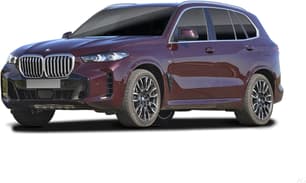
The BMW X5 is a leading contender in the ‘Over $70K Large SUV’ division of Australia’s new car market, which is a hotly-contested segment boasting 15 marques and 25 models.
The X5 has hit an enduring sweet spot with Aussie buyers in terms of size, performance and price. BMW prefers to call it a Sports Activity Vehicle (SAV) as distinct from its Sports Utility Vehicle (SUV) rivals.
Clearly, any word association with a utility is something BMW Group Australia wants to avoid after recently launching its latest X5 range, which brings numerous enhancements including design revisions, increased standard equipment, refreshed powertrains and more.
We were entrusted with the digital ‘Comfort Access’ key to one of the latest X5s, to understand from a family car perspective why this model range enjoys such enduring popularity with prestige SUV (sorry, SAV) buyers.
Cub Campers is Australia’s oldest camper-trailer manufacturer and one of the oldest businesses in the caravan and camping industry, having just celebrated 50 years of operation in 2018.
The company can lay claim to inventing the soft-floor camper trailer, pioneering the rear-fold and championing off-road campers when everyone else was concerned with the on-road market. Amongst all that, though, it was late to the game when it comes to forward-fold campers, not releasing the Frontier until early in 2016, well after the flood of Chinese manufactured versions became immensely popular. So why did Cub wait so long and was it worth it?
This is a luxurious prestige five-seater brimming with BMW’s latest design and technology that’s not only practical for weekly family duties but can also embrace spirited driving with the push of a button. A great all-rounder for families that like a sporty edge.
All in all, the Frontier is the best forward-fold camper on the market, although it is also the most expensive. If you were making a buying decision purely based on features, you’d probably look elsewhere, but if you are prepared to pay a little more because this camper-trailer is Australian made, you get a very functional camper that’s easy to set up, reliable, strong and light.
With its 2165kg kerb weight and maximum allowable weight of 2885kg, our test vehicle can legally carry up to 720kg.
That should be ample for five adults (even better for kids) and their luggage, of which up to 100kg can be carried on the roof rails using a rack or roof box (both in BMW's accessory range).
Powered upper and lower tailgates provide good access to the luggage area, which is carpeted and equipped with a roll-out privacy screen, load securing hooks, a 12-volt accessory outlet and a first-aid kit stored behind a removable side panel.
The space-saver spare and tools are stored below the hinged load floor, so all luggage must be removed to access them.
Internal luggage space with the rear seat upright is 650 litres (0.65 cubic metres) which expands to 1870 litres (1.87 cubic metres) with the rear seat folded flat.
A useful load-carrying feature when the rear seat’s backrest is upright is a hinged centre section that folds forward and flat to carry long and narrow items.
These can stretch all the way from the tailgate to the dash if need be, which could be handy for carting anything from skis to home hardware purchases (firmly secured, of course).
It’s also rated to tow up to an impressive 3500kg of braked trailer, which matches the class benchmark for one-tonne utes.
However, given that tow-ball download (TBD) is usually around 10 per cent of trailer weight, the X5’s maximum TBD rating of only 140kg could be a challenge if 3500kg towing is required.
Front of cabin storage includes a big bottle-holder and bin in each front door, a glove box and on the right-hand side of the dash a pull-out driver’s bin, both of which are felt-lined.
The centre console, in addition to its wireless phone-charging pad, USB-A port and 12-volt outlet, has two small-bottle/cupholders up front and a large box at the rear, housing a USB-C port and topped by a padded dual 'brochure fold' lid that double as an elbow-rest for driver and front passenger.
Rear seat storage includes a large-bottle holder and bin in each door and pockets on each front seat backrest. The rear of the centre console has two storage nooks for small items in addition to its air-vents, two USB-C ports and a 12-volt outlet. There’s also a handy tablet-mount and USB-C port on each front seat backrest, which is great for long trips.
Folding down the rear seat’s centre armrest reveals two pop-out small-bottle/cupholders. And under its hinged lid is a hidden felt-lined compartment that’s ideal for storing slim screened devices away from prying eyes.
The real appeal of a forward-fold camper-trailer is the internal configuration. Because the bed folds out over the front of the camper, the trailer body is configured with a wrap-around lounge and dinette area, that also converts into a bed. It brings a certain level of caravan comfort to a camper-trailer-sized package. Cub’s execution is quite good. The lounge is comfortable and the dinette table is highly adjustable up and down or around and around. It converts into a bed more simply than any other on the market I’ve seen.
The downside of the forward-fold concept is the quantity and access of storage. Very little of the internal storage is easy to get to, and in truth there’s very little of it. That’s what happens when you put a couch in a trailer, sorry. There are hatches under the seats, but even they are limited by the slide-out kitchen and battery box across the back, plus, they’re not as easy to get to as a drawer. It’s the same in every manufacturers version, though. However, the Frontier has one unique features that makes it stand out – a series of pigeon holes under the foot of the bed which provide the only easy-to-access internal storage in any forward-fold I’ve come across so far.
It’s supremely comfortable, with front bucket seats that offer powered-adjustment of height, reach and backrest angle along with side bolsters that can tighten their grip of your upper torso.
There’s also two-way lumbar support, that adjusts not only how far it pushes your spine forward but also allows that pressure point to be raised or lowered.
Combined with its power-adjustable leather-rimmed steering wheel, it would be hard not to find a comfortable driving position.
Eyelines to all mirrors are good and over-shoulder blind-spots are minimal. Front and rear occupants can talk without raised voices thanks to low engine, wind and tyre noise at highway speeds.
As you’d expect, it has high build quality and a tangibly solid feel as though it was machined from a single block of steel, from the satisfying thuds of its closing doors to the absence of shudders or rattles on a variety of roads.
It also has two personalities, which can be switched in an instant. In 'Comfort' mode it will happily cruise around city and suburbs as a mild-mannered family car, fulfilling daily duties like work commutes, school drop-offs and pick-ups, supermarket shopping and the like.
However, flick the drive mode to 'Sport Plus' and you awaken, well, if not ‘the ultimate driving machine’ then something close.
Its optimised drivetrain and handling settings feel more like a sports sedan than a family car, which can turn any winding mountain road into an engaging experience.
It has impressive reserves of cornering grip and braking force, combined with sparkling engine response and fast sequential manual-shifting at your fingertips.
It feels impressively agile, with all-round response that belies its 2.0-tonne-plus kerb weight, backed by a symphony of sounds from its sublime in-line six.
The Frontier is quite good under tow. Cub designed and manufactures its own coil-spring independent suspension and has paid quite close attention to the balance and dynamics of the trailer.
As it’s not overly heavy, it’s not a handful, even on the beach, and behind the Mitsubishi Triton I tested it with, it was barely a struggle. On the road, the camper is well behaved, easy to see over and around and because it’s not very long, it’s not very daunting.