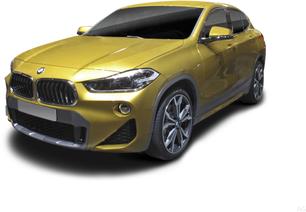
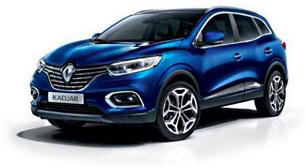
What's the difference?
BMW’s original X2 crossover from 2018 was not a massive sales success in Australia. The related X1, however, was and continues to be a very popular pick in the ultra competitive premium small SUV class.
BMW has flipped the script for the second-generation X2, giving it a dramatic makeover that ushers in a bold design that’s now in keeping with its SUV strategy. That is to offer a ‘conventional’ SUV - X1, X3 and X5 - and then a coupe-style sibling - the X2, X4 and X6 - to sit alongside it.
Beyond the new look there are significant changes throughout the car, including the introduction of an all electric version - the iX2.
We drove the two flagship grades at the international launch in Lisbon, Portugal - the petrol-powered M35i xDrive, and the iX2 xDrive30. They might look the same, but they maintain their own distinct characters. Let’s dive in…
Don’t let people talk you into buying a tiny car just because you live in the city. That’s what I’ve learnt from being a car reviewer and living about eight kilometres from the CBD.
Yes, car spaces are small, or almost non existent, but the people that live there are as full-sized as people elsewhere and they often carry around just as much gear. What you need is a big, little car and the Renault Kadjar is that – a small SUV which is actually bigger than most.
The Kadjar is also French, and that’s appealing to us city folk because even though there are millions of us living in one square metre we like to think of ourselves as different, as individuals, cosmopolitan, metropolitan.
So the Kadjar looks perfect then, right?
Well, it’s good yes… in some ways, but after reading this you might prefer its Japanese cousin, the Nissan Qashqai. Let me explain...
There is little doubt the new X2 represents a vast improvement over the original model. The design alone gives it a lot more presence.
More interior and boot space also helps widen the SUV’s appeal and the significant tech updates are welcome.
It is on the pricey side and there are a few too many options that should be standard.
However, the M35i is hard to ignore as a sporty premium crossover, and the iX2 xDrive30 is the sort of electric SUV that should worry Volvo.
They both have their own distinct flavours, so there’s no dud in this line-up. Of course, we will hold final thoughts for the local launch when we can drive all four grades. But until then, it’s a welcome return to form for the X2.
The Renault Kadjar Intens ticks a lot of the urban boxes. It’s small, which is good for navigating narrow city streets and parking in tight spaces, but it’s also spacious and practical. The Kadjar is fuel efficient for a four-cylinder petrol engine and it has that sophisticated French styling.
The Intens is expensive, though, and unless you absolutely have to have leather seats, a glass roof, and the Bose stereo I’d go for the mid-range Zen grade and save yourself $5K but still have all the same safety tech. That said the Intens has auto parking as standard which is a nice convenience for the city.
Safety could be better. The AEB system doesn’t have pedestrian and cyclist detection, rear cross traffic alert, or reverse emergency braking.
Finally, the dual-clutch automatic and 1.3-litre turbo-petrol engine while a fuel efficient combination, isn’t all that easy to live with and can make driving a less-than-smooth experience. The Nissan Qashqai’s combination of CVT auto and four-cylinder naturally aspirated engine is better suited to the urban jungle - something to think about there.
Now the scores, the Kadjar Intens gets the same mark for daily driving and its urban talents – it could be smoother to drive, but there’s still lots to like.