What's the difference?
Balancing luxury car comfort, hot hatch agility and supercar speed is no easy task, yet that is what made the six previous generations of BMW's M5 so iconic.
In seventh-generation ‘G90’ guise, the M5 has another skeleton in the cupboard: the toughest emissions regulations that Europe, and now Australia, have ever seen.
A twin-turbo V8 was untenable and going battery electric was not an option. Plug-in hybrid was the only answer. For the new M5, BMW combined a revised 4.4-litre ‘S68’ bent eight with a punchy electric motor for 535kW and 1000Nm.
Problem is, the G90 is widely acknowledged as one of the greatest BMW M cars of all time, especially in CS trim. And thanks to a circa-600kg weight hike to nearly 2500kg, the new M5's 0-100km/h claim is actually slower than the old 'F90' M5.
Doesn’t exactly sound like a big leap forward, does it?
A drive through the Central West of NSW and around the iconic Mount Panorama racing circuit gave us answers to two questions. Does the M5 work on Australia roads, and does BMW M's latest super-sedan represent progress?
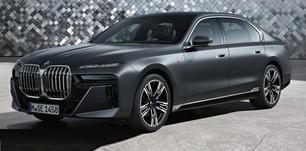
The BMW 7 Series is Munich’s flagship, the car that fans of the blue and white roundel respect as peak plush motoring.
Now, for the seventh 7 Series, BMW has brought electric power to the table in the form of the i7 in order to stay ahead of the curve.
It’s still joined by a petrol-powered variant here in Australia, the 740i, which is a mild hybrid and shares a lot of the luxury specifications of the i7 - including a properly impressive rear seat theatre screen.
But is it forward-thinking enough to fend off the likes of the Mercedes EQS?
Let’s get one thing out of the way: the new M5 is a very good car. Considering the emissions limitations and size increase of its base model, it is an impressive bit of engineering.
What’s trickier is deciding whether the new car is really better to drive. Less edgy but supremely comfortable and quiet; BMW leaned into the daily usability of the plug-in hybrid M5 rather than amping the petrol-electric system for maximum thrills. And do you know what? That’s fine with me.
The new M5 still performs on road and track and does an incredible job of hiding its weight (most of the time). Perhaps the G90 is a little more Audi RS6 than F90 in its demeanour but some would argue that’s no bad thing.
The concept of the BMW M5 is not static, it evolves with the times, and the G90 is no exception. Expect future Competition and CS variants to unlock some extra lunacy.
Note: CarsGuide attended this event as a guest of the manufacturer, with meals provided.
While the new 7 Series won’t visually appeal to everyone, nor is it at the forefront of spirited driving dynamics, it’s hard to argue that it isn’t fit for purpose.
Its rear theatre screen and lounge layout might seem gimmicky at first, but it’s difficult to think of a more comfortable way to be transported on wheels short of putting a chassis under your loungeroom. Even then, you’d have to ask someone for a massage.
This is one of those cases where a car becoming larger isn’t such a bad thing, and BMW should feel like it’s achieved, seemingly, what it set out to do in building an electric limousine that doesn’t fall short in range or dynamics.
If BMW can bring this level of refinement down to its more affordable models, its electric future is looking promising.
Note: CarsGuide attended this event as a guest of the manufacturer, with meals provided.