What's the difference?
You know when you're walking along the footpath and you come to a soft spongey bit that the council have put in around a tree and your mind goes: "Whoah, the ground is bouncy but it looks just like bitumen?!"
Well that's the kind of response you'll get from people when they think they're looking at a regular BMW 7 Series, only to have their world go a bit bouncy when they see the Alpina B7 badge on the back of this car as you're overtaking them at Warp Factor 9000.
And you will be overtaking them like a blur because, thanks to the elves at German tuning house Alpina, the B7 is hugely fast for a five-seat, 5.3m-long, 2.2 tonne limo. But then the B7 is fast for any type of car of any dimensions, because with its 330km/h top speed this beast will outrun a McLaren 570GT. Yes, seriously.
Based on the BMW 750Li long wheelbase, the B7 begins life rolling down the same production line as a regular 7 Series. Alpina then goes on to make so many changes to the engine and chassis that the German government requires the BMW VIN to be replaced with a new one.
Ready to find out more? Well there's so much to see here that things may go a bit weird and bouncy again. Be prepared.
To say the BMW M4 CS is a hot ticket in Australia is something of an understatement.
Consider this. There is an even more expensive one, the M4 CS Edition VR46 – at a cool $346,900 – and it sold out in less than an hour. Now, granted, Australia only got four examples, but still, demand was running hot.
That car makes this one, the regular M4 CS, seem like an absolute steal. It's only $254,900 (yes, the word 'only' is doing a lot of heavy lifting in that sentence), and it shares the same upgrades, and makes the same monstrous power, as the VR46 – for Valentino Rossi’s 46th birthday – only it does it for around $100K less.
See? A bargain. At least, that's how I'd be justifying it to myself if I had a quarter of a million burning a hole in my pocket.
So, this or a Porsche 911? Read on.
The BMW Alpina B7 is a special car destined (like all Alpinas) to be a collector's item, due to its rarity and exclusivity. I asked Alpina just how many current model B7s there are in Australia and the answer was "less than five", which is just as mysterious as most people find the car in general.
The B7 is fast – too fast to enjoy legally on Australian roads – but it is also supremely comfortable and well appointed. For Alpina fans lucky enough to be driven in on,e this would make for a truly rare and niche way to be chauffeured.
Brutal, bruising and utterly brilliant, the M4 CS will be an acquired taste due to its no-compromise approach, but those willing to take the leap will find a performance car like few others at their disposal.
This is a good place to start because the B7 looks just like the 750Li it's based on, until you see the first tell-tale signs that it's not one.
There's the front wing with Alpina lettering and the boot-top spoiler, the graphics, which run the length of the car, and the 20-spoke wheels with Alpina badging.
This is late '70s, early '80s styling at its best (and possibly worst), but these special cars can pull off the irony-free look because this is how Alpina BMWs have rolled since 1975, when the E21 320-based Alpina A1/3 was launched.
BMW badges have been left on the bonnet and boot, but there's Alpina B7 BiTurbo lettering in place of the 7 Series identifier.
Most people walked by it in the street thinking it was just a big BMW, others scratched their heads wondering what I'd done to my big German limo and a handful almost dropped to their knees in praise and wonderment at spotting a rare beast like this in the wild.
These people all had their own Alpina stories – one was the third generation of an Alpina-owning family. You become a member a small and passionate club when you buy into this rarefied brand.
The standard B7's cabin is close to identical to the luxurious interior of the 750Li, save for Alpina-embossed stitching in the headrests of the soft, leather seats, the virtual instrument cluster and the Alpina plaque on the centre console denoting the build number.
The B7 is long, low and wide at just under 5.3m end to end, 1.5m tall and 1.9m across. A 3.2m wheelbase means cabin room is more than just spacious.
The B7 rolls off the Dingolfing production line in Germany and is then handed over to Alpina's facility in Buckle, where significant changes take place. Read on to find out how the B7 is different from a regular 750Li.
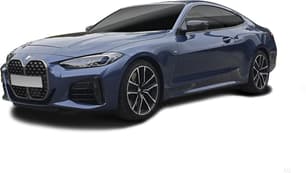
The M4 CS is familiar in all the right ways, but definitely looks significantly jacked up compared to its lesser siblings.
Part of that is the extensive use of carbon everywhere, from its bonnet panels to its roof, front lip, side skirting and boot spoiler. But also because of its super-muscular angles and creases, including the huge dome in its bonnet.
Also exclusive to this M4 CS is the light treatment, with the front LEDs lighting up with yellow highlights the brand says are supposed to be reminiscent of GT racing cars.
At the back, the rear lights are flush with fibre optic lighting, lending a flowing and unique light signature that looks epic at night.
Inside, it's a sea of carbon, with the lightweight racing seats, the dash inserts and the centre console all lined in it. It is a perfectly finished space, though, and one that's also flecked with red, including a 12 o'clock band on the thick-rimmed steering wheel, the seat backs, the contrast stitching and the paddle shifts.
Be warned, though, it takes some acrobatics to climb into or out of the CS. The seat bottoms have these super high edges that double as grab handles, but require some awkward contortions to navigate.
In short, it looks angry, this M4 CS, inside and out.
The B7 is a five-seater limousine although with the fold-down rear centre armrest which houses the media control panel the back is really set up to carry two.
That 3.2m wheelbase means cabin space is enormous. At 191cm tall I can sit behind my driving position with about 30cm between my knees and the seatback. Those rear doors open wide and the entrance is huge, making entry and exit almost as easy as just walking through a doorway. The air suspension also rises and lowers the B7's ride height for better access.
Storage is excellent, with two cupholders and door pockets for rear passengers, along with the area inside the centre armrest.
Up front, the driver and co-pilot have a deep centre console storage bin with split-opening lid, two cupholders and door pockets.
Luggage space is good, with a 515-litre boot.
It all boils down to how you classify practicality in a car like this. I mean, the basic stuff is all there – it's got two doors, four seats and a boot capacity of 440 litres.
It measures 4801mm in length, 1918mm in width and 1399mm in height, and room for front seat riders is good, but less so for anyone you squeeze into the back. There are even ISOFIX points for a child seat.
But if you consider practicality the practical pursuit of performance, then the M4 CS has plenty of perks.
The B7 lists for $389,955, while a 750li is about $319,000. At this level, $70K seems like a downright reasonable premium to pay for a faster, more powerful, better handling and comfier version of the 750Li.
In this case you're paying more but getting more, although standard features are close to identical. There's adaptive LED headlights, head-up display, night vision with pedestrian detection, a 10.25-inch touch screen up front and two screens in the second row for TV and other media functions.
There's a reversing camera, sat nav, harman/kardon surround stereo and Apple CarPlay. There's leather upholstery, seat massagers in the front and rear, four-zone climate control, heated and ventilated front and rear seats, front and rear parking sensors, auto tailgate, sunblinds for the rear and rear-side windows and proximity key.
The safety features are listed in the section below, and that list is also impressive.
Rivals to the B7 include the Mercedes-AMG S63, which lists for $375,000, the $331,700 Audi S8 and even the Bentley Flying Spur, which almost matches its price at $389,500.
We're talking a $254,900 entry price for the M4 CS, which – despite my attempts at justification – is a lot. Remember, the regular M4 is $168,700, and the M4 Competition is $186,500, so we're talking a sizeable premium here.
BMW justifies that price increase in two ways. The first is scarcity, with the M4 CS limited to just 50 examples in Australia. And the second is by dialling up every aspect of the M4's performance to terrifying levels.
The engine outputs are up, the weight is 20kg down, there are better brakes, better seats, a louder exhaust, a stiffer chassis – it goes on and on.
We'll get to some of the performance stuff in a moment, but here's what else your money buys you with the M4 CS.
It starts outside with staggered alloys, 19-inch up front and 20-inch at the rear, wrapped in track-ready rubber. There's also hi-po 'M Compound' brakes with red calipers, lightweight carbon racing seats that are heated up front, an Alcantara-trimmed steering wheel, the 'M Carbon' exterior package with carbon bonnet and roof, adaptive 'M Suspension' and a titanium exhaust that howls like the winds of hell.
The less performance-focused stuff is similar enough to the other M4 models including a 12.3-inch centre screen with digital radio, Apple CarPlay and Android Auto, a second 14.9-inch screen that handles your driving data and a head-up display. There's also twin-zone climate control, Merino leather upholstery and ambient interior lighting.
But all of that is secondary, really. This is about performance, specifically of the brutal kind.
Alpina takes the 4.4-litre twin turbo V8 from the BMW 750Li and rebuilds the engine by hand. Alpina fits its own turbochargers, air-intake set -up, high-capacity cooling system and Akrapovic quad exhaust. Output is 447kW and 800Nm – an increase of a whopping 117kW and 150Nm over the 750Li's grunt.
It's interesting to note that the V12-powered 760Li has a smidge more power, at 448kW, and the same torque output as the B7.
How fast is the B7? Supercar fast – the B7 has a top speed of 330km/h, which will see it outrun a McLaren 570 and almost keep up with a Ferrari F12. That's quite incredible for a 2.3-tonne limousine with three TVs on board. A 0-100km/h time of 4.2 seconds is also hugely impressive.
In comparison, a 750Li has a 0-100km/h time of a not-too-shabby 4.7 seconds, but the car is electronically limited to 250km/h.
An eight-speed automatic transmission shifts gears smoothly, although a little slowly in Normal mode, while Sport and Sport+ add urgency and harder shifts.
Finally, the B7 is all-wheel drive, and those rear wheels are designed to steer slightly for better cornering performance.
BMW has found yet more grunt lurking in its trusty 3.0-litre 'M TwinPower' six-cylinder petrol engine, with the M4 CS now pumping out 405kW and 650Nm.
That's a decent jump from the 390kW and 620Nm served up by the M4 Competition, and a giant leap from the outputs of the 'base' M4 – 353kW and 550Nm.
Predictably, then, the CS is the fastest of the lot, knocking off the run from 0-100km/h in 3.4 seconds, compared to 3.5 and 4.2 in the Competition and M4, respectively. The top speed is also dialled up to 302km/h.
All that power is channeled through an eight-speed automatic and sent to all four wheels on demand, with the help of an 'Active M Differential'.
The B7 is probably not the car to own if you're concerned about either fuel prices or emissions, but then the twin-turbo V8 may not be as thirsty as you'd think, with Alpina stating that, after a combination of urban and open-road driving, you should only use 9.6L/100km.
My time in the B7 saw me double that usage but this could have had something to do with me turning off the stop-start system and driving in Sport mode constantly.
The M4 CS is fitted with a 59-litre fuel tank, which – given the BMW's official fuel claim of 10.2 litres per hundred kilometres – should deliver a driving range on a full tank of 541 kilometres.
But... BMW also says the regular M4 – you know, the one that makes 52 fewer kilowatts and 55Nm less torque – uses 10.1L/100km, so do with that information what you will.
Who on Earth thinks a BMW 750Li isn't fast enough or comfortable enough, even with all its horsepower, luxurious cabin and technology? Alpina, that's who.
Redevelopment of the 4.4-litre V8 with new turbochargers, a high-capacity cooling system, different air suspension set-up and an exhaust system made by Akrapovic have made this already exceptional car better. Better to drive and better to be driven in.
The ride, even on those 21-inch wheels and low-profile Michelin Pilot Super Sport tyres (255/35 ZR21 on the front and 295/30 ZR 21 on the rear) is incredibly comfortable. I drove it and also had a chance to recline in the back and be chauffeured (by our photographer) and the ride was so composed and refined it was hard to believe I was travelling along some truly awful urban roads with their cracked and pot-holed surfaces.
And it's quiet, too. Which will suit those in the back being transported swiftly from the airport to their next meeting, but if you're after a loud and angry exhaust note then you won't find it in the B7. Sure, from the outside at full throttle the B7 has a menacing growl, but this isn't a BMW M car that will bark and snarl.
See, while BMW's M division makes brutal, loud, high-performance versions of their regular cars, Alpina makes comfortable, stealthy, high-performance ones.
All-wheel drive provides fantastic traction and ensures that grunt doesn't just tear the tyres off those rims when you sneeze on the throttle.
And while the air-suspension is soft and comfortable, adaptive dampers adjust for when the road goes twisty, providing impressive handling for a heavy and long car.
Really, though, the B7 is built for long, endless stretches of roads, and the acceleration beyond 100km/h is almost as startling as that from 0-100km/h, as it wants to push straight past 200km/h towards that 330km/h top speed.
Which, unless you know a good lawyer or happen to be one, will send you straight to jail. Yes, the B7 is probably too much car for Australian roads. Only on a German autobahn would a B7 be fully at home.
I felt like I was given a Melbourne Cup-winning racehorse for a week but could only ride it in my suburban backyard.
The hardest and angriest M4 of all time is, perhaps unsurprisingly, hard and angry. This is a race track specialist, but because I don't happen to own one of those, my first experience with the barking (and barking mad) M4 CS was navigating my way back from BMW's inner-city dealership.
Like it or lump it, you're going to read some Porsche comparisons here, because you're talking not too far off base 911 Carrera money, and suddenly I find the two Germans doing battle for a spot in my dream garage.
First things first, the BMW won't be much chop for daily driving for most people. Happily, I have a sickness for uncomfortable sports cars. It tells me that no compromises have been made in the pursuit of punishing performance.
A good thing, too, because the BMW, at city speeds, can be punishing. Everything feels heavy, the seats aren't overly comfortable – especially the hard bits that tend to dig in when cornering – and it stiff-arms its way over road imperfections, that exhaust booming and barking as it does.
Again, I loved it, and you probably will, too. But it's still not the kind of car I'd relish sitting in the morning peak hour rush in.
But escape the confines of the city and the BMW M4 CS suddenly makes a whole heap of sense. The acceleration is genuinely brutal, and wonderfully theatrical, with that quad-tipped titanium exhaust barking and snarling as you rocket towards 100km/h.
The steering is brilliant, with feedback fed to your wrists via that thick-rimmed wheel, and the entire experience feels sharp, super engaging and edgy.
You can push the M4 hard and fast, and I'm certain my limited talents would run out far before the BMW's would, but there's this thrilling sense of peril sparked by the aggression of the experience, that I love.
It's like the magic of a roller-coaster, I guess. Even if you know nothing is going to happen, you never really know, right? And in that lies the magic.
But back to original question, this or a Porsche 911? There's no doubt a Carrera is a better all-rounder, in terms of comfy commuting and race track fun, but this angry M4 is all shouty theatrics, all of the time.
I bloody love it.
The Alpina B7 comes with all of the BMW 750Li's safety equipment – this includes AEB, lane-keeping assistance and lane-departure warning, blind-spot warning, active cruise control, night vision with object recognition, auto parking and surround view camera.
Along with the suite of airbags, there's traction and stability control and ABS, as you'd expect.
The 750Li and B7 have not been given an ANCAP score.
Expect no ANCAP rating here, I'm afraid. But the BMW 4 Series does wear a five-star rating from 2019.
The M4 CS gets six airbags (driver and passenger, side airbags, head airbags), along with what BMW calls its 'Driving Assistant Professional', which bundles active cruise control (with stop and go function), front and rear cross-traffic warning, 'Steering & Lane Control' and 'Lane Keeping with Side Collision Warning'.
The B7 is covered by BMW's three-year, unlimited-kilometre warranty. Servicing is recommended every 12 months or 15,000km. The B7 is covered by BMW special vehicles servicing plan, which means services are cost-free for the first three years of the car's life.