What's the difference?
Hybrid campers are no longer a new development in caravanning and camping. We've been seeing trailers like them, in some form or another, for nearly two decades.
The concept is straightforward: hybrid campers offer some of the best comforts of a caravan (solid walls, proper beds, little to no set-up time) with the best aspects of camper trailers (light, small, rugged and able to be towed nearly anywhere).
Although Blue Tongue Campers has been a leader in the traditional camper-trailer market for more than a decade, its first hybrid has been a long time coming. First chance we got, we hooked it up and headed out to Wee Jasper to see what it's about.
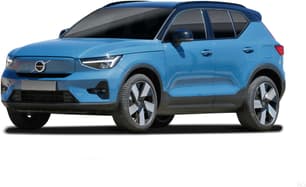
The XC40 Recharge Twin Motor is the flagship model for the segment leading small electric SUV from Volvo.
Well positioned in terms of price, specifications and driving range, it continues to prove itself a fierce rival to the Mercedes-Benz EQA, Lexus UX and newcomer BMW iX1.
But does it bring its A-game to every attribute buyers in the small electric SUV segment demand? In this review, we put it to test to find out.
Given that Blue Tongue is a relative latecomer to the hybrid caravan market, it’s done its homework.
For $50,000, the HX15 is a great value, highly capable off-road camper with a comprehensive list of features to keep it self-contained and self-sufficient when you're camping.
That it includes an island bed, 2000-watt inverter, grey-water tank and enough battery capacity to free camp almost endlessly, is a testament to all that.
The Volvo XC40 Recharge Twin Motor is a cute small electric SUV that offers a decent specs list and a sweet urban driving experience. It’s not the nicest ride on a longer journey but it does have a decent range to be able to tackle one, if needed. I didn’t love the interior design but there’s lots the XC40 gets right.
A lot of these hybrid campers are little more than expensive metal boxes with a large bed inside, although the Blue Tongue is a little more than that.
It has a fold-out extension from the driver's side of the camper, which contains the queen-sized bed. By expanding sideways, rather than rearwards, Blue Tongue's managed to create access around the bed from three sides. The upside is, no one ever has to climb over the other, or shuffle along it, to get in. It's a feature almost unique in the genre.
Considering the XH15 also fits a small shower and toilet cubicle, cosy dinette, a small sink, bunk bed and heaps of storage, it's quite a practical little space that doesn't feel as cramped as it sounds.
The dinette lounge is good for the occasional meal away from the bugs, while the bunk above it folds up to improve access. And even if you're not travelling with a child, it makes a great shelf.
The en-suite, if we can call it that, is naturally compact. With its own toilet and shower plumbed into the grey-water tank, this is a fully self-contained camper, which is becoming increasingly more important at many free and remote bush camps.
Front passengers enjoy the most space and I have plenty of head- and legroom up front. It’s a really easy car to get in and out of and the individual storage is very good for the class.
Front passengers enjoy a glove box, middle console with a removeable bin, two cupholders, utility tray and skinny drink bottle holders in the storage bins in the doors.
In the rear, passengers get map pockets on the backs of the front seats, two cupholders in the fold-down armrest and small storage bins in each door.
The synthetic leather-trimmed seats look neat and tidy but are very hard in the cushion, which makes them a tad uncomfortable on longer trips. The rear seats are much the same.
Charging options throughout the car are good with the front enjoying a 12-volt port, two USB-C sockets and a wireless charging pad to choose from. The rear also gets two USB-C ports and there's another 12-volt outlet in the boot.
The rest of the technology is easy to use once you spend some time with it. The 9.0-inch touchscreen multimedia system features built-in Google Maps, Assistant and Play Store apps, as well as, YouTube.
The 12.0-inch digital instrument panel isn’t customisable but I like the way it pulls through the satellite navigation screen and directions.
Because of the dual-motor powertrain, your boot capacity drops to 419L from 452L for the single-motor variant. It is large enough for my grocery shop and random errands and you can fold the floor up to create a deep storage well for additional space. Fold the 60/40 split-folding rear seat and available space expands to 1295 litres.
I don’t like the hardened cargo liner, it feels and looks a little cheap, but I do like the powered tailgate. There’s also handy frunk storage of 31L, which is perfectly sized for any charging cables you will have.
The 15-foot off-roader is well balanced behind our tow car. At tare, there's 150kg on the ball, which gives it room to move up once a load is added. We carried a load of camping gear, nearly 200 litres of water and the fridge, all of which helps add stability to the combination.
Towing the XH15 along the highway, it tracked beautifully and even with soft, off-road suspension it didn't wobble around. Onto the narrower, winding roads into Wee Jasper, it was compliant and followed without incident.
When the drive became a bit challenging, such as when we had to navigate steep, loose tracks into our campsite, the camper's high-clearance, angled cutaways and off-road hitch made sure none of its underbody scraped or bumped on the ground.
It rides on coil-spring, independent suspension with dual-shock absorbers each side and this is a robust, well-proven system, which is really great when roads become a little rougher.
Like the Polestar 2 there’s no ignition button on the XC40. You shift into drive to ‘turn on’ and after you park, you simply get out to turn it off. It takes a little while to get used to but it’s a cool feature.
The twin motors deliver a hefty kick and you never worry about not having ‘enough power’. In the city it’s zippy but on the open-road you also feel comfortable getting up to speed or overtaking because the power distribution is so well-balanced because it’s an AWD.
I customised my steering wheel ‘feel’ to firm and it makes the handling crisp and direct. You feel like you’re in total control whenever you have to tackle be it tight streets or small car parks.
The blind-spot visibility is compromised by how wide the B and C-pillars are and I find that I'm relying a lot more on the blind-spot monitoring system to compensate.
The XC40 loses a few points for me in terms of ride comfort. As mentioned, the seats aren't terribly comfortable but the suspension is hard enough that you notice every bump, as well.
Road noise is also quite pronounced and it doesn’t sound refined when you drive at higher speeds, which is a shame. The flip-side, though, is that you don’t notice those things as much on short, urban trips.
The standard regen braking isn’t customisable and you don’t notice it until you switch over to a 'one-pedal' function. I found this function uncomfortable to use as it’s very aggressive and creates a jerky driving experience.
Because of its 4440mm length and tiny 11m turning circle, you won’t struggle in a car park! The 360-degree view camera system and front and rear parking sensors make it easy to navigate a tight spot.
This is a joy to park. It’s so easy.