What's the difference?
Hybrid campers are no longer a new development in caravanning and camping. We've been seeing trailers like them, in some form or another, for nearly two decades.
The concept is straightforward: hybrid campers offer some of the best comforts of a caravan (solid walls, proper beds, little to no set-up time) with the best aspects of camper trailers (light, small, rugged and able to be towed nearly anywhere).
Although Blue Tongue Campers has been a leader in the traditional camper-trailer market for more than a decade, its first hybrid has been a long time coming. First chance we got, we hooked it up and headed out to Wee Jasper to see what it's about.
Most cars get secretly cheapened as they travel through their model lifecycles.
Yes, while facelifts often usher in headline advances like updated electronics and more equipment to boost attention, in too many cases, engineers are forced to cut costs, especially where they cannot be very easily detected, such as with removed sound-deadening, inferior carpet quality and deleted minor items, like bonnet struts. Hello, latest Ford Ranger!
Every cent saved is extra profit made.
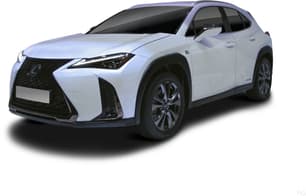
Now, we cannot tell at what level – if any – the penny-pinchers pilfered the Lexus UX for its Series II update last year, but the completely unexpected result is a small SUV/crossover that feels and drives noticeably better than before.
Keep reading to find out how and why.
Given that Blue Tongue is a relative latecomer to the hybrid caravan market, it’s done its homework.
For $50,000, the HX15 is a great value, highly capable off-road camper with a comprehensive list of features to keep it self-contained and self-sufficient when you're camping.
That it includes an island bed, 2000-watt inverter, grey-water tank and enough battery capacity to free camp almost endlessly, is a testament to all that.
Most cars get worse as they age as their makers try and save pennies by scrimping on quality and features. But the reverse seems to be true for the Lexus UX.
The 250h Luxury 2WD we tested is the car that the brand should have launched with back in 2018, with an appealing balance of performance and economy, comfort and sporty handling, as well as refinement and features. The UX has finally come of age.
A lot of these hybrid campers are little more than expensive metal boxes with a large bed inside, although the Blue Tongue is a little more than that.
It has a fold-out extension from the driver's side of the camper, which contains the queen-sized bed. By expanding sideways, rather than rearwards, Blue Tongue's managed to create access around the bed from three sides. The upside is, no one ever has to climb over the other, or shuffle along it, to get in. It's a feature almost unique in the genre.
Considering the XH15 also fits a small shower and toilet cubicle, cosy dinette, a small sink, bunk bed and heaps of storage, it's quite a practical little space that doesn't feel as cramped as it sounds.
The dinette lounge is good for the occasional meal away from the bugs, while the bunk above it folds up to improve access. And even if you're not travelling with a child, it makes a great shelf.
The en-suite, if we can call it that, is naturally compact. With its own toilet and shower plumbed into the grey-water tank, this is a fully self-contained camper, which is becoming increasingly more important at many free and remote bush camps.
The UX’s compact crossover-esque hatchback proportions have implications inside. Inevitably, this is no larger than the (related) Toyota Corolla, despite having the higher seating position.
Beyond that, though, the 2023 model highlights how Lexus has made its so-called ‘gateway’ model better than before.
For starters, despite being the base grade, this UX has a properly premium ambience, backed up by exceptional fit and finish.
From a sensory perspective, the UX looks, smells, feels and sounds like a Lexus should. And by the latter, we mean the cabin is pleasingly isolated from the outside world.
The overhauled touchscreen and multimedia system is a huge step forward for the series. The larger new display looks great and works well – what a monumental improvement over the infuriatingly fiddly old set-up. It’s difficult to see how they’ll improve it. Dependable and glitch-free. Are you listening, all European manufacturers?
Meanwhile, the carryover parts that worked well enough before continue to impress.
The UX’s front seats are sumptuous in their cushy softness and comfort, yet provide sufficient support over longer driving distances.
There’s also the excellent driving position, with most switchgear within grasp. There’s just enough space for taller people to settle in nicely up front. And the basics like ventilation and storage are thoughtfully executed. The climate in the UX is always fine.
Negatives? Don’t worry, we’ve identified several.
As mentioned earlier, the now-better-equipped Luxury does have all the essentials. But for a car that’s approaching $60K-drive-away, we’d expect kerb-side mirrors that dip down when reversing to avoid damaging alloys against gutters; we couldn’t get ours to auto-fold when locking up, either.
Driver vision out isn’t great. Thick pillars and that rising shoulder line make changing lanes and reversing a technology-reliant affair, as it’s difficult to see objects that are too-easily obscured. For the same reasons, a front camera would be useful in this grade.
Others might expect a sunroof, or cooled seats that massage, or a head-up display for the instrumentation, but we’d argue that they’re hardly necessities. Lexus has to upsell buyers to something.
Moving on to the back-seat area betrays the UX’s compactness most.
The back doors have small apertures. Entry/egress is challenging for folk with long legs. Legroom is tight, and three adults abreast would be a struggle, so it’s best to treat the littlest Lexus crossover as a four-seater.
Yet headroom is fine, the appearance and finish remain first class as it is up front, and the basics are all present – air vents, grab handles, coat hooks, overhead lighting, one map pocket, centre armrest with cupholders, two USB outlets, and windows that wind all the way down. Narrow front seats aid with light, vision and ambience, too.
Further back, the luggage area is pretty petite for an SUV, though the boot is (slightly) larger than the Corolla and Mazda3’s. That powered tailgate is useful if your arms are full, but the loading lip is high.
Normal boot floor depth is shallow but most of that flooring can be removed to reveal a hidden compartment underneath.
Small side pockets are also useful. You’ll find a 240V outlet. Bag hooks and floor tie-down hooks are fitted.
And – being a hybrid – there’s no spare wheel, just a tyre inflation kit. And the flimsy cargo cover is there only to keep prying eyes out.
Not big on utility, then, but the UX is true to its role as a Lexus in concentrate form.
The 15-foot off-roader is well balanced behind our tow car. At tare, there's 150kg on the ball, which gives it room to move up once a load is added. We carried a load of camping gear, nearly 200 litres of water and the fridge, all of which helps add stability to the combination.
Towing the XH15 along the highway, it tracked beautifully and even with soft, off-road suspension it didn't wobble around. Onto the narrower, winding roads into Wee Jasper, it was compliant and followed without incident.
When the drive became a bit challenging, such as when we had to navigate steep, loose tracks into our campsite, the camper's high-clearance, angled cutaways and off-road hitch made sure none of its underbody scraped or bumped on the ground.
It rides on coil-spring, independent suspension with dual-shock absorbers each side and this is a robust, well-proven system, which is really great when roads become a little rougher.
Before driving the 2023 UX250h hybrid, there was some trepidation.
All versions of the original series from 2018 were tested previously, and in every one bar the base 200 on small wheels and tyres, none lived up to the promise of a premium Lexus crossover. A harsh ride, excessive noise intrusion and dull handling made this model a disappointment.
That’s all in the past, thankfully, thanks to a sustained program to save the UX from mediocrity. The company really got the basics wrong the first time around with the horrid CT200h predecessor back in 2011, so we imagine that it would be damned if this was going down the same sorry path again.
In the 250h Luxury, as reviewed here, it is difficult to objectively fault the way everything works and drives.
Let’s start with performance. Even in Normal or Eco mode, the UX steps off the line briskly, and initially at least, it’s the electric motor and battery that silently whooshes the car forward.
If you’re gentle, you can reach speeds of up to about 40km/h before the petrol engine chimes in unobtrusively.
Beyond that, there’s a stream of electric power you can feel, keeping the acceleration coming on strong, even as speeds rise above 100km/h.
This is also true for Sport mode, except that it all happens a bit quicker and earlier, and with extra urge.
And the welcome news here is that the CVT doesn’t really make the engine sound too droney, unless the driver is mashing the pedal to the metal.
Travelling along at normal urban speeds, there’s a seamless transition from electric-enhanced petrol propulsion back to electric-only if the conditions are right – such as when coasting off-throttle.
This is most common in heavier traffic, and the resulting smoothness and quietness adds to a refined and relaxed experience.
About our only objection is when you apply the brakes. In our test car, they felt a little on/off, like a switch. At times, they seemed too grabby for smooth stopping.
That said, the driver can downshift using the gear lever to provide powertrain braking, to help minimise snatchiness.
Road noise seems to be more muted than before, supporting Lexus’ claims that retuning the suspension and beefing up the structure/chassis has helped with refinement.
We wouldn’t say the UX is at the top of the class for quietness, especially on Australia’s coarse-bitumen highways, but now things have hushed sufficiently enough for a crossover purporting to be a premium.
Where the suspension changes really transform the UX, at least on the 215/60R17 tyres the Luxury wears, is how much softer and comfier the ride is.
Where before there was suddenness there’s now suppleness, substantially improving the experience. We wonder whether the bigger-wheeled rubber the richer grades receive are as well-resolved.
As the 250h Luxury is not trying to be a hot hatch, the resulting body lean through fast corners is a happy trade-off, though it’s not so roly-poly that handling composure is adversely affected.
Plus, the steering – while light and easy at parking speeds – still offers enough response and feedback for most drivers to enjoy taking the UX for a cross-country blast once in a while.
To that end, the steering’s weighting does increase in Sport mode… though you won’t be selling your Peugeot 205 GTi for one just yet, but that previous dullness is history. In fact, whether behind the wheel or ensconced in one of the inviting outboard seats, the UX250h as a whole is a much sunnier experience all-round than before.