What's the difference?
If you’re looking for a sedan version of the RS 6 Avant, then you’ve come to the right place – sort of. See there is no RS 6 Sedan, but the RS 7 Sportback is the next best thing – you may even find it an even better thing because not only does it share RS 6 Avant’s outrageous engine and high-performance hardware, it’s also a sedan …but with a hatchback.
And if that kind of thing makes you happy, sit down – because the new generation RS 7 Sportback has just landed.
Are you in the market for a cheap SUV? Are you ambivalent about what badge it wears? Do you like taking risks?
If you're answered yes to all those questions, do I have the car for you!
It's called the GAC Emzoom (that's e-m-zoom, so back off Mazda lawyers), and it's the latest in a seemingly endless list of new cars from new Chinese brands.
But unlike so many new models that fail to leave an impression, there are several reasons why the Emzoom is worth paying attention to.
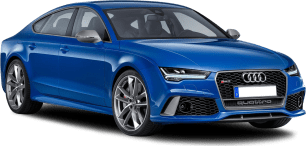
The new-generation RS 7 Sportback heralds the further evolution of this large majestic beast, with more features, a beautifully finished cabin and with more grunt with the looks to match. You’d be hard-pressed to find a better combination of power, dynamics and comfort in the Audi range – apart from in the RS 6 Avant of course.
Candidly, I really didn’t want to like the Emzoom. I think Australia has too many car brands already and the market is in danger of becoming overwhelmed with mediocre products at bargain prices that will squeeze out better but more expensive products.
But I cannot help but really be impressed by what GAC is offering. There’s no doubt the brand faces a major challenge expanding its dealership network to grow sales, but if it continues to deliver vehicles as nice as the Emzoom then it at least has a shot.
Not only is it affordable but it has style, space and is enjoyable to drive. For anyone in the market for a small SUV or just a sub-$30k new car, this should definitely be on your short-list.
Note: CarsGuide attended this event as a guest of the manufacturer, with accommodation and meals provided.
The big news is the RS 7 Sportback now comes with five seats. The previous generation car had just two seats in the second row. I'll talk more on practicality below but for now let's examine the new styling.
This RS 7 Sportback has new broad, black mesh grille, flanked by gigantic side air intakes, narrow headlights, and a thin upper air inlet which is a hat tip to early racing Audis.
While that new angrier, more angular and menacing face is a showstopper, everything about the new RS 7 Sportback seems to be accentuated further.
Look at the wheels. The previous generation came with 21-inch rims, now the new normal for the RS 7 are 22-inches – they're huge. Those wheel guards also flare out 20mm more than a regular A7's and the rear haunches have bulked up massively.
Come to the back of the car and the diffuser and bumper have also been beefed up. Nobody sitting behind you in traffic is going to think this is just a regular A7.
Don't expect the RS 7 Sportback's insides to be just as hardcore as its exterior. The cabin is almost identical to a regular A7's. It's a stunning cockpit dominated by a dash which protrudes back towards the passengers and houses the media screen. Anther display for climate is set into the big centre console which divides the driver and co-pilot into almost cocooned cells.
The cabin isn't without its RS touches though – there's the sports seats with honeycomb stitching, fully digital instrument cluster with RS specific meters, the RS steering wheel, the Nappa leather on the dashboard and the doors, the aluminium inlays. The level of fit and finish is up there with the best that I've seen on any production car.
The RS 7 Avant is 5009mm long, 1424mm tall and 1950mm across for a wide planted stance.
Unfortunately one of the common themes for many of the new Chinese brands entering the Australian market is inoffensive but uninteresting design. The cars tend to be quite generic and lacking in style and statement.
That’s not the case with the Emzoom, which stands out with its bold, angular design that really sets it apart from its direct rivals. For a brand looking to make an immediate impression and attract a new demographic, GAC has made a strong opening move with the Emzoom.
It’s not limited to the exterior either, with an equally design-forward cabin. There’s only a smallish 7.0-inch LCD instrument display integrated into a wider panel, but it’s all housed within a single unit alongside the 14.6-inch multimedia display to create a hi-tech look.
Yes, there are other elements from rival brands that are evident in the design, but borrowing a few cues from other places isn’t something unique to GAC and the overall look and feel of the Emzoom is very likeable.
The previous RS 7 Sportback was a four-seater, now it has five seats. That's right, a middle seat has been added to the second row, but, as you'd expect, it's not the best place be in the RS 7 Sportback, straddling the large driveshaft and ducking under the low roof-line.
That fastback profile does mean headroom in the second row is nowhere near as good as the RS 6 Avant's, but legroom is the same and, at 191cm tall, I can just fit behind my driving position with about 10mm to spare.
Up front it's not as spacious as you might think. That stepped dash protrudes into the passenger's space, the door pockets are thin and the centre console storage under the armrest is small.
Sportbacks are more practical sedans thanks the large opening offered by the hatch. The boot's 535-litre cargo capacity is great and only about 30 litres less than what you have in the RS 6 Avant.
For phones there's a wireless charger and two USB ports in the centre console storage box, while back seat passengers have two USB ports and a 12V outlets. There's also directional air vents and dual-zone climate control in the rear, too.
The Emzoom offers a surprisingly spacious interior for a small SUV.
We were required to travel with four adult occupants at one stage and even in the back seat there was enough room for this six-foot tall reviewer to ride comfortably.
It feels more spacious thanks to the panoramic sunroof which can let in a load of natural light and get rid of the cramped feeling you sometimes have in these smaller models, particularly in the back seats.
While the seats are trimmed in PVC, they look and feel fine for this price point, and the driver’s seat is ventilated and has six-way power adjustment.
There are two USB ports in the front (one A and one C) as well as a 12V outlet, and there’s one USB-A in the rear.
The boot measures 341 litres, which is a respectable size for this type of SUV. While the inclusion of a power tailgate is a very nice touch at this price and makes life easier.
The Audi RS 7 Sportback lists for $224,000, which is exactly $8K more than the RS 6 Avant.
Coming standard are the enormous 22-inch alloy wheels, the matrix LED headlights with laser lights, metallic paint, a panoramic glass sunroof (which is new to the model), privacy glass, head-up display, soft-close doors and red brake calipers.
Inside there's the Bang and Olufsen 16-speaker sound system (that new, too), sat nav, the 12.3-inch virtual instrument cluster, wireless Apple CarPlay (new, as well), wireless charging, full leather upholstery with RS sport front seats that are heated and now come with ventilation as standard, and four-zone climate control.
I've left off all the standard RS mechanical equipment, but I'll cover that in the driving section below.
Is it good value? Well the Mercedes-AMG CLS 53 S is $186,435 but it has way less grunt, the Alpina B5 which I've also road-tested lists for $210,000 and there's the Porsche Panamera 4 Sport Turismo for $236,300.
GAC has kept it simple and offers the Emzoom in a single model grade - Luxury - which is priced from $25,590 plus on-road costs. Even at roughly $28,000 on-road, the Emzoom is among the dozen or so cheapest new cars in Australia, and certainly one of the most affordable SUVs of this size.
GAC didn’t skimp on equipment to achieve that price too, with such luxuries as a panoramic sunroof and power tailgate included, along with 18-inch alloy wheels, LED lights and dual-zone climate control.
Other equipment includes wireless phone charging, wireless Apple CarPlay and Android Auto, Bluetooth and a six-speaker sound system.
The RS 7 may look like a large, well-mannered business class car, but think of it as a thug in a suit because this thing is a monster with a 441kW/800Nm twin-turbo petrol 4.0-litre V8.
That's almost 600 horsepower and the supercar acceleration that goes with it is brutal: we're talking 0-100km/h coming in 3.6 seconds. That also matches the RS 6 Avant and it's a tenth of a second faster than the Audi R8 V10 RWD supercar, (and also the previous-gen RS 7 Sportback Performance) and this is a large, four-door, five-seater.
Compared to the previous generation RS 7 Sportback Performance the power is down by 4kW, but torque is up by a whopping 100Nm. Give me torque over power any day.
Shifting gears is an eight-speed automatic transmission, sending the drive to all four wheels.
Bucking the trend for electrification, the Emzoom is powered by a 1.5-litre four-cylinder turbocharged petrol engine that makes 125kW/270Nm. This provides adequate performance for a small SUV, without offering anything special.
The engine is paired to a seven-speed dual-clutch transmission, which sends its power to the front wheels. More on that set-up under ‘Driving’...
This is a large, all-wheel drive car with a 600 horsepower V8, but it also has a mild hybrid system in this new generation, which will switch the engine off at let the car coast down hills or at speeds under 22km/h.
Audi says this can save up to 0.8L/100km in real-life driving. That's great news, but consumption is still fairly high with Audi saying that after a combination of open and urban roads the RS 7 Sportback will have used 11.6L/100km.
Slightly confusingly GAC quotes a claimed combined urban/extra urban figure of 6.6L/100km, but based on the WLTC testing protocol, which is similar but marginally different to the more common and real-world-focused WLTP.
However, in our actual real-world test drive we instead saw a return of 7.6L/100km, so expect to use slightly more than the claim, regardless of testing protocols.
The Emzoom has a 47-litre fuel tank, which means if you can hit the claimed economy, you’ll have a range of just over 700km on a single tank. Our real-world average would still be good for more than 600km, which is a respectable range for what is designed to be a city-friendly SUV.
I've never met an RS model that hasn't been great to drive – these cars are way more than just tough body kits and big wheels. The engineering which separates the RS 7 Sportback from the A7 makes them more distant cousins than siblings.
As I mentioned before the RS 7 Sportback and RS 6 share more than the same twin-turbo V8, there are also the giant brakes in form of 420mm discs at the front with 10 piston calipers and 370mm discs at the rear.
The optional carbon ceramic brakes are the largest ever to be fitted to a production vehicle at 440mm at the front and 370mm at the rear, saving 34kg in mass over the steel brakes.
Now standard for the first time is Audi's Dynamic Package, which adds dynamic steering (a variable ratio) paired with all-wheel steering, a sport differential, and a 280km/h top speed.
Coming standard is adaptive air suspension and for $2850 you can option the Dynamic Ride Control suspension, which is a hydraulically activated adaptive damper system
At the Australian launch, Audi supplied two RS 7 Sportbacks: one with the air suspension and the other with not only the Dynamic Ride Control system, but also the RS Dynamic Package Plus which adds the ceramic brakes and increases the top speed to 305km/h – this was the car I started off in.
I'm going to say right away that you don't need ceramic brakes for regular road use. Sure it means you can tell people that you have the biggest brakes in the world and they save you almost 35 kilos in weight, and, yes, they're resistant to fading, but they're expensive to replace and the steel ones are incredibly good.
I also feel the Dynamic Ride Control sports suspension isn't necessary in a car like the RS 7 Sportback. This is a Grand Tourer designed to eat up hundreds of miles at lightspeed in comfort.
So, while I found the first RS 7 Sportback with the big brakes and sports suspension sharper and firmer than the standard car, it didn't seem to fit with this vehicle's intent.
The regular RS 7 Sportback still accelerated with the same brutal force and roared at the scenery flashing past. It still handled through the tight corners superbly with excellent turn in, mind-boggling traction and grip, and excellent body control, but all in far more comfort.
This is the point – we covered hundreds of miles at the Australian launch of the RS 7 Sportback in a range of RS models, and sports suspension can go from great to gruelling on Aussie roads with their coarse-chip bitumen and potholes. The RS 7 Sportback, with its air suspension, not only made driving far more comfortable, but easier, too.
What makes the Emzoom really impressive, particularly at its price, is the way it drives. GAC has been in partnership with both Toyota and Honda in China for decades, and clearly the brand has been paying attention to how those more established global brands do things.
The net result is a small SUV that is genuinely enjoyable to drive and a far cry from the dull, unresolved offerings from other Chinese newcomers.
The Emzoom’s ride is nothing short of remarkable, given this is an all-new brand to Australia. It managed to soak up some very nasty-looking bumps without any notable fuss in the cabin. There is still some fine-tuning that could be done to make it class-leading in terms of both comfort and responsiveness, but the overall first impression is very, very positive.
It’s a similar story for the steering, with responsiveness and good weighting, not the occasionally numb and dull steering other Chinese competition offer up.
The engine is fine, nothing special to report, it does the job steadily but does need to be worked hard at times. The gearbox, on the other hand, is more notable.
While a dual-clutch transmission is better on paper, providing faster gear changes for more responsive driving and lower fuel consumption, in practical terms they can be more challenging to operate smoothly.
That’s very much the case with the Emzoom, with the clutch tending to ‘slip’ when you take-off from standstill, often resulting in wheel spin - and a more dramatic-sounding departure than you intended.
This is probably not helped by the tyres, a Chinese brand that this reviewer had never experienced before but felt light on grip.
Once on the move, it works well enough, although occasionally it gets caught between gears when you’re trying to drive more spiritedly, but most of the time it’s fine.
By far the biggest foible of the Emzoom is the noise. GAC clearly saved money on what’s known in the business as ‘NVH’ (or noise, vibration and harshness), with a noticeable amount of tyre roar, wind noise from mirrors and poor sound deadening underneath.
It’s not ideal but there was always going to be a compromise to get this type of SUV for this price.
ANCAP tested the A7 in 2018 and gave it the maximum five-star ANCAP rating, however, this rating does not apply to the RS 7 Sportback high performance model.
That said, the RS 7 Sportback is fortified with nearly every piece of advanced safety tech there is in Audi's cupboard. There's AEB which can detect and brake for cyclists and pedestrians at speeds between 5-85km/h and vehicles up to 250km/h; there's rear cross traffic alert and intersection crossing assistance with braking; lane departure warning and corrective steering to keep you in your lane, and blind spot warning.
Not a fan of parking, the RS 7 Sportback can do it by itself, or there's a 360-degree camera that'll help you do it yourself. There's an exit warning system, which will warn you if a vehicle is approaching as you go to get out, too, and if the RS 7 Sportback detects that it will be hit from behind, it will prepare the cabin by tensions the seatbelts and closing the windows, including the sunroof.
Along with all that there are Audi's new Matrix LED headlights with laser lights, rain sensing wipers and adaptive cruise control.
For child seats you'll find three top tether points and two ISOFIX mounts across the second row.
There's no spare wheel – instead, there's a tyre repair kit.
Thankfully, GAC didn’t cut too many corners on safety. There’s airbag coverage for all outboard occupants and a 360-degree parking camera system as well as a decent amount of driver assistance features for a sub-$30k SUV.
It must be noted that there is no ANCAP or Euro NCAP score, but the Emzoom comes with autonomous emergency braking (AEB), forward collision warning, lane keeping assist, lane departure warning, high beam assist and adaptive cruise control.
However, that's the extent of the list, so it doesn't have the comprehensive list of active safety systems that its rivals can claim.
The RS 7 Sportback is covered by Audi's three-year, unlimited kilometre warranty which not only falls behind in duration compared to mainstream brands but also its direct rival Mercedes-Benz which now has five-year, unlimited kilometre coverage.
Service intervals are every 12 months or 15,000km with a three-year plan costing $2380 and a five-year plan for $3910.
GAC has tried to be proactive and match the market with a seven-year/unlimited kilometre warranty, but strangely offers an even longer warranty for its electric and plug-in hybrid models.
It is an unusual decision and raises question marks over the longevity of its internal combustion engine models for no apparent reason.
As we wrote when we tested the Aion V, GAC is starting from scratch in Australia with less than a dozen dealers set to operate in the first 12 months. That means limited opportunities to both buy and service a GAC vehicle.