What's the difference?
When I say this is a rare review, I’m talking about the kind of rare that means you can’t even buy the car you’re reading about.
The 2026 Audi RS6 Avant GT you’re looking at in the pictures around this story is number 248 of 660. That’s six-hundred and sixty worldwide.
In Australia, there are only 22 RS6 GTs, and they’re all sold - at exorbitant prices, mind you, but we’ll get to that.
The RS6 GT is essentially a production version of the Audi RS6 GTO concept, built in 2020 and inspired by the Audi 90 quattro IMSA GTO race car, which means the RS6 GT carries a lot of ‘90 GTO’ in the way it looks. More on that shortly.
Aside from its extremely limited availability and its design package, there are some mechanical changes to increase the appeal of the RS6 GT, though whether any of its owners will put the on-road (or on-track) ability of this special wagon from Ingolstadt to the test remains to be seen.
A couple of days to live with one of the few RS6 GTs in Australia should reveal how special this car feels, and result in at least one example of the rarity being driven good and proper.
How much would you pay for an outstandingly beautiful grand touring coupe with supercar performance?
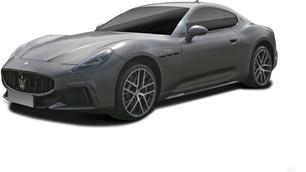
Costing as much as a one-bedroom inner-city flat, the new-from-the-ground-up Maserati GranTurismo possesses seductive styling. When you’re chasing the exquisite Porsche 911 Carrera 4S and Bentley Continental GT, you need every asset available, and then some.
Which brings us to the 2024 second-generation (M189) range.
Adding to a stunning back-catalogue of gorgeous Maseratis that stretches back even further than either of its opponents above, does the latest GranTurismo have the brains as well as the brawn to match its stunning beauty?
Let’s dive right in.
You’ll notice a number out of 10 on this review, you should ignore it.
Not only is it irrelevant because you can’t buy one, but the RS6 Avant GT isn’t a ‘brain’ car, it’s a ‘heart’ car. As much as a five-seat wagon can be, anyway.
Whether you think it’s overkill, overpriced, or overhyped, the GT is a celebration of a car that’s become such an icon for petrolheads. It’s also probably a marker for the end of an era, because we don’t see many V8 family cars getting about anymore.
Well done to Audi, the accounting team in particular, and if anyone who owns an Avant GT is willing to let me have another drive, my in-box is open.
Or I’ll just keep an eye out.
There’s a famous line in a Hollywood movie that somebody’s ego is writing cheques their body can’t cash.
In the GranTurismo’s case, its agility, performance, ride, handling and overall refinement means it absolutely delivers on the promise of the stunning styling.
Of course, this review is a first taster only, even if it is on one of the most challenging race circuits we know. And, as such, we cannot wait to finally drive the GranTurismo outside on Australian public roads.
Which, by the way, will be all the more beautiful because of it.
“It looks like a toy car you’d get in a Kinder Surprise” was the first comment from my housemate upon seeing the $400K collector's item on wheels.
Harsh, but to anyone unfamiliar with the Audi 90 quattro IMSA GTO racer, there’s arguably too much going on with the RS6 Avant GT.
The red, grey and black decals, the chunky white 22-inch wheels, the flared and vented front fenders and the wing over the rear window… all of it is a lot to take in, but it’s very faithful to the IMSA car.
As pictured, the 90 quattro IMSA has the red around the bottom lip of the car, on the bonnet, and even its rear wind, the same as the red on the rear of the Avant GT.
Some of the black at the front of the car, where the bonnet and fenders are, is just exposed carbon-fibre rather than a black decal.
Short of the sponsors and racing numbers, the Avant GT does a fabulous job of paying homage to the 1989 race car. It just means you’re going to be the centre of attention anywhere you drive. Or park.
On that note, an alternative paint and graphic scheme in 'Mythos Black' (this car is 'Arkona White') was available to customers and is decidedly more ‘under the radar’. You have to wonder, though, if you opted for the subtle version of a car that pays homage to a fire-breathing IMSA car, would you feel like you took the coward's option?
Besides, you’re either keeping this car in some kind of temperature-controlled bubble, or (hopefully) spending most of your time around it in the driver’s seat. From there, you don’t have to grapple with the question of garishness.
The interior is, while elevated past standard RS6 vibes, a lot more subtle. Dark materials of microfibre, carbon, leather and the smudge-prone piano black (an Audi favourite) are joined by a relatively restrained serving of red in the contrast stitching and seatbelts.
With a long bonnet and centralised, cab-backward silhouette, the new GranTurismo is built on a highly-modified version of the Stellantis Group’s Giorgio platform, which debuted with the BMW 3 Series-sized Alfa Romeo Giulia sedan back in 2016 and also underpins the Stelvio SUV.
In this application, it has been redesigned as a modular architecture to accommodate, among other things, electrification. The resulting Folgore (Lightning) electric vehicle version will arrive in Australia during 2025.
Compared to before, the design is all-new, with a body that is slightly longer and wider than before; it features over 65 per cent aluminium, weight distribution is 52/48 per cent up front/rear, and the aerodynamics are honed to maximise efficiency, especially for the Folgore. The latter’s drag coefficiency of 0.26 – 0.02 better than the Modena/Trofeo.
Here are the key dimensions: 4959mm long (+78mm), 1957mm wide (+42mm), 1353mm tall (same as before) and 2929mm wheelbase (-20mm).
Maserati claims it invented the grand tourer with its post-war A6 1500 coupe of 1947. Since then, a variety of timeless designs have been released, with beauty always being the priority… and the GranTurismo nails it.
You’ve bought a $400K collectible sports car capable of effortlessly deleting kilometres of highway with your family and enough luggage for a week. Usually a special edition driver's car at this price point is doing well if it has a place to put a phone and a water bottle, let alone phones and water bottles for four people - five if you really need.
Yes, in the performance car world, the Audi RS6 Avant has long been king of the convenience game and the GT holds onto that.
The seating position and ergonomics remains comfortable, the driver’s seat being manually adjustable means it can sit even lower, there’s decent storage in the door cards, cupholders are able to be hidden, the phone charger is under the armrest, there’s a spot for small items like keys, change or glasses and the rear seats have mostly the same alongside their own individual climate controls and heated seats.
Behind those, a 548-litre boot puts most performance cars to shame, but its 1658L space when the rear seats are folded down is unbelievable for something that you’d want to take to a race circuit.
Long, low and wide. These are prerequisite proportions for a traditional grand touring 2+2 coupe, and with them come traditional packaging compromises.
With a near 3.0-metre wheelbase, there’s tonnes of room for legs, shoulders and even heads if you’re willing to sit nice and low, though the lush ambience is more cosy than coastal because of the accompanying broad centre console.
The dual central screens look like an open tablet, and it’s perfectly sized and easy to use. Same goes for much of the controls, while the driving position is, thankfully, first class. Just like the fit and finish.
Beating Mitsubishi’s TR Magna to the punch by decades, there’s an analogue clock perched above the centre vent outlets, which is digitalised and contains performance telemetry as per Porsche’s equivalent.
Vision is a little limited by the fat pillars and upswept window line but the big screens help. Storage is okay, and access to the rear is only for the very young, very fit or very limber.
Two more seats out back provide snug comfort, but the GranTurismo really is all about the ones up front. Overall, the cabin design’s restrained modernity matches the exterior’s styling philosophy down to a tee.
Further back, the boot lid opens electrically because why not, revealing 310 litres of cargo space. The rear seat doesn’t fold, but there is a ski-hatch into the cabin for broomsticks and some such.
Speaking of flying high, let’s take a look at the other side of the GranTurismo.
I’ve been told I’m not allowed to swear in CarsGuide reviews, so add your own expletive when I say, at $399,000, before on-road costs, the RS6 GT is expensive.
A ‘standard’ Audi RS6 Avant Performance costs $252,600, so you would really, really hope that warm feeling you get from owning one of only 22 GTs in the country is worth around $146,400. It’s very hard to imagine the physical changes to the car amount to that much money.
Of course, there’s plenty of kit in the RS6, anyway. But unique to the Avant GT is a carbon bonnet, carbon wing mirrors and carbon front fenders, a restyled spoiler, tailgate, and rear diffuser, 22-inch Audi Sport six-arm ‘Avus’-inspired alloy wheels (in white or black), RS ceramic brakes and black badging.
Inside, there are RS front bucket seats trimmed in leather, synthetic suede and carbon, contrast stitching in red, red seatbelts, black synthetic leather along the dashboard with open-pore carbon, rear window sunshades and a Bang & Olufsen 3D sound system from the 'Sensory Package' as standard.
There’s also ‘RS6 GT’ scuff plates, floor mats, puddle lighting and the individual number for each of the 660 cars on the centre console.
There’s also manually adjustable coil-over suspension and a GT-specifically-tuned quattro sport differential.
It’s cool, but is it an extra $146K cool?
For the price, you’re almost in Ferrari territory, or you’re ticking some options boxes on your Porsche 911 Carrera T. Suppose neither of those can comfortably take a family of four on a holiday to the snow and even feel safe driving on icy roads, though.
It does happen to be about the same price as the Mercedes-AMG GT63 S 4 Door, though whether that looks as good as the RS6 is debatable.
Beauty like this does not come cheap. What Italian supercar does?
The Modena is the base grade, kicking off from an Australian luxury-tax addled $375,000, before on-road costs, while there’s also the top-of-the-line Trofeo, from $450,000.
This puts the GranTurismo smack-bang in the middle of several other high-end 2+2 sports coupes besides the 911 and Conti GT, such as the Aston Martin Vantage, BMW M8 Competition and Mercedes-AMG GT.
Clearly, privilege brings the luxury of variety.
Now, as you’d probably expect, the GranTurismo is a pretty lavishly presented and equipped proposition.
Yet it’s the sheer modernity of the Torinese icon that might catch you by surprise – until you learn there’s also a cutting-edge and completely electric Folgore version also coming to Australia sometime mid-next year.
There’s a sense of that thinking with a pair of sizeable digital display screens – one ahead of the driver and a 12.3-inch touchscreen to the centre, sat above a smaller, 8.8-inch climate control display like an open tablet.
You’ll also find sumptuous leather, a 360-degree camera view, a head-up display, a digital rear-view mirror, high-end premium audio with 14 speakers and an Android-based multimedia set-up offering Alexa assistance, ‘Hey, Maserati’ voice-control and even a Wi-Fi hotspot.
It’s the repurposing of the traditional analogue clock perched up on top of the dash as both an analogue-look timepiece and performance telemetry screen that best juxtaposes the classic with the contemporary.
That, and the long list of adaptive driver-assist safety systems, which will be spelled out in more detail in the safety section below, as well as the standard air suspension and adaptive dampers. All underline the GranTurismo’s security, luxury and comfort yang to its supercar-performance yin.
Still, regardless of how many more features or more performance the Maserati’s competitors may have over it, the GranTurismo possesses one luxury no other quite manages as naturally and that’s supermodel looks.
Audi’s venerable 4.0-litre, twin-turbo V8 engine remains at the heart of the RS6, though in the GT there’s no more power than the RS6 Avant Performance.
That means 463kW of power and 850Nm of torque delivered to all four wheels via an eight-speed torque converter automatic and Audi’s ‘quattro’ all-wheel drive system, making the RS6 Avant GT capable of a 3.3-second sprint to 100km/h, according to Audi. Top speed is a blistering 305km/h.
All this in a car I took to Coles.
So, no more Ferrari-sourced V8, eh?
Yet, it’s not just a sexy body that Maserati has mastered, because this particular 2992cc 3.0L twin-turbo V6 is pretty-much exactly the same engine as you’ll find in the company’s MC20 supercar, give or take a bunch of outputs.
Called the Nettuno, it isn’t quite in the performance league of the GT’s mid-engined two-seater sibling, but with 365kW of power and 600Nm of torque in the Modena and 45kW/50Nm more in the Trofeo, it’s a spine-tingling symphony of speed and total jailbait… especially given the latter’s 320km/h maximum velocity.
That’s 18km/h quicker than the standard tune, and the Trofeo also shaves 0.4 seconds off the 0-100km/h sprint time at just 3.5s flat.
Either engine, though, feels terrifically quick and smooth and no doubt that’s aided by what must be one of the world’s greatest automatic transmissions in the eight-speed ZF unit. It sends drive to all four wheels.
Given the length, girth and opulence, a kerb weight of just 1795kg is outstanding, allowing a power-to-weight ratio of 203kW per tonne in the Modena and a knockout 228kW/tonne in the Trofeo.
To help keep all that in check, the GranTurismo also deploys double wishbones up front, a multi-link independent rear suspension set-up, along with the aforementioned air suspension – which is a nice nod to history as French carmaker Citroen used to own Maserati.
Anyway, the active suspension works in tandem with the four self-explanatory driving models fitted – 'Comfort', the default 'GT', 'Sport' and 'Corsa' (track).
Do you care about this section of the review if you’ve bought one? Surely not.
Anyway, Audi claims 11.8L/100km in terms of fuel consumption and you’d better believe it’s 98 RON minimum.
It’s got a 72-litre fuel tank, which was depleted rather rapidly on test. While driving conditions weren’t ‘fair’ in terms of the test given the content demands of a short-term loan, there’s probably a realistic figure somewhere between the claim and the 17.9L/100km I achieved over a few days.
You know, for a super coupe that can easily exceed 300km/h, the GranTurismo is pleasingly efficient, with a combined cycle average figure of 10.2L/100km.
Top that 70L tank with premium unleaded petrol, and you might even average over 680km between refills if you can restrain yourself from poking the bear under the bonnet.
How? Clean aero efficiency, along with that predominantly aluminium body that helps keep the weight down to under an impressive 1.8 tonnes.
Which all bodes really well for 2025’s Folgore EV version, which can also hit 100 in 2.7s on the way to 325km/h. Bring that on!
There’s something unfortunate about how good the Audi RS6 Avant GT is from behind the wheel. That’s knowing how few people will properly get to enjoy it.
Not just because only 660 were built, but also because the majority of those 660 owners will be too worried about how much they’ve just spent on an automotive rarity to properly take it for a burn on a road, or even a track.
The RS6 was always an icon of Germany's penchant for subtle-looking cars that just happen to be capable of embarrassing much more brash vehicles, but the GT does away with the pretence and sharpens its teeth a little.
The specifically tuned rear differential makes for a more rear-biased driving experience in Dynamic mode, which means more agile cornering and a more natural balance compared to the way the RS6 sometimes feels - like a family wagon.
Its rival, the BMW M5 Touring, can go full rear-drive, but the Audi doesn’t need that as an option. It feels more capable and composed; ready to obey commands without fuss. A set of Continental SportContact 7 tyres (285/30) help there on the grip front.
The suspension underneath, adjustable coil-overs with three settings, is unique to the GT and lowers the ride height by 10 millimeters. It’s stiffer, 30 per cent at the front and 80 at the rear, and you notice it.
There’s more control and much less body roll, but the trade-off is the RS6 Avant GT is a little less comfortable on Australia’s particularly rough roads. Its 22-inch wheels don’t help.
It’s not, however, crashy or rattly. The suspension still does a fine job of stopping the driver being jostled around, but there’s a decidedly firmer response to the surface underneath. Again, still very composed.
With the new suspension, steering the GT feels easier than memory would suggest and the baseline was already good. There’s no unnecessary weight, but there’s still decent feedback from the front wheels and accuracy is bang-on.
Throttle adjustment in the corners, too, is easier with the rear differential, and it means anyone who still had reservations about Audi and understeer can be proven wrong.
The drivetrain remains unchanged from the Performance, which is a good thing. The effortless acceleration, even in the more aggressive 'Dynamic' setting with the transmission set to 'Sport' is smooth but seemingly unending.
Fortunately, the 4.0-litre V8 under the carbon bonnet sounds delightfully burbly, so getting to the speed limit or overtaking is a little treat every time. While the steering wheel paddles are there if you really need to drive in anger, the eight-speed is fine left to its own devices.
A 2.0-tonne family wagon with a V8 up front, easy communicative steering, and sporty suspension that settles well over bumps but allows enthusiastic corner attacks?
The RS6 Avant GT is in limited company.
Though it has been modified by what may be an almost unrecognisable amount by Maserati’s engineers, using Stellantis’ Gorgio architecture that first appeared in the magnetic Alfa Romeo Giulia of 2016 and then utterly seduced in the flagship Quadrifoglio version is a great place to start.
Now, we’ve only tested the all-new GranTurismo (GT from here on in) coupe around the fast and challenging Tailem Bend race track near Adelaide, so cannot speak of its behaviour on Australian public roads.
But what we experienced was an incredible and elevating sports car experience. And, yes, that's despite the loss of the magnetic Ferrari-based 4.7-litre V8.
Even with ‘just’ 365kW of power and 600Nm of torque, the base Modena twin-turbo V6 thunders off the line, its superb ZF eight-speed automatic transmission, surely the best of its type in the world, shifting with lightning speed through the ratios as it blitzed past 100, then 150, then 200km/h in mere seconds. Maserati says within 8.8s, in fact.
To help keep all that in check, the GranTurismo deploys double wishbones up front, a multi-link independent rear suspension set-up, along with the aforementioned air suspension – which is a nice nod to history as French carmaker Citroen used to own Maserati.
Anyway, the active suspension works in tandem with the four self-explanatory driving models fitted – 'Comfort', the default 'GT', 'Sport' and 'Corsa' (track).
We were too thrilled to notice whether the loss of the Maserati V8 grumble, because the exhaust howl was exciting enough, along with the sheer ease in which the GT accelerates.
And when we needed to suddenly brake reaching corners that seemed stupidly close until we realised they weren’t, we also were relieved at the Modena’s marvellously effective Brembo brake package.
Now, at under 1900kg, the GT is still a heavy car, but not for a five-by-two metre-long-and-wide 2+2 seater coupe.
Seriously, the cohesion and crispness of the steering, whether in Comfort or three-settings down in shockingly heavier Corsa mode, tingles the senses, seeming far lighter and more agile than the (albeit lithe) luxury coupe styling suggests.
Not Porsche 911 supernatural-alacrity, but beautifully quick and reactive nonetheless. It’s such a buzz.
There’s also a sense of isolation from the air suspension underneath, aided by the trick adaptive dampers doing their bit too to cushion the ride. The vital luxury part of the GT equation is omnipresent in the Maserati coupe.
And this was all just in the Modena. Another few laps in the Trofeo just sharpened the senses and speed and responses, supercharging the experience around Tailem Bend.
What all this left us is a longing for more time behind the wheel. Which hopefully will happen soon, but for now, this is far-and-away the best Maserati I have ever driven. If you can afford one, this is all great news.
Of course, back in the real world on everyday roads, there will surely be criticisms, but for now, around the circuit, the GranTurismo is something very special indeed.
There’s no current rating from ANCAP for the A6 in general, let alone this specific RS6, but there’s a decent suite of safety equipment and tech to keep you worry-free in the GT.
Eight airbags and more than 30 driver assistance systems from the RS6 are of course present in the GT, including adaptive cruise control, lane-keep and warning, emergency brake assist and cross-traffic alert.
Audi’s also got surround view cameras for parking, which also includes warnings for approaching vehicles or objects, plus there are preemptive measures the car can take in an impact like tightening the seatbelts or braking to avoid a second collision.
The second row also has three top tethers and ISOFIX anchor points on the outboard seats for mounting child seats.
It might shock to learn that supercars like this generally are not crash-tested by EuroNCAP or other such agencies, so there’s no rating.
But most of today’s advanced driver-assist tech is present and active in the GranTurismo along with a super-strong body, massive Brembo brakes and that trick air suspension to help keep everything grounded.
The 'Level 2' tech includes front and rear AEB, blind-spot warning, lane support systems with alerts and intervention, rear cross-traffic alert, driver attention alert and auto high beams. Front, side and rear cameras are also fitted.
Plus, there are six airbags (dual front, dual side and curtain for both rows), along with anti-lock brakes, brake assist, electronic brake-force distribution, electronic stability control, traction control and front/rear parking sensors.
Two ISOFIX restraints and child-seat anchorage points are integrated into the rear pair of seats.
Audi’s five-year/unlimited kilometre warranty is below industry par, though most premium brands are in the same boat.
Twelve years of bodywork warranty against corrosion is also included, as is a five-year run of free Audi roadside assistance.
Five-year service plans can be purchased, or customers can buy back-to-back two-year extensions for the warranty, servicing and roadside assistance.
Maserati offers a frankly disappointing three-year/unlimited kilometre warranty, which is on the stingier side of things.
Service intervals are also every 12 months or 10,000km.
There is no capped-price servicing, but Maserati offers a pre-paid maintenance program that covers all the inspections and components and consumable replacements.
As the pricing was not finalised at the time of publishing, best to check the company’s website for the latest details.