What's the difference?
When I say this is a rare review, I’m talking about the kind of rare that means you can’t even buy the car you’re reading about.
The 2026 Audi RS6 Avant GT you’re looking at in the pictures around this story is number 248 of 660. That’s six-hundred and sixty worldwide.
In Australia, there are only 22 RS6 GTs, and they’re all sold - at exorbitant prices, mind you, but we’ll get to that.
The RS6 GT is essentially a production version of the Audi RS6 GTO concept, built in 2020 and inspired by the Audi 90 quattro IMSA GTO race car, which means the RS6 GT carries a lot of ‘90 GTO’ in the way it looks. More on that shortly.
Aside from its extremely limited availability and its design package, there are some mechanical changes to increase the appeal of the RS6 GT, though whether any of its owners will put the on-road (or on-track) ability of this special wagon from Ingolstadt to the test remains to be seen.
A couple of days to live with one of the few RS6 GTs in Australia should reveal how special this car feels, and result in at least one example of the rarity being driven good and proper.
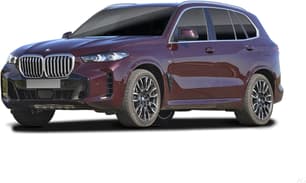
The BMW X5 is a leading contender in the ‘Over $70K Large SUV’ division of Australia’s new car market, which is a hotly-contested segment boasting 15 marques and 25 models.
The X5 has hit an enduring sweet spot with Aussie buyers in terms of size, performance and price. BMW prefers to call it a Sports Activity Vehicle (SAV) as distinct from its Sports Utility Vehicle (SUV) rivals.
Clearly, any word association with a utility is something BMW Group Australia wants to avoid after recently launching its latest X5 range, which brings numerous enhancements including design revisions, increased standard equipment, refreshed powertrains and more.
We were entrusted with the digital ‘Comfort Access’ key to one of the latest X5s, to understand from a family car perspective why this model range enjoys such enduring popularity with prestige SUV (sorry, SAV) buyers.
You’ll notice a number out of 10 on this review, you should ignore it.
Not only is it irrelevant because you can’t buy one, but the RS6 Avant GT isn’t a ‘brain’ car, it’s a ‘heart’ car. As much as a five-seat wagon can be, anyway.
Whether you think it’s overkill, overpriced, or overhyped, the GT is a celebration of a car that’s become such an icon for petrolheads. It’s also probably a marker for the end of an era, because we don’t see many V8 family cars getting about anymore.
Well done to Audi, the accounting team in particular, and if anyone who owns an Avant GT is willing to let me have another drive, my in-box is open.
Or I’ll just keep an eye out.
This is a luxurious prestige five-seater brimming with BMW’s latest design and technology that’s not only practical for weekly family duties but can also embrace spirited driving with the push of a button. A great all-rounder for families that like a sporty edge.
“It looks like a toy car you’d get in a Kinder Surprise” was the first comment from my housemate upon seeing the $400K collector's item on wheels.
Harsh, but to anyone unfamiliar with the Audi 90 quattro IMSA GTO racer, there’s arguably too much going on with the RS6 Avant GT.
The red, grey and black decals, the chunky white 22-inch wheels, the flared and vented front fenders and the wing over the rear window… all of it is a lot to take in, but it’s very faithful to the IMSA car.
As pictured, the 90 quattro IMSA has the red around the bottom lip of the car, on the bonnet, and even its rear wind, the same as the red on the rear of the Avant GT.
Some of the black at the front of the car, where the bonnet and fenders are, is just exposed carbon-fibre rather than a black decal.
Short of the sponsors and racing numbers, the Avant GT does a fabulous job of paying homage to the 1989 race car. It just means you’re going to be the centre of attention anywhere you drive. Or park.
On that note, an alternative paint and graphic scheme in 'Mythos Black' (this car is 'Arkona White') was available to customers and is decidedly more ‘under the radar’. You have to wonder, though, if you opted for the subtle version of a car that pays homage to a fire-breathing IMSA car, would you feel like you took the coward's option?
Besides, you’re either keeping this car in some kind of temperature-controlled bubble, or (hopefully) spending most of your time around it in the driver’s seat. From there, you don’t have to grapple with the question of garishness.
The interior is, while elevated past standard RS6 vibes, a lot more subtle. Dark materials of microfibre, carbon, leather and the smudge-prone piano black (an Audi favourite) are joined by a relatively restrained serving of red in the contrast stitching and seatbelts.
The latest front-end design features subtle revisions to BMW’s signature 'kidney' grille theme, highlighted by slimmer matrix LED headlights with chevron-shaped DRLs that incorporate the turn indicators.
There’s also an ‘iconic glow’ function, which illuminates the twin-grilles at night in-sync with the external courtesy lights when approaching and departing the vehicle. Lower front air-intake and tail-light treatments have also been revised.
The dash features a new curved instrument panel. Based on BMW’s latest generation 'iDrive' operating system, it consists of a 12.3-inch driver’s info display and 14.9-inch control display presented across the same seamless glass surface.
The control display’s touchscreen functionality has allowed dash buttons and switches to be minimised.
This new design dash has a blend of synthetic leather trim and dark brown/high-gloss woodgrain surfaces, along with new LED ambient lighting and gear-selector design.
The rear seat is sumptuous and spacious, even for someone my height (186cm). There’s ample knee and headroom and it can seat three kids in comfort, but for adult passengers wanting that 'business class' feel it would be ideal for two.
My only criticism of the new instrument display is that with more than 30 applications displayed on the expansive control screen, it can be distracting at times trying to visually locate and operate these functions while driving.
And, depending on sun angle, there were also complaints from different front seat passengers on different days about blinding glare caused by the dash’s high-gloss woodgrain inserts. Fortunately, the driver is unaffected by these reflections.
You’ve bought a $400K collectible sports car capable of effortlessly deleting kilometres of highway with your family and enough luggage for a week. Usually a special edition driver's car at this price point is doing well if it has a place to put a phone and a water bottle, let alone phones and water bottles for four people - five if you really need.
Yes, in the performance car world, the Audi RS6 Avant has long been king of the convenience game and the GT holds onto that.
The seating position and ergonomics remains comfortable, the driver’s seat being manually adjustable means it can sit even lower, there’s decent storage in the door cards, cupholders are able to be hidden, the phone charger is under the armrest, there’s a spot for small items like keys, change or glasses and the rear seats have mostly the same alongside their own individual climate controls and heated seats.
Behind those, a 548-litre boot puts most performance cars to shame, but its 1658L space when the rear seats are folded down is unbelievable for something that you’d want to take to a race circuit.
With its 2165kg kerb weight and maximum allowable weight of 2885kg, our test vehicle can legally carry up to 720kg.
That should be ample for five adults (even better for kids) and their luggage, of which up to 100kg can be carried on the roof rails using a rack or roof box (both in BMW's accessory range).
Powered upper and lower tailgates provide good access to the luggage area, which is carpeted and equipped with a roll-out privacy screen, load securing hooks, a 12-volt accessory outlet and a first-aid kit stored behind a removable side panel.
The space-saver spare and tools are stored below the hinged load floor, so all luggage must be removed to access them.
Internal luggage space with the rear seat upright is 650 litres (0.65 cubic metres) which expands to 1870 litres (1.87 cubic metres) with the rear seat folded flat.
A useful load-carrying feature when the rear seat’s backrest is upright is a hinged centre section that folds forward and flat to carry long and narrow items.
These can stretch all the way from the tailgate to the dash if need be, which could be handy for carting anything from skis to home hardware purchases (firmly secured, of course).
It’s also rated to tow up to an impressive 3500kg of braked trailer, which matches the class benchmark for one-tonne utes.
However, given that tow-ball download (TBD) is usually around 10 per cent of trailer weight, the X5’s maximum TBD rating of only 140kg could be a challenge if 3500kg towing is required.
Front of cabin storage includes a big bottle-holder and bin in each front door, a glove box and on the right-hand side of the dash a pull-out driver’s bin, both of which are felt-lined.
The centre console, in addition to its wireless phone-charging pad, USB-A port and 12-volt outlet, has two small-bottle/cupholders up front and a large box at the rear, housing a USB-C port and topped by a padded dual 'brochure fold' lid that double as an elbow-rest for driver and front passenger.
Rear seat storage includes a large-bottle holder and bin in each door and pockets on each front seat backrest. The rear of the centre console has two storage nooks for small items in addition to its air-vents, two USB-C ports and a 12-volt outlet. There’s also a handy tablet-mount and USB-C port on each front seat backrest, which is great for long trips.
Folding down the rear seat’s centre armrest reveals two pop-out small-bottle/cupholders. And under its hinged lid is a hidden felt-lined compartment that’s ideal for storing slim screened devices away from prying eyes.
I’ve been told I’m not allowed to swear in CarsGuide reviews, so add your own expletive when I say, at $399,000, before on-road costs, the RS6 GT is expensive.
A ‘standard’ Audi RS6 Avant Performance costs $252,600, so you would really, really hope that warm feeling you get from owning one of only 22 GTs in the country is worth around $146,400. It’s very hard to imagine the physical changes to the car amount to that much money.
Of course, there’s plenty of kit in the RS6, anyway. But unique to the Avant GT is a carbon bonnet, carbon wing mirrors and carbon front fenders, a restyled spoiler, tailgate, and rear diffuser, 22-inch Audi Sport six-arm ‘Avus’-inspired alloy wheels (in white or black), RS ceramic brakes and black badging.
Inside, there are RS front bucket seats trimmed in leather, synthetic suede and carbon, contrast stitching in red, red seatbelts, black synthetic leather along the dashboard with open-pore carbon, rear window sunshades and a Bang & Olufsen 3D sound system from the 'Sensory Package' as standard.
There’s also ‘RS6 GT’ scuff plates, floor mats, puddle lighting and the individual number for each of the 660 cars on the centre console.
There’s also manually adjustable coil-over suspension and a GT-specifically-tuned quattro sport differential.
It’s cool, but is it an extra $146K cool?
For the price, you’re almost in Ferrari territory, or you’re ticking some options boxes on your Porsche 911 Carrera T. Suppose neither of those can comfortably take a family of four on a holiday to the snow and even feel safe driving on icy roads, though.
It does happen to be about the same price as the Mercedes-AMG GT63 S 4 Door, though whether that looks as good as the RS6 is debatable.
Our test vehicle, to use its full name, is the X5 xDrive 40i M Sport. That breaks down to xDrive (intelligent all-wheel drive) and 40i (3.0L turbo in-line petrol six) with eight-speed automatic transmission.
M Sport denotes a package that's included as standard equipment which contains desirable goodies like enormous multi-piston M Sport brakes/adaptive suspension/aerodynamics, M leather-rimmed steering wheel, high-gloss black roof-rails and more.
All up, the list price is $138,900. However, our example has an optional ‘Enhancement Package’ which for another $6000 adds your choice of selected 22-inch alloy wheels (fitted with 275/35 R22 Continental tyres on ours), a tyre pressure monitoring system, metallic paint ('Skyscraper Grey' on ours), Harman Kardon 16-speaker surround-sound audio and 'Crafted Clarity' glass application (glass-handled shifter).
And this is on top of many standard features including three-zone climate control, automatic two-piece tailgate, digital radio, a head-up driver display, adaptive LED headlights with high beam assist, a panoramic full-length sunroof, wireless Apple/Android integration, 'Verino' quilted synthetic leather upholstery, numerous USB ports/12v outlets and more. However, there’s only a space-saver spare.
Numerous options include self-levelling air suspension, 'Merino' leather upholstery, active seat ventilation and massage functions, thermo-adjustable cupholders, LED-illuminated ‘sky lounge’ panoramic glass sunroof and Bowers & Wilkins premium surround sound to name a few.
Audi’s venerable 4.0-litre, twin-turbo V8 engine remains at the heart of the RS6, though in the GT there’s no more power than the RS6 Avant Performance.
That means 463kW of power and 850Nm of torque delivered to all four wheels via an eight-speed torque converter automatic and Audi’s ‘quattro’ all-wheel drive system, making the RS6 Avant GT capable of a 3.3-second sprint to 100km/h, according to Audi. Top speed is a blistering 305km/h.
All this in a car I took to Coles.
The X5 xDrive40i is powered by BMW’s legendary 3.0-litre DOHC 24-valve in-line six with state-of-the-art technology.
This includes twin-scroll turbocharging, variable valve/camshaft timing and 48-volt mild hybrid technology (delivering up to 9.0kW and 200Nm) using an electric motor integrated with the transmission.
The combined effect is optimised power and throttle response (0-100km/h in 5.4 secs) with minimal fuel consumption and Euro 6d emissions.
It produces 280kW between 5200-6250rpm and 520Nm of torque (this can reach 540Nm with hybrid input) across a remarkably wide and flat peak torque band between 1850-5000rpm, which showcases its flexibility. There’s also auto start-stop and selectable drive modes.
This is paired with BMW’s smooth and sharp-shifting eight-speed torque converter automatic, which combines the best characteristics of a dual-clutch and traditional torque converter transmission.
There’s overdrive on the seventh and eighth gears to optimise fuel economy and the choice of rapid manual-shifting using the steering wheel paddles.
Power reaches its wide tyres through the xDrive intelligent all-wheel drive system, which actively varies the engine’s torque distribution between the front and rear wheels to optimise traction at all times.
BMW’s ‘Efficient Dynamics’ also includes brake energy regeneration with recuperation display and many other standard features to enhance driving safety and efficiency.
Do you care about this section of the review if you’ve bought one? Surely not.
Anyway, Audi claims 11.8L/100km in terms of fuel consumption and you’d better believe it’s 98 RON minimum.
It’s got a 72-litre fuel tank, which was depleted rather rapidly on test. While driving conditions weren’t ‘fair’ in terms of the test given the content demands of a short-term loan, there’s probably a realistic figure somewhere between the claim and the 17.9L/100km I achieved over a few days.
BMW claims combined average (WLTP) fuel consumption of 9.9-8.5L/100km. Our 415km test comprised a mix of suburban and highway driving and when we stopped to refuel the dash display was showing 10.2L/100km which was line-ball with our own 10.6L/100km figure, calculated from fuel bowser and tripmeter readings.
So, based on our figures, you could expect a realistic driving range of around 780km from its 83-litre tank using standard 91-octane petrol.
There’s something unfortunate about how good the Audi RS6 Avant GT is from behind the wheel. That’s knowing how few people will properly get to enjoy it.
Not just because only 660 were built, but also because the majority of those 660 owners will be too worried about how much they’ve just spent on an automotive rarity to properly take it for a burn on a road, or even a track.
The RS6 was always an icon of Germany's penchant for subtle-looking cars that just happen to be capable of embarrassing much more brash vehicles, but the GT does away with the pretence and sharpens its teeth a little.
The specifically tuned rear differential makes for a more rear-biased driving experience in Dynamic mode, which means more agile cornering and a more natural balance compared to the way the RS6 sometimes feels - like a family wagon.
Its rival, the BMW M5 Touring, can go full rear-drive, but the Audi doesn’t need that as an option. It feels more capable and composed; ready to obey commands without fuss. A set of Continental SportContact 7 tyres (285/30) help there on the grip front.
The suspension underneath, adjustable coil-overs with three settings, is unique to the GT and lowers the ride height by 10 millimeters. It’s stiffer, 30 per cent at the front and 80 at the rear, and you notice it.
There’s more control and much less body roll, but the trade-off is the RS6 Avant GT is a little less comfortable on Australia’s particularly rough roads. Its 22-inch wheels don’t help.
It’s not, however, crashy or rattly. The suspension still does a fine job of stopping the driver being jostled around, but there’s a decidedly firmer response to the surface underneath. Again, still very composed.
With the new suspension, steering the GT feels easier than memory would suggest and the baseline was already good. There’s no unnecessary weight, but there’s still decent feedback from the front wheels and accuracy is bang-on.
Throttle adjustment in the corners, too, is easier with the rear differential, and it means anyone who still had reservations about Audi and understeer can be proven wrong.
The drivetrain remains unchanged from the Performance, which is a good thing. The effortless acceleration, even in the more aggressive 'Dynamic' setting with the transmission set to 'Sport' is smooth but seemingly unending.
Fortunately, the 4.0-litre V8 under the carbon bonnet sounds delightfully burbly, so getting to the speed limit or overtaking is a little treat every time. While the steering wheel paddles are there if you really need to drive in anger, the eight-speed is fine left to its own devices.
A 2.0-tonne family wagon with a V8 up front, easy communicative steering, and sporty suspension that settles well over bumps but allows enthusiastic corner attacks?
The RS6 Avant GT is in limited company.
It’s supremely comfortable, with front bucket seats that offer powered-adjustment of height, reach and backrest angle along with side bolsters that can tighten their grip of your upper torso.
There’s also two-way lumbar support, that adjusts not only how far it pushes your spine forward but also allows that pressure point to be raised or lowered.
Combined with its power-adjustable leather-rimmed steering wheel, it would be hard not to find a comfortable driving position.
Eyelines to all mirrors are good and over-shoulder blind-spots are minimal. Front and rear occupants can talk without raised voices thanks to low engine, wind and tyre noise at highway speeds.
As you’d expect, it has high build quality and a tangibly solid feel as though it was machined from a single block of steel, from the satisfying thuds of its closing doors to the absence of shudders or rattles on a variety of roads.
It also has two personalities, which can be switched in an instant. In 'Comfort' mode it will happily cruise around city and suburbs as a mild-mannered family car, fulfilling daily duties like work commutes, school drop-offs and pick-ups, supermarket shopping and the like.
However, flick the drive mode to 'Sport Plus' and you awaken, well, if not ‘the ultimate driving machine’ then something close.
Its optimised drivetrain and handling settings feel more like a sports sedan than a family car, which can turn any winding mountain road into an engaging experience.
It has impressive reserves of cornering grip and braking force, combined with sparkling engine response and fast sequential manual-shifting at your fingertips.
It feels impressively agile, with all-round response that belies its 2.0-tonne-plus kerb weight, backed by a symphony of sounds from its sublime in-line six.
There’s no current rating from ANCAP for the A6 in general, let alone this specific RS6, but there’s a decent suite of safety equipment and tech to keep you worry-free in the GT.
Eight airbags and more than 30 driver assistance systems from the RS6 are of course present in the GT, including adaptive cruise control, lane-keep and warning, emergency brake assist and cross-traffic alert.
Audi’s also got surround view cameras for parking, which also includes warnings for approaching vehicles or objects, plus there are preemptive measures the car can take in an impact like tightening the seatbelts or braking to avoid a second collision.
The second row also has three top tethers and ISOFIX anchor points on the outboard seats for mounting child seats.
Five-star ANCAP (awarded in 2018) includes front and side airbags for driver and front passenger, plus head airbags for front and rear seats.
The comprehensive 'Driver Assistant Professional' active safety menu includes AEB (city, interurban and vulnerable road user) and a multitude of others.
It also has 'Parking Assist Professional' and for young families there are ISOFIX child seat anchorages on the two outer rear seating positions and top-tethers for all three.
Audi’s five-year/unlimited kilometre warranty is below industry par, though most premium brands are in the same boat.
Twelve years of bodywork warranty against corrosion is also included, as is a five-year run of free Audi roadside assistance.
Five-year service plans can be purchased, or customers can buy back-to-back two-year extensions for the warranty, servicing and roadside assistance.
BMW covers the X5 with a five year/unlimited km warranty and offers several service plans to suit different budgets and requirements.
For example, the 'Service Inclusive Basic' package covers all scheduled services over five years/80,000km for a total of $3450, or an average of $690 per year.