What's the difference?
Audi is known as a design-led brand, and arguably no model in the line-up embodies that ethos more than the Audi A7 Sportback.
This all-new version of Audi's largest swoopy five-door hatchback takes the concept of the original first-generation version and, rather than reinventing the idea, reimagines it with a more modern and even more style-focused look, inside and out.
And it's a very convincing execution, indeed.
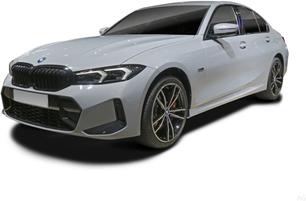
A hybrid BMW 3 Series makes sense now that everything is going electric. And the BMW 330e M Sport is the plug-in hybrid version of the 330i petrol variant. What's not to like, then?
Well, that's what we're here for because this review of the BMW 330e M Sport will reveal everything we've discovered about the car and will help you decide if it really does make sense to make it your next car.
We've covered everything from practicality to on-road performance, features and prices. And yes, we've run a fuel test to see just how efficient this plug-in hybrid is to live with in the real world.
The Audi A7 is a really likeable car, one that is heavily focused on style but also emanates substance. The 55 TFSI model will appeal to many, but my initial impression is that the best buy in the range could well be the entry-level 45 TFSI. I can't wait to sample it sometime in 2019.
The 330e M Sport is an excellent car, but it could be a much better hybrid.
In Australia, where driving distances can be vast, a car that's as comfortable and easy to live with as this one is welcome. But for the electric range to dissipate so quickly, and not recoup again at a fast enough rate without plugging into a charger, is disappointing.
There are other plug-in hybrids, even among the more affordable mainstream brands, which can return charge to the battery incredibly quickly and effectively on the go.
If you are looking to make the step into a hybrid, then perhaps consider a fully electric car. There isn't a battery electric 3 Series on the market in Australia (yet), but BMW does sell the iX1 small SUV for less money than a 330e or the iX3 for a tad more.
Both are pure electric SUVs and have a range of between 400-500km. You'll never need petrol again, which makes a hybrid seem outdated.
If you can't find something interesting about the design of the Audi A7, there's a good chance you're visually impaired.
The original A7 Sportback was perhaps ahead of its time in the way it blended the lines of a coupe with the practicality of a big sedan, and the new second-generation version pushes the envelope even further into the future. The vision, according to chief designer Andreas Koglin, was "a clear form with sharp lines and tight shapes", including the distinguishable 'boat tail' at the rear.
This is a technologically advanced looking car - big, long, sleek and stylish. From the LED headlights (or matrix LED and laser lights - yes, frikkin' lasers that have the same 5500 Kelvin as the sun, according to Audi) and daytime running lights, to the long, lean LED tail-light assembly, there's an illuminated, enlightened air to the A7.
Plus, with the matrix lights, both ends of the car do a sort of disco sequence as part of the start up and shut down procedure for the car.
There are a few carefully balanced lines across the body of the A7 that help catch the light, which is something you can't really say about its closest direct rival, the Mercedes-Benz CLS. It still retains the 'big-metal-small-glasshouse' look of the existing model, but there are definitely more angles and interesting elements to this new-generation car.
There are two exterior types offered for Australia - the S line that you see here is the version that'll be fitted to the two higher grade models, while the entry-grade model gets a less aggressive look to its front and rear bumpers. To my eyes, the base car actually looks more luxurious, where the S line models - when not fitted with the optional black exterior styling pack that deletes the chrome trims outside - have a slightly uneasy look in the grille area. With a black edge to the single frame grille, it looks a touch more convincing.
The A7 is still large, at 4969mm long (-5mm) and riding on a longer 2926mm wheelbase (+12mm), spans 1908mm wide (2118mm including mirrors), but it's also a little bit taller, at 1422mm (+2mm). According to Audi, the interior space has been increased by 21mm in this generation, making for a more luxurious cabin than before.
Things are a little edgier in terms of design in the cockpit, too. Gone is the appealing wraparound dashboard design, with a more driver-focused treatment evident. It looks sharper, more shapely, and has improvements to the usability inside, too.
Once upon a time sedans were all we drove, well mainly. Then SUVs became the style of car most people wanted. In fact, three out of four new cars sold in Australia today are SUVs.
So, I commend you on your choice of not just doing what everybody else does, and you'll be rewarded with better driving dynamics, and ownership of an iconic BMW - the four door, 3 Series.
And even though this is a plug-in hybrid version of the 3 Series it's identical in styling to the petrol variants. Only the light blue border around the BMW roundel is the indication that it's an electric vehicle. That and the charging flap near the left front wheel.
The M Sport pack adds some very sexy features such as the M Sport aerodynamic body kit, the door sills and M Sport seats, but the M Sport Pro Pack our car came with adds a black gloss grille, boot lid spoiler and the snazzy seat belts.
The cabin's double screens are impressive but I miss analogue gauges and found the digital instrument cluster overly busy and led more by cool design than functionality.
According to Audi, the A7's interior is said to offer a "futuristic lounge type ambience". And if your vision of a lounge in the future includes beautiful textile finishes, quality trims, and your choice of three crisp screens to look at and interact with, it certainly lives up to that.
Unlike the existing model, which seemed to draw a bit more inspiration from the world of watercraft, the new model isn't as luxe looking, with a more tech-focused approach inside. The wraparound finish on the dash is gone, and everything is more driver-centric in its orientation - the screens are tilted just enough towards the pilot and the design of the dashboard helps anchor the person in the driver's seat as the most important in the car.
As a driver, I still struggle to come to terms with climate controls that require you to use a screen, and I think it's distracting, too. At least with the Audi screen there's the possibility to slide up or down on the temperature display to make quick changes, rather than having to tap the screen repeatedly.
The haptic feedback on the screens is something that does take a bit of getting used to, because the response time isn't as instant as some regular touchscreen systems, but the menus are all pretty logically laid out.
And of course, all the storage considerations are dealt with, including good cupholders between the seats, decent door pockets, some loose item caddies and so on. In the back there's a flip-down armrest with cupholders, bottle holders in the doors and map pockets on the seat backs. One really neat addition is illuminated seat belt buckles - clever!
Space back there is mostly good, but it's better if you're short. There's enough legroom and shoulder-room for three adults, but anyone taller than me (I'm 182cm) will likely lack some headroom due to the curvaceous roofline.
The boot is good at 535 litres - enough to deal with two golf bags, the brand claims. The shape of the boot means tall items mightn't fit, but the length and width is good, and you get tie-downs with a mesh net to keep things in order. And there's a space-saver spare wheel under the boot floor.
People will tell you SUVs are more practical than sedans... and they're right, but not in as many ways as they probably think.
The cabins of sedans and SUVs of the same size are close in terms of space, but the 330e comes with excellent storage - better than many SUVs I've tested, featuring enormous door pockets, and a deep centre console storage bin.
There are four cupholders, too. Two in the fold down armrest in the back and another two up front.
There's also wireless charging up front, plus USB ports for the back passengers. The second row also has its own climate control and directional air vents.
Legroom is excellent in the back and I can sit behind my driving position with plenty of room to spare. Headroom is also excellent thanks to the tall roofline of the 3 Series.
Where a sedan isn't as practical as an SUV is its ride height, which makes getting in and out of the latter easier (although the 330e's doors open very wide) and its boot opening.
SUVs have hatch-like openings and that offers a wider and taller aperture for carrying cargo.
The 330's boot was still big enough to fit our two largest CarsGuide suitcases (see the video), but the location of the battery means cargo capacity has been reduced from 480 litres in a petrol 330i to 375 litres in this 330e.
There are three models in the range, and considering the most natural competitors to the Audi A7 - the Mercedes-Benz CLS (from $136,900) and the BMW 6 series GT (from $123,500) - there's an argument that this car is something of a bargain. Ahem. 'Bargain' is relative, clearly.
The entry-level model is the 45 TFSI, which lists at $113,900 plus on-road costs. That's pretty close to the existing starting point for the A7, but now there's a bit more gear included as standard. It doesn't arrive until around the middle of 2019, though.
This model is comprehensively kitted out, with standard inclusions consisting of 20-inch alloy wheels, adaptive suspension, Audi's 'progressive steering' system, LED headlights with high-beam assist, an electronic tailgate with smart opening, keyless entry and push-button start, 'Valcona' leather trim and sports front seats, electric front seat adjustment and front seat heating and three-zone climate control air conditioning.
Other goodies include an LED interior ambient lighting package, head-up display, Audi's 12.3-inch 'Virtual Cockpit' digital driver information display, a 10.1-inch media screen and 8.6-inch control touchscreen, Bluetooth phone and audio streaming, USB connectivity, Apple CarPlay and Android Auto phone mirroring, and wireless smartphone charging.
Next up the model range is the 55 TFSI, which has a list price of $131,900 before on-road costs - which is the exact same price, and carries the exact same level of standard specification, as the diesel-powered 50 TDI model (also due mid-2019). This splits the difference between the existing models, but still undercuts the rivals by a good margin.
Over the entry-grade model, the 50 TDI and 55 TFSI models bring matrix LED headlights (with light animation), a different 20-inch wheel design, the S line exterior styling pack - essentially a body kit with new front and rear bumpers incorporating mesh-look diffusers and new side sills, plus S line badging.
These two models also get different interior styling, too, with S line embossed leather seats, illuminated door sill trims, a flat-bottom leather wheel with paddle shifters, dark brushed aluminium inlays, stainless steel faced pedals, black headlining, piped floor mats, electric steering column adjustment and a Bang & Olufsen 3D 705-watt sound system with 16 speakers and subwoofer.
There's a lot of safety kit included at each price point, too - see the section below for a breakdown.
Audi has tried to simplify things in terms of optional gear - apparently its customers said there was too much complexity when it came to electing bits and bobs, so the company's local arm has just one optional package... and a few other items it says are very much "buyer specific".
The 'Premium Plus' package costs $6500 for the 45 TFSI and $8000 for the other two models (and you get air suspension included in those grades). Across all grades the pack adds 21-inch alloy wheels, tinted rear glass, a panoramic glass roof, an extended upholstery package, four-zone climate control with rear touch control panel, plus a colour interior lighting package with up to 30 colours.
Other options include metallic paint (up to $2200), a four-wheel steering system ($4200) and laser headlights ($2500).
The BMW 330e M Sport lists for $97,400, which is $4000 more than its 330i petrol twin.
The M Sport part of the name is there because the 330e comes standard with the M Sport pack. And that gives you a tough body kit, M Sport suspension, M Sport seats and aluminium trim, as well as M Sport door sills.
The car we tested and the one you can see in the video and images also comes with the 'M Sport Pro Package'. It costs $2800 and adds a boot-lid spoiler, glossy black grille and tail pipes, and M Sport seat belts, among other goodness.
This car also had the optional 'Visibility Package' fitted. It costs $4800 and adds a sunroof and adaptive LED headlights.
There's no direct rival for the 330e in Australia now. Mercedes Benz used to have a C300e, a plug-in version of its C-Class, but retired it locally some time ago.
The standard features of the 330e M Sport are identical to the 330i M Sport.
So, along with that M Sport pack also coming standard on the 330e is a head-up display, a 12.3-inch digital instrument panel, a 14.9-inch media screen with sat nav, Apple CarPlay and Android Auto, three zone-climate control, wireless phone charging, digital radio and power adjustable front seats.
Is it good value? There's a stack of equipment, tech, beautiful M Sport additions and it all feels superbly high quality. But knowing you can have a 330i for less means you're paying more just for the hybrid system. So, let's talk about that...
All three drivetrains offered in the A7 have some form of mild hybridisation. The entry-level 45 TFSI engine is a 2.0-litre four-cylinder turbo producing 180kW of power (at 5000-6000rpm) and 370Nm of torque (1600-4500rpm). It has a 0-100km/h claim of 6.8 seconds, and employs a seven-speed dual-clutch auto with quattro all-wheel drive. It employs a 12-volt mild-hybrid system to assist with stop-start traffic and uses brake regeneration, too.
The high-spec petrol is the 55 TFSI, a 3.0-litre V6 producing 250kW (at 5000-6400rpm) and 500Nm (1370-4500rpm). The 0-100 claim is 5.3sec, and it also uses a seven-speed dual-clutch auto. It has a 48-volt mild-hybrid system that uses a larger capacity battery and a belt-driven starter generator that recuperates energy in stop start traffic and, according to Audi, can also allow the car to coast for up to 40 seconds at speeds of 55-160km/h.
The same 48-volt tech is used for the only diesel model in the range, the 50 TDI. This powertrain uses a 3.0-litre turbo-diesel engine producing 210kW (3500-4000rpm) and 620Nm (2250-3000rpm), and unlike the petrols, it has an eight-speed automatic (not a dual-clutch). The claim for acceleration is 5.7sec from 0-100km/h.
The 330e M Sport has a 2.0-litre petrol engine and an electric motor. The engine makes 135kW while the motor produces up to 80kW, for a combined dollop of 215kW. Total torque is more than sufficient at 420Nm.
Acceleration to 100km/h from zero feels as quick as the 5.8 seconds BMW claims and that's also about a tenth of a second brisker than the 330i.
The 'XtraBoost' function combines the total output of both the engine and motor briefly providing that great acceleration.
An eight-speed automatic shifts gears smoothly with the drive going to the rear wheels.
I like all this very much - the responsive engine, the fantastic transmission, the extra oomph from the motor and the way it all works together seamlessly. It's just a shame it's not as efficient as some other new plug-in hybrids.
The mild hybrid tech in each of the A7 models help it offer miserly fuel consumption.
The 45 TFSI model claims 7.1 litres per 100 kilometres; the 55 TFSI model just a touch more, at 7.3L/100km. And as you might expect, the 50 TDI diesel model is the most efficient, using a claimed 6.0L/100km.
We only drove the 55 TFSI on test, and the dashboard indicated display of 9.1L/100km seemed pretty respectable.
The 330e M Sport is a plug-in hybrid which must be connected to an external power source regularly to charge its 12kWh battery.
The charging flap is located on the left side of the car near the front passenger door, which worked well for me as I could steer the 330e into my driveway and connect to a powerpoint on the wall using the charging cable provided.
It took me about six hours to charge the battery to 100 per cent from zero and that gives you a maximum 57km of electric driving range.
During my four days with the 330e Sydney's summer temperatures were hitting 34-degeres Celsius and with the climate control keeping the cabin at a hospitable 18C electric range was seriously cut short to about 40km.
I drove the 330e in hybrid mode nearly all the time - this is a hybrid after all. But there is a 'Sport' mode for more grunt and a 'Battery Hold' mode to save the charge for later.
I started with a full charge and a full tank of petrol, and for four days I lived with the 330e as I do with all my test cars.
I didn't aim to get the best fuel economy ever, nor was I wasteful with fuel. My wife and I, plus our two kids, just used it as our family car, doing trips to the beach, endless laps of the supermarket car park looking for a space, a birthday party, the lot.
I drove 154.7km over those four days and charged it on the second day after the battery was drained completely before driving another 70km or so over the next couple of days.
When I filled up after this it needed 7.74 litres to reach full again - it's a small 41 litre tank.
That converts to average fuel consumption of 5.0L/100km, which is bang on double the 2.5L/100km BMW says you should get.
I don't doubt you could get 2.5L/100km, but you'd have to be doing short trips and charging almost every time you weren't driving. And not use the climate control on an icy blast setting.
I've tested other plug-in hybrids that achieved much better mileage and that's because their on-board charging capabilities were excellent.
Some were even able to use the petrol engine to power the motor in reverse and therefore act as a generator to recharge the batteries fully.
The 330e M Sport doesn't do a good job of charging its battery while on the go. Sport mode does recoup charge to the battery, but again, if you're doing a long motorway trip that charge evaporates fast.
I don't think this type of plug-in hybrid is suited well to our country where we don't blink an eye at travelling 100km for Christmas lunch and then drive back again.
Also think about if you ever go on a trip away and don't have access to a power point or public charger. It's happened to me.
A lot of the time when we go on new car launches the test drive route is planned to highlight handling dynamism, with less focus on the day-to-day drudgery most of us will actually encounter.
The launch of the Audi A7 was primarily of that design, too, but (thankfully?) there was some disgusting traffic to deal with on our in and out of Brisbane, where it was clear the A7 is superbly comfortable.
Well, that is, if you get the air suspension system. The ride was impressively cushioned, untroubled by sharp edges and road joins, and the suspension eliminated pothole effects, too. All the cars I drove on the launch were the 55 TFSI model, and all had the air suspension - the cynic in me thinks there's probably a reason for that, and I'd love to sample one without it.
This stint of stop-start driving saw the engine cut out at speeds up to 22km/h when you're decelerating, allowing us to coast to a stop without the engine burning fuel.
Once we exited the city limits and found ourselves on the roads of Mt Nebo and Mt Glorious, the chance presented itself to push the A7 in some bendy bits. With the dynamic drive mode selected, the transmission in sport mode, and about a hundred corners to contend with, the big German luxury hatch showed its skills.
The air suspension kept the circa-1815kg model relatively flat in the bends, but the front seats lacked adequate side bolster support despite being called 'sports' seats. Obviously physics were at play here.
The steering was more eager in the four-wheel steer version we sampled, and that's definitely an option for the enthusiastic owner to consider. Otherwise, the steering was accurate, if devoid of meaningful feel.
And while the engine was strong in its response and the transmission clever in its shift speed and intelligence, it became clear that this was a car that seemed more adept at open road cruising than bruising a series of hairpins. It didn't disappoint in terms of dynamics - it just felt its size.
Eventually when we reached an open road, the effortlessness of the A7 came to the fore. Comfort mode engaged, it paced along beautifully, the adaptive cruise taking its surroundings in nicely. There is a touch of wind noise and the suspension can be loud when you encounter pockmarked sections, but it doesn't feel flustered at speed.
One of the nice elements of the A7's smarts is that it will pulse the accelerator pedal to warn you that you could be saving fuel - say you're approaching an 80km/h zone, and you're driving at 100km/h, the throttle will throb to let you know you could ease off. Neat.
At the end of our day of driving, I was left with the impression that the Audi A7 is more than capable as a luxury saloon, one that was relaxing to drive - even when we encountered a five km traffic jam on the way back into Brisbane. It feels well engineered, without excessive gimmickry and with enough genuine quality to leave you feeling pampered.
The 330e M Sport is outstanding to drive. The driving position is superb, the steering is effortless and accurate, handling is excellent and the ride is beautifully comfortable.
Brake pedal feel is surprisingly good for a hybrid - some have a wooden sensation.
The transition from electric motor to petrol engine is also remarkably smooth.
Acceleration in Sport mode is sudden, with the engine and motor combining their mumbo to move you. There is a 'fake' or synthesised exhaust note in Sport mode, but it sounds convincing.
Speaking of sounds at lower speeds, in fully electric mode the 330e emits a warning tone to alert pedestrians of your presence. It's quite loud in car parks and does actually make people turn around looking for a UFO.
The Audi A7 doesn't have a five-star safety rating from either ANCAP or Euro NCAP. It's hard to see it not getting that rating, if it were to be tested, because every trim grade has an array of high-tech safety equipment.
The A7 is fitted with a surround-view camera system (360 degree camera) and there are front, side and rear parking sensors, as well as Audi's version of auto emergency braking (AEB) which it calls 'pre sense' - and it operates up to 250km/h.
There's also a reverse AEB system, lane keeping assistance, blind spot monitoring, cross traffic alert (front and rear), and there's adaptive cruise control with traffic jam assist (allowing semi-autonomous driving up to 60km/h), a system that'll stop the car if it doesn't think you can make a gap in the traffic (Intersection Assist) and a system that prevents you from opening your door into the path of cyclists, pedestrians or oncoming traffic.
There are dual ISOFIX child seat restraints in the back, as well as three top-tether attachments. The A7 has dual front airbags, side airbags front and rear, and curtain airbags (Audi claims a total of 10, but by most other makers' counts, that'd be eight).
The 3 Series was awarded the maximum five-star ANCAP rating when it was tested in 2019. The 330e comes standard with AEB, lane keeping assistance, blind-spot warning and rear cross-traffic alert.
There are excellent cameras front and rear and LED headlights, too.
Adaptive cruise control is also standard on the 330e M Sport.
As with all Audi models, there's a three-year/unlimited kilometre warranty offered. Mainstream brands seem to be pushing to five years' warranty, while the premium makers lag behind.
The company also offers a three-year pre-purchase capped price service plan called the 'Audi Genuine Care Service Plan', which you can bundle into your finance package. Exact pricing isn't known yet, but you can expect it to average out at about $650 for every 12 month/15,000km service (based on the previous generation model).
The 330e M sport is covered by BMW's five-year/unlimited kilometre warranty. The hybrid battery is covered by a six-year/100,000km warranty.
BMW offers a five-year/80,000km service package for the 3 Series for $2150.
Service intervals are condition-based, and the car will let you know when it's time for a check-up.