What's the difference?
When the BMW iX first showed up a few years ago, it was a promising look at what BMW seemed capable of when it comes to electric cars.
While mildly flawed, the iX was fast, comfortable and felt properly premium. Now it’s had a decent update, with the iX xDrive45 M Sport here to replace the former entry-level xDrive 40.
BMW claims among other mechanical and tech updates a power increase of 25 per cent, a 30 per cent greater energy content for the battery, a 38 per cent increase in driving range and a 17 per cent faster charging rate.
But in the time since the iX launched, there have been big strides in the premium electric SUV space, including new arrivals from European opposition like the Polestar 3; even a new American in the form of the Cadillac Lyriq.
Aside from gull-winged supercars, stunning sports cars and coupes, plus saloons of all sizes that define status around the globe, Mercedes-Benz is also famous for its elegant yet very practical station wagons. Or Estates in Merc-speak.
Long before SUVs really existed (and two years before the industrial G-Class first appeared), the three-pointed star was offering wagon-bodied versions of its core sedan models that allowed owners to mix pleasure with business, or simply pleasure while carrying vast cargo in the back.
Merc Estates have never simply been an extended roof tacked onto the back, with a depth of design that integrates cargo restraints like the characteristic retractable net, but also generally including an extra two seats that fold neatly into the floor. No, your giant Mazda CX-9 wasn’t the first to do this.
Fast forward to 2017, and the popularity of the ever-expanding array of Merc SUVs and SUV-coupe spin-offs is threatening to render the Estate obsolete, outside Europe at least.
We’re still big fans of the wagon bodystyle, and Mercedes says there are enough loyal Merc wagonists to keep them on the radar for Australia. The latest C-Class Estate is actually proving more popular than the version it replaced, but the bigger E-Class is more of a niche offering.
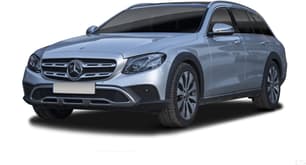
Which is where the new E 220 d All-Terrain comes in. For the first time, Mercedes has added a bit of off-road SUV flavour and ability to the E-Class Estate, and with this extra sparkle it makes sense for it to be the sole long-roof version of the W213-generation E-Class to be brought down under.
But does this extra sparkle retain the elegance that keeps E-Class Estate buyers coming back for more?
If anyone was worried that it would be too late to get a decent bit of value out of an entry-level iX, there's reassuring news.
With more power, range and features added to the model and the cost remaining close to its former sticker price, the iX has held up well despite now existing in a more competitive environment.
Given Mercedes-Benz's rich heritage with station wagons, it is a bit of a shame Australia’s preference for SUVs has reduced the line-up to just one variant this time around.
I'm glad they've picked the All-Terrain to fly the flag though, and Merc wagon loyalists should appreciate the extra versatility of its dirt road ability - if they're not mourning the loss of the extra two seats in the rear. Like the rest of the current E-Class range, the E 220 d All-Terrain is an excellent product overall.
The iX was a bit divisive upon its original launch, because it was one of the early adopters of BMW’s current ‘big grille’ era.
The good news for the iX is that many have adjusted their expectations on that front and it now feels pretty well at home in the brand’s line-up.
The addition of the 'Iconic Glow' grille surround might be a step too far for some, but overall the iX has aged well and its exterior design hasn’t changed much because of that.
The adaptive LED headlights have new DRL elements, and the M Sport pack is now standard, but if you were only casually familiar with the iX you’d have to be looking closely to spot the update.
The new colour palette for the iX also includes the pictured 'Arctic Race Blue metallic', though I’m personally a fan of the iX in all black, giving it a more monolithic look.
Inside, it’s a similar story - what was once perhaps ahead of its time is now the expectation in an electric SUV. Minimalism in terms of physical controls, but plenty of space.
Helping the feeling of spaciousness is the now-standard panoramic sunroof, though a lack of physical shade is one of the iX’s few interior let-downs. Instead, it can electrochromatically ‘shade’, which still lets in plenty of light.
At night, ambient lighting joins the glow of the iX’s rather large 14.9-inch multimedia touchscreen and 12.3-inch driver display.
The All-Terrain styling pack is comprised of tough-looking front and rear bumpers, with unpainted plastic side skirts and wheelarch flares on all corners. This will all be welcomed by anyone who travels regularly on dirt roads, but the All-Terrain bits will also provide a handy disguise from urban parking scrapes.
The double-blade grille, wheels and roof rails are also bespoke to the All-Terrain, and the net result is a distinct personality that should satisfy the majority of previous E-Class Estate buyers previously opting for the AMG styling pack.
Interior trim is based on the regular E-Class Avantgarde package, but with specific rubber studded pedals and All-Terrain branded floor mats to align with the exterior treatment.
In the default suspension setting, the All-Terrain sits 29mm higher than a regular E-Class. Taller tyres make up 14mm of this, while the remaining 15mm is thanks to an elevated 'Air Body Control' air suspension. A further 20mm of lift is available with the All-Terrain drive mode selected, but only at speeds up to 35km/h.
The All-Terrain’s 20-inch alloys are a staggered fitment with 245/40 tyres up front and 275/35 at the rear, while taller-sidewalled 245/45R19 at each corner are a no-cost option, and essential if you wish to use snow chains.
Like the Estate available internationally, the All-Terrain rides on the same 2939mm wheelbase as the E-Class sedan but gains an extra 24mm in rear overhang to measure 4947mm overall.
The wagon body, extra kit and all-wheel drivetrain also add an extra 240kg to the kerb weight over the E 220 d sedan, with the All-Terrain tipping the scales at 1920kg.
The space on offer in both rows of the iX is a huge plus, and it might even be enough to make you look past some of the small downsides to the electric Bimmer’s interior.
The iX’s clever two-level central console has the phone charger pad and drinks holders down out of the way and means you can put distractions (phone) and your tall bottles out of the way. There's a slot above for your phone to sit upright with a gap under for charging, too.
The storage bin under the armrest also has plenty of space as well as a little shelf for smaller items you don't want to go hunting for, but the iX’s control panel and dial are still reflective and, at certain times of the day, this means distracting light getting in your eyes.
Speaking of distracting, I have found BMW’s multimedia software to be less intuitive and more complicated with each major update, and ‘OS 8.5’ is no different. At this point, using the brand’s touchscreen feels like operating an iPad on the move, with dozens of menu tiles to sort through.
But back to the physical space that is the iX’s interior - the big EV makes a lot of sense as a family car, especially if your kids are old enough to appreciate (and keep clean) the fit and finish.
Not only does the drive have a nicely adjustable and comfortable sports seat thanks to the M Sport pack, there's also heating and a massage function.
The front passenger gets the same, and the second row is borderline palatial. There's heaps of kneeroom, headroom, and even space under the front seats at their lowest setting to slot your feet.
The four-zone climate controls mean arguments are avoided, there is of course a central armrest, though even with it folded up and a person in the centre there's enough room in the back to be comfortable.
Behind that, the iX’s 500 litres of boot space could probably be expanded but at the expense of rear legroom, so it's acceptable. There is space under the floor for cables, but no space saver spare, just a repair kit.
There's a switch that allows you to fold the seats down from the tailgate, but you can also manually fold the middle seat for a 40/20/40 split rather than the more expected 60/40.
Aside from the All-Terrain’s rugged looks, the greatest departure from E-Class Estate tradition is the omission of the third row of seats, which makes this one a strict five-seater.
One could argue that the Estate’s traditional rearward-facing third row is a bit old school next to the forward-facing setup used by seven-seat SUVs like the GLS, but it's a shame given the third row is still available in other markets.
The All-Terrain does offer a vast cargo area however, with an extra 130 litres (VDA) over the sedan with the seats up to total 670 litres (VDA). Seats down, this extends to 1820 litres (VDA), but it’s worth noting that both wagon figures are marginally smaller than the previous Estate’s 695/1950 measurements.
Facilitating full use of this space is the classic Merc Estate retractable cargo net, and a 670kg payload promises good scope for loading beyond a full passenger count. The air suspension will also automatically maintain a level ride height regardless of load.
As with all current E-Classes, there are bottle holders in each door plus two cupholders front and back and ISOFIX child seat mounts in the outward rear positions.
As per the non-AMG Mercedes passenger car norm, run flat tyres take the place of a spare tyre, but a space saver can be optioned to sit above the boot floor.
The sole entry-grade iX is the xDrive45 M Sport, which brings with it more than the original base xDrive40, but also a price a few thousand dollars higher.
It starts from $142,900 but can quickly become much more expensive when you start ticking options boxes. But in this market segment, it's not that unusual, especially considering recent arrivals like the Polestar 3.
Given it’s only a little more expensive than before, the extra kit and higher grade that now forms the iX entry-point is impressive.
The 'M Sport' pack is now standard as the name suggests, plus there’s M trim inside like the steering wheel, the M seats and silver design highlights.
The LED lights are now adaptive and the glowing grille surround has also been added.
There’s also now a panoramic glass roof as standard, rather than an option, plus the steering wheel is heated and there’s now a tyre pressure monitor.
Aside from that, there’s plenty that carries over, like the wireless phone charging, wireless Android Auto and Apple CarPlay, 18-speaker surround sound by Harman Kardon, four-zone climate control and heated front seats.
There’s also an 'Executive Pack' which adds some comfort features like soft-close doors, privacy glass and front seat ventilation with rear seat heating. That one’s $6500.
Then there’s active steering, which brings the rear wheels into play for more manoeuvrability and stability for $3000.
Adaptive air suspension is $4000, while the most expensive option is a 30-speaker Bowers & Wilkins ‘Diamond’ surround sound system for $9500.
The All-Terrain theme follows the same path taken by key rivals Audi and Volvo with the A6 Allroad ($112,855) and V90 Cross Country ($99,900), which leaves BMW’s upcoming 5 Series Touring as the sole option in this segment not to adopt the semi-SUV look.
The $109,900 Mercedes is priced right between the Audi and Volvo, but note that the Audi brings a more powerful V6 to justify its slight premium.
The All-Terrain is available with a V6 internationally, but the 220 d four-cylinder diesel was selected for Australia as it's the closest match for the E 250 d that proved the most popular variant last time around.
Compared with a similarly specified E 220 d sedan (which kicks off at $92,900), Mercedes reckons they're about the same on price, but the All-Terrain throws in the wagon body and all-wheel drive pretty much for free. The All-Terrain also offers a significant value improvement over the previous E 250 d Estate which bowed out at $107,900.
Key inclusions for the All-Terrain over the already opulent E-Class are genuine leather trim, proximity unlocking, widescreen dash instrument that spans two thirds of the cabin, LED 'Multibeam' headlights, underbody protection and 20-inch twinned five-spoke alloys.
The iX has, as the xDrive part of its name would suggest, a dual-motor electric set-up with all-wheel drive.
Power and torque now total 300kW and 700Nm for the system in the xDrive45 M Sport, up from the 240kW and 630Nm on offer in the outgoing xDrive40.
BMW says the iX is now good to hit 100km/h from a standstill in 5.1 seconds, with its claimed top speed a nice, rounded 200km/h.
The All-Terrain’s excellent 2.0-litre turbo-diesel engine and nine-speed torque converter auto are carried across from the E 220 d sedan, which produces a decent 143kW/400Nm. Max torque is available from 1600-2800rpm.
The All-Terrain is the only Australian E-Class to pair this engine with the '4Matic' all-wheel drivetrain though, which uses a slightly rear-biased (45/55) torque split in this application.
The iX’s 94.8kWh battery allows a range up to 522km, but relatively low efficiency because of the size and weight.
Its 20kWh/100km is on the higher side of power use for cars around this size and this is part of the reason its huge battery capacity results in a fairly average driving range.
Maximum power input for DC fast charging is, however, up from 150kW to 175kW with the update, which is good news for those long drives.
The All-Terrain’s extra 240kg and no doubt less slippery body add 1.6L/100km to the E 220 d sedan official combined fuel consumption figure, but the wagon’s 5.7L/100km claim is still very impressive for a taller body nudging two tonnes.
At this rate, the E-Class All-Terrain has a theoretical range of 1157km from its 66-litre fuel tank.
The BMW iX was a relatively early entry into the catalogue of electric cars I’ve driven and because of that it had a couple of (in hindsight) unfair criticisms levelled at it.
For a start, it felt heavier than expected and its ride quality didn’t feel up to BMW’s standards - both things that plenty of electric SUVs have struggled with since.
But its drivetrain, design, and interior all impressed, aside from perhaps some of the aforementioned interior reflections.
Now years on, and the iX has aged well.
Some of the mechanicals and suspension also copped a tweak along with the entry iX now being a more powerful ‘45’. The result is a big electric SUV that holds up better than I remember.
‘Smooth’ is the key word that comes to mind in regards to a lot of the iX’s characteristics. While it’s still not perfect and feels heavy, the iX rides well in comparison to many SUVs on the market, including some of its close rivals.
Perhaps key to this is the fact its standard 21-inch wheels leave plenty of tyre to help the suspension soak up sharp edges on bumps, while we’re sure BMW’s handling engineers have learned more about getting the best out of a big, heavy electric vehicle in the last couple of years.
Road noise is well-muted as a result, and the shape of the iX doesn’t seem to lend itself to excessive wind noise. Even when you’re getting rather quick.
Despite being a 2525kg beast, its 5.1-second sprint to 100km/h is in the muscle car realm - the last of Holden’s V8 Commodores would do about that, for reference.
Its acceleration is also nicely progressive, rather than giving you an almighty but unnecessary jolt of torque right as you put your foot down. But once there’s traction and you’re rolling, the xDrive45 is impressive.
Meanwhile, its cornering and braking still reveal the heft behind the iX, it’s not something you can chuck around like a go-kart, but that’s also not really its area.
Anyone familiar with BMW’s steering characteristics will find the slightly higher force required for its weight (and thickness of the steering wheel rim) standard, though it’s still unnecessarily on the heavier side.
Climbing aboard the All-Terrain, there’s a sense you're seated higher than its 29mm static ride height lift suggests. It's probably mostly psychological, and borne from the All-Terrain styling treatment, but something SUV fans will probably appreciate.
Otherwise it's mainly W213-generation E-Class from the driver's seat, which is a very good thing.
However, the extra 240kg of Estate body and All-Terrain spec over a regular E 220 d sedan is just enough to put a dent in the 2.0-litre diesel's performance. Mercedes claims an 8.0sec 0-100km/h figure, which is still more than enough to keep up with traffic, but just not as spritely as the sedan’s 7.3sec figure.
The combination of airbag suspension and the All-Terrain’s slightly taller tyre sidewalls help the wagon ride commendably well. There's no disguising the large-diameter 20-inch wheels over sharp potholes, but the experience is generally even better than we recall from any other existing E-Class.
The steering also feels slightly heavier, as though the level of assistance has been tuned for a touch more weight to add to the All-Terrain’s semi-SUV aura. If our perception is correct, it only adds to the sense of substance from the driver’s seat.
Its overall composure is maintained on dirt too, with the All-Terrain’s Victorian launch route offering a good dose of gravel and muddy unsealed roads. The all-wheel drive system keeps you pointing where you want and enables clean acceleration from the greasiest of corners. All of this highlights the All-Terrain’s potential as a ski field chaser.
We also detoured via some moderate fire trails, which gave us the chance to try the All-Terrain driving mode that lifts the suspension an extra 20mm and slackens the stability control and ABS to better suit low grip scenarios.
At speeds above 35km/h it reverts to Comfort mode, but will return to All-Terrain settings if you slow down again. In Sport mode or above 125km/h, the suspension lowers 15mm below normal to reduce aerodynamic drag. Even at full height it won’t challenge a GLE for clearance, but it’s significantly more capable than regular E-Class models.
The BMW iX holds a five-star ANCAP rating, which it earned under slightly more lenient testing back in 2021.
Seven airbags, auto emergency braking with cyclist and pedestrian detection up to 80km/h, lane-assist, rear-cross traffic alert and intersection assist, plus a surround view parking camera all help immensely.
Like all versions of the current E-Class, the All-Terrain carries the maximum five star ANCAP and EuroNCAP safety ratings. A brilliantly integrated suite of active and passive safety features represents the forefront of occupant and pedestrian protection, which goes well beyond its AEB, nine-airbag count, 360-degree parking cameras, rear cross-traffic alerts, and a pedestrian-protecting active bonnet.
These systems work in harmony to enable semi-autonomous driving, which is perhaps the greatest technical advancement of cars since we stopped riding horses.
BMW offers a five-year/unlimited kilometre warranty with an eight-year/160,000km warranty on the battery.
BMW servicing takes place as needed rather than on a schedule, meaning you’ll be alerted via the car or app when a service is required in the near future.
For the iX a six-year all-inclusive service pack costs $3475, regardless of how many km you drive.
BMW has 54 servicing dealers listed in Australia, with each capital city covered and many more locations in the eastern states.
The E220 d All-Terrain is covered by Mercedes’ three-year, unlimited kilometre warranty, with service intervals pegged at either 12 months or a generous 25,000km.
Mercedes is yet to confirm capped service pricing for Australia, but we don’t expect the All-Terrain to stray too far from the $556, $1112 and $1112 figures applied to the E220 d sedan’s first three services.