What's the difference?
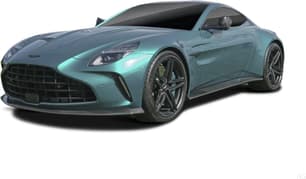
Aston Martin says the 2024 Vantage is designed to put the brand back where it belongs. And by that, it means thrust into the same conversation as Ferrari and Lamborghini when it comes to the ultimate in driver-focused supercars.
Which is why everything – and I mean everything – about this new model has been tightened, tuned or turned way the hell up in pursuit of performance.
Really, it has been a no-stone-left-unturned approach here. And the result, the brand reckons, is a car that delivers not just more power and more torque, but a near-telepathic connection between car and driver, too.
Well, that’s the promise anyway.
So how does the Vantage stack up in the battle for supercar supremacy? I was quite looking forward to figuring that out, to be honest.
Maseratis make a certain amount of sense to a certain kind of person. As the folks who run the brand in Australia will tell you, its buyers are the kind of people who’ve driven German premium vehicles, but find themselves wanting something more.
They are older, wiser and, most importantly, richer.
While it’s easy to see the high-end lure of Maserati’s Italian sex appeal styling and luxuriously appointed interiors, they’ve always struck me as cruisers rather than bruisers.
Again, they’re for the older, more generously padded buyer, which makes the Trofeo range something of an oddity. Maserati says its Trofeo badge - seen here on its mid-sized sedan, the Ghibli, which sits below the vast Quattroporte limousine (and side on to the other car in the range, the SUV Levante) - is all about the "Art of Fast".
And it certainly is fast, with a whopping V8 driving the rear wheels. It’s also completely bonkers, a luxury car with the heart of a track-chomping monster.
Which is why Maserati chose to launch it at the Sydney Motorsport Park complex, where we could see just how quick and crazy it is.
The big question is, why? And perhaps who, because it’s hard to imagine who wants, or needs, a car with such severe schizophrenia.
It’s either a comfortable race car or a bonkers grand tourer, but it’s that best-of-both worlds positioning that makes this new Vantage so appealing. Think of it as like a supercar for proper grown-ups, and one you don’t need to grunt and groan to extract yourself from.
Note: CarsGuide attended this event as a guest of the manufacturer, with travel, accommodation and meals provided.
The Maserati Trofeo Ghibli is a very strange beast, but there's no doubt that it is a beast. Fast, loud and capable on a race track, and yet still closely resembling a classy, expensive Italian family sedan, it is genuinely unique. And genuinely strange, in a good way.
Ok, so the first thing you notice is this massive grille, which I now know is exactly 38 per cent bigger than before. That’s mostly for cooling, sucking in great lung-fulls of air – and any stray pets unlucky enough to wander into its path, I’d imagine — to keep that engine humming.
That air has to go somewhere, and the new bonnet vents complete the engine-cooling.picture.
Then there are 21-inch alloys are wrapped in performance rubber, and I love the swollen haunches at the rear tyres, giving the Vantage a mean and menacing vibe. At the rear, a very new and very loud quad-exhaust completes the picture.
In the cabin you'll find nothing in the way of hand-me-down Mercedes switchgear, which makes for change. This is all Aston Martin, and actually it all feels really nice.
The twin-screen setup looks tech-savvy and premium, the materials are all nicer than you'd find in something more track-obsessed, and even the optional race seats managed to be both snug-fitting and comfortable.
The Ghibli Trofeo is an alluringly beautiful car from just about every angle, with a genuine sense of occasion and presence about its nose, a sleek side profile and a much improved rear end, where the light clusters have been redesigned.
The Trofeo special touches are impossible to miss, particularly from the driver’s seat where you look straight into two vast nostrils on the bonnet. There are also carbon fibre pieces on the front air duct and the rear extractor for a sportier, wilder look.
The red details on the air vents on each side are the highlight, though, while the lightning bolt on the Maserati trident badge is another nice touch.
The interior is simply beyond special and feels even more expensive than it is. Overall, I’d say it again, it’’s alluring. Italian style at its best and the Ghibli is the Cinderella point in the range, because the Quattroporte big brother really is too large, and the Levante is an SUV.
You’ll be shocked to hear that Aston Martin didn’t dedicate too much of its limited track time to extolling the practicality perks of its new Vantage, mostly because there simply aren’t that many of them.
But the most obvious one, I think, is that most of the people in the market for a $400k-plus vehicle in this category are likely to be, well, of a certain vintage, and it’s for these people that the more traditional layout of the Vantage will no doubt appeal.
See, the engine is up front, and the doors open in the usual fashion, making getting in and out of the cabin easy, and free of the human-origami antics sometimes required to climb in and out of a scissor-door supercar.
But there have been practical improvements made to performance here, too. There’s 30 per cent more power, 15 per cent more torque, new cooling, better aerodynamics, retuned suspension and anti-roll tech, new brake booster tuning, improvements to the ESP system, more body stiffness. And it goes on.
From the driver’s seat, the Trofeo Ghibli feels spacious indeed, and while it’s not as vast in the back as a Quattroporte, there’s plenty of room for two adults, or even three small children.
The move to throw sportiness at the Ghibli has led to it having firm but fabulous seats. They’re comfortable, and the leather is luscious, but the actual seat back is constantly letting your spine know that this is no ordinary Ghibli.
Throw it around a track, though, and the seats feel just right, providing the kind of support you need.
Boot space is ample at 500 litres and the Ghibli feels like the sort of car you could take your family in, if only it didn’t make you feel like you were spoiling your children too much.
Let’s start with the big number, and that is the $410,000 you’ll need to park the new Vantage on your driveway. Interestingly, I was also on the launch of the previous Vantage, back in 2018, and that one was just under $300k. That’s quite the jump.
Anyway, for that spend you get a whole bunch of improved performance, obviously, but also quite a bit in terms of cabin tech and comfort. This isn’t a stripped-back supercar, and that’s a good thing, I reckon.
It starts outside with 21-inch five-spoke forged wheels wrapped in Michelin Pilot Sport rubber, matrix LED headlights and LED tail-lights, while in the cabin, there’s a 10.25-inch central screen with Apple CarPlay, a second 10.25-inch screen in front of the driver, an 11-speaker stereo, and wireless phone charging.
At a price of $265,000, the idea of “value” becomes a different discussion, but you only need to glance at the Ghibli to realise that it looks like four times that much money.
The interior is also spectacularly boudoir-like, with lashings of carbon fibre and a whole cattle stud worth of full-grain Pieno Fiore natural leather, “the best the world has ever seen”, as Maserati likes to say.
Perhaps most vitally, this Trofeo racy edition gets a Ferrari engine; a 3.8-litre twin-turbo V8 good for 433kW and 730Nm (the first time it’s been seen in the Ghibli), driving the rear wheels only through a limited-slip differential and an eight-speed torque converter automatic gearbox. You also get very nice, expensive feeling paddles to shift those gears with.
Speaking of nice, the 21-inch aluminium Orione wheels are dead classy, if reminiscent of Alfa Romeo cars.
Ghibli Trofeo models come with a Corsa, or Race, button for hard-core sporty driving, and a Launch Control function.
There’s also an MIA (Maserati Intelligent Assistant), featuring a rather large 10.1-inch multimedia screen with upgraded resolution.
The Active Driving Assist “assisted driving function”, which has been seen in Ghibli before, can now be activated on urban roads and ordinary highways.
The 4.0-litre twin-turbo V8 is still borrowed from Mercedes-AMG, but this is the new-generation unit, making 489kW and 800Nm. It gets modified cylinder heads and bigger turbos, helping generate the extra grunt.
That’s fed through an eight-speed ZF automatic and channeled through to the rear tyres. The race to 100km/h? That 3.5 seconds. Meanwhile, the flying top speed is around 325km/h.
This will be the last time Maserati gets to enjoy a proper Ferrari engine - a 3.8-litre twin-turbo V8 good for 433kW and 730Nm - before it moves to a more electrified future, but it’s certainly going out with a lot of loud bangs.
Deafeningly lovely, the V8, which drives the rear wheels, will shove you to a shouty 100km/h in 4.3 seconds (fast, but not stupidly so, although it feels even quicker) on your way to a very Italian top speed of 326km/h.
We can report that it exceeds 200km/h with consummate ease and has epic amounts of torque on tap.
There’s the official figure, which is 12.1L/100km on the combined cycle, and then there’s the real-world figure. It’s not really fare to judge fuel use when you’ve just stepped off a racetrack, but rest assured it was a large number, which is to be expected really.
The Aston’s 73-litre fuel tank prefers 98RON fuel, too.
Maserati claims a slightly inexact fuel-economy figure of 12.3 to 12.6 litres per 100km, but good luck ever achieving it. The desire to open the taps and really chew some fuel will aways be overwhelming.
We drove it on a race track and would easily have been exceeding 20 litres per 100km, so our test figure is probably best not spoken about.
It's funny, I never felt like the old Vantage wanted for power, but now I suddenly wonder how we ever made do with it. This feels like the engine and the outputs that should have always been, such is the way it suits the nature of Aston’s most performance-focused model.
Everything is about the driver here. From the suspension tune to the gearbox mapping and the increase in stiffness everywhere. You’re supposed to feel like the main character, and you do.
Aston Martin have come under fire in the past for delivering cars that are a treat to look at, but didn't quite deliver the drive experience to match the appearance, and it's something the brand says it is actively rectifying with with the Vantage, and the Astons that will follow it.
The mission, it says, is to be spoken of in the same sentence as the Italian supercar makers when it comes to delivering driver engagement, and this 2024 Vantage is a considerable leap in that direction.
It is, above all else, fun. From the multi-stage ESP settings that you can pair to your bravery, to the retuned and raucous exhaust and the blistering acceleration.
More than that, it feels light and lithe on a racetrack, and super communicative, the front wheels talking through your wrists, and the back tyres through, well, the bit of you that hits the bottom half of the racing seat...
It is plenty fun, right across the park. The power is immense, but somehow it doesn't feel terrifying, partly because you're so dialled-in to the drive experience, and partly because the carbon brakes fitted to our test car were able to slow the Vantage so savagely it's as though we'd dropped anchor out the back window.
The Vantage does have a split personality, though, and it's one that really shows itself once you venture out onto the road. It's quiet, comfortable even, at suburban speeds, leaning more into grand tourer than bonkers track-day special.
The only downside being that, should you sit behind the wheel long enough, it becomes easy to forget you're driving something "super" at all. Well, until your right foot finds its way back to the accelerator, that is...
We were fortunate enough to drive all three Trofeo models - Ghibli, Levante and Quattroporte - on the track at Sydney Motorsport Park, which really is the only way to fully appreciate vehicles with Ferrari V8 engines, 433kW and rear-wheel drive.
Maserati is keen to point out that other premium brands don’t offer that kind of grunt in their rear-drive cars, indeed most of them are going all-wheel drive, and that level of playfulness is a real USP, it believes.
The thing is, the company also acknowledges that its buyers are older, wiser and wealthier types moving up from the German brands.
The Trofeo range, in particular, then, is a real niche within a niche. I picture Maserati buyers as being slightly sedate yet stylish. Fans of the nicer things in life, but not flashy, or thrashy, about the cars they drive.
And yet, unlike other Maseratis, the Trofeos are flame-spitting beasts that sound like Game of Thrones dragons. Clearly there are people who like their classy Italian saloons to be insanely fast and track ready. And hooray for them, because as weird as it seems to flog a car like this so hard, the Trofeo Ghibli was well and truly up for it.
It’s also the pick of the litter, being less SUV like than the SUV Levante, and less stupidly long and heavy than the Quattroporte.
Its shorter wheelbase and lighter weight make it the most fun and light on its feet when being thrown around. We hit an easy 235km/h on the front straight before hurling into Turn One well north of 160km/h, and the Ghibli just held on tight before using its torque to hurl it at the next bend.
It sounds, as I’ve said, amazing, but it’s worth saying again because it’s a real Maserati (or Ferrari, really) advantage of choosing this car.
The brakes are also up to the task of repeated track-hard stops, the steering is lighter and less talkative than a Ferrari perhaps, but still excellent, and the whole Trofeo Ghibli experience is best described, on circuit, as being better than you would possibly imagine.
Out on the road, you don’t have to put up with the firm ride that pressing the Corsa button compels, and the Ghibli reverts to its smooth, cruiser persona - while still looking sporty as hell.
The only letdown is the seats, which are a little on the firm side, but everything else about the cabin is so luxe you almost forgive it.
While this car makes no sense to me, it obviously excites enough people for Maserati to make a business case, and charge $265,000 for the Trofeo Ghibli. Good luck to them, I say.
You’ll never see a Vantage crash-tested by ANCAP, but it does arrive with a solid safety package.
There are front and side airbags, plus a heap of active safety stuff like AEB, forward collision warning, adaptive cruise, lane keep assist, lane departure warning, lane change assist with centring and front and rear cross-traffic alert.
There is no ANCAP rating for the Ghibli as it has not been tested here.
The Trofeo Ghibli comes with six airbags, Blind Spot Detection, Forward Collision Warning Plus, Pedestrian Detection, Adaptive Cruise Control, Lane Keep Assist, Active Driver Assist and Traffic sign Recognition.
Aston Martins in Australia are covered by a three-year/unlimited-kilometre warranty, but you can extend that for one or two years, at a price. You’ll be visiting the service centre annually, too.
Maserati offers a three-year, unlimited kilometre warranty, but you can choose to buy 12-month or two-year warranty extensions, and even a sixth or seventh-year drive-train warranty extension.
When much, much cheaper Japanese and Korean cars are offering seven and even 10-year warranties, this is so far off the pace that such a fast vehicle should be embarrassed. And if you're buying something Italian, a better, longer warranty would seem like a must. I'd be negotiating at sale for them to throw the longer warranty offer in.
Maserati says servicing for the Ghibli has a "ball park costing of $2700.00 for the first three years of ownership" with a service schedule of every 20,000km or 12 months (whichever occurs first)
Also, "please note that the above is indicative only of the manufacturers basic routine service maintenance schedule and does not include any consumable items such as tyres, brakes etc or additional dealership charges such as environmental levies etc."