What's the difference?
Alfa Romeo. A brand with more re-boots than success stories. Yet one which driving enthusiasts the world over can’t seem to shake the allure of.
Of course, these are not cars for just everyone. Most mainstream buyers are scared away by what I like to call the three Rs. Rust. Reliability. Resale.
Alfa’s tumultuous (and often overstated) past is one it has trouble putting behind it. Reputations are hard earned and easily lost, and besides, the majority of the voting public aspire to own something German, which they see a lot more of on the road.
It doesn’t help that Alfa also dragged its feet on committing to a five-year warranty in Australia (in early 2022), hardly a statement of confidence in its product.
You’re probably wondering by now why anyone would buy one, and why it’s the car which most enthusiasts wish they were brave enough to own.
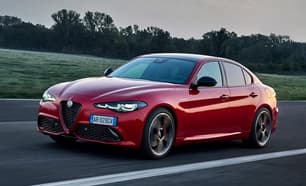
Well the Giulia is the Alfa Romeo. The low-slung, sporty, sexy car which a few of us out there still use as a reference-point for how to make a sedan in 2023 good-looking, and how to make one drive like it has heart.
The brand can throw all the SUVs at us it wants, but for those who see Alfa Romeo for the brand it should be, this car is it.
Parting sorrow, perhaps, the version we’re looking at for this review may be one of the last - under its new Stellantis management, Alfa has said it will leave this fantastic, promising Giorgio platform behind it in a move to be more electrified.
Travel with me, dear reader, as we celebrate a car which is the culmination of Alfa’s past, at a moment before it steps into the future.
I'm going to reveal something of myself here - I used to be a RenaultSport Clio owner. This is what the purists call what we now know as Clio RS, and I find myself constantly corrected yet unrepentant. It was a 172 - a nuggety three-door with wheels that looked too small, a weird seating position and a 2.0-litre naturally aspirated engine that was big on torque as long as you belted it.
It was a classic and you could still see the links back to the epoch-making Renault Clio Williams, that blue and gold Mk 1 Clio we never saw in Australia that redefined the genre. The current Clio has been around for four years now and I even drove this current RS Clio at its launch in 2013, memorable for the sudden bucketing rain that drenched the circuit and made things very interesting indeed.
This Clio was a big change from the cars that went before - slimmer-hipped, less aggressive-looking and with a 1.6-litre turbo engine, five-door-only body and (gasp!) no manual, just Renault's twin-clutch EDC transmission. It was a hit, at least with enthusiasts. Back then it was the dawn of a golden age in small hot hatches. But that was then, this is now. With a small power bump and a couple of features thrown in, is the ageing RS still at the pointy end?
The Giulia is a love letter to the increasingly lost art of the sporty executive sedan. As refined as it is beautiful and oh-so elegant to drive, itβs a reminder of why we always love Alfa Romeo, even when the odds are against it.
Emotional cars like this are hard to come by and they will soon be gone, replaced by something new. The future is not necessarily worse, but it will be different, so if a sporty European sedan with a combustion engine is calling out to you donβt miss your opportunity to drive the Giulia while it still exists in this form.
The Clio RS is still a ton of fun and in Cup spec, probably the best compromise between price and livability. Despite its advancing years (it turns five this year, so ready to start kindy) and big brother Megane hogging the limelight with a fancy new model on the way, the Clio is a stayer. It's missing some frustratingly obvious things like CarPlay, AEB, rear airbags and rear cross-traffic alert, but it's hardly alone in the segment.Β
With the departure of the Fiesta ST, though, the Clio returns to the top of the list of best small hot hatches on sale today.