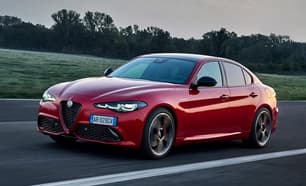
What's the difference?
Alfa Romeo. A brand with more re-boots than success stories. Yet one which driving enthusiasts the world over can’t seem to shake the allure of.
Of course, these are not cars for just everyone. Most mainstream buyers are scared away by what I like to call the three Rs. Rust. Reliability. Resale.
Alfa’s tumultuous (and often overstated) past is one it has trouble putting behind it. Reputations are hard earned and easily lost, and besides, the majority of the voting public aspire to own something German, which they see a lot more of on the road.
It doesn’t help that Alfa also dragged its feet on committing to a five-year warranty in Australia (in early 2022), hardly a statement of confidence in its product.
You’re probably wondering by now why anyone would buy one, and why it’s the car which most enthusiasts wish they were brave enough to own.
Well the Giulia is the Alfa Romeo. The low-slung, sporty, sexy car which a few of us out there still use as a reference-point for how to make a sedan in 2023 good-looking, and how to make one drive like it has heart.
The brand can throw all the SUVs at us it wants, but for those who see Alfa Romeo for the brand it should be, this car is it.
Parting sorrow, perhaps, the version we’re looking at for this review may be one of the last - under its new Stellantis management, Alfa has said it will leave this fantastic, promising Giorgio platform behind it in a move to be more electrified.
Travel with me, dear reader, as we celebrate a car which is the culmination of Alfa’s past, at a moment before it steps into the future.
The Polestar 2 was one of the first electric vehicles (EVs) in Australia to break through to the mainstream, however it has always been relegated to the Tesla Model 3’s shadow.
As a result Polestar is constantly playing catch up, releasing update after update for this premium-pushing electric liftback. The most notable was a major mid-life update in 2024.
Two years after this, Polestar has just rolled out the 2026 model year (MY26) update which introduces a range of subtle changes, largely under the surface.
It comes as Polestar is now introducing newer models, there’s mounting pressure from legacy carmakers who are only now catching up to EV tech, and Australians are moving away from buying passenger cars to SUVs.
Has this latest update improved the appeal? Read on to find out.
The Giulia is a love letter to the increasingly lost art of the sporty executive sedan. As refined as it is beautiful and oh-so elegant to drive, it’s a reminder of why we always love Alfa Romeo, even when the odds are against it.
Emotional cars like this are hard to come by and they will soon be gone, replaced by something new. The future is not necessarily worse, but it will be different, so if a sporty European sedan with a combustion engine is calling out to you don’t miss your opportunity to drive the Giulia while it still exists in this form.
This latest update for the Polestar 2 is lovely, but driving the original is a reminder of how solid this car has always been if you overlook the inherent impracticalities of being an EV on a combustion-engine platform.
The fact you still get steady flow of over-the-air software updates bringing new features, plus you can now upgrade to the new Qualcomm processor chip, saving some coin and getting a second-hand model that’s a couple of years old isn’t a bad option at all.
Note: CarsGuide attended this event as a guest of the manufacturer, with meals provided.