What's the difference?
Alfa Romeo. A brand with more re-boots than success stories. Yet one which driving enthusiasts the world over can’t seem to shake the allure of.
Of course, these are not cars for just everyone. Most mainstream buyers are scared away by what I like to call the three Rs. Rust. Reliability. Resale.
Alfa’s tumultuous (and often overstated) past is one it has trouble putting behind it. Reputations are hard earned and easily lost, and besides, the majority of the voting public aspire to own something German, which they see a lot more of on the road.
It doesn’t help that Alfa also dragged its feet on committing to a five-year warranty in Australia (in early 2022), hardly a statement of confidence in its product.
You’re probably wondering by now why anyone would buy one, and why it’s the car which most enthusiasts wish they were brave enough to own.
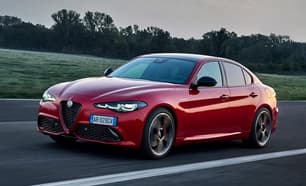
Well the Giulia is the Alfa Romeo. The low-slung, sporty, sexy car which a few of us out there still use as a reference-point for how to make a sedan in 2023 good-looking, and how to make one drive like it has heart.
The brand can throw all the SUVs at us it wants, but for those who see Alfa Romeo for the brand it should be, this car is it.
Parting sorrow, perhaps, the version we’re looking at for this review may be one of the last - under its new Stellantis management, Alfa has said it will leave this fantastic, promising Giorgio platform behind it in a move to be more electrified.
Travel with me, dear reader, as we celebrate a car which is the culmination of Alfa’s past, at a moment before it steps into the future.
Even on its Australian swansong outing, the incredible R35 GT-R continues to perform beyond expectations.
Released in late 2021, the final batch of specials spearheaded by the T-spec in regular GT-R and SV in flagship Nismo guises sold out quickly and are already commanding twice and even thrice their recommended retail prices in private hands.
Nobody ought to be surprised. From its glitzy 2007 Tokyo Motor Show debut (on the eve of a global recession at that), the GT-R has been nothing less than an automotive force of nature, moving with calamitous calm to the beat of its own twin-turbo and all-wheel-drive thrum, like nothing else matters. The R35 has seen off countless assassins in its time, including the Lexus LFA and Honda NSX II.
Some 15 years later, this is what a GT-R in T-spec trim feels like in 2022.
The Giulia is a love letter to the increasingly lost art of the sporty executive sedan. As refined as it is beautiful and oh-so elegant to drive, it’s a reminder of why we always love Alfa Romeo, even when the odds are against it.
Emotional cars like this are hard to come by and they will soon be gone, replaced by something new. The future is not necessarily worse, but it will be different, so if a sporty European sedan with a combustion engine is calling out to you don’t miss your opportunity to drive the Giulia while it still exists in this form.
The GT-R of the famous R32 era was a direct response to immortals like the Audi Ur Quattro and Porsche 959 that preceded it in the 1980s.
But the Nissan’s true gift since then is that it has evolved over successive generations, to serve as a glimpse of what these long-discontinued European supercars might be like if they, too, were allowed ongoing development, rather than dropped.
As such, the last R35 GT-R as we know it in Australia is far from disadvantaged, even 15 years on from launch, because it was devised and developed outside of the usual constraints and compromises of mere mass production sports cars.
In 2022, then, the Nissan GT-R remains timeless and transcendental. It’s still an incredibly moving and thrilling driving experience… if you can get hold of one.