What's the difference?
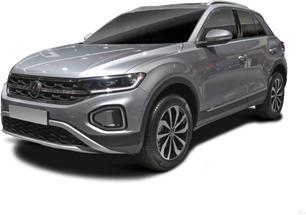
For a small SUV that technically starts under the $40,000 mark, the 2024 Volkswagen T-Roc has a fair bit going for it.
It’s still in its first generation, but updates have made some parts of the T-Roc feel properly up to speed. And the parts that haven’t? Well, maybe that’s not such a bad thing.
We’re driving the mid-spec Style 110TSI, which sits above the base CityLife, but below the R-Line. Then of course, there’s the wicked R variant.
But is this a Euro that could replace your trusted Japanese small SUV?
Volkswagen has a new large SUV in the Tayron (pronounced TIE-ron), and it arrives with a fair bit riding on it. Replacing the Tiguan Allspace and taking on some of the duties left by the departing Touareg, it’s now the brand’s key seven-seat family offering.
We’re testing the flagship 195TSI R-Line with established petrol rivals like the Kia Sorento GT-Line, Skoda Kodiaq RS and Toyota Kluger Grande in mind. After a few weeks of school-holiday mayhem, complete with feral kids, does it sink or swim?
So that’s the T-Roc, a bit of Euro style that’s still priced to take the fight to some small SUVs from Japan or Korea.
Is it the cheapest style-forward small SUV you can get? No, but it’s far from the expensive end of things.
Plus, if you can resist ticking some option boxes, it beats some value-focused rivals and looks good doing it.
If the feeling of a sturdy fit-out and a confidence inspiring drive is important to you, I reckon the T-Roc should be an entry on your shopping list.
So, does the new Volkswagen Tayron 195TSI R-Line sink or swim? It's definitely swimming as it delivers a solid blend of features and comforts for families seeking a 'sometime' seven-seater. It's not yet on the podium as it doesn’t hit every mark. Purchase price and servicing costs may put some buyers off but it packs in a number of thoughtful, family-oriented features. Whether it will go on to become Volkswagen’s standout seven-seat offering remains to be seen, but it’s a capable, well-rounded option in the segment.
The T-Roc subtly stands out without being garish, avoiding becoming part of the highway or suburban camouflage without relying on extreme design decisions.
For example, the LED daytime running lights that wrap around the shapes below the LED 'I.Q' headlights where vents would otherwise be on the R performance variant are quite cute.
In fact, the whole front end of this small SUV has a friendly look, even if there’s nothing specific that’s particularly exciting about it.
This 'Petroleum Blue Metallic' colour is a $700 option, but anything other than white costs extra.
However, the black roof two-tone look is a standard for the Style, as are the black mirror caps and its 18-inch alloys.
There are roof rails up top, tinted privacy windows for rear passengers and for the rear window and a sloping roofline at the rear that adds a touch of ‘sport’ to the silhouette along with a small spoiler at the top.
The Tayron has a robust silhouette but avoids tipping into boxy territory. Its long wheelbase is balanced well by the overall shape and the large 20-inch alloy wheels give it a planted, purposeful stance. It’s a pleasant-looking family SUV, though it stops short of being particularly distinctive. Beyond the illuminated Volkswagen badges (which are a genuine highlight and lend the Tayron some subtle Tron-like flair) the design is fairly unassuming.
Inside, the Tayron makes its strongest impression after dark. Multiple illuminated panels with galaxy-like patterns add depth and visual interest, giving the cabin a sense of atmosphere that’s largely absent in daylight. There’s a reassuring mix of soft-touch surfaces and materials throughout. Suede-like microfleece and leather elements are used generously, contributing to a cabin that feels well made.
The black headliner is a win when you have kids but interestingly for a top-spec grade, there is no sunroof. The R-Line leather steering wheel looks the part and feels good in hand but aside from the expansive digital displays, the cabin lacks a clear focal point. A little more personality would have gone a long way toward elevating the cabin space.
Inside the T-Roc is a bit of an interesting dichotomy.
Some of what’s in here is ‘old-gen’ Volkswagen stuff, but it still holds up today against even some recently introduced models.
The dichotomy is that while it’s very usable and slick, some of its materials and surfaces let it down a touch.
The good points are that the cabin tech is a perfect level of physical and digital. The buttons and controls are easy to use and feel solid and even though the climate controls could be more physical, they’re still good as far as touch panel style controls go.
The older VW gear is arguably better than a lot of what’s found in newer models where some use of touchscreens and haptic panels has drawn negative feedback from customers.
The multimedia software managed via the 8.0-inch touchscreen is more simple and sensible than the new version, plus the Digital Cockpit Pro display for the driver is clear and, importantly, customisable. It’s a similar cockpit system that used to seem quite impressive in high-end Audis.
But what doesn’t feel very high-end is some of the plastic and the decisions around function in the rest of the space.
The leather on the seats is not a cheap option box to tick at $3450, but it feels a little cheap to the touch. It’s a tad hard and even has a bit of a rough look to it.
That option also makes them heated and electrically adjustable, though, which is welcome in winter. Otherwise, cloth seats without the optional leather or heating would be absolutely fine, and that means you get a storage space under them, too.
This central space between the driver and front passenger, too, is a little awkward with the cupholder placement. It’s behind the shifter meaning a tall bottle will be in the way and it’s got slightly odd sizing for bottles or cups with nothing to stop them wobbling.
I am, however, a fan of the angled-away phone slot under the climate controls to minimise phone screen visibility (and distraction) and the traditional shifter itself is welcome.
Look up, and (in our test car) there’s an optional ($2000) panoramic sunroof there. It’s yours if you want it, and it does have an electric blind, but some Japanese and Korean cars at this price point get that as standard.
An average-sized adult will find the second row is spacious enough and relatively comfortable. There’s an armrest, dual-directional vents and two USB-C ports.
Behind that, boot space is generous at 445L with the seats up thanks to an adjustable floor, which is very useful for tall items and even manages to fit a space saver spare tyre under it.
It’s a total of 1290L with the split-fold seats down, too, though they’re not super flat with the adjustable floor down.
The Tayron’s cabin hits most of the right notes for a three-row family SUV. Space is strongest in the front and middle rows, with generous head and legroom accommodating taller passengers without issue. That said, the narrow centre armrest means the driver and front passenger end up quietly competing for elbow room on longer drives.
The electrically-adjustable front seats are the most comfortable place to be, particularly over distance. With heating, ventilation, massage and strong lumbar and under-thigh support, they reinforce the sense that this is the flagship grade.
Storage up front is more mixed. The door bins and glove box are on the larger side, but the centre console leans more towards tray than box. While the ‘hideaway’ dual wireless charging pads are a clever idea, accessing them means clearing whatever you’ve placed on the shelf above. A small drawer to the right of the steering wheel is a useful touch, though, and works well for a garage remote or wallet.
The second row is firmer and more bench-like, with seat backs that don’t offer much support in corners. Heated outboard seats are a welcome inclusion, but, much like the Tiguan Allspace, there are noticeable gaps of around 12cm between the seats and the doors. While the Tayron offers three top-tether anchor points across this row, fitting three child seats side by side would be challenging.
That said, amenities in the second row are plentiful. The transmission tunnel is relatively low, foot space is generous, and there’s no shortage of features to keep younger passengers comfortable. Map and device pockets, dedicated climate controls, two USB-C ports, retractable cupholders and manual sunblinds all feature. The sunblinds, in particular, are a road-trip essential when travelling with kids or a sleeping baby. The only frustration is that the climate and seat heating controls can occasionally lock, requiring access via the front touchscreen.
The third row is kid-coded because of the access and available legroom. There’s no footwell as the seat base sits fairly close to the floor, so knees are up. There are also no amenities aside from a single cupholder, so any novelty will quickly wear off even for younger kids.
Much of the Tayron’s functionality runs through the large 15-inch multimedia display, including climate control. The screen offers clear graphics and is mostly responsive, though some lag can occur on start-up. Built-in navigation is standard, along with wireless Apple CarPlay and Android Auto. CarPlay maintained a consistent connection and pairing was straightforward.
Practicality is rounded out by a well-shaped boot. With all seats in use, there’s 345L of cargo space which is enough for school bags and a grocery run. Fold the third row and capacity expands to 850L, which is better than several key rivals. The squared-off load area makes it easy to stack gear, and it comfortably swallowed a nine-year-old’s BMX bike and scooter without needing to fold the second row, which benefits from a versatile 40/20/40 split.
All grades come with a space-saver spare tyre, which is far preferable to a repair kit, and the R-Line adds a hands-free powered tailgate. Deep side pockets flanking the height-adjustable boot floor and a 12-volt socket round out a cargo area that feels genuinely family-friendly.
The specific Style test vehicle being reviewed here is priced at $38,890, before on-road costs. But it's worth noting a new example of the Style will cost you $39,790 at the time of writing, as its price has since ours was 'delivered'.
While the Style features some older VW fitout, it comes with a decent list of features.
A set of 18-inch wheels, self-levelling headlights (with cornering function), some cute LED DRLs plus chrome highlights with black contrast trim are the best way to spot a Style from the outside.
Inside, there’s an 8.0-inch touchscreen for multimedia paired to the driver’s 'Digital Cockpit Pro' display.
The multimedia screen is last-gen VW gear, but that’s not a bad thing.
There’s also dual-zone climate control with an allergen filter, ambient lighting, a six-speaker sound system, wireless phone charger and wireless Android Auto and Apple CarPlay.
There are a few options on our test car that nudge the price up quite quickly, like the metallic paint, leather upholstery, sunroof, plus the keyless entry or ‘Easy open and close package’.
All this brings the total price as-tested to $45,640, before on-roads.
The good news is you don’t need to tick all, or any, of those options for this to still be a compelling option.
A hybrid version of the Tayron is expected later this year, but for now Volkswagen is launching the model with three petrol engines across three grades. We’re family-testing the flagship 195TSI R-Line, which sits at the top of the range and offers the most power, priced at $73,490, before on-road costs.
That places it towards the upper end of its immediate rivals. The Kia Sorento GT-Line and Skoda Kodiaq RS come in more affordably, at $66,290 and $69,990, respectively, while the Toyota Kluger Grande jumps well beyond at $85,135, before on-road costs.
On paper, the Tayron doesn’t dramatically out-spec its competitors, which means its value equation doesn’t immediately leap out. Particularly as it’s also more expensive than the Tiguan Allspace it replaces, which won’t thrill some prospective buyers.
That said, there is little to want for with the R-Line, which will soften the sting. The cabin is generously appointed, with 12-way electric front seats featuring three-position memory, heating, ventilation and a massage function. Upholstery is finished in Varenna leather, paired with a mix of suede-like microfleece and synthetic leather trims. Second-row outboard seats are heated, as is the R-Line leather steering wheel and a 30-colour ambient lighting system adds a noticeable lift to the cabin at night.
Technology plays a central role, with a large 15-inch multimedia display joined by a 10.25-inch digital instrument cluster and a colour head-up display. The system runs Discover Pro Max navigation and includes a voice assistant function, wireless and wired Apple CarPlay and Android Auto, Bluetooth connectivity and a 10-speaker Harman Kardon sound system covering AM, FM and digital radio.
Elsewhere, the R-Line includes a 360-degree camera system with a cleaning function, although image clarity is slightly underwhelming for a vehicle at this price point. Owners also receive a complimentary five-year subscription to Volkswagen’s 'GoConnect' app, which provides live vehicle status, location tracking, trip data, warning notifications and direct dealership communication.
Day-to-day practicality hasn’t been overlooked. There are manual sunshades for the second row windows, three-zone climate control, two 15W wireless charging pads, four USB-C ports, and two 12-volt sockets. A hands-free powered tailgate and a space-saver spare tyre round out a feature list that, while not segment-leading, is thorough and well considered.
The engine in the T-Roc - as with most Volkswagens - does what it says on the tin. Essentially, a 110TSI means there’s 110kW of turbocharged VW happening, in this case a 1.4-litre four-cylinder that also makes 250Nm of torque.
It’s paired to an eight-speed torque converter, which will be music to the ears of those who have been scorned by older VW dual-clutches.
It drives the front wheels only, and there’s no hybridisation or 48-volt system.
For now, the R-Line sits at the top of the Tayron range and is the most powerful version available. It’s powered by a 2.0-litre, four-cylinder, turbo-petrol engine producing 195kW of power and 400Nm of torque, paired with a seven-speed auto transmission and all-wheel drive.
In isolation, and particularly against its key petrol-powered rivals, those figures stack up well. For everyday family duties, the combination feels suitably polished.
With a 2500kg braked trailer towing capacity, it's competitive for this segment and will be sufficient for many families towing medium-sized toys. That said, buyers coming from, or expecting, a Touareg replacement may notice the difference. The Tayron doesn’t match the larger SUV’s 3.5-tonne towing capability. And the larger capacity will be missed.
A lack of electrification in a relatively small engine and a traditional drivetrain shouldn't scare you too much, in this case.
Combined cycle fuel consumption is a claimed 6.3L/100km. On test in mostly urban areas or for spirited driving we saw the fuel use rise a little higher than that but not by as much as you might think.
After a mix of primarily urban, some highway and a stint of dynamic test driving, the trip computer admitted to a figure of 8.1L/100km.
Some of the Tayron’s key rivals lean on mild-hybrid assistance to improve fuel efficiency, and on paper they offer an advantage in this area. By comparison, the Tayron 195TSI R-Line sticks with a conventional petrol powertrain, so its efficiency figures are largely in line with what you’d expect given its size, weight and performance.
Volkswagen claims a combined (urban/extra-urban) fuel cycle figure of 8.6L/100km for this grade. With a 58-litre fuel tank, that translates to a theoretical driving range of up to 698km. In real-world use, after a mix of longer highway driving and some urban running, I recorded an average of 9.3L/100km, which feels reasonable rather than surprising.
Efficiency is an important consideration for families, particularly in this segment and it will be interesting to see how the upcoming hybrid powertrain performs once it arrives. For now, the R-Line’s fuel consumption feels broadly consistent with its output, even if it doesn’t lead the class.
The T-Roc is essentially a previous-generation Golf-turned-small SUV in terms of its platform, and that’s a great thing for anyone who likes driving.
The Golf 7.5 was a benchmark for everyday driving as far as hatchbacks are concerned, and even though the current Mk8 might be a bit more up to date, the T-Roc’s use of the platform it rides on is practical and fun.
It’s not as nimble as a Golf, but the T-Roc in front-drive Style guise, with a responsive turbocharged engine and no all-wheel drive system weighing it down, is not only more dynamically capable than most rivals, it’s also easy to access that capability.
The 1.4-litre engine feels well-tuned for its two modes accessible through the shifter - calm but not lazy in ‘Drive’ and eager but not thrashy in ‘Sport’.
It works well with the transmission on the move, picking right gears fairly accurately, though there are paddles behind the wheel for those who prefer to take charge.
The drive modes are also more customisable than just those on the shifter, with 'Individual' selections for steering and drivetrain able to be used rather than the standard 'Eco', 'Normal' or 'Sport' full-system modes.
While the steering wheel itself is a little thick and the feedback, while adequate, isn’t the most telling, it’s accurate and inspires confidence in cornering.
The T-Roc handles turn-in and exits well, even soaking up bumps and not becoming unsettled when braking.
Its safety systems are relatively subtle, and the active cruise control is well sorted, though the automatic braking at car park speeds can be overzealous. Something I’ve experienced in VW Group models several times over the years.
The main culprit for the T-Roc was a shrub beside my driveway that, while not touching the car, would set off the automatic braking system. Still, better than letting the car roll back if there was a proper obstacle or someone who could be hurt in the way.
Aside from that, the Volkswagen T-Roc is fun and easy to drive, and the work that’s gone into that puts its price into perspective a little more.
There are more expensive cars available that are less impressive, some even disappointing.
The R-Line’s engine is the standout in the Tayron range. It delivers solid, usable power with enough in reserve to make overtaking straightforward, particularly at highway speeds. While it doesn’t have the same effortless surge as the larger Touareg, it performs where it matters for everyday driving.
There is an occasional shudder through the front suspension and steering when entering a roundabout or turning off on a hill. It’s brief when it occurs, but noticeable and not something you expect to feel regularly in this class.
Suspension tuning is on the firmer side, though overall ride comfort remains acceptable. The Tayron provides decent road feedback without feeling unsettled or harsh. At higher speeds the cabin can sound slightly tinny, but around town it remains quiet and composed.
Steering response is direct without being heavy. The Tayron corners confidently for a vehicle of this size, but there is some body roll, which is most apparent for passengers in the back rows.
Forward and side visibility are strong, helped by a high seating position and unobtrusive pillars. Rearward visibility becomes more limited when the third row is in use, and a digital rear-view mirror would be a worthwhile addition.
With a 12.1m turning circle, the Tayron can feel large in tighter car parks, though it’s otherwise easy enough to park. The 'Park Assist' function and 360-degree camera system helps, even if image clarity falls short of what you’d expect from a flagship grade.
In 2017, ANCAP gave the T-Roc five stars for safety. For most people, that says enough, plus the list of features the SUV comes with is fairly comprehensive even in the Style.
While its rating is getting on in years, the only real downside to the T-Roc’s age when it comes to safety is it only having six airbags - front and side for the front passengers, plus curtain airbags for front and rear passengers.
But the list of tech isn’t lacking, with driver fatigue detection, pedestrian monitoring, parking bay and parallel parking assistance, pedestrian monitoring, side assist, rear cross-traffic alert and lane assist.
The Tayron carries a fresh maximum five-star ANCAP rating from 2025, with strong results across the board - 87 per cent for adult and child protection, 83 per cent for vulnerable road users and 85 per cent for safety assist systems. Nine airbags come as standard, including side-chest protection for the front and middle rows, something often reserved for the front seats alone and side curtain airbags extend across all three rows.
The suite of driver-assistance systems is comprehensive. Features include blind-spot monitoring, lane keeping aid, lane departure alert, side door impact protection, driver attention monitoring, traffic sign recognition, side exit warning, front and rear cross-traffic alert and forward and rear collision warning with emergency braking. The emergency braking system is sensitively tuned, though, and can be triggered by minor obstacles like leaves on the road, leading to the occasional mini heart attack while parking.
Adaptive cruise control with stop-and-go functionality is reasonably well calibrated. The middle row benefits from ISOFIX child seat mounts and three top-tether anchor points, though the third row misses out entirely. Emergency call capability is also absent.
Autonomous emergency braking covers vehicles, cyclists, motorcyclists and pedestrians and is operational from 4.0-250km/h.
Volkswagen’s five-year/unlimited kilometre warranty is pretty standard for a premium-leaning brand, with VW also offering roadside assistance for the warranty period.
In terms of servicing, VW offers care plans of three years or five years, covering servicing for $1515 or $2770 respectively. That's an average of $505 or $554 per workshop visit.
Otherwise, servicing costs at 12-month/15,000km intervals can cost from $470 for some to $1104 to the biggest service if you don’t go with the locked-in package.
The Tayron is covered by Volkswagen's five-year/unlimited km warranty which is a shorter term than a lot of its rivals.
You can pre-purchase a three- or five-year servicing plan at $2207 or $4098, respectively, which isn’t as affordable as some rivals but does include roadside assistance. However, at the time of writing, the five-year price was set at $3550.
Servicing intervals are well spaced at every 12 months or 15,000km, whichever occurs first, with servicing available at any of VW's 118 official service centres nationwide.
The Tayron only accepts a minimum 95 RON unleaded petrol, which might sting a little with regular fill-ups.