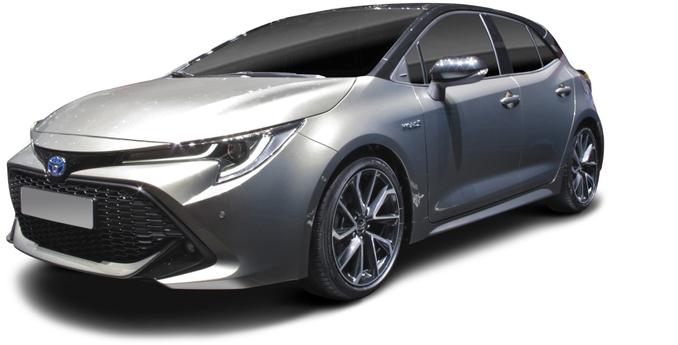
The 2024 Toyota Corolla range of configurations is currently priced from $24,990.
Our most recent review of the 2024 Toyota Corolla resulted in a score of 8.2 out of 10 for that particular example.
Carsguide Deputy Editor James Cleary had this to say at the time: After several years in market, the Toyota Corolla Ascent Sport Hybrid stands up well. Late 2022 upgrades have helped keep the hybrid powertrain on the pace and the multimedia system competitive. The sedan layout is better than the hatch for carrying people and cargo, it’s a refined and comfortable drive, and the ownership package sets the pace in this category. That said, safety is good but could be better, the CVT’s a bit drony, there are some small things we’d like to see on the standard equipment list (adjustable rear ventilation, extra USBs) and there’s room for improvement in terms of in-cabin storage. But overall, it’s hard to go past this small sedan proposition.
You can read the full review here.
This is what James Cleary liked most about this particular version of the Toyota Corolla: Hi-tech powertrain, Driving dynamics, Affordable ownership costs
The 2024 Toyota Corolla carries a braked towing capacity of up to 1300 Kg, but check to ensure this applies to the configuration you're considering.
Corolla Hatch and Sedan are available in ‘Glacier White’, ‘Frosted White’, ‘Silver Pearl’ and ‘Eclipse Black’. Hatch-only colours are ‘Sunstone Orange’, ‘Lunar Blue’, ‘Graphite’ and ‘Jasper Red’. Sedan-only colours are ‘Dark Grey’, ‘Celestite Grey’, ‘Atomic Rush’ and ‘Saturn Blue’. Note: The ZR hatch in Frosted White, Graphite, Jasper Red, Silver Pearl and Lunar Blue can be optioned with a two-tone black roof.
The Toyota Corolla 2024 prices range from $24,750 for the basic trim level Hatchback Ascent Sport to $43,010 for the top of the range Hatchback Zr Two-Tone Opt Prem Paint Hyb.
Simply assuming the problem is a dud sensor is a great way to replace a bunch of things that weren’t causing the problem. This needs to be diagnosed and the first step there is to have the car electronically scanned to see what faults the computer already knows about. From there, you can make a much more informed plan of attack.
That said, you may well be right and the problem is a crank-angle sensor or something to do with the throttle position sensor. But, equally, the problem could be with the car’s wiring (getting hot when the power is turned on) or the fuel pump, so making a guess and replacing that component is a great way to waste time and money. A scan is quick and cheap and the smart way to go on any electronically fuel-injected vehicle.
Show more
Plenty of used cars change hands without service books in the glovebox. But this is usually a problem in older cars where the vehicle is well and truly out of warranty. In a newer cars such as yours, the lack of any service history in the car would be a major red flag.
There’s no law requiring a car dealer to provide a service history, just as there’s no law compelling owners to have their cars serviced correctly, even though failing to do so will often void the car’s warranty. And how can a dealer be responsible for a car’s service books if the previous owner lost them? Also, if the car hasn’t been serviced within the Toyota dealership network, how can a dealership determine what that service history has been?
But here’s what’s probably happened: Many dealerships (especially high-volume ones) remove the service handbook, owner’s manual and the second key from the car before it goes on the lot. That’s to prevent those things going 'missing' over the weeks the car is on sale and being test driven by who-knows-who. In my experience, there will be one person at that car-yard who will know where the books and keys and stored and until you find that person, their location will remain a mystery. But, if the car was bought on the condition that the service books would be sent to you, then that forms part of the contract of sale and the car-yard must produce them. In the meantime, since you don’t know when the last service was carried out, I’d be pushing for a free service to ensure the car doesn’t wind up with a skipped service based on time and kilometres.
Show more
On older cars like this one, some pretty strange electrical things can start to happen as switches and wiring ages. The first thing to check for is that there’s not a cargo area or interior light staying on when it shouldn’t and subsequently flattening the battery.
But the failure of the stereo and temperature gauge both point to a body computer problem (as does the battery going flat). The body computer basically controls all the car’s functions that are not driveline related. So, the central locking, lighting, entertainment, security, power windows, climate control and much, much more are body-computer driven. And if this computer fails, lights can turn themselves on, the central locking can cycle over and over again and various other electrical bits and pieces can switch themselves on and drain the battery.
But there’s one other check to make before blaming the computer (which, on a 1994 Corolla, won’t be as complex as one on a more modern car), which is to make sure there are no bad earths on the car. Failing gauges are a common symptom of a bad earth somewhere on the car, and if that’s the case, you might find this is also causing the starting problems by not allowing the battery to fully charge when the car is driven.
Show more
At a minimum, all Corollas feature an 4.2-inch touchscreen multimedia display with voice control (higher grades boast 7.0- and 12.3-inch screens), Android Auto and (wireless) Apple CarPlay, six-speaker audio with digital radio and in-built satellite navigation. There’s also climate control air (single-zone), a 7.0-inch information display in the instrument cluster, keyless entry and start, wireless phone charging, active cruise control, an electrochromatic rearview mirror, 16-inch alloy wheels, LED headlights, tail-lights and DRLs, as well heated door mirrors.
The Corolla is powered by a 2.0-litre, four-cylinder, naturally aspirated four cylinder engine. Hybrid models are powered primarily by a naturally aspirated 1.8-litre four-cylinder petrol engine supported by a primary AC synchronous, permanent magnet electric motor.
The Corolla’s interior is simple without crossing over into plain, the dual-level dash design accommodating a media screen standing proud in the centre, and a compact instrument binnacle sitting under a curved brow. There’s plenty of breathing space up front and in the rear there’s good legroom and ample headroom.
The Corolla ZR hybrid has the biggest boot size of the hatch range because it has a tyre repair kit instead of a spare tyre. The storage space is 333 litres (VDA), as opposed to 217L in all other variants, whether they have a full-size spare (Ascent Sport petrol) or not (all others). By contrast, the sedan’s boot measures 470 litres.
The Corolla is a five-seater in sedan and hatch form, with comfy seats trimmed in hard-wearing cloth in the lower grades and premium partial synthetic leather trim on the top-spec ZR.
Toyota doesn’t quote acceleration figures for the Corolla but you can expect 0-100km/h in around 12 seconds for hybrid models and approximately 10 seconds for non-hybrids. Top speed is around 190km/h.
Non-hybrid Corollas have a range approaching 850km, while hybrid’s models can go just over 1100km between fills.