What's the difference?
Tesla’s Cybertruck truly is a giant wedge of cutting-edge technology, and not only because its edges are so sharp you could literally cut yourself, or chop kindling, with them.
No vehicle, nor indeed even any of his stupid ideas, so perfectly represents the manic mania, the whooping, wanton wackiness of Elon Musk as this comically angular, sharp-edged savager of pedestrians.
And yet people, and American people in particular as we discovered on a trip to Los Angeles to drive one, love the Cybertruck. Tesla is said to be holding as many as 2 million pre-orders for it in North America alone and many Australians have expressed interest in buying one, when the company finally manages to build it in right-hand drive, and get it on sale down here, almost regardless of the price (spoiler alert: it’s going to be a lot).
I’ve seen a lot of strange and wildly ugly cars over the years, but if you parked the Cybertruck next to all of them, they’d just disappear because you really can’t take your eyes off its pointy, almost dangerous looking lines. It’s like a human tried to engineer an echidna on wheels.
It does make me laugh, though, and so it was with a smile on my face and acid dripping from my pen that I arrived at a giant Tesla delivery centre in LA to drive it. Come with me.
The SUV craze is such that high-riding wagons are increasingly being tasked with also doing the job of sports cars, despite the immutable laws of physics clearly working against them.
While the results have been mixed, Mercedes-AMG has some serious form in this area, so much so that it’s been confident enough to unleash the second-generation GLE63 S.
Yep, this large SUV is looking to do its best impersonation of a sports car, so we’re looking to find out if it’s a convincing Jekyll and Hyde. Read on.
Weird, wild, unnecessary, arguably horrific to look at, or at least challenging, too fast, too silly, the Cybertruck is many things, but all of the bad things are obvious from a distance while you only realise just how impressive, clever and intense it is once you take it for a drive.
The drive-by-wire steering alone is a revolutionary bit of tech that will surely bleed into the wider world.
Overall I thought I would hate it, but I walked away, head still shaking, with grudging respect approaching admiration for the Tesla Cybertruck.
There’s little wonder the GLE63 S is back for a second go around, after clearly putting the frighteners on the Audi RS Q8 and BMW’s X5 M Competition and X6 M Competition.
After all, it’s a large SUV that sacrifices little in the way of practicality (especially the wagon) in its pursuit of high performance.
And for that reason, we’re itching to go for another drive – with or without the family.
Note: CarsGuide attended this event as a guest of the manufacturer, with travel and meals provided.
Is there anything interesting about a Narwhal, or a rhinoceros? It’s hard to know whether to give the Tesla Cybertruck 10 out of 10 for how interesting its design is, or zero for how offensive it is, but it would certainly get a solid 20 out of 10 for uniqueness.
Sure, in pictures it looks pretty out there, but when you stand before it in all its shiny steel it makes you laugh out loud, to the point where it has taken your breath away.
And then you start to notice all the fingerprints on it. Every time you - or any of its many admirers - touches it, you get nasty, oily stains and keeping it clean would make looking after a car painted in a matte finish look as easy as sleeping.
So, stainless steel as a choice for constructing a car? Perhaps there’s a reason no one else has ever followed the DeLorean’s lead here, but there’s no denying it grabs your eye, and provides a certain solidity to the whole structure.
Much like a Frank Gehry building, you’re either going to love the Cybertruck and think it a work of modern art, or dismiss it as a childish man’s fantasy made real (essentially that was the design brief for this vehicle, “make Elon a toy”, and it has nailed that brief), but either way you’ll definitely have strong feelings about it.
A car, or even a pick-up truck, with no round surfaces, nor subtlety of any kind, can’t really be described as beautiful in any way. But interesting? Definitely.
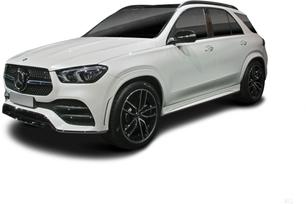
First things first, the new GLE63 S is available in two body-styles, with the wagon appealing to the traditionalists out there, while the coupe targets the style-conscious.
Either way, few large SUVs are as imposing as the GLE63 S, which is a good thing considering it wants to be taken seriously.
Up front, it’s immediately identifiable as a Mercedes-AMG model thanks to its distinctive Panamericana grille insert.
The angry look is punctuated by the angular daytime running lights integrated into the Multibeam LED headlights, while the chunky front bumper has large air intakes.
Around the side, the GLE63 S stands out with its aggressive wheelarch extensions and side skirts, with the wagon getting 21-inch alloy wheels as standard, while the coupe gets 22-inch items.
From the A-pillars onwards, the differences between the wagon and coupe body-styles start to become apparent, with the latter’s roofline much more steeply raked.
At the rear, the wagon and coupe differentiate themselves even more clearly with their unique tailgates, LED tail-lights and diffusers. That said, they do have a sports exhaust system with squared-off quad tailpipes in common.
It’s worth mentioning that the difference in body-style also means a difference in dimensions, with the coupe 7mm longer (4961mm) than the wagon, despite having a 60mm-shorter wheelbase (2935mm). It’s also 1mm narrower (2014mm) and 66mm shorter (1716mm).
Inside, the GLE63 S separates itself with its flat-bottom steering wheel with Dinamica microfibre accents, and multi-contour front seats, which are upholstered in Nappa leather alongside the armrests, dashboard and door shoulders and inserts.
The door bins are of the hard plastic variety. That’s underwhelming in a vehicle that costs this much, as you would hope cow hide – or at least a soft-touch material – would be applied to them.
The black headliner acts as another reminder of its performance focus, and while it makes for a darker cabin, metallic accents feature throughout, while the trim (our test vehicle had open-pore wood) adds some variety alongside the ambient lighting.
That said, the GLE63 S is still filled to the brim with cutting-edge technology, including two 12.3-inch displays, with one the central touchscreen and the other a digital instrument cluster.
Both use Mercedes’ MBUX multimedia system and feature Apple CarPlay and Android Auto support. This set-up is still the benchmark, thanks to its speed and breadth of functionality and input methods, including always-on voice control and a touchpad.
While the front and rear seats feel plenty spacious, that odd peaked baseball cap roof is a bit challenging in terms of headroom, and I smashed my noggin into it a few times trying to reach into the back seat for more Oreos and Mountain Dew.
You can pop up the bench seat in the back to create even more space for storage, or to provide a flat floor to sleep on.
You can also lie an American sized pizza box on the vast swathe of dash between you and the wildly angled windscreen, there’s plenty more storage on the floor between you and the passenger and then more storage bins at your hip, as well. A wireless phone charger sits twinned with the spot where you park your Tesla card key.
It’s a practical, semi-rugged feeling space, but with the usual kind of Tesla less is more feeling, except when it comes to the screen, which is stupidly large and requires far too much input when you’re driving to be safe. And there’s still no speedometer where you need one, in front of your eyes, and no head-up display, despite Tesla’s love of other jet-fighter tech, like drive-by-wire steering.
Being a large SUV, you’d expect the GLE63 S to be quite practical, and it is, but what you wouldn’t expect is the coupe to have 25L more cargo capacity than the wagon, at a generous 655L, due to its higher window line.
That said, when you stow the 40/20/40 split-fold rear bench via the second row’s release latches, the wagon has a significant 220L advantage over the coupe, at a cavernous 2010L, thanks to its boxier design.
Either way, there’s a small load lip to contend with, making loading bulkier items a little more difficult, although that task can be made easier with the flick of a switch, as the air springs are able to lower the load height by a handy 50mm.
Better yet, four tie-down points are on hand to help secure loose items, alongside a couple of bag hooks, while a space-saver spare resides under the flat floor.
In the second row, things are even better, with the wagon offering a crazy amount of legroom behind our 184cm driving position, as well as two inches of headroom for me.
With its 60mm-shorter wheelbase, the coupe naturally sacrifices some legroom, but it still provides three inches of legroom, while its sloping roofline trims headroom to an inch.
No matter the body-style, the five-seat GLE63 S is wide enough to seat three adults abreast with few complaints, with the transmission tunnel on the smaller side, meaning there’s plenty of room for feet.
There’s also plenty of room for child seats, with two ISOFIX and three top-tether anchorage points on hand for fitting them.
Amenities-wise, rear occupants are treated to map pockets on the front-seat backrests, as well as a fold-down armrest with two cupholders, while the door bins can accommodate a couple of regular bottles each.
A fold-out cubby is positioned below the air vents at the rear of the centre console, containing two slots for smartphones as well as a pair of USB-C ports.
In the first row, occupants have access to the centre console’s cubby, which features two temperature-controlled cupholders, in front of which are a wireless smartphone charger, two USB-C ports and a 12V power outlet.
The central storage bin is pleasingly large and contains another USB-C port, while the glovebox is also on the larger side, and you get an overhead sunglasses holder too. Stunningly, the front door bins can take three regular bottles apiece. Not bad.
While the wagon has a large, square rear window, the coupe’s is a letterbox in comparison, so rearward visibility isn’t one of its strong suits.
How does one define value when it comes to the vehicular equivalent of a cockroach, one that seems capable of surviving the apocalypse with it indestructible (but possibly slightly rusty in appearance) stainless-steel exterior, HEPA filters (will protect you from pollution, pollen and “industrial fallout”) and (almost, kind of) bowling-ball proof super-strong windows (it can allegedly survive the impact of a baseball at 112km/h - handy if someone is trying to kill you with a baseball)?
And what price can you put on the kind of attention driving a Cybertruck gets you? Perhaps only a Bugatti or a Pagani could match the level of wide-eyed, slack-jawed excitement you see from other people when you drive this thing around.
Then there’s the fact that it accelerates like an actual rocket, is allegedly so cosseted in the cabin that it’s “as quiet as outer space” (this is a comparison test I am up for, if Elon’s Space X would like to arrange it), and can tow “an average African elephant”, or 4,990kg, and has a 1134kg capacity in that vast rear tray, covered by a standard, automatic tonneau cover that’s so tough you can stand on it.
In that rear tray you’ll find a bottle opener, and some storage tubs with drainage holes to keep your beer cold or your fish frozen. You could sleep in there, on the composite bed, which is tough you don’t need a liner, but why would you when you can sleep in the truck - the dash is so large you could comfortably lie under the windscreen to sun yourself - using 'Sleep Mode', which runs the air con all night from its giant battery to keep it at your set temperature.
Speaking of your battery, you can also charge things with it using the integrated power outlets, and that includes the ability to charge another Tesla, or to re-zap your Tesla Powerwall at home and run your house during a blackout. Or the Apocalypse.
Tesla has put a price on all this, of course, and in America it ranges from US$81,895 to US$101,985. Frankly, that seems like quite good value when you add it all up, or at least it would if the Cybertruck really could tow five tonnes further than the end of the street, and if range - surely something of an issue for an outdoorsy vehicle like this - really could be guaranteed at 547km.
If and when it gets to Australia, of course, its value will need to be reassessed on what is sure to be a much, much larger number.
Priced from $220,600 plus on-road costs, the new GLE63 S wagon is $24,571 dearer than its predecessor. While the rise is unfortunate, it is accompanied by the fitment of a lot more standard equipment.
And the same is true of the new GLE63 S coupe, which is priced from $225,500, making it $22,030 more expensive than its forebear.
Standard equipment for both cars includes metallic paintwork, dusk-sensing lights, rain-sensing wipers, power-folding side mirrors with heating, side steps, soft-close doors, roof rails (wagon only), keyless entry, rear privacy glass and a power-operated tailgate.
Inside you score push-button start, a panoramic sunroof, satellite navigation with live traffic, digital radio, a 590W Burmester surround-sound system with 13 speakers, a head-up display, a power-adjustable steering column, power-adjustable front seats with heating, cooling and massaging functionality, heated front armrests and outboard rear seats, four-zone climate control, stainless-steel pedals and an auto-dimming rearview-mirror feature.
Rivals for the GLE63 S include the less expensive Audi RS Q8 ($208,500) and BMW’s X5 M Competition ($212,900) and X6 M Competition ($218,900).
Yes, I’m giving it 10. Because how could you want for more than a torque figure of 13959Nm, and a Ferrari-humbling 630kW of power to boot?
The Cybertruck is the perfect example of Elon Musk’s approach to what we’ll call science, or Twitter, or X. If it can be done, just do it, don’t ask whether it’s a good idea, or batshit insane.
So because he could fit a vast 123kWh battery and two crazy powerful motors to this pick up monster, and that could provide enough grunt to send three tonnes of mass to 100km/h in 2.8 seconds, they did.
Is it wise? Probably not. Is it wild and almost, somehow, strangely admirable? Yep.
The GLE63 S is powered by Mercedes-AMG’s ubiquitous 4.0-litre twin-turbo V8 petrol engine, with this version pumping out a hard-hitting 450kW of power at 5750rpm and 850Nm of torque from 2250-5000rpm.
But that’s not all, because the GLE63 S also has a 48V mild-hybrid system called EQ Boost.
As its name suggests, it has an integrated starter-generator (ISG) that can provide up to 16kW and 250Nm of electric boost in short bursts, which means it can also reduce the sensation of turbo lag.
Mated to a nine-speed torque-converter automatic transmission with paddle-shifters, and Mercedes-AMG’s fully variable 4Matic+ all-wheel-drive system, the GLE63 S sprints from a standstill to 100km/h in just 3.8 seconds, in either body-style.
Tesla claims a range of 547km between charges and that even when towing something of “reasonable size” (a smaller Tesla perhaps) it will still get 400km. I, for one, very much doubt that.
Tesla also claims you can recover up to 235km of range with just 15 minutes of Tesla Supercharging, while a charge from 10 to 80 per cent on that same Supercharger would take 44 minutes. On a 110V American plug it would take 110 hours, or 4.5 days, to fully charge from zero to 100 per cent.
The GLE63 S’s fuel consumption on the combined-cycle test (ADR 81/02) varies, with the wagon achieving 12.4L/100km, while the coupe needs 0.2L more. Carbon dioxide (CO2) emissions are 282g/km and 286g/km respectively.
When you consider the high level of performance on offer, all of these claims are fairly reasonable. And they’re made possible by the engine’s cylinder-deactivation technology and the 48V EQ Boost mild-hybrid system, which has coasting and extended idle-stop functionality.
That said, in our real-world testing with the wagon, we averaged 12.7L/100km over 149km. While that’s a surprisingly good result, its launch drive route mainly consisted of high-speed roads, so expect a much higher number in metropolitan areas.
And in the coupe, we averaged a higher but still respectable 14.4L/100km over 68km, although its launch route purely involved high-speed country roads, and you know what that means.
For reference, the wagon has an 80L fuel tank, while the coupe has an 85L unit. Either way, the GLE63 S only takes more expensive 98RON premium petrol.
It’s fair to say the Tesla Cybertruck is an intimidating prospect in the metal. It towers over you and seems to stretch into forever, because it does, at 5.68m long (too long to fit in a standard Australian parking space).
It’s also a full 2.0m wide, 1.8m tall and weighs 3.1 tonnes, but along with its size comes the fact that it just doesn’t look… right. There’s not a round surface on it but there are plenty you could cut yourself with, or lose a finger in.
It’s no less weird inside, as the giant A-pillars, vast dash, crazy yoke steering device and graphically lovely screen confront you, making it feel like you might be on the Starship Troopers ride at Universal Studios rather than in an LA car park.
Then, while you’re getting used to this and having a good laugh at the Easter egg on the touch screen (smash the windows on the graphic of the car with your finger and you hear the sound of Elon freaking out at the infamous failure demonstration of its unbreakable glass), you’re warned that it is going to be almost as weird to drive as it looks.
This is, in part, due to the Cybertruck’s unique drive-by-wire steering - a technology previously popular only with jet fighters and other planes - which allows it to have a yoke instead of a steering wheel without being annoying, because your hands will never cross over and be left grasping air.
Yes, the Infiniti Q50 debuted with 'steer-by-wire' a decade ago, but featured a full mechanical system as a fail-safe back-up. No mechanical safety net here.
The Cybertruck has less than one full turn lock-to-lock, and it has not just passive but aggressive rear wheel steering, allowing the back wheels to turn the opposite direction to the front ones at parking speeds, quite radically, which, once you’re used to it, makes it much easier to park than seems possible.
It also makes this Tesla incredibly sharp and direct and means that, for the first few minutes of driving it you will turn the wheel, sorry, yoke, far more than necessary.
Once you get used to it, however, it is fabulous, as long as you don’t think about what would happen if the software that’s the only thing connecting you to the wheels - rather than actual moving parts - failed.
The steering makes the Cybertruck shrink around you to the point where you forget, at times, just how big it is. Combined with the low centre of gravity and the bank vault solidity of the chassis, it also makes it turn-in and handle like a much smaller sports car (and it has a turning circle that defies belief, one that’s sharper than some sedans).
Speaking of sports cars, most of them won’t keep up with the Cybertruck if there’s someone brave in its driving seat. Indeed, you’d need a proper hypercar to match its constant, surging torque (no, I don’t believe it can really have 13,000-plus Newtons, but it’s a lot), and its purely outrageous, surging speed.
Tesla has a habit of calculating torque at the wheels, not the motor(s) and gearing reductions increase torque markedly.
Yes, I do believe it would do 0 to 100km/h in three seconds, maybe slightly less, but I’m also equally sure it’s not a great idea to try (I'm also very grateful I didn't experience the problems with the throttle sticking open on some examples that recently saw every Cybertruck recalled).
The problem is that 3.0-tonne weight figure, and all that mass. It feels beyond weird to move something this big, that fast, and it quickly makes you pause for a chilling thought about whether it’s all going to be able to stop again. It does, or it did for me, but boy, it puts the wind up you every time you try.
Overall, though, it’s hard to overstate just how surprisingly good, and yes, at times even fun, the Cybertruck is to drive.
Oh, and for the trainspotters out there, claimed efficiency is 22.4kWh per 100km, but we actually saw 27kWh during our two days of test drives. Our second Cybertruck was also making some distinctly weird metallic clanking noises from underneath, particularly when we switched between forward and reverse.
It might be worth waiting for the second generation of this thing before buying one, but that won’t be an issue for Australian fans, anyway.
As far as its off-road abilities, we managed to find a bit of beach in a car park and pointed the Cybertruck at it. After an initial fearful moment of being sure we were going to sink, we just put the foot down and let all that torque power us out of trouble. It felt effortless.
Make no mistake, the GLE63 S is a big beast, but it certainly doesn’t act its size.
Firstly, the GLE63 S’s engine is an absolute monster, helping it to hunker down off the line and then charge on towards the horizon with serious vigour.
While there’s so much initial torque to begin with, you still get the added benefit of the ISG, which helps to eliminate lag as the new twin-scroll turbos spool up.
That said, acceleration isn’t always brutal, as the electronic stability control (ESC) is often quick to cut power when under full throttle in first gear. Thankfully, engaging the ESC system’s Sport mode solves this issue.
This behaviour is somewhat ironic as the 4Matic+ system is seemingly never short of grip, with it's working hard to find the axle with the most traction, while torque vectoring and a rear limited-slip differential proportion torque from wheel to wheel.
Regardless, the transmission provides predictably smooth and predominantly timely gear changes, although they’re definitely not dual-clutch quick.
What’s more memorable, though, is the sports exhaust system, which keeps your neighbours relatively sane in the Comfort and Sport drive modes, but will drive them mad in Sport+, with hilarious crackles and pops heard loud and clear on the overrun.
It’s worth noting that while the sports exhaust system can be manually engaged in the Comfort and Sport drive modes via a switch on the centre console, it only makes the V8 rumble grow stronger, with the full effect only unlocked in Sport+.
Of course, there’s more to the GLE63 S experience, like the fact that it somehow rides like a large SUV yet handles like a sports car.
The suspension’s air springs and adaptive dampers offer up a luxurious ride in the Comfort drive mode, with the GLE63 S wafting along with confidence. Not even its large-diameter alloy wheels pose too much of a threat to this quality on poorer country roads.
The ride is still more than liveable in the Sport drive mode, although the adaptive dampers become a too firm in Sport+, with the ride becoming a little too jittery to be bearable.
Of course, the whole point of the adaptive dampers becoming progressively firmer is to help the GLE63 S handle even better, but the real revelations here are the active anti-roll bars and engine mounts, which effectively limit body roll to such a level that it’s almost imperceptible.
In fact, overall body control is impressive, with the GLE63 S not feeling like the 2.5-tonne-plus behemoth it is. It really has no right to attack corners the way it does, with the coupe feeling a touch tighter than the wagon, thanks to its 60mm-shorter wheelbase.
Further confidence is afforded by the sports brakes, which include 400mm discs with six-piston calipers up front. Yep, they wash away speed with ease, which is exactly what you’d hope for.
Also key to the handling is the electric power steering, which is speed-sensitive and has a variable ratio. It’s really quick in the wagon, and even more so in the coupe, thanks to its more direct tune.
Either way, this set-up is well-weighted in the Comfort drive mode, with plenty of feel and just the right amount of heft. That said, Sport and Sport+ make it gradually heavier, but neither make the driving experience better, so stick with the default setting.
Meanwhile, Noise, Vibration and Harshness (NVH) levels are pretty good, although tyre roar is consistent at highway speeds, while wind whistle is prominent over the side mirrors when travelling above 110km/h.
Some unkind experts have referred to the Cybertruck as a “death machine” and a “guideless missile”, pointing out that putting a stainless steel body on top of a big old battery is inherently problematic. As is the lack of crumple zones.
Making all this very pointy metal move as fast as a McLaren supercar has also raised some questions about sanity.
Then there was the recent recall of every Cybertruck built so far:
"Cybertruck owners reported that their vehicles were at risk of getting stuck driving at full speed due to a loose accelerator pedal. Video showed the pedal itself falling off and the piece beneath wedging itself into the car’s interior, which would force the vehicle into maximum acceleration. One driver was able to save himself from a crash by holding down the brake pedal."
Elon Musk, has claimed, however, that the Cybertruck, is “much safer per mile” than its competitors.
Australia has different pedestrian safety regulations to the US and while some have posited that the Cybertruck will pass, pointing to the fact that you can buy an even bigger Ram truck here, others are not so sure.
The Tesla Cybertruck does have six airbags, and a suite of active safety features as part of its 'Autopilot' system, but it does not yet have 'Full Self Driving'.
ANCAP awarded the second-generation GLE range its maximum five-star rating in 2019, meaning the new GLE63 S gets full marks from the independent safety authority.
Advanced driver-assist systems generously extend to autonomous emergency braking with pedestrian and cyclist detection, lane-keep and steering assist (including emergency), adaptive cruise control with stop and go functionality, traffic-sign recognition, driver attention alert, high-beam assist, active blind-spot monitoring and cross-traffic alert, tyre pressure monitoring, hill-descent control, park assist, surround-view cameras and front and rear parking sensors.
Other standard safety equipment includes nine airbags, anti-skid brakes, electronic brake-force distribution and the usual electronic traction and stability control systems.