What's the difference?
The SsangYong Tivoli XLV is about as unknown to Australian customers as cheeseburgers are to the tribespeople of the Amazon.
That is to say, if I asked your opinion of the SsangYong Tivoli XLV, you’d probably have no idea what I was on about. You may be unsure of its origins, unclear of its intentions, and generally baffled by the concept of it. The Amazonians may well feel the same way about burgers.
However, if Korean SUV specialist SsangYong has its way, the Tivoli XLV will become as hip and desirable, as Instagrammable and indulgent as the most clickable cheeseburgers out there. Geez, I’m hungry.
The Tivoli XLV is essentially a longer, taller version of the shorter, lower Tivoli, which is also coming to Australia. It keeps the Tivoli part of the name because it’s largely very similar, but the XLV has some points of difference: it’s all-wheel drive only, it’s diesel only, and it’s clearly one of the most practical small SUVs in the class.
What does XLV stand for? According to SsangYong, the acronym represents “eXciting smart Lifestyle Vehicle”.
Scratch that. Think of it as the 'eXtra Large Version' of the brand’s smallest vehicle, and you’ll be most of the way to understanding just what this big small SUV is all about.
The BMW X5 is a leading contender in the ‘Over $70K Large SUV’ division of Australia’s new car market, which is a hotly-contested segment boasting 15 marques and 25 models.
The X5 has hit an enduring sweet spot with Aussie buyers in terms of size, performance and price. BMW prefers to call it a Sports Activity Vehicle (SAV) as distinct from its Sports Utility Vehicle (SUV) rivals.
Clearly, any word association with a utility is something BMW Group Australia wants to avoid after recently launching its latest X5 range, which brings numerous enhancements including design revisions, increased standard equipment, refreshed powertrains and more.
We were entrusted with the digital ‘Comfort Access’ key to one of the latest X5s, to understand from a family car perspective why this model range enjoys such enduring popularity with prestige SUV (sorry, SAV) buyers.
Depending on the pricing and specifications, the SsangYong Tivoli XLV might well offer an interesting alternative to the mainstream small SUV crowd. The safety score is a bit of a deterrent, but that may not rule it out for all buyers.
It’s almost like this is a provisional review, because we simply don’t know much about the brand’s strategy ahead of the local range rollout in November.
One thing’s for sure: just like a cheeseburger or any good laboured pun, we can’t wait to get our hands on some of the finer details from SsangYong Australia.
This is a luxurious prestige five-seater brimming with BMW’s latest design and technology that’s not only practical for weekly family duties but can also embrace spirited driving with the push of a button. A great all-rounder for families that like a sporty edge.
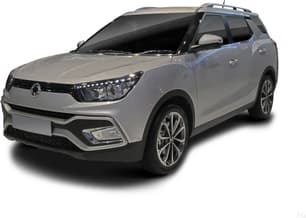
One look and you might think 'honey I shrunk the Stavic', and that’s not too bad of a summary. There are some ungainly touches to the design of the Tivoli XLV - as you might expect from a small SUV that has been stretched.
But from some angles, it doesn’t look too bad. The front end is quite fetching, I think, with those projector halogen headlights with LED daytime running lights cutting a different shape to many of its rival models sold in our market. However, the overtly lipped quarter panels aren’t to all tastes, and the curved, clear-lensed tail-lights aren’t going to win any beauty contests.
I don’t think it’s ugly in the same way the original Stavic was… but SsangYong let us in on a secret at the launch event in Korea: there’s an updated, facelifted version of the Tivoli XLV and the regular Tivoli due in June 2019. It may be worth waiting for, because not only will it bring a new, more modern look, it will probably add equipment and safety features.
What do you think? Does it look more or less attractive than, say, a Honda HR-V, Mitsubishi ASX or Nissan Qashqai? Tell us in the comments section below.
Now, size: the XLV is essentially a stretched, more family-friendly version of the Tivoli. Both are built on the same line, and everything is pretty much the same from the C-pillar forward. It measures 4440mm long (which is 198mm longer than the standard Tivoli, both on a 2600mm wheelbase), 1798mm wide and 1635mm tall (Tivoli is 1590mm). The XLV is longer than any other small SUV it competes against.
Australian customers are expected to be able to choose between an array of eight body colours and a contrasting roof finish. One really smart combination is the red body and black roof, and high-spec models are expected to get flashy 18-inch wheels (with 16s on low spec models).
The benefits of the Tivoli XLV’s stretched body are clearest in the boot area, which beats some mid-sized SUVs.
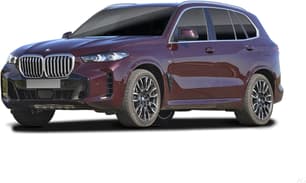
The latest front-end design features subtle revisions to BMW’s signature 'kidney' grille theme, highlighted by slimmer matrix LED headlights with chevron-shaped DRLs that incorporate the turn indicators.
There’s also an ‘iconic glow’ function, which illuminates the twin-grilles at night in-sync with the external courtesy lights when approaching and departing the vehicle. Lower front air-intake and tail-light treatments have also been revised.
The dash features a new curved instrument panel. Based on BMW’s latest generation 'iDrive' operating system, it consists of a 12.3-inch driver’s info display and 14.9-inch control display presented across the same seamless glass surface.
The control display’s touchscreen functionality has allowed dash buttons and switches to be minimised.
This new design dash has a blend of synthetic leather trim and dark brown/high-gloss woodgrain surfaces, along with new LED ambient lighting and gear-selector design.
The rear seat is sumptuous and spacious, even for someone my height (186cm). There’s ample knee and headroom and it can seat three kids in comfort, but for adult passengers wanting that 'business class' feel it would be ideal for two.
My only criticism of the new instrument display is that with more than 30 applications displayed on the expansive control screen, it can be distracting at times trying to visually locate and operate these functions while driving.
And, depending on sun angle, there were also complaints from different front seat passengers on different days about blinding glare caused by the dash’s high-gloss woodgrain inserts. Fortunately, the driver is unaffected by these reflections.
If you’re buying the Tivoli XLV, it’s arguably because it’s a compact SUV with the interior space of a bigger SUV inside. With a claimed cargo capacity of 720 litres (VDA), that makes sense. The XLV adds 297L more space (VDA) over the Tivoli, with a bigger boot than some very big SUVs.
In person the boot looks pretty big, but not as enormous as the numbers suggest. The fact there’s a false floor set-up is handy, though, and the packaged from SsangYong to be able to engineer so much boot space and still offer a four-wheel-drive system and multilink rear suspension is almost genius. Many brands can’t do it as well as SsangYong has. And going by SsangYong’s promise to fit a full-size spare wheel to all of its AWD models, the packaging is even more impressive.
It was handy for us to drive the XLV alongside the Musso and Rexton, both of which are newer-generation models that feel more modern inside. That isn’t to say the XLV feels old - it’s just not as special as its bigger siblings. Again, the face-lifted model due in 2019 could go a ways to fixing that.
If I had to compare the quality and design of the XLV to any car, it would be the old Hyundai ix35. You remember that small-to-mid-size SUV that came before the Tucson, which was on sale here from 2010 to 2015? Well, its cabin design and materials were fine, but nothing special. A bit like the Mitsubishi ASX, which launched around the same time as the ix35, yet is still sold today (and in big numbers!).
The front seats are pretty comfortable and the driver’s seat has good adjustment to it, but taller front seat passengers may lament the lack of height adjustment to the seat - especially in models fitted with a sunroof.
In the back there’s easily enough for a 182-centimetre-tall adult to sit behind their own driving position, with more knee room than most small SUVs, and reasonable shoulder and head room, too. The XLV is a five-seater, and three across the back is possible, but not enjoyable. There are dual ISOFIX child-seat anchors for outboard seats, and top-tethers across the width.
With its 2165kg kerb weight and maximum allowable weight of 2885kg, our test vehicle can legally carry up to 720kg.
That should be ample for five adults (even better for kids) and their luggage, of which up to 100kg can be carried on the roof rails using a rack or roof box (both in BMW's accessory range).
Powered upper and lower tailgates provide good access to the luggage area, which is carpeted and equipped with a roll-out privacy screen, load securing hooks, a 12-volt accessory outlet and a first-aid kit stored behind a removable side panel.
The space-saver spare and tools are stored below the hinged load floor, so all luggage must be removed to access them.
Internal luggage space with the rear seat upright is 650 litres (0.65 cubic metres) which expands to 1870 litres (1.87 cubic metres) with the rear seat folded flat.
A useful load-carrying feature when the rear seat’s backrest is upright is a hinged centre section that folds forward and flat to carry long and narrow items.
These can stretch all the way from the tailgate to the dash if need be, which could be handy for carting anything from skis to home hardware purchases (firmly secured, of course).
It’s also rated to tow up to an impressive 3500kg of braked trailer, which matches the class benchmark for one-tonne utes.
However, given that tow-ball download (TBD) is usually around 10 per cent of trailer weight, the X5’s maximum TBD rating of only 140kg could be a challenge if 3500kg towing is required.
Front of cabin storage includes a big bottle-holder and bin in each front door, a glove box and on the right-hand side of the dash a pull-out driver’s bin, both of which are felt-lined.
The centre console, in addition to its wireless phone-charging pad, USB-A port and 12-volt outlet, has two small-bottle/cupholders up front and a large box at the rear, housing a USB-C port and topped by a padded dual 'brochure fold' lid that double as an elbow-rest for driver and front passenger.
Rear seat storage includes a large-bottle holder and bin in each door and pockets on each front seat backrest. The rear of the centre console has two storage nooks for small items in addition to its air-vents, two USB-C ports and a 12-volt outlet. There’s also a handy tablet-mount and USB-C port on each front seat backrest, which is great for long trips.
Folding down the rear seat’s centre armrest reveals two pop-out small-bottle/cupholders. And under its hinged lid is a hidden felt-lined compartment that’s ideal for storing slim screened devices away from prying eyes.
We don’t know what price SsangYong is aiming to list the XLV model range at, because the company hasn’t yet confirmed pricing and specifications. So we can’t tell you what it will cost.
But we do know there will be manual and automatic variants available in four-wheel drive only (4WD/AWD) at launch, and it will be diesel only. The smaller Tivoli will be offered with petrol and diesel, and a more affordable front-wheel drive model.
There’s an expectation that the XLV will come well specified as standard, but that two trim levels will be offered.
The base model will likely have cloth seat trim, dual-zone climate control and a leather-lined steering wheel, while the top-spec will come with leather seat trim. All models will likely come with a touchscreen media system with Apple CarPlay and Android Auto, plus USB and auxiliary inputs and Bluetooth phone and audio streaming.
Seat heating, auto headlights, auto wipers, a sunroof, 18-inch wheels (as opposed to 16s on the base spec), push-button start and keyless entry could be offered standard in the high grade version - but we’ll have to wait and see.
Expect more safety equipment in the top version, too, but a reversing camera and parking sensors should be offered range-wide.
As a potential budget-conscious offering pitched against relative high-spec small SUVs, the Tivoli XLV prove intriguing. Think of a Honda HR-V VTi-L, which lists at $33,390, and has a 1.8-litre petrol engine and is front-wheel drive… a similarly specified diesel AWD automatic model could be tempting.
Our test vehicle, to use its full name, is the X5 xDrive 40i M Sport. That breaks down to xDrive (intelligent all-wheel drive) and 40i (3.0L turbo in-line petrol six) with eight-speed automatic transmission.
M Sport denotes a package that's included as standard equipment which contains desirable goodies like enormous multi-piston M Sport brakes/adaptive suspension/aerodynamics, M leather-rimmed steering wheel, high-gloss black roof-rails and more.
All up, the list price is $138,900. However, our example has an optional ‘Enhancement Package’ which for another $6000 adds your choice of selected 22-inch alloy wheels (fitted with 275/35 R22 Continental tyres on ours), a tyre pressure monitoring system, metallic paint ('Skyscraper Grey' on ours), Harman Kardon 16-speaker surround-sound audio and 'Crafted Clarity' glass application (glass-handled shifter).
And this is on top of many standard features including three-zone climate control, automatic two-piece tailgate, digital radio, a head-up driver display, adaptive LED headlights with high beam assist, a panoramic full-length sunroof, wireless Apple/Android integration, 'Verino' quilted synthetic leather upholstery, numerous USB ports/12v outlets and more. However, there’s only a space-saver spare.
Numerous options include self-levelling air suspension, 'Merino' leather upholstery, active seat ventilation and massage functions, thermo-adjustable cupholders, LED-illuminated ‘sky lounge’ panoramic glass sunroof and Bowers & Wilkins premium surround sound to name a few.
The XLV will come with only one engine option - a 1.6-litre turbocharged four-cylinder diesel engine. Hardly a horsepower hero, it produces 115kW of power (from 3400-4000rpm) and 300Nm of torque (1500-2500rpm).
It is available with a six-speed manual or six-speed automatic, with a standard-fit 4WD system known as 'Torque On Demand 4x4', which can sense the surface under the tyres and apportion torque to the rear axle to ensure better traction. SsangYong says it may offer a front-wheel drive XLV if demand necessitates.
A diesel engine isn’t unique, but it is rare in the small SUV class. But the fact of the matter is about 90 per cent of small SUVs sold are petrol-auto, so diesel could miss the mark for a lot of buyers.
The XLV offers a bonus element - towing capacity: the XLV can cope with a 500-kilogram unbraked trailer, and a 1500kg braked trailer - pretty strong for a compact SUV. Consider it competing against the Mazda CX-3 diesel AWD (640kg un-braked, 800kg braked) and Mitsubishi ASX (750kg/1400kg).
The X5 xDrive40i is powered by BMW’s legendary 3.0-litre DOHC 24-valve in-line six with state-of-the-art technology.
This includes twin-scroll turbocharging, variable valve/camshaft timing and 48-volt mild hybrid technology (delivering up to 9.0kW and 200Nm) using an electric motor integrated with the transmission.
The combined effect is optimised power and throttle response (0-100km/h in 5.4 secs) with minimal fuel consumption and Euro 6d emissions.
It produces 280kW between 5200-6250rpm and 520Nm of torque (this can reach 540Nm with hybrid input) across a remarkably wide and flat peak torque band between 1850-5000rpm, which showcases its flexibility. There’s also auto start-stop and selectable drive modes.
This is paired with BMW’s smooth and sharp-shifting eight-speed torque converter automatic, which combines the best characteristics of a dual-clutch and traditional torque converter transmission.
There’s overdrive on the seventh and eighth gears to optimise fuel economy and the choice of rapid manual-shifting using the steering wheel paddles.
Power reaches its wide tyres through the xDrive intelligent all-wheel drive system, which actively varies the engine’s torque distribution between the front and rear wheels to optimise traction at all times.
BMW’s ‘Efficient Dynamics’ also includes brake energy regeneration with recuperation display and many other standard features to enhance driving safety and efficiency.
The fuel consumption claim for the Tivoli XLV 4x4 auto is 6.3 litres per 100 kilometres. That’s not bad, and some small SUVs are better…
The Mazda CX-3 diesel AWD auto, which has a very low claimed consumption of 5.1L/100km (admittedly, it has a 1.5-litre engine with just 77kW/270Nm). But even the 2.2-litre turbo-diesel Mitsubishi ASX AWD auto uses less, at 6.0L/100km, and it’s almost a decade old. That engine has 110kW/360Nm.
The Tivoli XLV is a fair bit bigger than those two models, but even so, the fuel use should be a bit lower. It just goes to show the engine is working hard to deal with the weight of the Tivoli XLV, which in its heaviest guise, weighs 1535kg. Beefy.
BMW claims combined average (WLTP) fuel consumption of 9.9-8.5L/100km. Our 415km test comprised a mix of suburban and highway driving and when we stopped to refuel the dash display was showing 10.2L/100km which was line-ball with our own 10.6L/100km figure, calculated from fuel bowser and tripmeter readings.
So, based on our figures, you could expect a realistic driving range of around 780km from its 83-litre tank using standard 91-octane petrol.
It’s difficult to learn what a car is all about over 29km, but that was the task I was handed in Korea, where I drove the Tivoli XLV from the hotel in Gangnam, Seoul, to a rest stop some 24km north of town. Then I jumped in some other models, before eventually getting a further - very illustrative - 5km stint behind the wheel at an off-road coarse later in the day.
There was some traffic, slow moving highway driving, and even a bit of higher-speed cruising. And it was fine.
The diesel engine was impressively refined and quiet, so much so that I initially thought it was a petrol. But after a couple of instances of traffic halts, it became clear there was a little more rattle from under the bonnet, and a more heft over the nose than you’d expect of a petrol.
That said, the performance was muted. With a torque output of 300Nm, you might think it would be potent - but it’s really not, and there’s some hesitancy from standstill, not to mention some sluggishness during roll-on acceleration.
The six-speed auto transmission did a good job, as far as I could tell, but a more arduous test loop will sort the facts from the feels.
As for the dynamic element, it’s hard to say anything other than the XLV felt smaller, more nimble and more fun to drive than either the Rexton or Musso models I also drive. The steering was adequate in its response, if a little lifeless, and the ride was a touch harder than I was expecting, but not sharp or punishing.
If you’re interested in off road specs, the Tivoli XLV is said to offer a 20 degree approach angle, a 20.8deg departure angle, and 17.0deg ramp-over. More of a problem, though, was the lack of ground clearance. The figure is just 168mm, which isn’t much more than some regular run-of-the-mill hatchbacks. Consider this: a Subaru XV has 220mm. Yep.
The suspension travel isn’t huge, either, with stiff-legged feel to the model we drove. Part of that could have come down to the stylish 18-inch alloy wheels and low-profile tyres, but it simply isn’t a soft and wobbly off-road SUV. It’s a monocoque chassis small crossover, so if you want a more serious SsangYong off-roader, the ladder-frame Rexton could offer a lot more appeal.
It’s supremely comfortable, with front bucket seats that offer powered-adjustment of height, reach and backrest angle along with side bolsters that can tighten their grip of your upper torso.
There’s also two-way lumbar support, that adjusts not only how far it pushes your spine forward but also allows that pressure point to be raised or lowered.
Combined with its power-adjustable leather-rimmed steering wheel, it would be hard not to find a comfortable driving position.
Eyelines to all mirrors are good and over-shoulder blind-spots are minimal. Front and rear occupants can talk without raised voices thanks to low engine, wind and tyre noise at highway speeds.
As you’d expect, it has high build quality and a tangibly solid feel as though it was machined from a single block of steel, from the satisfying thuds of its closing doors to the absence of shudders or rattles on a variety of roads.
It also has two personalities, which can be switched in an instant. In 'Comfort' mode it will happily cruise around city and suburbs as a mild-mannered family car, fulfilling daily duties like work commutes, school drop-offs and pick-ups, supermarket shopping and the like.
However, flick the drive mode to 'Sport Plus' and you awaken, well, if not ‘the ultimate driving machine’ then something close.
Its optimised drivetrain and handling settings feel more like a sports sedan than a family car, which can turn any winding mountain road into an engaging experience.
It has impressive reserves of cornering grip and braking force, combined with sparkling engine response and fast sequential manual-shifting at your fingertips.
It feels impressively agile, with all-round response that belies its 2.0-tonne-plus kerb weight, backed by a symphony of sounds from its sublime in-line six.
The Tivoli XLV doesn’t have an ANCAP crash test rating, but it was tested by Euro NCAP in 2016, where it scored a less-than-excellent four- out of five-star score. That’s in spite of the fact it was available with auto emergency braking (AEB), too.
According to SsangYong, the “top of the range Tivoli will feature AEB, lane departure warning, lane keep assist and high-beam assist”. We’ve heard that will be mirrored in Tivoli XLV flagship spec, too.
The Tivoli XLV has seven airbags (dual front, driver’s knee, front side and full-length curtain), as well as a reversing camera and rear parking sensors. ISOFIX child seat anchors are standard.
Five-star ANCAP (awarded in 2018) includes front and side airbags for driver and front passenger, plus head airbags for front and rear seats.
The comprehensive 'Driver Assistant Professional' active safety menu includes AEB (city, interurban and vulnerable road user) and a multitude of others.
It also has 'Parking Assist Professional' and for young families there are ISOFIX child seat anchorages on the two outer rear seating positions and top-tethers for all three.
Nothing has been confirmed yet, but we suspect SsangYong could be working to match one of the best warranty offers in the Australian market in mimicking Kia’s seven-year/unlimited kilometre plan. In the UK SsangYong models have seven-year/150,000 mile (241,000km) cover, but an unlimited mileage offer is expected here.
If that’s the case, and models like the Tivoli XLV can be competitively priced for servicing, and with reasonable (read: not too frequent!) service intervals, then the score for this element of our test could increase in later reviews.
BMW covers the X5 with a five year/unlimited km warranty and offers several service plans to suit different budgets and requirements.
For example, the 'Service Inclusive Basic' package covers all scheduled services over five years/80,000km for a total of $3450, or an average of $690 per year.