What's the difference?
The new Skoda Scala brings a trim line-up of just two models and the features list for both have been reshuffled with a little pruning here and a few welcome additions there.
The Select 85TSI on test for this review replaces the former Ambition base variant and offers very competitive pricing considering its European roots.
You would be forgiven, though, if the Skoda Scala was not the first make and model that came to mind in your new hatchback hunt. But with its minor facelift and a boot capacity that rivals medium SUVs, maybe it should be on the list.
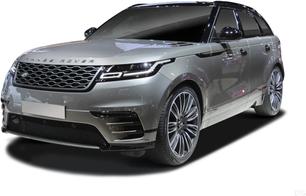
The new Range Rover Velar P400e Dynamic HSE, or P400e for short, is the first Velar offered with a plug-in hybrid powertrain. In theory, this should make it a solid contender for those wanting a luxury SUV that produces a smaller and greener footprint.
It’s not as big as its Range Rover siblings, so if you’re after a sleeker Rangie that can do some 'mild' adventuring on the weekends while still looking flash during the week, this may be the one you’re looking for.
It faces competition from the BMW X5, Volvo XC90 and… at a stretch, the Porsche Cayenne. I’ve spent a week with the mid-level P400e Velar to see how it stacks up for everyday use.
The new Skoda Scala Select proves base models can be well-equipped and have a great price tag, which is not always the case at this grade level.
Its driving experience might not be as exciting as some rivals but it’s a great urban dweller nonetheless and it offers really good value overall.
The Range Rover Velar P400e looks damn sexy and is large enough to house your family comfortably while still being easy to manoeuvre around town.
But I’m not a fan of these luxury brands forcing you to pay extra for what should be standard features when you’re at this grade level and price point. This is a model I’d pay close attention to in terms of the optional trims required to maintain a high-end feel.
But the powertrain works quite well here and it has pleasant on-road manners.
The new Scala has had a minor facelift that sees a redesigned black grille with slim LED headlights, refreshed 17-inch alloy wheels and an extended rear windscreen.
The new Scala more than holds its own against its European rivals when it comes to looks and while it's more unassuming at the kerb side than its peers, there will be those who appreciate that it's not too cutesy-looking.
Head inside and there are similarities between its corporate cousin, the VW Polo with the sharply-designed dashboard and air vents but it’s softened by lovely grey fabric-accent panels and soft touchpoints that have been liberally scattered across the cabin.
The technology screens look premium, if small, and the black and grey cloth seats look a lot nicer than the standard black fabric you usually get in base models.
There's also a certain charm to seeing the traditional elements, like the gearshift and new physical buttons for the climate control. There's enough in the cabin to satisfy most.
Land Rover hasn’t updated the exterior looks of the Velar and for good reason. It is almost flawless in how sleek and sexy it looks. It hovers between its larger Ranger Rover siblings and the more nimble-looking Discovery Sport.
There is still a distinctly ‘Range Rover’ vibe but it looks more agile and fun than its bigger siblings. But while its external looks are beautiful, the cabin loses me.
It’s even more pared back now than the pre-facelifted model and while the minimalistic style will appeal to some it doesn’t tick the luxury factor box for me.
There are too many plain and empty spaces in the dashboard and doors. The multimedia system has been updated to the cool 11.4-inch floating-effect screen but all the buttons and dials are gone. So, there’s even less going on and it makes you 100 per cent reliant on the screen.
And funnily enough, the grey knit fabric and synthetic material that’s used in the upholstery and trims is an optional extra and replaces Windsor leather. The knit-fabric adds some warmth but the black synthetic stuff is awful to touch or clean and reminds me too much of neoprene-style wetsuit material.
The large panoramic sunroof keeps the cabin feeling bright and cheery when it's open, though.
Ooh, the cabin of the new Scala offers fantastic practicality because it's class leading when it comes to space. There is no 'sardines in a tin' experience here, front and rear passengers get stacks of head- and legroom.
The only stumble on this front is the elbow room up front as you can at times jostle a co-pilot on the annoyingly sloping armrest.
Access is easy enough and you surprisingly don't 'fall in' or grunt when getting out, despite the low 149mm ground clearance.
The storage is good for a hatchback with the front getting a glove box that can fit more than just a manual, small middle console, two cupholders and a drink bottle holder in each door. As well as a sunglasses holder (always handy) and a medium-ish storage cubby in front of the gearshift that can accommodate a phone and wallet.
The rear enjoys two map pockets, two device pockets and a drink bottle holder in each door but misses out on a centre armrest and cupholders.
The boot is massive with its 467L of available capacity and we managed to fit luggage and golf clubs on a roadie this week without trouble.
There’s a temporary space saver tyre underneath the floor and while there’s no powered tailgate, it's not a difficult lid to operate. It even has a neat little toggle to help pull it down.
Other amenities feel well-rounded with two USB-C ports in each row, directional air vents, a 12-volt socket and reading lights.
The touchscreen multimedia system is responsive but looks tiny as it's almost the same size as my iPhone 15 Pro Max. This translates to smaller text and icon sizes as well as a smaller screen for the reversing camera.
There’s also not much in the way of customisation or extra features, like satellite navigation but the new wireless functionality for the Apple CarPlay and Android Auto makes it feel modern. Although the wireless function for the CarPlay drops in and out a lot.
Practicality on a whole is pretty good in the Velar and that comes down mostly to the space provided for each occupant and the high-end tech.
Up front, there is a lot of head- and legroom for my 168cm height and even when you have a co-pilot you’re not jockeying for elbow room.
The seats are very comfortable as they’re well-cushioned and feature excellent lumbar support. I miss a seat heat function on colder days but you can easily do a long trip in the Velar and not feel too fatigued.
The 214mm ground clearance has made it an easy SUV to get in and out of, for me and my seven-year old. Annoyingly, though, some of the doors don't close properly unless you slam them.
The individual storage is a bit less than you might expect as there's not a lot of centre console storage for little items but you still get a small glove box and middle console, two cupholders, two drink bottle holders and a phone cubby up front.
The back seat offers enough space for me to be comfortable but I did have a comment from my dad, who is 183cm, that it was a smidge squishy for him.
The seats are comfortable and amenities are good with two USB-C ports, a 12-volt socket, directional air vents, map pockets and a fold-down armrest with two cupholders. There are storage bins but they're very shallow.
Because of the sleek rear shaping, the boot space is smaller than most of its rivals at 625L when all seats are in use. It’s large enough for my gear and you should still be able to stack luggage easily for a road trip.
The technology on offer is pretty darn good. The multimedia system takes a while to get used to but once you do, it's an easy enough system to get around but not having any buttons/dials means you tend to look at it more than I like while on the go.
Unlike the Disco Sport I was just in, which features the same system, there have been no issues with connectivity with my iPhone with the Bluetooth or wireless Apple CarPlay. There’s also Android Auto and the built-in satellite navigation is top-notch.
I've already mentioned the rear charging options but up front you're spoiled for choice with a USB-A port, three USB-C ports and a wireless charging pad.
There are two variants available for the Skoda Scala, and the Select on test for this review is the base model.
The Select replaces the previous base Ambition grade and is $1100 more affordable at $32,490, drive-away, and offers great value for money as it sits in the middle of its rivals, the Toyota Corolla Ascent Sport at $36,023, drive-away, and Volkswagen Polo 85TSI Life at $31,990, drive-away.
The features list has been reshuffled with a few previous extra cost options now included as standard fare, like front parking sensors, wireless Apple CarPlay and Android Auto, upgraded USB-C ports, keyless entry and start and dual-zone climate control.
However, previous standard items have been omitted from the list, like adaptive cruise control, floor mats and a 'Lane Centering Aid' while the previous 10.25-inch instrument panel has been replaced with an 8.0-inch screen.
Technology still feels well-rounded with the 8.25-inch touchscreen multimedia system that features a reversing camera, four USB-C ports, Bluetooth, AM/FM radio and an eight-speaker sound system.
The Velar is offered in three variants with a choice of four powertrains spread between them. The model I'm testing is the plug-in hybrid mid-level HSE Dynamic in P400e form, which sits right behind the flagship Autobiography.
The P400e is priced from $143,508, before on-road costs, and sits close to the middle of the pack compared to its rivals.
The Volvo XC90 Recharge Ultimate PHEV comes in as the most affordable at $128,990 MSRP, then the BMW X5 xDrive50e M Sport PHEV at $149,900 MSRP.
Even with our model's optioned extras, the Porsche Cayenne S E-Hybrid PHEV sits a country-mile above them all at $178,300 MSRP (thus it's a 'stretch').
Our test model has a few optioned extras, including a 'Dynamic Handling Pack' for $1750, a black contrast roof ($1420), ash veneer trim ($930), rear privacy glass ($890), 21-inch diamond turned alloys ($780), non-leather premium steering wheel ($750), black synthetic leather upholstery ($700), cabin lighting ($540), rear seat remote levers ($300) and 'Terrain Response' ($430).
That all equates to an extra $8490 and brings the total before on-roads costs price tag to $151,565.
Standard technology features that are included are an 11.4-inch touchscreen multimedia system, 12.3-inch digital instrument cluster, built-in satellite navigation, wireless connectivity for Apple CarPlay, wired Android Auto, Amazon Alexa app, dual-zone climate control, a wireless charging pad, five USB-C ports, one USB-A port, two 12-volt sockets and a Meridian sound system with digital radio.
Other features include pixel LED headlights, panoramic sunroof, keyless-entry, push-button start, rear fog lights, powered front seats, run-flat tyres, a powered boot lid and a tyre pressure monitoring system.
Annoyingly, a lot of luxury features have to be added at additional cost and given the price tag it's odd there are no heat or ventilation functions for the seats, no heat function for the steering wheel, no climate control for the rear or even a head-up display.
So, it feels a bit bare on features once you start to compare the Velar to some of its rivals, like the well-specified and more affordable Volvo.
The Scala Select is a front-wheel drive with a seven-speed auto transmission. It has a 1.0L three-cylinder turbo-petrol engine that produces up to 85kW of power and 200Nm of torque.
At first glance you might think those outputs sound low and while most of its rivals have better outputs, there's plenty of oomph here to move the little Scala around.
The Range Rover Velar P400e's plug-in hybrid powertrain combines a 2.0-litre four-cylinder turbo-petrol engine with an electric motor to deliver 297kW of power and 640Nm of torque.
The Velar features an eight-speed auto transmission and is an AWD. With that optioned Terrain Response feature, it can do some mild off-road adventuring or tackle a trip to the ski-fields with relative ease.
The new Select has almost hybrid fuel efficiency with its official combined cycle (urban/extra-urban) fuel figure of 5.4L/100km. In comparison, its hybrid rival, the Toyota Corolla isn’t too far away with its 4.0L usage.
Based on its 50L fuel tank, you should see a theoretical driving range of up to 925km, which is excellent for an urban dweller.
After doing a road trip combined with a fair amount of city-driving, my real world usage has popped out at 5.7L/100km. Which is a great result overall.
The official combined fuel-cycle consumption figure is 2.2L/100km and my real-world usage came out at 6.0L/100km after doing mostly open-road trips with some urban stuff thrown in.
I have charged it to full twice with a few (small) charging moments scattered in between as that’s been realistic for life this week.
Claimed pure electric driving range is 69km but expect closer to 50km in the real-world.
Based on my real-world consumption and the 69L fuel tank, expect a theoretical driving range of 1150km.
The only draw back with a PHEV is the charging element as you get the best economy if you charge it to full every time you drive, and that's not always realistic!
The P400e has a Type 2 CCS charging port, so you can hook it up to a fast charger. On a 50kW system you can go from 0-80 per cent in 30 minutes and on a 7.0kW system, you can go from 0-100 per cent in two-hours and 12-minutes.
On a standard domestic socket, expect to leave on overnight for a 0-100 per cent fill.
Land Rover recommends a minimum 95 RON premium unleaded petrol for the Velar.
Hatchbacks are always a bit of fun to drive because of the dodgem car-esque handling and when the Scala is in Sport mode, it has enough pep to earn it a fun badge.
Out of Sport mode, the power delivery is still responsive enough for it to be a pleasant open-roader but you won't whoop with joy when you accelerate.
The steering is light without feeling loose and the Scala is nimble when cornering or in tight turns.
The ride comfort is very good and despite hitting some bad weather the Select didn’t miss a beat. It's a confident on-road experience because of its surefootedness.
There's a bit of road noise although its pretty quiet in the cabin, which also makes it a refined open-roader.
The visibility is decent and it’s easy to feel the dimensions of the car when you're in a skinny city laneway.
The Select gets a reversing camera with dynamic reversing guidelines and a clear quality feed but its tiny in the little screen.
The additional front sensors round out the parking experience considerably. You shouldn’t have any issue in parking this one!
The P400e has a deep well of power to dip into and fantastic pick up when you need to overtake or get up to speed.
Like other plug-in hybrids I’ve sampled from Land Rover there's a little lag sometimes when you accelerate from a full stop but it’s not as pronounced in this model as others.
The back brakes seem to hold a couple seconds longer than they should and if you accelerate as you would in any other car, there is a ker-clunk sound and you shift forward in your seat until they release.
This was most noticeable in stop-start city traffic and to be fair might just be a quirk on our test car and not on the model as a whole.
The switch between the electric and petrol components is mostly smooth and the cabin is refined because it’s so quiet. Pretty much no external noise makes its way inside.
I did a trip with my father-in-law this week and he said riding in the back seat was smooth, comfortable and very quiet. In fact, he fell asleep not long after we left! A high compliment, indeed.
The wide windows and higher ride have ensure excellent visibility but you only get a reversing camera. Yes, it’s great quality and clear but a 360-degree view system should come standard on a large SUV like this, especially considering its price tag. That being said, the P400e is still pretty easy to park.
The Scala has a maximum five-star ANCAP safety rating from testing done in 2019 and scored well across the four assessment areas.
It rated 97 per cent for adult protection, 87 percent for child protection, 81 per cent for vulnerable road user protection and 76 per cent for its safety assist systems.
However, this car only features six airbags, which is low in our day and age but you get a decent number of safety features included as standard, including biggies like rear cross-traffic alert, blind-spot monitoring and forward collision warning.
The base model also comes with a Lane Keeping Aid, lane departure warning, LED DRLs, driver monitoring, safe exit assist, seat belt reminders and front/rear parking sensors.
The Scala Select is no longer offered with adaptive cruise control, you just get the standard type, or a driver's knee airbag, either.
The rear seat features two ISOFIX child seat mounts and three top tether anchor points but two seats will fit best.
It has AEB with car, pedestrian and cyclist detection which is operational from 4.0-250km/h.
The plug-in hybrid variant is not rated with ANCAP yet but features a good number of safety features, like blind-spot monitoring, driver attention alert, tyre pressure monitoring, rear collision warning, forward collision warning, AEB, DRLs, rear cross-traffic alert, lane keeping aid, traffic sign recognition, intelligent seatbelt warning, adaptive cruise control, reversing camera, as well as front and rear parking sensors.
It does miss out on lane departure warning and only has six airbags, which is low for a large SUV but all of the other safety tech seems well-tuned and not intrusive on everyday driving.
For any families, the Velar has ISOFIX mounts on the rear outboard seats plus three top tethers. You might get three seats installed if they’re not too big but two will fit best.
The Scala is offered with a seven-year/unlimited km warranty, which is good for the class and you can pre-purchase a seven-year/105,000km servicing program for a flat $3650, which is competitive.
Servicing intervals are reasonable at every 12-months or 15,000km. You also get roadside assistance as a part of your servicing pack if you service on schedule.
The Scala likes to drink the good stuff, though, and Skoda recommends a minimum 95 RON premium unleaded petrol be used.
The Range Rover Velar comes with a five-year/unlimited km warranty and the battery is covered by an eight-year/ 160,000km warranty, which is a usual term for the class now.
There is a five-year capped-price servicing program which costs a flat $2100, or $420 per service, and is more affordable than a pay-as-you-go option.
Servicing intervals are very reasonable at every 12 months or 20,400km, whichever occurs first.
You also get five years roadside assistance through Assist Australia as a part of your servicing plan.