
Mitsubishi Reviews

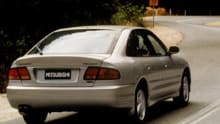
Used Mitsubishi Lancer review: 2002-2007
By Graham Smith · 17 Nov 2017
The Lancer has been a steady and sturdy presence on the local market for many years; in that time it has gained a reputation for being a loyal and reliable friend, if not the most exciting one.
Read the article
Used Mitsubishi Lancer review: 2007-2018
By Graham Smith · 10 Nov 2017
The CJ Lancer arrived in 2007 with plenty of promise.Compared to the previous model the CJ had fresh looks, a longer wheelbase and wider track for more cabin space, and there was more equipment.In an increasingly crowded, and hotly contested small car market, it tended to blend into the background rather than stand out, but anyone who cared to take a closer look would have discovered a solid, well built, and reliable car.The CJ range offered a choice of four-door sedan and five-door hatch body styles, and a range of models to suit most needs and desires.Most were front-wheel drive, but there were also sizzling hot four-wheel drive models to satisfy wanna-be rally drivers.At launch, everyday motorists had the option of the entry-level ES, the VR mid-ranger, and the sporty VR-X, with the Aspire, Activ, RX, and SX, added to the range in the following months and years.Weekend warriors could satisfy their need for speed with the rally-bred Ralliart and Evolution models.Standard features in the ES included air-conditioning, four-speaker sound with CD player and MP3 compatibility, cruise control, driver’s footrest, intermittent wipers, multi-function control screen, power windows and mirrors, cloth trim, trip computer, and tachometer.It had steel wheels and full wheel covers, and the spare tyre was a space saver.Metallic and pearl paint could be ordered as options.Had you chosen the VR you would have got all of that plus alloy wheels, six-speaker sound with CD stacker, air-conditioning with climate control, fog lamps, leather-trimmed, multi-function steering wheel and hand brake lever, rain-sensing wipers, automatic headlamps, and a sporty rear spoiler and side skirts.The list of standard features was even longer with the VR-X, and included 18-inch alloy wheels, Bluetooth to allow you to connect your iPhone or Android device, sports seats, sports pedals, keyless start, a body kit with high rear spoiler, and a front strut brace to aid handling. High end Rockford audio and a sunroof were available as options.The four-wheel drive, turbocharged Evolution, or Evo, was Mitsubishi’s nod to its rally participation. It had everything you could imagine in a rally special, with sports suspension, a wild body kit, sports instruments, sports seats and a sporty steering wheel.For more there was the optional 'Performance Pack', which saw the suspension and brakes upgraded.An update in 2008 saw the introduction of the Aspire with a 2.4-litre engine.Standard features of the Aspire included 18-inch alloy wheels, leather trim with woodgrain highlights, a premium sound system with nine speakers, a 7.0-inch touchscreen, and fog lamps.At the same time the VR-X was upgraded with the 2.4-litre engine, and the Ralliart joined the Evolution on the performance front.The RX arrived in 2009 and it was positioned above the ES, and could be distinguished by alloy wheels, and the Activ came a year later.A reversing camera was added to the range, except for the ES, in 2012, but there were no parking sensors or a parking assist system.Sat nav was not available on the ES, but was available on other models in the range from 2013.The Lancer’s cabin was quite roomy for its size, with comfortable accommodation for five.Front seats were buckets, sports seats in the sporty models, and the rear was a split-fold seat for extra carrying capacity when needed.With the rear seat in the normal position the boot volume was 315 litres. With it folded the volume increased to 400 litres.There was plenty of storage spread around the cabin, with an in-dash glove box, a compartment in the console, pockets in the front doors and front seat backs, bottle holders, and cupholders in the front and rear.Most models had cloth trim, but up-range ones had leather, and some had woodgrain, as well.The main power source across the range was a double overhead camshaft 2.0-litre four-cylinder petrol engine with variable valve timing that put out 113kW (151 horsepower), and 198Nm at is power and torque peaks, which was enough to give it solid performance in the class.A larger 2.4-litre petrol four was added to the range in 2008, and with 125kW (167 horsepower), and 226Nm of torque, it provided more performance for those wanting a bit more zip.There was a five-speed manual gearbox available, but the transmission most buyers chose was the CVT, which was the automatic option.The quirky CVT was not everyone’s cup of tea, but with the option of a six-speed sports mode the Mitsubishi transmission didn’t feel as soggy as some others.With their connection to rallying the Evolution and Ralliart models had blistering performance delivered by a 2.0-litre turbocharged four-cylinder engine.It was linked to a six-speed dual-clutch transmission, in turn to a four-wheel drive system.The CJ Lancer was a capable and user-friendly small car. It did everything well and didn’t present anyone with any untoward challenges on the road.With independent front and rear suspension, even in base form, it was sure-footed, steered well, handled corners with assurance, and the ride was well damped.The steering was light, and the turning circle tight, making it easy to manoeuvre and park around town.Step up the model range and the picture was even better, with sportier handling from the lower and former suspension.Both engines were willing, the larger 2.4-litre unit had more torque to deliver smoother driveability, and for that reason, is a better choice than the 2.0-litre engine.Those inside were treated to comfortable seating with little external disturbance from road noise or other potentially annoying elements to bother them.The thrill-a-minute performance-tuned Ralliart and Evo models were different animals entirely; they were at their best competing on the track or in the forests.The CJ Lancer was well equipped with safety features.All models except the entry-level ES, which was rated at four stars, carried a five-star ANCAP rating from the introduction of the model.The difference in rating can be attributed to the ES not having head airbags for the front or side airbags for the front and rear seat passengers.Anyone wanting to upgrade the safety of the ES to five stars could have added an option pack of side and head airbags.That changed in 2010 when the ES got the additional head and side airbags and was upgraded to the same five stars as the other models.All models then had front airbags for the driver and front seat passenger, a knee airbag for the driver, head airbags for the front seat passengers, and side (curtain) airbags for those in the front and rear seats.All five seats had lap-sash seat belts, allowing the fitment of a baby car seat.The Lancer was one of the cars that had ISOFIX baby car seat mounting points before they were made mandatory in 2014.In addition to the passive safety features all models had ABS braking, EBD electronic brakeforce distribution, traction control, and ESP electronic stability control.Except for the CVT and dual-clutch automatic transmissions the Lancer follows a well-proven formula.There’s nothing radical about it, nothing that should be cause for concern by anyone considering buying one second hand.Most owners were keen to praise the reliability of their cars, saying they were well built and were for the most part reliable.One issue that cropped up related to the operation of the ABS brakes as a result of the failure of the electronic module that controls the system.Owners said their first warning of the problem was when the warning light on the dash began flickering. It eventually stayed on; the ABS braking system was then not functioning.Check with the seller to see if there have been any problems with the braking system previously, and take note of the ABS warning light if it comes on.Another thing to focus on when test-driving a car is the operation of the automatic transmissions.No owner we spoke to raised any issues with either the CVT or the dual-clutch transmission, which suggests there are no problems with them, but the history of the transmissions in general says they are prone to problems. Observe the CVT for shuddering on take-off or when accelerating, hesitations, or any other thing that doesn’t feel right.In the case of the dual-clutch auto, observe for any hesitation on shifting, or incorrectly selecting neutral.Check for a service record to make sure your potential purchase has been well maintained.The recommended engine oil for the CJ Lancer is 5W-30, servicing should be every 15,000 km or 12 months, whichever comes first, and the engines have timing chains.Mitsubishi provided a generous new car warranty of five years/130,000km, and there was also five years roadside assistance.Capped price servicing was introduced in 2012 to keep a lid on service costs.There have been some recalls, mostly for electrical issues, so check the service book to see what if any recall reworks have been done.Buying a Ralliart or Evolution model requires extra caution when inspecting prior to purchase. As many will have been driven hard by enthusiast owners, or even used in motorsport competition, it’s important to check for signs of modification or abuse.MORE: If anything crops up, you’ll probably find it on our Mitsubishi Lancer problems page.K. Brigham: I bought my 2010 Activ new. It’s solidly built, very roomy, comfortable, gets good mileage, and there have been no problems with it at all.Anna Breinl: My 2007 VR-X is a great touring car, it’s comfortable, and it has been absolutely trouble-free.Patrick Firth: The 2013 ES feels sporty. I like the performance of the 2.0-litre engine, the manual gearbox is good, and I get good economy.Michael Beeston: I’ve owned my 2011 ES from new. It’s now done almost 100,000 km and there has been no problem with it at all. I like driving it, the handling is quite good, it’s safe, and the fuel economy is good.Apart from the Evo the Lancer wasn’t very exciting, but it was a solid and reliable all-rounder.
Read the article
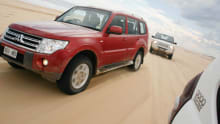
Used Mitsubishi Pajero review: 2001-2016
By Ewan Kennedy · 08 Aug 2017
When introduced to Australia in 1983, the Mitsubishi Pajero was arguably the first affordable 4WD that was a family wagon rather than a truck-based 4WD.However, this is a genuine SUV, not a passenger car with a tough looking body, Pajero is competent off-road, being able to handle most situations likely to be encountered by an adventurous family in the great Aussie countryside or on beaches.Though it began its life in downunder as a body-on-chassis 4WD, it became a monocoque for improved ride and comfort in 2000. Good engineering meant the post-2000 models retained similar strength to the chassis models. All have a low-range case for tough, slow conditions.While we are considering the monocoque models from the year 2000 in this feature you should be aware the older ones may be past their use-by date. Unless you can do a fair bit of your own mechanical work you're probably better off considering models from the new generation in December 2006.Mitsubishi’s sophisticated Super Select drivetrain permits the use of all-wheel-drive under any circumstance. For example, safe traction on wet sealed roads if you opt for AWD, or lower fuel consumption on dry dirt roads if you go for 2WD. AWD can be engaged or disengaged on the fly at any speed up to 100 km/h.Midway through 2013 Pajero was brought right up to date in its infotainment and safety equipment. These models are popular with buyers who can't come up with the dollars to buy a brand new one.Mitsubishi Pajero comes as a station wagon with either two or four passenger doors. The two-door was never particularly popular and imports stopped with the all-new model of 2000. They reappeared with the when the new model was launched at the start of end of 2006, then disappeared due to lack of buyer interest in 2010.All short-wheelbase Pajeros have five seats, the long-wheelbase models have either five or seven. The rearmost two seats in the seven-seat models are better suited to kids than adults but with a bit of squeezing up the Pajero can handle seven grown-ups.Though the first Pajeros had a petrol four-cylinder engine, all petrols under review here are V6s. This was a 3.5 twin-cam unit until September 2003 when it was uprated to a 3.8-litre.Diesel power is preferred by most buyers, the large four-cylinder units, 2.8 then 3.2 litres, have good torque and seem to enjoy hard work.Pajero is offered in manual and automatic transmissions, with the latter being almost universal in later years.The Australian Mitsubishi dealer network is long established and well-organised. Spare parts are generally available for all but the oldest models. Prices can be relatively high as 4WD bits are more rugged and can come as a surprise if you've only owned sedans in the past.Insurance premiums are about average for this class and there doesn’t seem to be much difference of opinion on the insurance risk amongst the major insurance companies.Note that the Pajero Sport launched at the end of 2015 is actually a replacement for the outgoing Challenger, not an additional version of the standard Pajero range.If you suspect a Pajero has been used off-road look for damage to door sills, door surfaces and bumper corners. Be very wary if the protection plates have been pushed up onto the mechanical items move them.Check out the interior carefully because carting bored kids about can be tough on any vehicle. Damage to the cargo area is another sign of hard use.Poor engine maintenance is hard on turbos and can lead to complete failure if the oil hasn't been changed on time. Check the service book.Be sure all gears in a manual box engage easily and that the clutch is light and quiet in its action.Automatic transmissions should go into Drive and Reverse promptly and easily.Listen for, and feel for, noises and roughness in the complete driveline.Make sure the brakes pull the Pajero up evenly, even on dirt.
Read the article
Mitsubishi Outlander PHEV Exceed 2017 review: family test
By Dan Pugh · 13 Jun 2017
As the cost of living continues to soar, I find myself taking more than a passing interest at local petrol station prices. Could the Mitsubishi Outlander PHEV be the answer?
Read the article
Mitsubishi Pajero Sport Exceed 7 seat 2017 review: Torquing Heads
By Peter Anderson · 02 Jun 2017
The Exceed is the top-of-the-range Pajero Sport but is among the cheapest of its competitors while still packing a decent amount of tech. Peter and Nikki discuss the merits of owning such a huge car.
Read the article
Mitsubishi Outlander Exceed diesel 2017 review: Torquing Heads
By Peter Anderson · 25 May 2017
The Mitsubishi Outlander is a firm favourite with Australian buyers, vying with the Holden Captiva for cheapest seven-seat SUV on the market.
Read the article
Mitsubishi ASX LS petrol auto 2017 review: Torquing Heads
By Peter Anderson · 28 Apr 2017
The Mitsubishi ASX has been around since 2010, and that's a long time in the car world without a significant facelift. Despite this, the ASX has held its own.
Read the article
Mitsubishi Outlander PHEV LS 2017 review
By Andrew Chesterton · 06 Apr 2017
Mitsubishi's plug-in hybrid Outlander is officially the best-selling electric vehicle in Australia. Though to be fair, that's like saying Blockbuster is the country's best-performing video store.
Read the article
Mitsubishi Outlander PHEV Exceed 2017 review: snapshot
By Andrew Chesterton · 06 Apr 2017
The Exceed is the top trim level in the two-tier Outlander PHEV range, sitting above the entry level LS ($50,490).
Read the article
Mitsubishi ASX 2017 review
By Tim Robson · 14 Mar 2017
Tim Robson road tests and reviews the new Mitsubishi ASX with specs, fuel consumption and verdict. The Mitsubishi ASX small SUV has been a mainstay of the local Mitsubishi lineup since 2010, and the range underwent a minor update in late 2016 for the 2017 model year. The five-seat, four-door SUV competes in the same
Read the article