What's the difference?
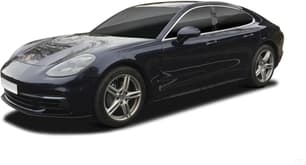
It’s a good thing the Porsche Panamera doesn’t feel emotions. Otherwise it might be feeling like the forgotten member of the Porsche family.
While the 911 remains the evergreen hero, the Cayenne and Macan the popular sales darlings and the new Taycan the exciting newcomer, the Panamera simply plays its part.
It fills an important but small role for the brand, giving Porsche an executive sedan (and wagon) to compete against the big players from the other German brands - Audi A7 Sportback, BMW 8-Series Gran Coupe and Mercedes-Benz CLS.
However, while it may have been overshadowed of late, that doesn’t mean Porsche has forgotten about it. For 2021 the Panamera has been given a mid-life update, after this current generation launched back in 2017.
The changes are subtle in isolation but add up to some big improvements across the range, most notably extra power has seen the previous range-topper, the Panamera Turbo, become the Turbo S.
There’s also a new hybrid model and tweaks to the air suspension and related systems to improve the handling (but more on that later).
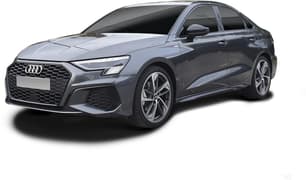
After teasing us with the S3, all-wheel-drive version of its A3 sedan and hatch (Sportback in Audi-speak), Audi has finally given us the full-fat, RS3 variant of the same car. Any time you see an `R’ and an `S’ on the badge of an Audi, you know it’s the full nine yards in terms of all-wheel-drive grip and engine performance. And the RS3 is no different.
The power is enormous, the grip prodigious and the attitude is way tougher than any other A3 variant. It’s also well equipped, safe and nicely put together. But is that extra `R’ worth the added price of admission? And is this more Audi A-Series than you really need?
The other question is, given that the S3 is such a resolved package with its own shot of high-performance, do the numbers stack up for the RS3 version? How much is too much?
While we didn’t get to sample the full breadth of the range, our time in the base Panamera demonstrated that while it’s the most overlooked member of the Porsche family it might also be the most under-rated.
While it may not be the most spacious luxury sedan it does offer ample space and combines it with performance and handling that’s hard to beat. The price drop should help make it a more appealing prospect, although at nearly $200,000 it’s still clearly a premium prospect for a lucky few.
If conventionally powered cars really are on the endangered list, it’s vehicles like the Audi RS3 that will remind us what we’ve lost. There’s so much fun to be had in this car, that you really need to take it to a track to tap into it safely and responsibly. And there’s the rub.
While there’s no doubting the RS3’s potential, neither is there any doubt that the driveline absolutely dominates the experience. In fact, we reckon the S3 with its more modest (but still ample) performance and friendlier nature is probably the smarter car for the everyday. It’s also cheaper by about $20,000 and while it lacks the aggressive looks, it’s still a charming car. Perhaps all the more charming for its easier-going nature and balance of abilities.
So why buy the RS3? Because it’s the one that will keep you entertained for longer if you’re a serious enthusiast driver. But if you don’t plan to use the car for track days, there’s a strong argument that the RS3 is way more car than you’ll ever need. Of course, that sentiment never stopped performance-car lovers, did it?