What's the difference?
Ah, now you can have your Peugeot 308 and plug it into a power point as well. Yes, the new petrol version of the 308 arrived late last year and now the 308 GT Sport Hatch plug-in hybrid is here, too.
We've just driven the 308 GT Sport plug-in hybrid (PHEV) at its Australian launch and we can now answer all of your questions, such as how much it costs over a regular petrol 308, what's its electric range, what features come standard, what's it like to drive and is there a fully electric Peugeot coming soon?
Ready? Let's go.
One must maintain several affections in one's life, I think that's fair. I don't mean that in the life-partner sense, that would get me blamed for marriage breakdowns. But then, as a motoring journalist, you do sometimes wonder if your recommendations send a few relationships over the edge.
What I mean is, having a few interests keeps life interesting. In this context, I'm thinking of two things that move me. Special Editions (of pretty much anything, except superhero movies) and VW vans. I can't stress enough how much I - and, as it turns out, just about every other road user - love a Volkswagen van.
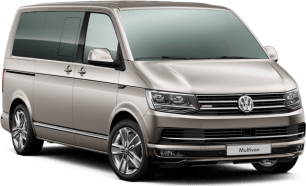
Put these two excellent things together and you have the Volkswagen Multivan Cruise, a special edition that somehow commemorates the 70th anniversary of the Kombi. I don't care how, I'm just intrigued by its existence and, by the grace of The Great Editor, I spent a week behind the wheel and a good chunk of that time exploring the interior of the Multivan Cruise.
The 308 GT Sport plug-in hybrid is a beautifully designed small hatch that is comfortable, enjoyable and easy to drive. The electric motor gives this hatch good acceleration and the equally impressive handling makes for a fun car to drive too. There's good storage, a decent boot and room for even tall people like me in those back seats.
There are two clear drawbacks, however: the price is steep compared to the petrol version; and you'll need to plug the vehicle into a power supply each night if you drive the car daily and want to achieve the 2.4L/100km fuel economy we did in this test.
Last, but probably the most important thing you'll read is that Peugeot will bring fully electric cars to Australia from the second half of 2023, from SUVs to (hopefully) the battery electric version of this very 308 hatch.
If it was my money, I'd hold on - you're going to have your next car for quite a long time so it's worth waiting for the fully electric versions.
Note: CarsGuide attended this event as a guest of the manufacturer, with meals provided.
Seventy-four grand is a lot of money for a seven-seater van but it's not the same as a similarly seated SUV. You can do a whole lot more in a Multivan and you can get yourself a VW badge into the bargain. There's something about that badge and the history of VW vans, though, that makes it popular. But it's got the chops to back up its history - it feels great to drive and easy to live with. It's also easy to use and phenomenally easy to get in and out of.
My wife and I genuinely found ourselves looking at each other and saying, "Yeah, we could have one of these." Obviously we came to our senses pretty quickly (we are not van people) but, if we had to have a van, the Multivan would go straight to the top of the list.
There hasn't been a Peugeot in the last five years that wasn't stunning. There's the high quality feel in their build, and premium yet unique look - like a new Volvo but with more flair. And the 308 hatch and this hybrid version has all of that.
From the sinister looking LED tail-lights to the wide mesh grille, you really get the feeling that Peugeot is hitting its design stride.
This 308 GT Sport plug-in hybrid looks identical to the petrol version with its low, wide stance, and big dark alloy wheels that fill up its arches.
The cabin is sporty, lavish and minimalist with quilted leather upholstery seats, the digital driver display and media screen, and avant garde small angular steering wheel.
Volkswagen's approach to this design is all about function but has yielded quite a strong result. That seems a bit silly if you just give the car a cursory glance, but if you spend a bit of time, it's a really nice job. The clay model clearly started as a big rectangular block and it was largely spared the chisel from the windscreen back.
In white it's close to anonymous but the Cruise's two-tone paint job adds a certain strength and some real character. I spent a lot of time looking at it and admiring the sparseness, but also what a clean design it is. That makes me sound slightly bonkers, but few cars get away with so few design features and look this good. Mitsubishi tried a basic design approach 10 years ago and the cars looked awful.
Perhaps the bigger surprise was the interior. Few commercial vans scrub up this well, so much so that you'd be hard-pressed to identify the Multivan in that way. The materials on the dash are typical VW - which is to say very good - and it doesn't feel or look like a knockabout interior, with some carpet and nicely covered seats in it.
Peugeot's 308 is a small hatch, think Toyota Corolla, only beautiful and more spacious.
So, the 308 can carry five people with just enough head and legroom for a semi-giant like me (I'm 191cm) to sit behind his driving position.
There's good cabin storage with large door pockets, a long and deep storage box under the centre armrest up front along with two cupholders up there, too.
The boot has a cargo capacity of 361 litres, which isn't bad for this class.
To power devices there's a wireless phone charger under the dash, and USB ports for front and rear passengers.
A quirky Peugeot design feature is the low-placed angular steering wheel. I found had to squeeze my knees past to sit in the driver's seat. I'm not sure what size human was used as the test case for this but it wasn't somebody with stilts like mine, I can tell you that.
This needs a very solid breakdown because there is a lot to know about this particular car. Starting with sliding doors on both sides, which are electrically operated, and there are buttons on the remote to open and close them.
There is a phenomenal amount of storage inside. The driver's door alone has two storeys of pockets to carry plenty of different-sized and shaped items. There's so many places to put things you can almost get decision paralysis.
Down on the floor between the seats is a handbrake that seems to have been borrowed from a helicopter, but it's that long because it's attached right down on the carpet. That means you can walk from the third row all the way through the van, flip up the armrests on either of the captain's-chair style seats and plonk yourself down. Or vice versa.
The second row features two separate captain's chairs (again) that are set on rails. You can slide them back and forth and - most impressively - swivel them through 180-degrees to face the third row so you've got yourself a meeting room on wheels, complete with the USB-C ports on one side of the back row, just above a double-cupholder set up. The seat belts for the second row are integrated into the seats themselves, which is why you can use them in motion.
Incidentally, the back row can also slide back and forth and can fold down as well. There are cupholders either side of the row, too (the previously mentioned double along with a generous-sized one that came with its own thermal cup...I think that's what it was) and with the aforementioned USB ports.
On top of all that, there are window blinds, little porthole windows in the sliding door windows themselves, a place to put, say, a clipboard on the dash in front of you and a cupholder with two USB-C ports next to the shifter.
Being a van, the total cargo volume is gigantic. If you hoof the seats out, the cargo area is 2.532 metres by 1.627 (1.220m at the wheelarches). The height is 1.32m, meaning if you're under five feet tall, you can walk without bending over. Suffice it to say, you can fit an enormous amount of stuff in.
If there's still not enough room, you can tow 2500kg with a braked trailer and 750kg unbraked. A two-bar roof rack will hold a further 100kg and a three-bar 150kg. Gross vehicle mass is 3080kg from a 2266kg unladen weight, meaning a maximum payload of 814kg.
That's enough stats on practicality to keep you going.
The 308 GT Sport plug-in hybrid lists for $64,990 before on-road costs. The ‘GT Sport' part of the name is the grade and the hybrid only comes in this grade. In comparison the priciest petrol 308 hatch is the GT Premium for $48,990. The 308 GT Premium also comes in wagon form and that's $50,490. Alas the wagon doesn't come as a hybrid.
Is it good value? Nope. A charge of $16,000 over the cost of the GT Premium petrol version with almost identical standard features is pretty unreasonable. It's also not good value when you could buy a fully electric car about the same size such as a new Tesla Model 3 for $64,300, or a Polestar 2 for even less at $63,900.
However if your heart is set on a PHEV, the main competitor is another Euro hatch - the Cupra Leon VZe from $59,990.
The 308 GT Sport plug-in hybrid standard features include LED matrix headlights, 18-inch alloy wheels and a panoramic sunroof, while inside there are two 10-inch displays - one for the media system and one for the driver's gauges.
It also has black full-grain Nappa leather seats (heated and massaging for the driver and front passenger), a 10-speaker Focal stereo system, proximity unlocking, dual-zone climate control, sat nav, wireless phone charging, plus Apple CarPlay and Android Auto.
The Cruise fits between the Comfortline Premium and the Highline, which itself comes in underneath the conference-room-on-wheels Comfortline Exec. The full title for the two-tone terror I had for a week is the Multivan TDI340 Cruise Edition T6.1 SWB. So from that you can tell it's a turbodiesel-powered Multivan on the shorter of the two available wheelbases and part of the T6.1 update for the van range.
The Cruise Edition comes with 18-inch alloys, a six-speaker stereo, multi-zone climate control, reversing camera, front, side and rear parkings sensors, active cruise control, digital dashboard, electric sliding side doors, powered tailgate, sat nav, auto LED headlights, park assist (with automated steering), auto wipers, power front windows, a clever seating system, LED taillights and sliding side windows.
The 308 GT Sport plug-in hybrid has a 1.6-litre turbo-petrol engine making 132kW and 250Nm combined with an electric motor at the front wheels making 81kW and 320Nm.
The combined output of the engine and motor working together is 165kW and 360Nm, and sending that grunt to the front wheels only is an eight-speed automatic transmission.
Acceleration is good. We're talking 0-100km/h in 7.4 seconds which is more than two seconds quicker than the petrol-only variant.
The 340 in the long name refers to the torque figure of the 2.0-litre turbodiesel four-cylinder. With 110Kw between 3250 and 3750rpm and 340Nm between 1500 and 3000rpm, it's a solid performer. In this guise, the seven-speed twin-clutch transmission delivers the power to the front wheels.
This is what it's all about right? Well, Peugeot says that after a combination of open and urban roads the 308 GT Sport plug-in hybrid will use 1.3L/100km.
At the launch I did a 34km test loop through Sydney's Northern Beaches with a good mix of morning traffic and hilly terrain. At the end of my journey the trip computer reported an average fuel consumption of 2.4L/100km.
I drove the entire loop in Hybrid mode, but there is a Sport mode, a Battery Save mode and EV mode.
If you were to drive in EV mode Peugeot says the electric driving range with a full battery is 60km.
At the start of my drive the battery was about three-quarters charged with the gauges displaying 38km of range.
A mileage of 2.4L/100km is still excellent fuel economy and from experience I can tell you a petrol-only variant would be up around the 8.0 or 9.0L/100km mark for the same trip.
There is a catch, and that is you'll need to plug in your hybrid 308 daily to charge the battery if you plan to achieve the fuel economy I did.
Charging will be slow, however, because Peugeot has fitted this hybrid with a small 3.7kW on-board charger. So, even using a fast charger you'll be looking at more than four hours to fully charge the 12.4kWh lithium-ion battery.
This charging time and small electric driving range in return could be a deal breaker for some and it's the reason why I've given the 308 GT Sport plug-in hybrid a lower mark. If you aren't always charging this car your fuel usage will rocket. New buyers unaware of this could end up using more petrol than ever.
A fully electric vehicle may be a better solution for city dwellers.
Volkswagen affixes a sticker to the windscreen with a 6.6L/100km combined-cycle figure. My week with the van was pretty busy and included a thorough fact-finding day on motorways and climbing Sydney's Blue Mountains, delivering an indicated 8.0L/100km over the week, which is well within the bounds of expectation with those official figures. That's pretty good going for a two-tonne-plus van with the requisite lack of slippery aerodynamics.
Once you've become accustomed to the strange, low steering wheel with its angular design the 308 GT Sport plug-in hybrid is superb to drive. The suspension is composed and comfortable, the handling is excellent, the steering is light and with the combination of both the electric motor and petrol engine, acceleration is good.
For those of you who haven't driven a plug-in hybrid before I think you'll like the quiet electric power at low speeds and the feeling of ‘instant' acceleration the electric motor adds, but compared to driving a regular petrol car the experience is much the same, just less noisy and smoother.
I may have given you the impression that the Multivan is fun to drive, but it's not in the usual sense. It does feel a bit van-ish with the initially awkward steering wheel angle. The driver's seat is hugely comfortable and you quickly discover that, despite being nearly as long as a Hyundai Santa Fe or Mazda CX-9, it's surprisingly wieldy, with the front wheels achieving impressive angles when you're on full lock.
No, you're not going to pull a u-turn in a normal suburban street, but you can get some tight angles while parking and, given its shape is that of a chiselled brick, you know where the corners are, with the sensors and cameras picking up the slack.
It never feels anything like its size until you head down the driveway into a shopping centre car park and the dangling 2.1 metres clearance sign looks ominously close. It doesn't just look close, though. The view out front is awesome and you are literally eye-balling bus drivers. Dogs love it because they can talk to bus drivers out the window, as our furry idiot did.
Obviously it's long for car-park spaces, like an SUV or any other people mover for that matter, so you have to take the usual care.
So why is it so much fun to drive. Obviously it's not a GTI (although the Transporter Sportline looks like it might be...) but the diesel engine is exceptionally strong and dealt with everything I threw at it.
Sadly I wasn't able to rope in a group of folks to go with me, given our current restrictions, but the 340Nm figure feels conservative. Especially when slaloming around slow-moving clowns on the motorway in the right-hand lane.
So the fun? Everybody absolutely loved this thing. In fact, to take the parlance of one of the Mystery Machine occupants, they dug it, man. So many blokes in utes looking wistfully at a van that obviously sparked a yearning for... having five kids maybe? I dunno, but people just loved it and when I posted a pic of it on Instagram, the crowd went wild.
And I loved driving it around and was sad to hand it back. M'colleague Matt Campbell is scheming to get into one, and even other folks from competing publications expressed a yearning.
The petrol variant of the Peugeot 308 achieved low scores when it came to protecting its front passengers in ANCAP's frontal off-set crash test and it was for mainly this reason that the vehicle scored four out of the maximum five stars in its ANCAP and equivalent European safety rating.
That said, Peugeot Australia has added more safety technology to the 308 than the European version of this car, such as a more comprehensive autonomous emergency braking (AEB) system as standard.
Along with AEB that can also detect cyclists and pedestrians, other standard safety tech includes lane keeping assistance, blind spot warning and rear cross traffic alert.
For child seats there are three top tether anchor mounts across the second row and two ISOFIX points on the outside rear seats.
There are front and side airbags for the driver and co-pilot, while curtain airbags cover the first and second rows.
The Multivan arrives with six airbags, with curtain airbags that reach all the way to the third row. There are also the usual traction and stability controls, along with multi-collision brake (which stops you rolling into another accident after suffering the first), driver-fatigue detection, reversing camera, blind-spot monitoring, rear cross-traffic alert, lane-keep assist, and low-speed forward AEB.
It's a pity the AEB doesn't extend to higher speeds, especially given this machine's role as a people carrier, and a further disappointment is its lack of pedestrian and cyclist detection.
The two swivel seats in the middle row feature ISOFIX points and top-tether anchors. The third row features another three ISOFIX points and three top-tether anchors.
The 308 GT Sport plug-in hybrid is covered by Peugeot's five-year/unlimited-kilometre warranty.
Peugeot will cover the hybrid battery with an eight-year/160,000km warranty.
Servicing is recommended at 15,000km or 12 month intervals and it can be expensive. Peugeot says the first service will be $425, then second is $771, the next is $425, then at 60,000km the costs will be $900, then $439 for the following.
As with other VWs, the Multivan Cruise has a five year/unlimited-kilometre warranty, which is now largely the norm, albeit not among German manufacturers. You also score a year of roadside assist into the bargain, which is extended with each service.
As for servicing, you can purchase up front, with five years for $1980, representing a $781 saving on pay-as-you-go assured-pricing service. A three-year commitment is $1300 and is a saving of between $159 and $357 on pay as you go.