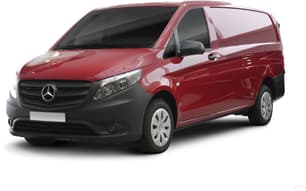
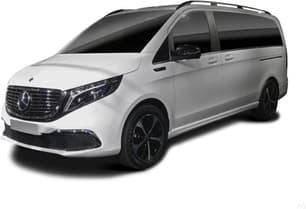
What's the difference?
Numerous commercial van manufacturers are adding battery-electric vehicle (BEV) variants to their model line-ups.
Anecdotal evidence suggests these vehicles are best suited to city and suburban fleet duties, in which they cover short-loop daily driving distances that are comfortably within a manufacturer’s claimed battery range and return to depots each day to be recharged.
However, given that it’s still relatively early days for electric vans, potential buyers are faced with numerous potential deal-breakers compared to conventional internal combustion engine (ICE) equivalents.
These include higher purchase prices, limited driving ranges, longer 'refuelling' times, heavier kerb weights (due to their large batteries) and resulting smaller payload ratings. And they are usually not rated to tow.
However, they can also offer lower operating costs. And they produce zero tailpipe emissions, which according to Mercedes-Benz "creates a powerful marketing tool (for buyers) to demonstrate their commitment to operating sustainably".
We recently trialled M-B’s Vito-based contender in this pioneering LCV market segment, to see how it measures up in Australia’s highly competitive medium-sized (2.5-3.5-tonne GVM) van market.
As far as vehicle niches go, this is pretty niche. The Mercedes-Benz EQV is Australia’s first premium electric seven-seat commercial vehicle-based people mover.
The EQV falls under Benz’s electric ‘EQ’ banner and is based on the Vito van platform, but adapted to house an all-electric powertrain.
However, unlike the popular EQA small SUV or recently launched EQB, don’t expect to see too many EQVs on the roads.
It is likely to appeal to airport transfer operators, hotels and other corporate customers that need to ferry multiple people around in comfort.
But given the kilometres those airport limo drivers can clock up in a day, is an EV capable of doing the job? And will these buyers be happy to fork out more than $150,000 for the privilege?
It’s arguably the best-looking mid-size van on the market, particularly with the optional enhancements fitted to our example. And its longer (km-based) service intervals and capped-price servicing costs offer substantial savings compared to a diesel Vito equivalent.
However, the eVito has a much higher purchase price, smaller payload, shorter driving range, can’t tow a trailer and feels a tad under-powered at low speeds. Plus filling its battery with fresh charge takes much longer than filling a tank with diesel, which may or may not be an issue depending on planned usage.
Therefore, a buyer would need to have not only a sizeable purchasing budget but also very specific and resolute criteria for this vehicle to shine in a commercial role.
The EQV is indeed a curious offering. The driving range is decent, but not outstanding, and depending on what you’re using it for, it could be a savvy investment. Especially if you charge using solar power. You’ll also save on servicing costs. But if you’re a limo operator, it really will depend how many kilometres you’re going to do each day. A V-Class might suffice.
Either way it’s great that Benz is giving buyers electric options in a variety of body styles and segments - an SUV simply won’t suit everyone.
If you can live with that ride quality and have the deep pockets for an EQV, there’s more than enough to like. But I suspect there won’t be many of you.