What's the difference?
Numerous commercial van manufacturers are adding battery-electric vehicle (BEV) variants to their model line-ups.
Anecdotal evidence suggests these vehicles are best suited to city and suburban fleet duties, in which they cover short-loop daily driving distances that are comfortably within a manufacturer’s claimed battery range and return to depots each day to be recharged.
However, given that it’s still relatively early days for electric vans, potential buyers are faced with numerous potential deal-breakers compared to conventional internal combustion engine (ICE) equivalents.
These include higher purchase prices, limited driving ranges, longer 'refuelling' times, heavier kerb weights (due to their large batteries) and resulting smaller payload ratings. And they are usually not rated to tow.
However, they can also offer lower operating costs. And they produce zero tailpipe emissions, which according to Mercedes-Benz "creates a powerful marketing tool (for buyers) to demonstrate their commitment to operating sustainably".
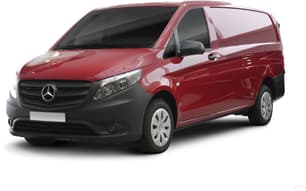
We recently trialled M-B’s Vito-based contender in this pioneering LCV market segment, to see how it measures up in Australia’s highly competitive medium-sized (2.5-3.5-tonne GVM) van market.
Ford’s legendary F-Series has been America’s best-selling truck for more than four decades. A major factor in that success is the Super Duty range (F-250/F-350/F-450), which reports for duty when loggers, landscapers, miners, oil-field workers and anyone else with seriously heavy on- and off-road load-hauling requirements needs more than the entry level F-150 can deliver.
Not surprisingly, such extreme-duty towing is also required in Australia, particularly by tradies with heavy equipment, and/or for recreational and sporting pursuits that involve multi-axle caravans, horse floats, boat trailers and the like. Some of these large trailers feature a goose-neck design which requires a prime mover-style turntable coupling mounted in the cargo tub.
There are a number of small volume importers which cater for these specialised requirements, including Harrison F Trucks at Melton in Melbourne’s outer west. Harrison provides ADR-approved right-hand drive conversion, local certification and sales/after-sales service for these American giants, one of which we recently sampled for a few days to see what life is like in the world of the Super Duty.
It’s arguably the best-looking mid-size van on the market, particularly with the optional enhancements fitted to our example. And its longer (km-based) service intervals and capped-price servicing costs offer substantial savings compared to a diesel Vito equivalent.
However, the eVito has a much higher purchase price, smaller payload, shorter driving range, can’t tow a trailer and feels a tad under-powered at low speeds. Plus filling its battery with fresh charge takes much longer than filling a tank with diesel, which may or may not be an issue depending on planned usage.
Therefore, a buyer would need to have not only a sizeable purchasing budget but also very specific and resolute criteria for this vehicle to shine in a commercial role.
If you’ve got something really heavy to tow and you have the budget to do it in grand style and with minimal effort, then a Super Duty could be just what you’re looking for. Its gargantuan proportions make it impractical for daily driving in Australian city and suburban traffic, but as a heavy-duty tow vehicle, particularly for long-haul open highway work, you’ll feel like king of the road.
Vehicle supplied by Harrison F-Trucks.