Mercedes-Benz CLS350 vs Mercedes-AMG E43

What's the difference?

VS
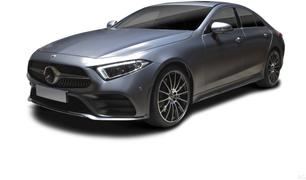
Mercedes-Benz CLS350

2018 price

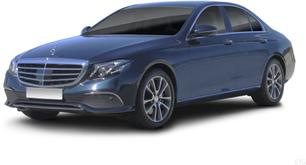
Mercedes-AMG E43
Mercedes-AMG E43

2017 price

Summary

2018 Mercedes-Benz CLS350
2017 Mercedes-AMG E43
Safety Rating

Engine Type
Turbo 4, 2.0L

Turbo 6, 3.0L
Fuel Type
Premium Unleaded Petrol

Premium Unleaded Petrol
Fuel Efficiency
7.8L/100km (combined)

8.4L/100km (combined)
Seating
5

5
Dislikes
  • Limited rear legroom
  • Higher entry price into range
  • No diesel variant

  • Exterior differentiation a touch too subtle
  • Firmish ride
  • V6 growl (not V8 symphony)
2018 Mercedes-Benz CLS350 Summary

There are people who probably wish the Mercedes-Benz CLS would just go away. Call security, have it escorted off the premises. That’s probably because they don’t agree with its styling. For them, it’s not how a large four-door Mercedes-Benz should look, with its ‘rude’ coupe roofline. 

But for some of you those looks are exactly why you want it, and there’s enough of you out there for Mercedes-Benz to tell us at the launch of the new-generation CLS that the model is here to stay.

“You don’t surrender a segment… a vehicle has to do 100 units to justify bringing it – this will do 100 units no problem sat all,” were the exact words from Benz’s head of communications David McCarthy.

You could say Benz created the four-door coupe segment when it launched its first-generation CLS 14 years ago, triggering its rivals to fire back with their own four-door coupes - the Audi A7 and BMW 6 Series Gran Coupe.

Far from surrendering, the CLS has evolved again with this third-generation bringing new engines and styling. So, what do you gain and what will you have to surrender (for lack of a better word) if you choose to go down the non-traditional route of the CLS?

I found out when I drove the new CLS 450 4Matic for the first time on Australian roads at its recent launch.

View full pricing & specs
2017 Mercedes-AMG E43 Summary

When is an AMG not really an AMG, but still a fitting homage to the models that built the brand?

The new E 43 is the eighth '43 after the SLC 43, GLC 43, GLC 43 Coupe and four C 43s, all of which arrived last year, and plugs a mighty gap between the mainstream E-Class line-up and the upcoming full-house E 63 S, while forming an almost exact philosophical fit with the E 36 and E 55 that helped put AMG on the map in the 90s.

How? Unlike the angry dinosaur V8 growl, supercar-like performance and generally hardcore demeanour we love about the current top-level models, the E 43 is more of a rapid grand tourer than a four-door supercar. Which is kind of what the AMGs of old were, before they sprouted exhausts from both sides and became more menacing than Mercedes.

Explore the 2017 Mercedes-Benz E-Class range

Mercedes-Benz E-Class E200 and E220d 2016 review

Mercedes-AMG E63 S 2017 review | first drive

Mercedes-Benz E400 2017 review | road test

Mercedes-Benz E350d 2016 review | snapshot

Mercedes-Benz E300 2017 review | road test

Mercedes-Benz E220d 2016 review | snapshot

Mercedes-Benz E200 2016 review | snapshot

The E 43 still boasts a muscular 295kW/520Nm from its twin-turbo V6 and all-wheel drive, but cloaks it all in an air-suspended package that's barely distinguishable from the AMG styling pack available from the base E 200 up.

It's priced $20,000 higher than the E 400 but still around $90,000 less than the E 63 S that arrives in June, and does nothing to dissuade the notion that Mercedes makes a car for almost everyone. And we're glad they do, particularly when the latest addition boasts a 4.6s 0-100km/h claim that would trump most mid-engined supercars of the 90s.

It also promises to be a star-badged alternative to the new BMW 540i, Audi S6 and even the Lexus GS F.

View full pricing & specs

Deep dive comparison

2018 Mercedes-Benz CLS350 2017 Mercedes-AMG E43

Change vehicle