What's the difference?
Freedom of choice has been the focus for the luxury car industry for more than a decade. Buyers were free to choose from a seemingly endless amount of variations and bodystyles to suit their taste and lifestyle.
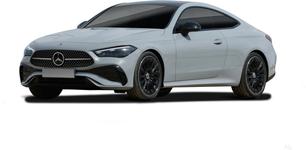
It gave birth to the ‘four-door coupe’ then the ‘SUV coupe’ and so many more. But now it seems car makers have reached their limit, as evidenced by Mercedes-Benz’s newest offering - the CLE Coupe and Cabriolet.
While technically a new addition to the range, the CLE actually replaces not one existing model, but two. The CLE will fill the gap left by both the C-Class Coupe and E-Class Coupe, allowing the German brand to simplify its line-up (ever so slightly).
So, what is the CLE Coupe and how will it live up to expectations of two different car buyers? Read on to find out…
Numerous commercial van manufacturers are adding battery-electric vehicle (BEV) variants to their model line-ups.
Anecdotal evidence suggests these vehicles are best suited to city and suburban fleet duties, in which they cover short-loop daily driving distances that are comfortably within a manufacturer’s claimed battery range and return to depots each day to be recharged.
However, given that it’s still relatively early days for electric vans, potential buyers are faced with numerous potential deal-breakers compared to conventional internal combustion engine (ICE) equivalents.
These include higher purchase prices, limited driving ranges, longer 'refuelling' times, heavier kerb weights (due to their large batteries) and resulting smaller payload ratings. And they are usually not rated to tow.
However, they can also offer lower operating costs. And they produce zero tailpipe emissions, which according to Mercedes-Benz "creates a powerful marketing tool (for buyers) to demonstrate their commitment to operating sustainably".
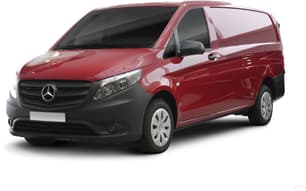
We recently trialled M-B’s Vito-based contender in this pioneering LCV market segment, to see how it measures up in Australia’s highly competitive medium-sized (2.5-3.5-tonne GVM) van market.
The CLE Coupe really feels like a car of the times. As the electric vehicle market continues to suck in resources, the days of endless variants and body styles is going to wane. But the truth is the CLE does a nice job of filling the demands that both previous C-Class Coupe and E-Class Coupe buyers are looking for.
It’s a stylish model with plenty of technology on the inside, so it should appeal to those who want something refined and elegant for their lifestyle. It has a hint of sportiness on road, without being overtly dynamic or uncomfortable; although Mercedes-AMG will cater to those buyers soon enough. And it offers the kind of space inside that buyers of both models will find acceptable (as long as they don’t have to climb into the back regularly).
The biggest challenge will be convincing C-Class customers to take the big jump up in price over the model it replaces, while at the same time convincing E-Class buyers that this is still something special and different given its similarities to the old model.
Note: CarsGuide attended this event as a guest of the manufacturer, with travel, accommodation and meals provided.
It’s arguably the best-looking mid-size van on the market, particularly with the optional enhancements fitted to our example. And its longer (km-based) service intervals and capped-price servicing costs offer substantial savings compared to a diesel Vito equivalent.
However, the eVito has a much higher purchase price, smaller payload, shorter driving range, can’t tow a trailer and feels a tad under-powered at low speeds. Plus filling its battery with fresh charge takes much longer than filling a tank with diesel, which may or may not be an issue depending on planned usage.
Therefore, a buyer would need to have not only a sizeable purchasing budget but also very specific and resolute criteria for this vehicle to shine in a commercial role.