What's the difference?
They're doing it again! Actually they've been doing it again for a bit now. It’s Mercedes-Benz Australia and plug-in hybrid tech.
The Ross and Rachel, or Jim and Pam of the premium automotive world.
It's been a will they, won't they for a while, and in the past Mercedes has dipped its proverbial plug into the electrons a few times and gotten cold feet.
But now it says it’s all in. There are others, the GLA and GLC SUVs, plus there’s the new C63 performance car, but this one feels like a bit of an arrival.
Yeah, the C-Class is no longer the Mercedes-Benz in terms of sales, but it might be the best way to make the most of a bit of battery power.
Aside from gull-winged supercars, stunning sports cars and coupes, plus saloons of all sizes that define status around the globe, Mercedes-Benz is also famous for its elegant yet very practical station wagons. Or Estates in Merc-speak.
Long before SUVs really existed (and two years before the industrial G-Class first appeared), the three-pointed star was offering wagon-bodied versions of its core sedan models that allowed owners to mix pleasure with business, or simply pleasure while carrying vast cargo in the back.
Merc Estates have never simply been an extended roof tacked onto the back, with a depth of design that integrates cargo restraints like the characteristic retractable net, but also generally including an extra two seats that fold neatly into the floor. No, your giant Mazda CX-9 wasn’t the first to do this.
Fast forward to 2017, and the popularity of the ever-expanding array of Merc SUVs and SUV-coupe spin-offs is threatening to render the Estate obsolete, outside Europe at least.
We’re still big fans of the wagon bodystyle, and Mercedes says there are enough loyal Merc wagonists to keep them on the radar for Australia. The latest C-Class Estate is actually proving more popular than the version it replaced, but the bigger E-Class is more of a niche offering.
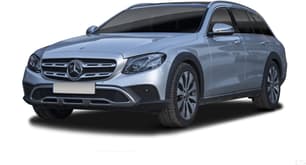
Which is where the new E 220 d All-Terrain comes in. For the first time, Mercedes has added a bit of off-road SUV flavour and ability to the E-Class Estate, and with this extra sparkle it makes sense for it to be the sole long-roof version of the W213-generation E-Class to be brought down under.
But does this extra sparkle retain the elegance that keeps E-Class Estate buyers coming back for more?
Plug-in hybrids will probably not appeal to all buyers, but in the premium space they make sense.
Smooth electric driving paired with the potential for weekend trips outside the 100km-or-so range make the C350e a decent thing, let alone its price parity with the C300.
It still doesn’t top the charts for value or practicality, but even aside from the PHEV tech, the C350e remains a fun-to-drive sedan that holds its own in the executive space.
Note: CarsGuide attended this event as a guest of the manufacturer, with meals provided.
Given Mercedes-Benz's rich heritage with station wagons, it is a bit of a shame Australia’s preference for SUVs has reduced the line-up to just one variant this time around.
I'm glad they've picked the All-Terrain to fly the flag though, and Merc wagon loyalists should appreciate the extra versatility of its dirt road ability - if they're not mourning the loss of the extra two seats in the rear. Like the rest of the current E-Class range, the E 220 d All-Terrain is an excellent product overall.