What's the difference?
Once upon a time Queensland was the home of Aussie camper-trailer manufacturing and companies, such as Lifestyle Camper Trailers, were pumping out camper after camper to happy customers. But then came the imports and the price that people were willing to pay for the product dropped very quickly. Many local companies succumbed and just went out of business, others started importing their own and some innovated, developing new products; Lifestyle did two of the three.
Today Lifestyle only builds light-weight, heavily off-road caravans which it calls Hypercampers and others would call a hybrid caravan, because it takes some elements of a camper-trailer and others of a caravan. It has four models, one of which is built in China in a factory the company part-owns. The other three, including the Reconn R2, which I’m testing, is built in Queensland.
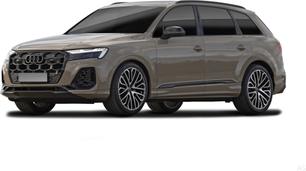
The updated Audi Q7 is a bit of a game of ‘spot the difference’ - but even though it’s far from a new generation, the update is more than just some shiny new bits.
While the brand’s first SUV is still in its second generation, a bit of modernised design and some tech tweaks are aimed at keeping it in line with rivals, even as it nears a decade on sale.
As well as the new features, there’s also a new variant bound for Aussie showrooms. So, is it still up to the task?
This is one of the campers that very finely straddles that line between camper-trailer and caravan. It’s light-weight and simple to use, even if (and mostly because) it lacks the wide-open comforts of a traditional caravan. It’s very capable, well-equipped and very well made.
If you do like to escape the great outdoors occasionally while camping (or someone you dearly love, does), this is well worth a look. It’ll follow you just about anywhere and your camp life will be better for it.
Overall, changes to the Q7 aren’t quite revolutionary, but that’s okay because it was already a fantastic large SUV.
The fact Audi has kept the price around the same mark and introduced a cheaper entry-grade should be welcome news for prospective buyers.
But even the existing variants are capable and impressive family haulers… and now they’re just that little bit better.
Note: CarsGuide attended this event as a guest of the manufacturer, with travel, accommodation and meals provided.
The Reconn’s interior is interesting, as unlike most modern caravans, there’s not a lot of free space in here, thanks largely, to the height of the bed. It sits right at the top of the camper, like a second-storey mezzanine. To get in, you have to climb onto the dinette lounge, or use the fold-down step built into the base.
There is also a small dinette and lounge space with a folding table that’s comfortable enough for two to sit at ease and read or eat dinner, but I get the feeling Lifestyle doesn’t expect you to be spending the majority of your time in here – that’s not what this camper is about.
Above the dinette there’s cabinet space, while all the dinette seats lift up to reveal more storage areas. The dinette closest to the door has two drawers in it, to make accessing the storage easy.
If this floorplan isn’t for you, there are three other options. One features a pair of bunks, another an ensuite with shower and toilet. The third packs both the bunks and the ensuite all in, somehow – it’s not an overly large space.
Audi has changed the layout and added new apps in the main 10.1-inch multimedia touchscreen, though fortunately it still has shortcuts to all the Big Dogs in terms of functions: media, navigation, phone, etc.
On top of that, everything is still in big, easy-to-see (and press) blocky buttons on the main screen.
The 8.6-inch screen below also still has climate controls readily available, and there are still physical buttons for a bunch of functions including drive modes.
The wide 12.3-inch driver display also remains familiar, though now has a higher resolution and more functionality in terms of on-road help and safety - which we’ll come to later in this review.
Aside from the tech, ‘spacious’ is an understatement when it comes to the big Audi’s cabin. In the front seats especially, the Q7’s central tunnel and dashboard are easy to reach without feeling like an enclosure as they wrap around the front passengers.
However, if I had to level one criticism at the usefulness of the Q7’s front row, it would be that despite there being physically plenty of room, storage is at a premium.
For something this big, there aren’t many places to put items that aren’t your phone or a drink.
There are door card holders for bigger bottles, some space for small items, and the cupholders of course, but the space under the central armrest including the phone charger is stingy.
Fortunately, the second row is not lacking space and is modular in its adjustability. Occupants can move seats, adjust their angle, and even sort out the middle seat separately.
Depending on how high up the variant chain you go, separate climate controls for the middle row and the panoramic sunroof help create a comfortable and roomy feeling.
The second row can also be tucked up behind the front row for easier access to the third row, which (if the second row is slid forward a tad) is just spacious enough for an average adult to be relatively comfortable for a short trip.
The third row seats are able to be folded or raised with switches that are accessible from the side doors or the (electric) tailgate, where there’s also a switch to lower or raise the rear suspension by 55mm to aid loading.
On that, the Q7 has a claimed luggage capacity of roughly 295L with all seats up, 780L with the third row folded down and 1908L with the second row lowered.
I towed it behind a RAM 1500 Laramie, which was serious overkill for a trailer of this size and weight, but it did all the right things. Because it has an adjustable air-suspension underneath, its ride is quite compliant and soft and its height can be adjusted to suit the terrain, or even lowered to reduce air resistance.
Off-road, it posed little trouble, although the tracks we did were mild, at worst. It has no shortage of clearance (and can be dialled up further if you are short of it) and is fitted with a Cruisemaster DO35 off-road hitch.
One of its best off-road features, though, is the completely clean underside. There’s actually no plumbing, tanks, wiring or fittings under the floor or exposed to the elements, river crossings, dust or stones. The camper’s two tanks, batteries, pumps, electricals and plumbing are all contained within a compartment under the driver’s-side storage section. There’s even room in there for expansion – it’ll fit another water tank, another batteries and extra electrical gizmos easily.
Aside from the mild-hybrid now standard on the Q7’s V6 models, there’s not a whole lot to report on in terms of new tricks or surprises from behind the wheel.
But that’s okay, because it means the Q7 remains a supremely comfortable and capable large SUV.
Our test route consisted of plenty of rural driving, with a combination of surfaces that would in some family haulers see the suspension and maybe even steering show cracks in their ability - but the Q7 remains composed.
Given its weight and size, it can feel a little hefty around sharper corners, but the Q7 in these variants (i.e, not its performance-focused SQ7 sibling) isn’t built to be hustled like that.
It feels like the kind of air-suspended loungeroom-on-wheels that would be at home barreling down the autobahn at 180km/h and being completely undramatic about it.
Still, this model shares some moving parts underneath with the likes of the extremely capable Porsche Cayenne, and while the Q7 isn’t quite a giant hot hatch, the sound foundations shine through dynamically.
Of course, when it comes to powertrains, there isn’t really a wrong answer, each engine fits a purpose.
If you’ll ever need to tow (and you can at up to 3500kg braked), the low-down steady urge of the 50 TDI is probably your best bet, but even the 45 TDI is a solid choice for long-range motoring.
The petrol models will better suit those in city situations, and while they never feel truly urgent, the 55 TFSI isn’t without some impressive push for something of this size.