What's the difference?
Having been on the market since 2014, the NX mid-size SUV quickly shot up the Lexus sales charts to become the brand’s most-popular model.
The SUV-hungry Australian market ate up the premium crossover, which also had the distinction of offering a hybrid powertrain.
In 2020 though, with SUVs popping up left, right and centre from premium and mainstream brands, can the NX still hold its own as an inner-city cruiser?
For many Australians, calling the new ZB a Commodore is tantamount to being forced to call your Mum’s new boyfriend ‘Dad.’
It's not built here, available in rear-wheel drive, there's no sign of a V8 or a sedan body, so why should we accept it as a worthy heir to the badge worn by Holden’s proudest model since 1978?
One big reason is that it was always going to be the next Commodore, even before Holden decided to stop building cars in Australia. Yes, it was even set to be built here.
Once the VE/VF Commodore’s Zeta platform was axed during General Motors’ post-GFC rationalisation, the next best thing was to align with the Opel/Vauxhall Insignia designed primarily for Europe.
Holden was actually involved with the new Insignia’s development from the beginning, which has led to some key details for the Commodore version and Australia, and a whole lot of input from our world-renowned Aussie engineering team.
So it’s a whole lot more Commodore than you may realise. Whether it lives up to its reputation is another matter.
The Lexus NX 300h F Sport is both a comfortable and luxurious family hauler that is held back by just a few things.
Of course, gripes like the underwhelming dynamics might not be an issue for all, but the less-than-stellar fuel economy (for a hybrid, at least), disappointing practicality and fiddly multimedia will affect all potential buyers.
However, this is balanced out by loads of equipment and premium appointments for a reasonable price, which should put the Lexus NX on your shopping list if you are keen for an inner-city premium SUV cruiser.
So will the new Commodore become Australia's favourite car? I strongly doubt it, but it's not the car's fault, and it wouldn't be any different if it was a rear-wheel drive, V8, Australian-built sedan. Australian buying habits have just moved on, and diversified into a range of SUVs, small hatches and dual-cab utes.
Taken as an all-new entry in Holden's revitalised line-up though, the new Commodore ticks all the important boxes required of a mid-size to large passenger car these days. It may not be anywhere near as exciting as a 6.2-litre Redline sedan, ute or wagon, but it’s objectively a far better car overall, and you should definitely give it a drive before dismissing it.
The pick of the bunch in my eyes is the $39,490 RS Sportwagon with the 2.0-litre petrol engine. Yep, the best new Commodore is now a four-cylinder station wagon.
Be sure to check out what James Cleary thought of the new Commodore in prototype guise here:
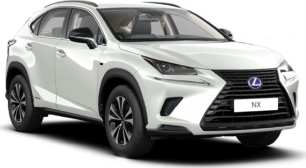
Lexus might have been known for drab and dowdy styling in the past, but the NX’s sharp aesthetic is head turning and attention grabbing in all the right ways.
Though the NX first hit Australian showrooms in 2014, after six years we reckon it wouldn’t look out of place strutting down a catwalk, and can easily hold its own in the design department against the likes of the Audi Q5, BMW X3 and Mercedes-Benz GLC.
From the front, you can’t miss the trademark Lexus spindle grille, which, with its trapezoidal shape, gives the illusion of a wider and more aggressive car.
The high-set, slender headlights also gives the NX a wide stance, while the sweeping daytime running lights and sharp bumper design give the impression that the NX is cutting through water.
In profile, the NX is characterised by a strong shoulder line, chiselled lower doors and narrow glasshouse, while the black plastic wheelarch cladding hints at its SUV status.
The black trim detailing on the tail-lights almost make it look like the NX has narrowing cartoon eyes from the rear, but the subtle diffuser and large bumper soften its look a little.
If you can’t tell, we dig the aesthetics of the NX, especially the subtle exterior features such as crystal-like front foglights and the unique side mirror design.
Step inside and those neat little design touches continue.
From the almost folded fabric-like design of the door trims to the soft-touch surfaces throughout, the NX’s cabin oozes luxury, class and quality.
The centre stack shape mirrors the front grille’s trapezoid shape, while all the buttons and switchgear have a nice heft and weight to them, and are laid out in an easy-to-use, ergonomic fashion.
Sure, look a bit closer and you might see some carryover items from lower-end Toyota models, such as the cruise control stalk but, be honest, if we didn’t point it out, would you have even noticed?
Aside from the move to a front-drive basis, the other key difference between the new Commodore and those of the past is its shift from a classic three-box sedan shape to a sleek, five-door Liftback. Even the Sportwagon has an elegant arc to its roofline, which is arguably their most appealing design element. There are no Ute or Caprice bodystyles, and there never will be.
The European-designed look is less macho than the bulging wheelarches of the VE and VF, but more in line with its European rivals like the Ford Mondeo, Volkswagen Passat and Skoda Superb.
The best way to identify specific models is by their wheels, with the trim levels split between a more elegant body trim on the entry, Calais, Calais-V and Tourer variants, and sportier body kits with side skirts and a rear spoiler on the RS, RS-V and VXR flagship.
The interior look is also best described as elegant, with fresh shapes that flow cohesively into the door trims and centre console. There’s a general air of quality about it, but it’s let down by some cheap-feeling controls and switches, particularly the climate control knobs.
The ZB’s overall size is bigger than you might think, with most dimensions fitting neatly between the VE/VF and the VT-VZ generation that preceded it.
You might be surprised to learn it’s no lightweight either, with the heaviest Calais-V Tourer actually outweighing the portliest VF by 31kg.
Interior dimensions are comparable with its predecessor, with the most significant differences being a narrower back seat thanks to its 36mm thinner body and 13mm less rear headroom in the Liftback (but 3mm more in the wagon).
Before the decision was made to source the new car from Germany, Holden was planning a longer wheelbase for Australia. One specific requirement that did reach fruition is the availability of a V6 engine, which isn’t fitted to European versions.
Under the skin it rides on GM’s E2XX platform, which is a significant evolution of the chassis that underpinned the previous Insignia and the now-defunct Holden Malibu.
Aside from having a say in every step of its design process, Holden engineers covered more than 200,000 kilometres of testing on Australian roads and at the Lang Lang proving ground.
This has been to fine tune the drivetrain calibrations, the steering, suspension, and even details like the sat nav and radio reception to suit our tastes and unique demands.
Specific suspension tunes have been developed for four cylinder models, the V6 Calais, V6 RS-V and the Tourer, with unique setups between Liftback and Sportwagon bodies.
The only version not to score an Australian suspension tune is the VXR, which was treated to a performance-focused setup at the Nürburgring in Germany.
Measuring 4660mm long, 1870mm wide, 1645mm tall and with a 2600mm wheelbase, the NX puts it foot firmly into the mid-size SUV class.
Front occupants can easily get comfortable thanks to seats with a wide breadth of adjustment, while drivers also get a telescoping steering wheel that automatically raises when the car is turned off for easier ingress/egress.
Generous door bins up front will swallow large water bottles and any other paraphernalia, while two deep cupholders are found between the driver and front passengers.
If you want to tuck any items out of sight though, the glovebox and centre console bin will do the job, but there is also a hidden compartment where the driver’s touchpad palm rest.
Lift up the flap and your precious valuables can be hidden away, but look underneath the flap and it doubles as a handheld mirror to check you don’t have any food in your teeth before a date.
The outer two second-row seats offer ample room for six-foot-tall passengers, and – even with the front seats in our preferred position – there is plenty of legroom in the back.
Like most vehicles, the middle seat is a bit compromised, but in the NX it feels especially narrow and uncomfortable.
This isn’t helped by the middle seat’s seat belt, which comes down from the roof and intrudes well into the backrest of the neighbouring seat when not in use.
It makes loading the NX full of passengers tricky as there is a bit of shuffling around to get all the belts in place and passengers comfortable.
Our advice? Use the NX as a four-seater and just fold down the centre armrest, which also exposes two cupholders, for extra comfort.
Other rear seat amenities include air vents and storage pockets in the doors, the latter of which will accommodate water bottles or small items.
Open the boot and the NX will swallow 475 litres of volume, which can expand to 1520L with the rear seats folded down.
Boot space is down on its rivals, with all of the German models offering at least 550L of volume.
In real-world terms, this means the NX’s boot won’t close with a large- and medium-sized suitcase sat side-by-side, but has no problem with smaller cases.
Boot space might be lacking in the NX, but the hybrid system’s batteries have to go somewhere, and at least Lexus offers up two big bag books and tie-down points.
Another traditional Commodore trait to have taken a step backwards is its ability to carry three adults across the back seat. Admittedly only really an issue for taxi use, the ZB will certainly still swallow three, and likely three child seats, but less comfortably and more like the similarly sized Camry.
The Liftback’s reduced headroom didn’t matter for this 172cm tester, but if you were marginal in a VF you’d probably want to avoid spiking your hair.
The cabin ticks all the other important boxes for a modern family car, including twin cupholders front and rear, bottleholders in each door and two ISOFIX child seat mounts in the rear.
All get a good cluster of USB and 12V charge points, while the RS-V models upwards get a big bonus with wireless phone charging.
The Liftback's boot space is only slightly down on before at 490 litres, but the huge opening created by the five-door design is so much more useful in the real world. It also brings a split-fold back seat for the first time in a non-wagon Commodore.
The Sportwagon has lost around 100 litres in capacity though, but is still a very useful 560 litres to seat height or 793 litres to the roof.
Holden’s local team has also developed a range of optional accessories for the Commodore, which includes a bonnet protector, weather shield, towbar, boot liner, floor mats, headlight protectors, sill guards, locking wheel nuts, roof racks and a cargo net, but there’s no sign of a cargo barrier, nudge bar or bullbar at this stage.
The Lexus NX mid-size SUV range kicks off at $55,700 before on-road costs for the base 300 Luxury 2WD, but our NX 300h F Sport AWD test car carries a $68,700 pricetag.
Of course, the price goes up due to the petrol-electric hybrid engine (more on that below), all-wheel-drive set-up and sporty appointments of the F Sport grade, but the list of standard equipment is sizeable.
From the factory, our test car is fitted with privacy glass, roof rails, auto-dipping and heated side mirrors, 4.2-inch driver display, keyless entry and push-button start, dual-zone climate control, wireless phone charger and powered tailgate as standard.
F Sport grades also score unique 18-inch wheels, a lowered ride-height and sports bodykit, as well as a bespoke leather shift knob, steering wheel with paddle shifters, seats, and interior trim.
Speaking of seats, the front pair are heated and cooled, and also feature electronic adjustment with memory function.
Handling multimedia duties is a 10.3-inch widescreen that outputs to 10 speakers dotted around the cabin., Digital radio, satellite navigation, Bluetooth connectivity, Apple CarPlay/Android Auto support and a DVD player can be found within the multimedia system, which is controlled by a central touchpad or via voice commands.
The only option ticked on our car is the Titanium premium paint. The only standard colour for the NX 300h F Sport is Onyx (black), with all other colour options incurring a $1500 penalty.
Of note, Lexus keeps the sunroof and colour head-up display on the options list.
While the 300h F Sport might be close to the top-end of the NX hierarchy (only cheaper than the Sports Luxury trims), its $68,700 asking price is comparable to base grades of key German rivals, such as the Mercedes-Benz GLC ($67,400) and BMW X3 ($68,900) that are rear-driven and offer less equipment.
Aligning with the Insignia’s European platform has bumped the Commodore right up to speed with the current status quo of features expected in such a family car.
Available Commodore firsts include standard auto emergency braking (AEB) on all models, adaptive cruise control, 360-degree / surround-view cameras, massage and ventilated seats, heated rear seats, wireless phone charging, LED headlights and a power tailgate on the wagons. Like most new cars, there’s no more CD player or DVD player with the radio and other multimedia options.
The broad model range is split into LT, RS, RS-V, Calais, Calais-V, VXR trim levels, while the off-road flavoured Tourer is split into Calais and Calais-V versions.
All bar the Tourer and VXR are available with either Liftback or Sportwagon ($2200 extra) bodystyles, while the 2.0-litre turbo engine is standard in the LT, RS and Calais. The V6 with all-wheel drive is available in the RS, RS-V, Calais-V, VXR and both Tourer trims, while the diesel engine is limited to the LT and Calais.
The base LT Liftback drops the Commodore entry point by $1800 with a list price of $33,690. The diesel engine is available in either bodystyle for an extra $3000.
Standard features include the aforementioned AEB, lane keep assist, lane departure warning, Apple CarPlay and Android Auto in addition to Bluetooth connectivity with a 7.0-inch multimedia screen, reversing camera, auto parking, a leather steering wheel, an eight-way power driver’s seat, proximity keys, auto headlights and wipers, air conditioning and 17-inch alloy rims.
The RS kicks off at $37,290, or $40,790 in V6 AWD guise, and brings sports front seats, steering wheel and body kit, blind-spot monitoring, rear cross-traffic alert and bigger 18-inch alloys, while the Sportwagon version gets a power tailgate.
The V6 AWD RS-V commands $46,990, and adds leather seats, heated front seats, paddle shifters a larger 8.0-inch multimedia screen with built-in GPS navigation system and DAB+ digital radio, a colour head-up display, wireless phone charger, interior ambient lighting, upgraded Hi Per strut suspension and a sportier rear bumper.
The $40,990 Calais is also available with the diesel engine for an extra $3000, or as the V6 AWD Tourer wagon for $45,990.
The Calais sits closer to the LT on features, but adds leather trim, front seat heaters, 8-inch multimedia screen with built-in GPS navigation system and DAB+ digital radio, wireless phone charging, blind-spot monitoring, rear cross-traffic alert and 18-inch alloys.
The Calais Tourer scores a ride height lift (overall height up 42mm) and off-road styled unpainted wheel-arch moulds and bumper caps.
The $51,990 Calais-V adds a Bose premium sound system, ventilated front seats, a massage function and powered side bolsters for the driver’s seat, heated rear seats, a sports steering wheel with paddle shifters, 360 degree cameras, colour head-up display, adaptive LED headlights and 20-inch alloys. The Liftback version gets an electronic sunroof, while the Tourer version gets a panoramic glass roof.
The top-spec VXR is closest to the RS-V in terms of features, but for $55,990 it adds VXR-specific sports seats with power adjustable bolsters and ventilation up front, heated rear seats, Bose premium audio, adaptive suspension, adaptive cruise control, Brembo brakes, VXR floor mats and sill plates, active LED headlights, 360-degree camera, electric sunroof, and 20-inch alloy wheels.
From launch, Holden is offering drive-away pricing across several models, with on-road costs included. The LT petrol Liftback is available for $35,990, while the RS Liftaback is being offered for $38,990 with the 2.0-litre turbo and $42,490 with the V6. The Calais Tourer is also being offered for $47,990 drive away.
MORE: Check out our ZB Holden Commodore price guide and price list here.
The available colours are spread across two whites, two reds, silver, grey, black and blue, with some only available on certain models. All bar the non-metallic white and red will cost you an extra $550, but there’s no sign of the green, purple, orange, or yellow we’ve seen over the past decade.

Propelling the Lexus NX 300h F Sport is a petrol-electric mild-hybrid powertrain, combining a 114kW/210Nm 2.5-litre naturally aspirated four-cylinder petrol engine with two electric motors – 105kW/270Nm unit for the front axle and a 50kW/139Nm unit for the rear wheels.
The total system output is measured at 147kW, which is sent to all four wheels in our test var via a continuously variable automatic transmission (CVT).
The zero-to-100km/h acceleration takes 9.2 seconds thanks to a fairly hefty 1895kg kerb weight.
No, there’s no more V8, manual transmission or rear wheel drive, but the ZB’s options are more in sync with its newer rivals.
For the first time since the VH, or 1984, the base engine is a four-cylinder petrol unit, but uses modern tech like direct injection and a turbo to boost power statistics to more than triple that of the infamous Starfire engine. Also seen in the Equinox, the new turbo motor’s 191kW is also notably 6kW more than the 5.0-litre V8 in the VL Group A SS (Walkinshaw), and 1kW more than the 3.6-litre V6 was making in top-spec VZ Commodores – so pretty good horsepower for its engine size.
The real story is its healthy 350Nm of torque, which is also more than what the same VZs were making, but on tap from a useful 3000-4000rpm.
The latest version of the 3.6-litre Alloytec V6 that’s seen duty in VZ, VE and VF models makes a reappearance as the new performance leader, but mounted sideways and turning all four wheels this time. In ZB trim, it produces 235kW and 381Nm, the latter from 5200rpm.
MORE: Find all ZB Commodore specifications here.
For the first time, you can also choose a diesel option with LT and Calais trims, which is a version of the engine used in the previous Opel Insignia. You’ll also find it under the bonnet of the Jeep Cherokee and Compass, and its applications spread as wide as the Alfa Romeo 159 that ended production in 2011. In Commodore guise, the turbo 2.0-litre engine specs are 125kW and 400Nm (available from 1750-2500rpm), and therefore taking out the torque trophy for the ZB range.
Both petrol engines are paired with a nine-speed torque converter automatic transmission, while the diesel has an eight-speed gearbox. Both four-cylinder engines are front-wheel drive, while all V6 variants are all-wheel drive.
MORE: What’s the difference between 4X4, 4WD and AWD
The all-wheel drive system is actually quite clever, using what’s called a Twinster twin-clutch rear differential for finite torque vectoring, or sending the just the right amount of power to each wheel. The system varies torque distribution between 100 per cent front and a 50/50 split.
If you think the Commodore has gone soft, its towing capacity ratings also suggest otherwise, with a 2100kg maximum braked rating for V6 models matching the best offered previously. The four cylinder models are rated at 1800kg, which is 200kg better than what the previous 3.0-litre V6 and LPG models carried.
Official fuel consumption figures for the Lexus NX 300h is 5.7/ litres per 100km, though we managed a 7.6L/100km figure in our week with the car.
Our driving consisted exclusively of inner-city driving for groceries and just two trips down the freeway upon collecting and returning the car due to Melbourne’s lockdown rules.
As you’d hope, the ZB sets a new Commodore benchmark for fuel consumption, with the diesel models managing a best official combined figure of 5.6L/100km. The petrol four-cylinder models also pip the VF’s best combined fuel economy figure of 8.3L/100km with 7.4 and 7.6L/100km for the LT, RS and Calais Liftbacks respectively. The Sportwagon versions wear 7.7 and 7.9L/100km figures, while V6 versions span 8.9-9.3L/100km combined ratings.
It’s worth noting that the petrol four-cylinder engine needs premium 95RON unleaded to do its best, while the V6 is happy to run on regular 91RON unleaded. All versions have a 61.7-litre fuel tank.
Though the Lexus NX might look sporty and dynamic from the outside, don’t be mistaken into thinking Lexus’ mid-size SUV is anything other than a comfy cruiser.
Steering remains light and lifeless in its default ‘Nomal’ drive mode, but even in ‘Sport S’ and ‘Sport S+’, weighting feels artificial and numb.
What this means is that the NX 300h F Sport is a joy to manoeuvre around town at low speeds, but is found lacking when the speedo climbs and the roads get a bit twisty.
Likewise, a stab of the throttle is met with a spike in revs and engine noise as the powertrain switches from its electric motor to internal combustion engine, but the expected thrust-burst never comes.
CVTs are generally tuned for better fuel economy, not a sporting drive, so it makes sense that the NX is a little more hesitant and lethargic to get up to speed, but the transmission does suffer from that ‘elastic’ feel where it can be slow to ‘shift up’ if it thinks you are wanting a sporty drive.
However, these shortcomings are especially evident when stacking it up next to the new Toyota RAV4 hybrid.
The NX is underpinned by Toyota’s MC platform, shared with the old RAV4, whereas the fifth-generation mid-size SUV that launched in 2019 is updated with a TNGA platform.
Much of our aforementioned criticisms in driving dynamics and snoozy drivetrain are fixed, or at least alleviated, in the latest Toyota RAV4, so here’s hoping the next-gen NX rumoured to break cover soon will be a welcomed step forward.
And while the current Lexus NX is certainly not the last world in SUV driving dynamics, it’s not trying to be.
As a daily runabout for the family, the NX is comfortable and predictable – just what some families might be after.
The suspension does a great job at soaking up road imperfections and little bumps you might find on your journey, helped by the comfy seats and great interior sound insulation.
What is noticeable though, is overcoming large bumps or any change in elevation at speed, where the NX 300h’s hefty weight means it takes just a touch longer to get settled again.
The cabin also feels a bit fussy from the driver’s seat, with the multimedia especially being fiddly and hard to navigate when on the move.
We reckon a rotary controller like those found on a BMW, or even better multimedia software as seen with a Benz, could go a long way in fixing Lexus’ multimedia woes.
Having said that, the system is compatible with Android Auto, and is laid out well on the widescreen, so you could easily forgo the annoying touchpad and janky software for a better experience.
The Commodore we know and most of us love is just as famous for its quality driving experience as its local production and motorsport successes. So, the ZB has some big shoes to fill in this area.
At the ZB’s media launch, we drove everything aside from the base LT or any diesel variant, over several hundred kilometres of pretty much every road condition.
I’ll cut to the chase. There’s a genuine quality to the way they handle Australian road conditions. We drove them back to back with a UK-spec model at Lang Lang, and while you’d expect the local car to excel at its own test facility, the rear and front suspension work in harmony to handle mid-corner bumps with far greater stability than the alternative. The electric power steering weighting was also lighter, but it didn’t seem to lose any precision.
You probably wouldn’t notice it driving to the shops every day or cruising on the highway, but this on-limit controllability could easily be the difference between life and death in an emergency.
The turbo four is a surprisingly capable and refined package, and would honestly be my pick if I were in the market. It’s smoother and more tractable than the V6, so feels like it would deliver speed more readily than the bigger engine unless you were going flat out.
Holden isn’t quoting official 0-100km/h acceleration figures, but we hear the petrol four is good for a 7.0 second-ish time, and the V6 will manage just over 6.0sec. So there’s really not much in it outright.
Therefore it’s a shame you can’t get the Tourer with the petrol four, but because the combination is available in Europe, Holden could shift the line-up if there’s enough demand.
The nine-speed auto does a pretty good job with either engine, and its electronic brain does a slick job of seamlessly adjusting its shift behaviour to your driving style.
Holden isn’t quoting ground clearance figures, but all have enough to handle dirt roads, and while the 17-inch wheel equipped models match the VF II’s 11.4m turning circle, be aware that the 18-inch wheel variants blow out to 11.7m, the 19s are 12.7m, and Holden doesn’t quote a figure for the 20-inch equipped Calais-V Liftback and VXR.
The only other surprise among the group we drove is the Calais-V Liftback, which is likely to be a bit too sharp in its ride for some luxury buyers on its big 20-inch alloy wheels. The Calais or one of the Tourers would be your best bet for comfort.
The VXR performance flagship is a completely different personality to the SS models of the past. It’s nowhere near as fast, but is more of a grownup package that’s easier to get the best out of.
Its more demure than the brash final VF IIs, and the V6 does make a pretty sweet note, even if half of it is coming from the speakers.
Nothing was ever going to replicate the romance and pride of the last SS, but all is not lost for fans of fast Holdens.
All Lexus NX grades carry a maximum five-star ANCAP safety rating, applicable to all variants of introduced from October 2017 onwards.
As the NX was tested on ANCAP’s old standards, it scored 35.39 out of a possible 37, dropping only 1.61 points in the frontal offset test for ‘acceptable’ protection of the driver’s chest and feet, and passenger’s lower legs.
Like all NX models sold in Australia, our car came with the brand’s Safety System+ suite, which includes autonomous emergency braking with pedestrian detection, blind-spot monitoring, rear cross-traffic alert, adaptive cruise control and lane departure warning.
Other safety tech in our F-Sport grade includes hill-start assist, automatic headlights and adaptive highbeams, while eight airbags, seatbelt pretensioners and a tyre pressure warning system are found throughout the local NX line-up.
All versions of the new Commodore come with a maximum five star ANCAP safety rating, which has been measured against 2017 standards. The VF’s five star rating was based on 2013 standards.
As mentioned above, all versions get standard AEB and ISOFIX child seat mounts, plus features like lane keep assist and departure warning, auto parking, a reversing camera with front and rear sensors and six airbags covering both rows of seats.
All versions also get a novel following distance indicator to help you gauge a safe distance from the car in front. This could serve as excellent driver training, and worth having a go with on a test drive.
RS variants upwards get blind-spot monitoring and rear cross-traffic alert, while only the Calais-V and VXR get 360-degree /surround-view camera setups.
Like all new Lexus vehicles, the NX 300h F Sport comes with a four-year/100,000km warranty, along with roadside assist over the same period. A six-year anti-corrosion is also part of the aftersales assurance package.
Scheduled service intervals are every 12 months/15,000km, whichever comes first.
The first three years/45,000km of scheduled servicing is capped at $495 for each annual service, which falls under the brand’s Encore service that also entails pickup and delivery of the NX, loan car, and wash and vacuum.
Lexus ownership also means owners will be access to exclusive events, dinners and drive days, as well as promotions from partner hotels.
Although servicing costs are relatively cheap for the first three years, Lexus’ four-year/100,000km lags behind luxury brand leaders Mercedes-Benz and Genesis, who both offer five-years/unlimited kilometre assurances.
Holden is currently offering a seven-year, unlimited kilometre warranty with roadside assistance to help boost sales, but be on the lookout for the return of this deal if you miss out this time. Normally, the Commodore carries the standard three year/100,000km warranty.
Service intervals are now 12month/12,000km, which have shifted from the previous 9month/15,000km terms.
Service costs are capped for the first seven trips to the workshop, with petrol models costing $259, $299, $259, $359, $359, $359 and $259, or a total of $2153 over seven years or 84,000km. The diesel is actually slightly better value at $259, $359, $259, $399, $359 and $399, or $2134 over the same period.