What's the difference?
Lamborghini is famous for making glamorous supercars whose pilots seem so carefree they don’t appear to need a boot, or back seats, or even families.
They don’t even seem to mind them being so low they have to get in and out on all fours – well that’s how I need to do it, anyway.
Yup, Lamborghini is famous for these exotic race cars for the road… not SUVs.
But it will be, I know it.
I know, because the new Lamborghini Urus came to stay with my family and we torture tested it, not on the track or off-road, but in the 'burbs doing the shopping, the school drop-offs, braving multi-storey car parks and the potholed roads daily.
While I never like to give the game away this early in a review, I need to say the Urus is astounding. This is truly a super SUV that is every bit as Lamborghini as I hoped, but with a big difference – you can live with it.
Here’s why.
The Subaru WRX – do we even need to introduce this iconic beastie at all? With its rally winning roots to being a legend in its own suburb, the ‘Rex’ is a sports car that’s affordable and fun – although the one we’re testing here is one of the pricier versions: the WRX tS Spec B.
So what is a tS Spec B? Well, the old king of the WRX world – the STI – was retired at the end of the previous generation. Now this new grade – the tS Spec B – is the new WRX monarch.
So does this mean the tS Spec B has more superpower than the rest of the line-up? Does it have a bigger engine? How much more does it cost? Does it have a manual gearbox? So many questions – the answers are below.
Lamborghini has nailed it. The Urus is a super SUV that’s fast, dynamic, and has Lamborghini looks, but just as importantly it’s practical, spacious, comfortable and easy to drive. You’re not going to find those last four attributes in a sentence about an Aventador.
Where the Urus loses marks is in terms of warranty, value for money and fuel consumption.
I didn’t take the Urus on the Corsa nor the Neve, nor Sabbia and Terra, but as I said in my video we know this SUV is capable on the track and that it can go off-road.
What I really wanted to see was how well it handled regular life. Any competent SUV can deal with shopping centre car parks, dropping kids off at school, carrying boxes and bags, and of course fitting and being driven as you would any car.
The Urus is a Lamborghini anybody could drive, pretty much anywhere.
Possibly one of the most perfect performance cars you can drive daily for the price. Dynamic and fun to drive, but also easy to live with thanks to the drive modes for extra comfort, the high ground clearance and the practicality that comes with four doors, lots of storage and a big boot.
The tS Spec B is the priciest WRX in the range, but compared to rivals it's also great value. A car I would buy with my own money for sure.
Anything interesting about the Urus? That’s like asking is there anything tasty about that really tasty thing you’re eating there? See, whether you like the look of the Lamborghini Urus or not, you have to admit it doesn’t look like anything you’ve ever seen before, right?
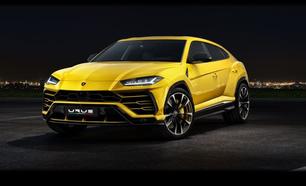
I wasn’t a major fan of it when I first clapped eyes on it in pictures online, but in the metal and in front of me wearing that 'Giallo Augo' yellow paint I found the Urus stunning, like a giant queen bee.
As I’ve mentioned, the Urus is built on the same MLB Evo platform as the Volkswagen Touareg, Porsche Cayenne, Bentley Bentayga and Audi Q8. While that offers a ready-made base with great comfort, dynamics and technology, it would limit shape and styling, but nevertheless I think Lamborghini has done an excellent job of ‘dressing’ the Urus with styling that doesn’t give away its Volkswagen Group bloodline too much.
The Urus looks exactly how a Lamborghini SUV should – from its side profile with the sleek glasshouse and haunches which look spring loaded, to its Y-shaped tail-lights and tailgate lip spoiler.
At the front, as with the Aventador and Huracan, the Lamborghini badge takes pride of place and even that broad flat bonnet which looks just like the lid on its supercar siblings has to skirt around the emblem almost out of respect. Below is the giant grille with its enormous lower air-intake and front splitter.
You can also see a few hat tips to the original LM002 Lamborghini off-roader from the late 1980s in those squared-off wheel arches. Yes, this isn’t Lamborghini’s first SUV.
The optional 23-inch wheels do look a bit too big, but if anything can pull them off, I feel the Urus can because so much else about this SUV is over the top. Even everyday elements are extravagant – the fuel cap on our car was carbon-fibre for example.
But then everyday objects which I think should be there, aren’t – like a rear windscreen wiper.
The Urus’s cockpit is just as special (and Lamborghini) as its exterior. As with the Aventador and Huracan the start button hides beneath a red flip-up cover fighter-jet rocket launcher-style and the front passengers are separated by a floating centre console which is home to more aircraft inspired controls – there are levers for selecting drive modes and there’s a giant one just for selecting reverse.
As we’ve covered above, the interior of our car had been optioned to the hilt, but I have to mention those seats again – the Q-Citura diamond stitching looks and feels beautiful.
It’s not just the seats, though, every touch point in the Urus has a quality feel – actually even places that never come in contact with passenger such as the headlining look and feel plush.
The Urus is large – look at the dimensions: it’s 5112mm long, 2181mm wide (including the mirrors) and 1638mm tall.
But what’s the space like inside? Read on to find out.
The WRX tS Spec B stands out from its siblings with 19-inch matte-grey alloy wheels with gold Brembo brakes and if you don’t notice any of that, then surely you won’t miss the gigantic rear wing planted on the boot lid.
The air scoop jutting out of the bonnet like a pizza oven is standard across the WRX range and it looks tough. There’s the rear diffuser which also looks beefy but also a bit plasticky, and the quad exhaust, that’s nice, and so is the note which wafts out of them at idle.
The tS Spec B’s Recaro sports seats are also in other tS grades – they do look and feel good, and offer outstanding comfort and support.
The rest of the cabin is much the same as other WRX grades with a large portrait-style screen, physical buttons for climate control, and yes, that is a traditional, mechanical handbrake you can see in images.
This is a sporty-looking although slightly outdated cabin compared with more modern rivals.
From the outside the Urus’s cabin looks like it could be a cramped place – it is a Lamborghini, after all right? The reality is the interior of the Urus is spacious and storage is great.
Our test car was a five-seater, but the Urus can also be ordered with just four seats. Alas, there is no seven-seater version of the Urus, but Bentley does offer a third row in its Bentayga.
The front seats in our Urus were snug but offered outstanding comfort and support.
Head-, shoulder- and legroom up front is excellent, but it’s the second row which is most impressive. Legroom for me, even at 191cm tall, is outstanding. I can sit behind my driving position with about 100mm to spare – take a look at the video if you don’t believe me. Headroom is good back there, too.
Entry and exit through the rear doors is good, although they could open wider, but the height of the Urus made putting my child into his car seat easy on my back. Also installing the car seat itself was easy – our is a top tether which hooked to the seatback.
The Urus has a 616-litre boot and that was large enough to fit the box for our new child car-seat (have a look at the images) along with several other bags – that’s damned good. Making loading easier is an air suspension system which can lower the rear of the SUV.
The big door pockets were excellent and so was the floating centre console which has storage underneath and two 12-volt power outlets. You’ll also find a USB port up front, too.
The centre console bin is the downfall – it’s only has space for the wireless charging pad.
There are two cupholders up front and another two in the fold down centre armrest in the rear.
The rear climate control system is outstanding and offers separate temperature options for left and right rear riders, with plenty of vents.
Grab handles, 'Jesus handles', call them what you will, but the Urus doesn’t have any. Both the youngest and oldest members of my family pointed this out – my son and my mother. Personally, I’ve never had a use for them, but they both feel it’s a glaring omission.
I’m not going to mark the Urus down for a lack of handles – this is a practical and family friendly SUV.
What’s so appealing about the WRX is that despite it being a performance car, it’s based on a regular 'small' sedan and with that comes all the practicality of a four-door, five-seater with a big 411-litre boot.
Space inside is excellent with plenty of room up front, while rear legroom is ample enough for me, at 189cm tall, to sit behind my driving position with plenty of headroom, too.
That all said the Recaro seats up front are on the snug side and I know they’re supposed to be, but I’m just saying they might not suit everybody – and by that I mean everybody.
Those with long legs might also find they have to adjust their driving position when letting out the clutch.
Big door pockets throughout, four cupholders, and hidey-holes for items throughout make for good cabin storage.
There are four USB ports and one 12V outlet, but no wireless phone charging to be found.
When it comes to Lamborghinis value-for-money is almost irrelevant because we’re in the realm of the supercar, where the laws of price and features don’t really apply. Yes, the old, if-you-have-to-ask-how-much-it-is-then-you-can’t-afford-it rule is coming into effect here.
Which is why the first question I asked was – how much is it? The five-seater version we tested lists for $390,000, before on-road costs. You can also have your Urus in a four-seat configuration but you'll pay more at $402,750.
The entry Lamborghini Huracan also lists for $390K, while the entry-level Aventador lists for $789,809. So, the Urus in comparison is an affordable Lamborghini. Or an expensive Porsche Cayenne Turbo.
You may know this already, but Porsche, Lamborghini, Bentley, Audi and Volkswagen have the same parent company and share technology.
The 'MLB Evo' platform which underpins the Urus is also used by the Porsche Cayenne, but that SUV is almost half the price at $239,000. But it’s not as powerful as the Lamborghini, not as fast as the Lamborghini, and … it’s not a Lamborghini.
Coming standard is a full-leather interior, four-zone climate control, two touch screens, sat nav, Apple CarPlay and Android Auto, DVD player, surround view camera, proximity unlocking, drive-mode selector, proximity unlocking, leather steering wheel, power and heated front seats, LED adaptive headlights, power tailgate and 21-inch alloy wheels.
Our Urus was fitted with options, lots of options - $67,692 worth. This included the giant 23-inch rims ($10,428) with carbon ceramic brakes ($3535), the leather seats with 'Q-Citura' diamond stitching ($5832) and optional stitching ($1237), the Bang & Olufsen stereo ($11,665) and digital radio ($1414), night vision ($4949) and the ambient light package ($5656).
Our car also had the Lamborghini badge sewn into the headrests which is a $1591 option and the plush floor mats are $1237.
What are the Lamborghini Urus’s rivals? Does it have any other than the Porsche Cayenne Turbo, which isn’t really in the same monetary ballpark?
Well, the Bentley Bentayga SUV also shares the same MLB Evo platform and the five-seat version lists for $334,700. Then there’s the Range Rover SV Autobiography Supercharged LWB at $398,528.
Ferrari’s upcoming SUV will be a true rival to the Urus, but you’ll have to wait until about 2022 for that.
Aston Martin’s DBX will be with us sooner – it’s expected in 2020. But, don’t hold your breath for a McLaren SUV. When I interviewed the company’s global product boss in early 2018 he said one was totally out of the question. I asked him if he wanted to bet on it. He declined. What do you think?
The WRX tS Spec B sits at the top of its range and lists for $61,490 plus on-road costs, making it expensive for the model compared to say the entry-grade WRX which is only $48,190 and pairs the same engine with the same gearbox.
Still, it comes with some unique features which makes this grade stand out from the other lower rungs in the WRX hierarchy.
The tS Spec B comes standard with 19-inch alloy wheels, six-piston front and two-piston rear high-performance Brembo brakes with ventilated and drilled discs, an enormous rear spoiler, STI Performance Mufflers at no extra cost, Recaro sports bucket seats in the front, a leather STI steering wheel and a 12.3-inch instrument cluster.
Also unique to the grade are drive modes which allow the suspension, engine, and steering to be customised for comfort or performance.
Standard on the ts Spec B, too, is equipment you'll find on lower grades in the WRX range, including LED headlights and daytime running lights, privacy glass, dual-zone climate control, an 11.6-inch touchscreen, a 10-speaker Harman Kardon sound system, wireless Apple CarPlay and Android Auto, proximity locking and push-button start.
Rivals to the WRX tS Spec B include the Hyundai i30 N Sedan that's $10K cheaper, and the Honda Civic Type R and Volkswagen Golf R which are both at least $10K more. The value for money in the tS Spec B is great compared to competitors, but there’s even better value to be found in the lower-grade WRXs.
The Lamborghini Urus has a 4.0-litre twin-turbo petrol V8 engine making 478kW/850Nm.
Any engine which can make 650 horsepower has my attention, but this unit, which you’ll also find in the Bentley Bentayga, is superb. The power delivery feels almost naturally aspirated in how linear and controllable it feels.
While the Urus doesn’t have the same screaming exhaust note as a V12 Aventador or the V10 found in the Huracan, the deep V8 grumble on idle and crackle on the down shifts let everybody know I’d arrived.
An eight-speed automatic transmission can change its personality from a brutally hard-shifter in Corsa (Track) mode to gelato smooth in Strada (Street).
Who doesn’t love the sound of a boxer engine? Well, probably your neighbours if you own a WRX. And while the tS Spec B doesn’t have any more power than any of the other WRXs – with it sharing the same 2.4-litre turbo-petrol four-cylinder boxer engine as the rest of the line-up – the 202kW and 350Nm feel like the perfect amount of power and torque for this package.
It’s probably been about six months since I last drove a car with a manual gearbox, and that shows how rare they’re becoming when you’re testing a new car nearly every week.
The six-speed manual in the tS Spec B has satisfying clunky shifts and a heavy-feeling clutch pedal, but it all plays along perfectly with this engine, sending the drive to all four wheels.
If you’re looking for a version of the tS Spec B with an automatic transmission you’ll be searching forever because this grade only comes with a manual gearbox. There are WRXs with autos – well, a CVT – the entry grade, the RS and the tS.
A V8 combustion engine that makes 478kW is not going to be frugal when it comes to fuel consumption. Lamborghini says the Urus should use 12.7L/100km after a combination of open and urban roads.
After highways, country roads and urban commutes I recorded 15.7L/100km at the fuel pump, which is close to the serving suggestion and good considering there weren't any motorway kays in there.
That’s thirsty, but not surprising.
The WRX tS Spec B manual really likes its fuel – it’s a hungry beastie and everybody who’s about to get into the WRX life should be aware that, like most petrol performance cars, it’s not super fuel efficient.
Subaru is beautifully honest with its fuel consumption figures, which have the the WRX tS Spec B using 10.4L/100km in combined driving and 14.2L/100km in urban environment, which is so close to what we recorded - ours was 14.1/100km after mainly urban driving. You'll also have to feed it 95 RON.
The fuel tank is a healthy 63 litres in volume and that should give you a range of 606km – in theory. Do not test this theoretical range somewhere remote, okay?
The Lamborghini Urus is a brute, but not brutal, in that it’s big, powerful, quick and dynamic without being hard to drive. Actually, it’s one of the easiest and most comfortable SUVs I’ve ever driven, while also being the fastest I’ve piloted.
The Urus is at its most docile in the Strada (Street) drive mode and for the most part I drove it in this setting which kept the air suspension at its cushiest, the throttle calm and steering light.
The ride quality in Strada even on Sydney’s pot-holed and patchy streets was outstanding. Remarkable, given that our test car rolled on giant 23-inch wheels wrapped in wide, low profile tyres (325/30 Pirelli P Zeros at the rear and 285/35 at the front).
Sport mode does what you’d expect – firms the dampers, adds weight to the steering, makes the throttle more responsive and dials back the traction control. Then there’s 'Neve' which is for snow and probably not hugely useful in Australia.
Our car was fitted with optional extra drive modes – 'Corsa' for the racetrack, 'Terra' for rocks and dirt, and 'Sabbia' for sand.
Alternatively, you can ‘build your own’ mode using the 'Ego' selector which lets you adjust steering, suspension and throttle in light, medium or hard settings.
So, while you still have the Lamborghini supercar looks and colossal grunt, with the ability to head off road you could pilot the Urus all day as you would any large SUV in Strada.
In this mode you’d really have to plant your foot for the Urus’s reaction to be anything other than civilised.
Like any large SUV the Urus gives its occupants a commanding view, but it was a strange feeling looking out over that very Lamborghini bonnet but then pulling up next to the No.461 bus and glancing over almost at head height with the driver.
Then there’s the acceleration – 0-100km/h in 3.6 seconds. Combine that with this height and piloting it feels like watching one of those videos of a bullet train shot from the driver’s seat.
Braking is almost as astonishing as the acceleration. The Urus has been equipped with the largest brakes ever for a production car – sombrero-sized 440mm diameter discs at the front with giant 10-piston calipers and 370mm discs at the rear. Our Urus was fitted with carbon ceramic brakes and yellow calipers.
Visibility through the front and side windows was surprisingly good, although seeing through that rear glass was limited as you’d expect. I’m talking about the Urus not the bullet train – bullet train rear visibility is terrible.
The Urus has a 360-degree camera and an excellent reversing camera, too, which makes up for the small rear window.
This may sound strange, but a few months ago I was squished into the tiny cockpit of a 2025 Chevrolet Corvette Z06 sitting at the traffic lights wishing I was in the 2020 Subaru WRX STI beside me. And having driven so many supercars and muscle cars in the past, many costing hundreds of thousands of dollars, I still see the WRX as being such a perfect daily driver performance car.
Sure, it doesn't have Porsche 911 dynamics or the straight-line acceleration of many electric cars, but it's the way the way this boxer engine interacts so beautifully the six-speed manual gearbox, combined with sticky all-wheel drive, a wonderful balance and such direct steering that make the WRX ts Spec B feel exactly right.
The tS Spec B is very much at home in the suburbs dotted with roundabouts and obstacles like speed bumps, but they all become part of the fun of driving this car in the same way that when you let it loose and open road it performs happily and so well, too.
The suspension does feel firm, but part of the big news of this tS Spec B is that it now has a drive mode function and this allow you to adjust the suspension, the steering and the throttle response to either sporty or comfort settings. This just makes this car an even more agreeable thing to live with daily.
The Urus hasn’t been assessed by ANCAP, and as with super high-end cars it’s unlikely to be fired into a wall. Still, the new-gen Touareg which shares the same underpinnings as the Urus scored five stars in its 2018 Euro NCAP test and we’d expect the Lamborghini to achieve the same result.
The Urus is fitted standard with an outstanding array of advanced safety technology including AEB which works at city and highway speeds with pedestrian recognition, there’s also rear collision warning, blind spot alert, lane keeping assistance and adaptive cruise control. It also has emergency assistance which can detect if the driver is not responding and bring the Urus safely to a halt.
Our test car was fitted with night vision which stopped me from running up the back of a ute with its tail-lights out while on a country road in the bush. The system picked up the heat of the ute’s tyres and diff and I spotted it on the night vision screen way before I saw it with my own eyes.
For child seats you’ll find two ISOFIX points and three top tethers across the second row.
There’s a puncture repair kit under the boot floor for a temporary fix until you replace the tyre.
The WRX hasn’t been given an ANCAP rating and up until only last year manual versions weren’t equipped with safety tech such as autonomous emergency braking.
The WRX tS Spec B manual has AEB, blind-spot warning, rear cross-traffic alert, adaptive cruise control, lane departure warning and high-beam assist.
It’s interesting but not particularly good that manual versions of the WRX don’t have parking sensors. I don't need to tell you that parking sensors on cars in the city are so helpful for squeezing into tight spots without nudging the vehicle or railing behind you.
A space-saver spare wheel instead of a full-sized spare isn’t ideal either in Australia where dirt and gravel roads beckon the WRX.
For child seats there are three top-tether anchor points and two ISOFIX mounts across the second row.
This is the category which brings the total score down. The three-year/unlimited kilometre warranty on the Urus is falling behind the norm with many carmakers moving to five-year coverage.
You can purchase the fourth year of the warranty for $4772 and the fifth year for $9191.
A three-year maintenance package can be bought for $6009.
The WRX tS Spec B is covered by Subaru’s five-year/unlimited-kilometre warranty, which while the standard for the mainstream segment, is behind the seven-plus terms we're now seeing from a lot of Chinese and Japanese car brands.
Servicing is recommended every 15,000km/12 months and can be expensive compared to other brands, with the five years of capped price servicing coming to $2692.