What's the difference?
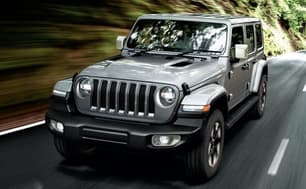
The first two things any new starter who arrives in the design department of Jeep’s headquarters in Ohio is told are, 1) The bathrooms are here and, 2) Don’t change the Wrangler.
Okay, I made that up, but it’s probably not far from the truth, because the Wrangler isn’t just iconic for Jeep, but iconic for the entire car world in a similar way to the Porsche 911 and the Ford Mustang.
The Jeep Wrangler is the equivalent of a Hollywood superstar - the Clint Eastwood of the car world - with its design that stretches all the way back to the iconic little off-roader purpose-built for the US Army in World War II.
So, how do you make changes without changing the recipe? Well, the Wrangler has been updated and we went to the Aussie launch to see what’s changed.
Hybrid campers tread the line between caravan comfort and camper trailer-manoeuvrability and are touted as somewhat of a new thing; almost an evolution of comfort as more people look for a perfect camping experience.
But camper-trailers like the Cub Longreach LE prove that the concept has been around for decades.
It hasn't always been called the Longreach, but this high-walled, super-sized, off-road camper-trailer was one of the first to offer caravan-like comfort and space in a product that'll go anywhere off-road*. (* In terms of reasonable use and having obviously scrutinised your camper's warranty conditions before setting off to make sure you're covered for that sort of usage.)
The 2019 LE takes the comfort levels even further, so we grabbed one for a night to check it out.
The changes to this updated Jeep Wrangler are small but meaningful. The inclusion of airbags, the updated media screen, and a feisty engine which suits the plucky nature of this off-roader make it a better Wrangler than ever.
Note: CarsGuide attended this event as a guest of the manufacturer, with travel, accommodation and meals provided.
This isn’t the camper for everyone – my guess is that plenty of people look at this and find it too sparse, too basic. I kinda get it.
But there are very few campers which offer the same amount of open, internal space, or that are as easy to set up.
That the Longreach, albeit with a few different names, has lasted so long on the Cub Campers' product roster is a testament to its versatility and ability to accommodate a small family on off-road camper trips.
It's arguably one of the forerunners of the hybrid camper scene, and it's now starting to evolve with campers' desires for more comfort.
When we review most SUVs practicality is scored on things like legroom, storage space and boot size. But in the case of a vehicle with removable doors and roof, and a cabin that has one-way drainage valves so you can hose the interior out, practicality takes on a different meaning.
The Wrangler’s practicality seems focussed on serving adventurous folks in search of a muddy off-road expedition and, so, while there is storage it’s mainly nets for door pockets, moulded wells on top of the dash, and smaller hidey holes to makes sure loose items don’t get flung around the cabin.
Given the roof can be removed there’s also a lockable glove box and centre console storage box.
When it comes to cabin space the Wrangler’s interior feels a bit cramped. The footwells up front don’t offer much space and headroom throughout is restricted by the roll cage which stretches from the front to the boot.
The four-door Wrangler has five seats and good legroom in the second row, even for me at 189cm tall. As mentioned above, headroom is limited in places because of the safety structure. Boot space behind those rear seats is 898 litres.
The two-door Rubicon has four seats. The back ones aren’t the most spacious and the boot behind them is almost too small to mention at 365L, Two pieces of carry-on luggage wouldn’t fit back there and we had to put our bags on the rear seats.
The rear tailgate for all Wranglers is side-hinged (opening left to right) and splits to allow just the window section or lower part to open separately.
For charging and powering devices all Wranglers have two USB ports up front (one -A and one -C) and four USB ports in the second row (two -A and two -C). There are also two 12V outlets on board (front and rear).
There are two cupholders, seatback map nets and directional air vents for the second row.
The Wrangler sits high and climbing into the rear seats might be a challenge for smaller kids or even fully-grown humans, but there are chunky handholds at the pillars for extra help.
So, the Wrangler has excellent practicality, but this is geared more to its intended purpose of adventuring off-road rather than the city commute and school pick-up.
For a rear-fold camper-trailer, the space inside couldn't be more practical. The long body and high sides mean that when the camper is open and set up, it has a lot more space than most. Behind the bed, for instance, there is enough space for Cub to have fit a small dinette.
The dinette has cushioned benches for two and a swivel table that can also become a counter over the rear floor area.
The camper's length also means that the rear floor area is massive. It is easily big enough to lie a couple of kids on, or if your nest is empty, to set up some camp chairs and a table to enjoy a covered living area.
It is still a rear-fold camper-trailer, though so, despite the fact it has nearly twice the space of other hybrid-style campers, it's very sparsely furnished. There's no internal kitchenette or anything like that.
Every one of the Jeep launches I’ve attended over the past 15 years has involved a pretty decent off-road component and it’s clear the company has a lot of faith in its product.
This Wrangler launch’s off-road test had been scaled back due to days of flooding rain beforehand, but the section that was passable was enough to remind us of what we already know and that is the Wrangler is formidable.
A Queensland bush off-road course full of steep, muddy hills, ruts, rocks, dirt and slippery descents was still all there for us to test the Wrangler Rubicon four-door.
Fun and comfortable are the first words that pop into my head when recalling how the Rubicon fares. This is a super-capable beastie that feels planted, secure and adept at all times.
We tested low- and high-range four-wheel drive, locked the rear differential and let the hill descent mode do its thing and get us down the sides of hills that felt so close to vertical all we could see through the windscreen was the ground.
What's also clear is the new turbo-petrol, four-cylinder feels well suited to the job, with plenty of torque along with a feisty and responsive nature that fits the Wrangler better than the old V6.
There was also plenty of time spent on the road in the four-door Rubicon and its smaller two-door sibling. And was here it was also super clear the Wrangler felt like we’d taken it out of its natural habitat.
At 110km/h on the motorway the two door Rubicon feels light and floaty in its suspension, with steering adjustments having to be made constantly, like actors pretending to drive cars in movies, as the Wrangler wanders around in its lane. The Wrangler wander is a known trait and isn’t specific to this updated car.
And even though our launch drive took us on some great winding country roads which would have been perfect for a Mazda MX-5, the Wranglers found the fast tight turns difficult to handle.
I’m sure I heard a sigh of relief from our Rubicon as we pulled off the road and selected low-range four-wheel drive before bouncing up what looked to be a sheer cliff, with ease.
Of course, our Adventure Expert Marcus 'Crafty' Craft will put the Wrangler though its paces once we have one in the CarsGuide garage.
Cub Campers are famously good to tow, and even the largest of them lives up to the reputation.
As big as it is, the Longreach LE is quite light thanks to the effort Cub puts into engineering. As a result, it's not a strain, even for older dual-cabs like the D22 Navara.
And because it isn't any higher or wider than a modern SUV, there was very little wind-drag or buffeting as we cruised along the highway.
Cub developed the camper's Australian-made and -designed independent, coil-spring suspension and the set-up yields excellent ride in any conditions.
For the LE, Cub has added an extra shock-absorber each side to improve its performance even on the most corrugated roads.
An AL-KO off-road ball hitch is standard but can be upgraded to the Click-Lock version if you'd prefer that or need a more low-profile hitch.
In reverse, the long drawbar makes it an easy camper to manoeuvre around a campsite, plus it has enough size that the tow-vehicle driver never really loses sight of it while positioning it.