What's the difference?
Jayco is Australia’s most prolific builder of camper-trailers, caravans and motorhomes. Many of its models are the cheapest options in their class and represent decent value for money.
The company’s cheapest little camper-trailer – the Swift – is the perfect example of that: functional, versatile, packed with features and it costs less than $20,000.
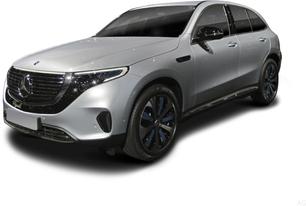
The Mercedes-Benz EQC has been on sale in Australia for a little while now, and aside from the local launch event we haven’t had a chance to spend any quality time with the brand’s first fully electric SUV. Until now.
The EQC 400, as it’s officially known, is the German luxury maker’s first foray into the full-EV landscape, and could arguably be seen as the first true luxury electric SUV on sale in Australia. I mean, yeah, there’s the Jaguar i-Pace, but it has a more premium-sporting intent than the EQC, and the Tesla Model X isn’t aimed at a luxury customer, more so a technologically-minded buyer.
So what’s the Merc EQC like to actually live with? We drove it for a week to find out.
Overall, the Swift is pretty good value. It’s got a sensible layout, a clever process to set up and offers quite a lot of comfort within a cosy package.
Given the price and the layout, it’s worth considering if you’re also shopping for a forward-fold camper-trailer, which likewise offers an internal living area.
When I was telling my colleagues about the Mercedes-Benz EQC my summary was, basically, it’s the best electric luxury car I’ve driven.
It’s plusher than a Jaguar i-Pace, more polished than a Tesla Model X - indeed, it feels like a different kind of electric car to both of those models. It’s an impressive foray into the segment, and we can’t wait for the chance to put it against some like-minded electric European luxury SUVs at some point in the future.
The camper’s interior is quite cosy, but there’s room to move around or to relax in the dinette, and the beds will become de-facto play areas for young children.
The dinette converts into a small bed, but if you’re thinking about using it as a full-time bed for a child, opt for one of Jayco’s larger campers.
If you’re thinking the EQC looks like a seven-seat SUV, you’re wrong. It’s a five-seater, with a decent sized boot, too.
The luggage capacity is 500 litres, which is decent for a car of this size, but bear in mind there is no spare wheel under the boot floor.
Rear seat space is reasonably spacious for someone my size (182cm) sitting behind their own driving position, with decent knee and toe space. Headroom is not terrific, though, and anyone taller will need to watch their head as they get in and out of the car as the top sill eats into space quite a bit.
Any middle-seat passengers might find the room a little less likeable, as the transmission tunnel intrudes quite a bit. Those with big feet might find shoehorning themselves in and out a bit of a challenge as the sills are quite large, and our car even had optional ($1200) “aluminium-look running boards with rubber studs” - side steps, essentially. They get in the way, too.
But if you’re just sitting two abreast in the back the seat comfort is really good, the trim quality is excellent, and there is a flip down armrest with the storage bin and pop out cupholders. There are rear air vents (no climate control adjustment in the back, though, and no USB charging either), and there are two map pockets, plus bottle holders in the doors. Up front you will find a mix of familiar elements if you’ve sat in any recent Benz model, but a few unique finishes and trim elements that might be new to you.
There’s a beautiful horizontal fin theme that runs around the cabin, as well as the now-traditionally audacious looking Burmester sound system speaker covers. They don’t quite gel with the aesthetic, to my eye.
The dash-top material - “fine surface texture”, as Benz calls it - is unlike anything else we’ve seen from the brand, it’s kind of like a soft silky slippery fabric trim. While there are lovely copper trim elements that just add something visually entertaining and appealing to the space.
There is a large covered centre console bin with 2x USB-C charge points and there is an additional USB-C upfront next to the wireless phone charger. The Mercedes touchpad system that aligns with the MBUX media screen is reasonably easy to get used to, but being a Benz there are plenty of options for usability - the centre screen is a touch-capacitive unit, or you can use the steering wheel-mounted controller on the left side of the wheel to control the middle screen. The right thumb controller manages the driver info screen.
It was mostly very easily managed, although the menus did get stuck at times for me - mainly in the section around the energy consumption. Plus I tried the whole “Hey, Mercedes” command thing, and it failed on numerous occasions.
Because the Swift Touring is so small and light, modern utes and SUVs are able to tow it pretty comfortably. With the Ford Ranger, for instance, as a tow vehicle I can see over the top of this camper-trailer to the traffic behind, and because it is so narrow, vision back along the side is quite generous, too.
The Swift’s weight has little impact on a dual-cab’s performance, and there’s only a slight rise in fuel consumption as the Swift doesn’t have similar aerodynamics to a large caravan.
Also, as its ball weight is so light, the Swift doesn't cause too much rear-end sag in the tow vehicle, even if it’s behind a passenger car.
Another advantage of the Swift’s slightness is that it’s easy to move around at camp, or drag onto the tow-ball if you have to hitch solo or don’t have a reversing camera.
If you have a garage and a Wallbox connector, there’s no reason the Mercedes EQC couldn’t be a terrific option as a commuter, a second car, or even your primary vehicle.
The thing with all electric cars is that it’s about settling into a rhythm. If you use the car to commute to work, maybe you can charge it there. Or you might have a solar array and charge at home.
No matter the situation, you’ll be getting a rather nice vehicle to live with, based on my week with the EQC.
It’s a plush car, that’s for sure. The silence it offers is truly relaxing, and there’s effortless torque to pull you away from a standstill. The way you can build pace to overtake, the rush of noise-free acceleration, is pretty astounding. Perhaps not as visceral as in a GLC 63 AMG, but it’s still an experience.
The steering is direct and doesn’t require much thought, though it does lack a little bit of feel. But it’s easy to predict and quick to respond, making for pleasant progress around town. It’s easy to park, as well, with a great surround view camera system, as well as front and rear parking sensors. And if you’re not confident, the car has semi-autonomous parking, too.
The brake pedal feel takes some acclimation, because it responds pretty well, but the action is hard to modulate at times. That is partly due to the brake regeneration system, which actively captures energy that would have otherwise been lost during braking. You can adjust the level of aggression of the regen brakes, too, by tapping either the up or down shift paddles. The most aggressive setting will almost pull you up to a halt from urban speed without any brake pressure required.
The suspension of the EQC feels more settled than the last GLC I drove, and that could be in part due to the extra weight and stiffness of the battery cell under the body. The centre of gravity feels low, and it feels stuck down to the road in most situations.
The ride is mostly fine, but with big 20-inch wheels and low profile tyres, it can jar on hard edges. I also noticed that it can feel a bit unsettled at higher speed, as the body moves around - from side to side - more than I would have expected. It deals well with undulation changes and big dips, and if the surface is good, so are the comfort levels in the cabin.