What's the difference?
For many tradies a one tonne cab-chassis ute will do the job. However, if you need much greater load space and much higher GVM and GCM ratings, the obvious solution is to upgrade to a cab-chassis that competes in the Light Duty (3501-8000kg GVM) segment of the Heavy Commercial vehicle market.
One of many competitors in that space is Italian truck manufacturer Iveco with its Daily E6 range. We recently put one of its latest cab-chassis models to the test, which with a 4495kg GVM rating can conveniently be driven with a normal car licence.
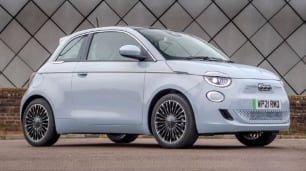
You wouldn’t know it to look at it, but this is a brand-new — as in really and truly all-new — Fiat 500.
That has got to be a big deal for fans of Fiat’s pint-sized city car, with a genuinely all-new 500 about rare as spotting Halley’s Comet soaring over Turin. The last time was way back in 2007, by the way, and that car will remain on sale alongside this new one for the foreseeable.
But that’s not the only surprise. This 500 is also entirely electric, properly modern inside, and it has actual technology in its cabin and on its safety list.
Fiat reckons this is a big reset for the 500. And that there will never be another all-new petrol model again.
So, how does this new 500e stack up against the recent flood of small EVs, predominantly from China?
Let’s go find out.
This workhorse combines good cabin comfort and storage with an expansive tray (or other service body if you prefer) and GVM/GCM ratings large enough to cater for a multitude of heavy work requirements. It would be worthy of consideration if you have a car licence and need more than a one-tonne ute or full-size US pickup to get the job done.
A fun, funky EV which will no doubt appeal to lovers of Italian style, but also one which struggles a little on the range and price front.
Still, there’s no doubt that electrification has improved the Fiat 500 formula.
The latest Daily E6 range features a revised and more streamlined grille design with more prominent horizontal louvres.
It has also switched from hydraulic to electric power-steering, bringing numerous benefits including steering wheel height/reach adjustment and the new ‘City Mode'.
The latter allows the driver to reduce low-speed steering effort by up to 70 per cent when negotiating tight worksites or loading zones. A welcome feature that allows turning with one or two fingers.
Iveco claims catering for big Aussies was of primary importance when refining its driver seating comfort which includes a taller headrest, longer seatbelts and seat-rails for greater adjustability, plus what it claims to be the first use of memory foam in commercial vehicles.
The only thing missing for RHD markets like Australia is a driver's left footrest, even though LHD markets get them as evidenced by the one residing in the passenger footwell, which is of course the driver's footwell in LHD models.
Passenger seating is often overlooked in single-cab designs but our test vehicle is unusually comfortable, particularly in the central position where even tall people can sit with sufficient knee clearance from the dash and with ample room for large boots on a flat floor.
The steel ladder-frame chassis rides on torsion-bar independent front suspension and a live rear axle, located by substantial double-stacked leaf-spring packs.
Braking is by four-wheel discs and it has a compact 13.5-metre turning circle, which certainly takes the stress out of U-turns, particularly at busy intersections.
The front bumper and lower sections of the doors, where most bumps and scrapes occur, have a low maintenance dark grey finish.
The bumper is now made in three pieces to minimise repair costs, as each section can be replaced independently if damaged rather than having to replace the entire unit.
It looks, well, it looks like a Fiat 500.
It’s actually bigger in every dimension than an ICE cinquecento, but it doesn’t really look like it, which is a good thing.
The 17-inch wheels look great, and big against the very small Fiat, and I like the hidden doorhandles, which make the already smooth-looking 500’s flanks look a little smoother still. But I can take or leave the little DRLs up front that are meant to act as little illuminated eyebrows for the headlights, which come over a bit too cutesy.
But I think the highest compliment I can pay it is that it looks like a regular Fiat 500 — one of the most successful reincarnations of a timeless design ever — and not some modern, eco-friendly version that would have killed the look.
In the cabin, however, it’s definitely a more modern affair, with the big screen, the horizontal push-button gear selector, and the nifty push-button door openers.
Still, it’s all pretty familiar Fiat 500, only a little nicer, even if some of the plastics are far too hard and scratchy for a vehicle this expensive.
There are five colours available: Ice white, Onyx black, Rose gold, Ocean green and Celestial blue.
With its 2135kg tare weight and 4495kg GVM, our test vehicle offers a substantial 2360kg payload rating, which is about double that of the sturdiest one-tonne cab-chassis models.
Even after you deduct the 304kg weight of its aftermarket aluminium tray from that figure, you're still left with 2056kg or more than two tonnes of payload capacity.
It's also rated to tow up to 3500kg of braked trailer and with its 7995kg GCM that means it can legally tow its maximum trailer weight while carrying its maximum GVM.
In other words, this jigger can legally haul just under 8.0 tonnes of combined payload and trailer, which opens the door to many working tasks requiring big load capacities.
The aluminium tray has a sturdy bulkhead with rear window protection and pivoting load retainers up top to ‘book-end' long lengths of pipe or timber.
It also has side-steps up front plus external rope-rails and internal load-anchorage points along each side.
There are two drop-sides along each flank separated by short and sturdy pillars to boost strength and rigidity.
According to our tape measure, this tray's internal work surface is 4070mm long and 2055mm wide with a drop-side depth of 330mm.
There are plenty of places to store things in the cabin starting with three tiers of storage in each door, with the largest equipped with small and large bottle-holders. There's also a full-width shelf at roof height.
The top of the dash has two large bins with clamshell lids, plus a central bin with two USB ports. There's also cup/small-bottle holders on each side of the dash and an open shelf and small glove box on the passenger side.
In the central dash there's a pop-out cupholder, shallow drawer for small items and a larger swing-open bin below them.
The centre seat's backrest folds forward and flat to provide a small work desk complete with a spring-loaded document clamp.
This desk can be raised to reveal a padded compartment below that's ideal for storing pens and slender electronic devices (phones, iPads etc).
Both base cushions in the passenger seat can also be tilted forward to access a large hidden area beneath, so there's good use of limited cabin space to maximise storage.
The 500e is 29mm taller, 61mm longer and 56mm wider than the current ICE Fiat 500 (now 1529mm, 3631mm and 1683mm respectively), and it rides on a longer wheelbase, too .
That means more front-seat room and head room, but there’s still not oodles of space in the four-seat cabin, and especially in the back, where things are pretty tight.
I’m 175cm tall, and my head touches the ceiling in the back, and if I had another full-size human in the back with me, I’d want it to be someone I know well, because we’d be well and truly aquatinted by the time we got to our destination.
The front seats are more accomodating, but there is a strange tightness to the pedal area for the driver. It’s so tight, in fact, that when you rest your left foot, you have to be careful not to accidentally clip the brake pedal when driving.
The boot is a small 185 litres, too. But you’re not buying this for practicality perks, are you?
Our test vehicle is the 50C single cab-chassis equipped with the standard 3.0-litre four-cylinder turbo-diesel, optional eight-speed automatic transmission and 3750mm wheelbase (one of five wheelbases to choose from) for a list price of $70,639, plus on-road costs.
Our example is equipped with the 'Hi-Business Pack' (one of four optional upgrade packs) which consists of the 'Hi-Connect' multimedia system with GPS navigation, wireless and USB phone-charging, fog lights and full LED headlights. So, drive-away price (not including tray) is $73,364.
For that money you get a workhorse that's well equipped for hard yakka, starting with its six rugged steel wheels (duals at the rear) with 195/75 R16 truck tyres and a full-size spare.
The single-cab has a suspended, heated and fully adjustable driver's seat with fold-down inboard armrest plus a two-passenger bench seat, adaptive cruise control, heated and power-adjustable door mirrors with direction indicators, electronic parking brake, daytime running lights, 3.5-inch driver's info display and four-speaker multimedia with multiple connectivity including Apple and Android devices.
There's also plenty of cabin storage and connections are provided to facilitate the installation of service bodies.
The 500e is not cheap by modern small EV standards — we’re looking at you, China — but it does arrive in one well-equipped trim level, called La Prima, with paint the only available option.
It's also, quite shockingly for anyone who has driven an ICE Fiat 500 lately, stacked with some truly high-tech kit.
There’s heated seats for the first time ever, for example, and there’s 10.25-inch central screen with Apple CarPlay and Android Auto, and wireless charging.
There’s a digital driver display, too, plus there’s faux-leather on the seats and dash, a panoramic glass sunroof and fancy push-button front doors (though with a mechanical back-up lever hidden in the door pockets should something go pear shaped).
Outside, you’ll find 17-inch alloys, as well as LED lightning all around, including the DRLs, and there’s keyless entry and push-button start, too.
But, and it’s a significant but, the 500e lists at $52,500 before on-roads , which — when you consider its size, battery and range — really edges it into the premium EV space.
A similar-sized EV from China can be had for under $40k, which means you are going to have to really love the 500e to drop that extra $15k or so.
Iveco's 180EVID F1C is a heavy-duty 3.0-litre, four-cylinder turbo-diesel with variable geometry turbine technology and tough Euro 6 emissions compliance using AdBlue.
It produces 132kW at 3500rpm and 430Nm of torque at 1500rpm.
The optional ZF eight-speed torque converter automatic sends drive to the rear wheels and offers a choice of 'Eco' (Economy) and 'Power' drive modes plus the option of sequential manual-shifting, all using the stumpy dash-mounted shifter.
It also has overdrive on its seventh and eight ratios to optimise fuel economy, particularly at highway speeds.
A single front-mounted electric motor delivers the power here, with 87kW and 220Nm on offer. Enough, Fiat says, to knock off 100km/h in 9.0 seconds. But it does feel quicker than that in real life, thanks to the way electric vehicles deliver their power.
There’s the usual EV single-speed gearbox, too, with power sent to the front wheels.
When we stopped to refuel at the completion of our 303km test, the dash display was claiming average consumption of 11.3L/100km, of which about one third of that distance was hauling a heavy payload on a mix of city and suburban roads plus some highway travel.
Our own number, crunched from fuel bowser and trip meter readings, came in slightly lower at 10.9, which is excellent economy for a vehicle weighing more than 2.4 tonnes unladen and almost 4.0 tonnes for part of our test.
So, based on our figures, you could expect a realistic driving range of around 900km from its 100-litre tank.
The Fiat 500e’s 42kWh battery provides a smallish 311km driving range on paper, but when we got in it was more like 290km at 96per cent charged. A city car, then, rather than a long-distance hauler.
When it does come time to charge, you’re set up for 85kW DC fast charging which should take you from zero to 80 percent in 35 minutes.
It's easy to find a comfortable driving position given the memory foam bucket seat has adjustments for lumbar support, base-cushion rake and driver weight for its inbuilt suspension.
The fold-down inboard armrest, in partnership with the door's armrest, ensures balanced elbow support to reduce neck and shoulder strain.
There are good eyelines to the big door mirrors, with the bottom thirds of each offering wide-angle views. However, with the seat in its most rearward position, the slim column that separates the fixed and sliding glass in the driver's door slightly obscures the outside edge of the driver's door mirror, which suggests the single-cab has more rearward seat travel than the van version we've previously tested.
The electric power-steering is nicely weighted (particularly the new ‘city mode' in tight spots) and the four-wheel disc brakes have good stopping power.
It's a no-brainer the ride quality is harsh over bumps when unladen, given it's designed to cope with 8.0-tonne GCMs.
Fact is, in a working role, this vehicle would rarely if ever be driven without a substantial load to engage its big rear springs, which we did when forklifting 1.3 tonnes onto the tray. With driver this payload totalled 1.4 tonnes, which was still more than 600kg below its peak rating (with tray).
Even so, it was enough to make the ride much smoother, which is most relevant in this context. The 3.0-litre turbo-diesel maintained good performance hauling this load in city and suburban driving, displaying useful flexibility either side of its 1500rpm torque peak in Eco mode.
We did sample the Power mode, but found the engine was more than capable of handling this task in its economy setting, with the eight-speed auto doing its best work if left alone without the need to manual shift.
The engine only requires 2000rpm to maintain highway speeds, so engine (and tyre) noise is low at 110km/h. The most cabin noise comes from wind-buffeting around the mirrors, bulkhead frame and payload hanging in the breeze.
In Eco mode it performed well on our 13 per cent gradient, 2.0km-long set climb at 60km/h, comfortably hauling this load to the summit in third gear without the need to select Power mode.
Engine-braking on the way down, in a manually-selected second gear, pegged the road speed at 50km/h without the brakes needing to being applied for most of the descent, until it overrode our manual gear selection and shifted up to third when the engine was approaching its 4500rpm redline on overrun.
In our experience, these engine-protecting protocols are common in European commercial vehicles. However, it can spring a surprise if you're leaning on the engine to help restrain a big payload on a steep descent and it suddenly changes up a gear.
Even so, the engine-braking performance was good given its sizeable payload.
This is the probably the best-driving example of the Fiat 500 I’ve ever climbed into. Sure, it’s not quite as engaging as self-shifting a perky little manual, but it’s smoother, easier and more comfortable, and a whole lot better than ICE vehicles fitted with Fiat's odd dual-logic automatic gearbox.
The EV transition genuinely suits the little Fiat, admittedly sapping a little character, but also thoroughly modernising the drive experience, with smooth, constant acceleration, sharp-enough steering and a ride that’s mostly settled, only really becoming crashy over the bigger road imperfections.
The small dimensions here also help the EV reincarnation. Yes, it’s heavier than you might expect, weighing in at 1290kg (tare), with the batteries adding several hundred kilograms to the equation, but the 500e still doesn’t feel overly heavy, with the little Fiat remaining pretty light on its feet.
There are three drive modes on board, including the catchy Sherpa mode (because it will help get you where you’re going), which, when you’re running low on battery, kills the climate control and anything else it needs to preserve range and get you home.
But you can’t shake the feeling that the 500e is a little expensive for such a specialist tool. It’s unashamedly a city car, but one that will cost you more than $50k, and which doesn’t feel quite premium enough in the cabin to justify that asking price.
Heavy commercial vehicles are not eligible for ANCAP ratings but the 50C cab-chassis is equipped with numerous standard passive and active safety features including driver, passenger and curtain airbags, AEB, adaptive cruise control, a suite of nine electronic stability programs and more.
There’s a heap of active safety stuff on board (again, unusual for a 500), with active cruise control, traffic sign recognition, front, rear and side parking sensors, blind-spot monitoring, AEB with pedestrian and cyclist detection, and more.
Still, the 500e only secured a four-star ANCAP safety rating, scoring just below the five-star cut off in Adult Occupant Protection, Child Occupant Protection and Safety Assist, with a lack of a centre airbag not helping.
Standard warranty is three years/200,000km (three years is short) but the option of up to five years/300,000km is available at extra cost.
Scheduled servicing is every 50,000km/12 months whichever occurs first.
Iveco offers a range of maintenance agreements to help owners manage maintenance costs.
The fly in Fiat’s ointment is its ownership proposition, with a three-year, 150,000km warranty now way below par in Australia these days, even if the battery is covered for the standard eight years.
Servicing is every 12 months or 15,000kms, and will cost $250 a pop for the first eight years, which is commendably cheap.