Isuzu Reviews

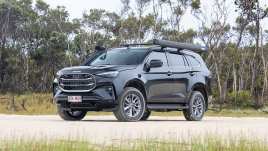
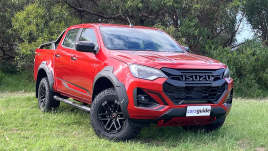
The D-Max ute and MU-X SUV are designed in Japan by the Isuzu truck maker and produced in the company's Thailand plant. Both are distributed locally by Isuzu Ute Australia, a separate company to the truck maker. The D-Max is available in two and four-wheel drive ute and cab-chassis versions with the choice of dual-cab, space-cab and single cab bodystyles, all with diesel engines. The MU-X seven-seat SUV wagon is also available with a choice of two and four-wheel drive variants, and also has a diesel engine.

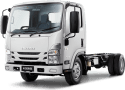
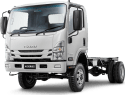
Browse Isuzu Models by vehicle type

Isuzu FAQs

Why does my Isuzu D-Max lose power in 4H but not 2H?

What you’re experiencing is the front and rear axles fighting each other. Us old-timers call it axle wind-up and, as the name suggests, it’s what happens when the various wheels need to turn at different speeds, but can’t.

When you’re in 4H, you’re effectively driving the front and rear axles at precisely the same speed. Logic says this shouldn’t matter, but, depending on what lumps and bumps they’re covering at the time, there are times when the front and rear wheels need to travel at slightly different speeds. Throw in full steering lock, and you’ve just made things very difficult for the driveline with all sorts of competing forces being fed around the various tyres, axles and driveshafts.

This is far from limited to the Isuzu, and many four-wheel-drives without a centre differential (such as your D-Max) when driven at full lock in 4H will exhibit the same shunting and apparent loss of power. The power loss, meanwhile, is simply those front and rear tyres fighting each other; nothing to do with the engine at all.

When you shift back to two-wheel-drive (2H) the front and rear axles are suddenly free to turn at different speeds, and the sensation goes away. This whole situation is why you can’t use 4H on dry bitumen in a four-wheel-drive vehicle without a centre differential. Meantime, there’s no fix for it other than learning when and when not to engage 4H.

Show more

Dusty smell inside Isuzu MU-X

Australian dust is pretty amazing stuff. In some locations, it’s so fine, it can get past even the best rubber seals and into a car’s cabin. Problem is, once it's found its way into the heating and cooling plumbing on your car, every time you turn on the climate control or open the vents, you’re going to smell dust.

Cabin filters can help reduce this, but once the dust has entered the car, there’s very little chance of ever removing it completely.

However, if the smell is only present when you’re travelling on a gravel road, it might be that there’s a more obvious leak that is allowing the dust inside at that point in time. Check all the door and window rubbers, not forgetting the tailgate as the rear of the car is where the dust often enters.

If there are no rubber seals showing damage (or a tell-tale trail of dust) make sure each panel is properly aligned and that the weight of a spare-wheel rack (if you have one fitted) hasn’t distorted the tailgate hinges.

The other thing to do is to put the climate-control on recirculate and switch on the air-conditioning as this will pressurise the cabin and help keep the dust from being sucked into the car. It’s amazing how effective this can be.

Show more

There are loud noises coming from the central area of my 2012 Isuzu D-Max

Any time you have a grinding noise from the driveline of a car, it’s time to have it checked out. That’s because continuing to drive it in that condition might cause more damage than was already there. Grinding sounds from the area of the transmission can indicate worn bearings in the gearbox which, if caught early enough can sometimes be replaced without resorting to a complete transmission replacement. Even so, it will be a big job as the gearbox will need to be removed and pulled apart.

You may also find while you’re inside the transmission that there’s other wear that needs to be addressed, at which point the decision becomes whether to repair or replace. You can buy a reconditioned transmission from a specialist shop, or a second-hand one from what was once called a wrecking yard. If you do the latter, make sure the used gearbox has been tested and comes with some sort of warranty. The cost of a replacement could be anywhere from $1000 to $10,000 depending on what you buy and where you buy it from.

Show more

See all Isuzu FAQs
Disclaimer: You acknowledge and agree that all answers are provided as a general guide only and should not be relied upon as bespoke advice. CarsGuide is not liable for the accuracy of any information provided in the answers.