What's the difference?
Sometimes it really is all a matter of timing.
GWM was always going to offer up the plug-in hybrid version of its Tank 300 4X4, but for it to arrive in showrooms right now must be being looked on as some kind of blessing at GWM HQ.
Consider the circumstances: The Tank 300 Hi4-T PHEV (to give it its full name) not only saves fuel by making use of plug-in hybrid tech, but the fossil stuff it does use is petrol, not diesel with that fuel’s buck-a-litre cost penalty right now.
And with the planet on a knife’s edge waiting for the next increase in brinkmanship from those referred to as our world leaders, overseas travel has never seemed sketchier to the average Aussie. Which is when keeping it local and hitting the outback in a four-wheel drive suddenly looks really, really good. Except for the cost of fuel, that is, which is where we circle back to square one.
All of which means the GWM Tank 300 Plug-in hybrid concept could not really have come at a better time. But does the reality match the promise?
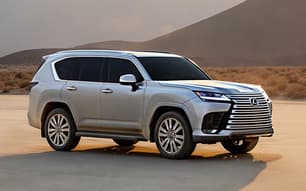
With the hugely anticipated Toyota LandCruiser 300 Series now in showrooms, the time has come for Lexus to show off its own riff on the LC300 theme. But don’t be fooled by the LandCruiser connection, the new Lexus LX models, while perfectly equipped to tackle bush tracks, are aimed at the cashed-up urbanite who appreciates an SUV with the absolute lot.
It's been almost a decade-and-a-half since the last new Lexus LX model, and in that time, the global demand for the SUV concept has gone from strength to strength, playing into Lexus’ hands somewhat. But that doesn’t mean this clean-sheet design has ignored some innovative technologies or creative design and packaging.
The new LX range covers plenty of price territory, and can be configured to handle a huge range of user profiles. And while it remains an expensive vehicle by Australian standards, there’s no doubt that it will be taken seriously by those with the means and the need for a huge SUV with the potential for serious off-road use.
In fact, the ability to cover rough terrain in supreme comfort and without sacrificing anything in the way of creature comforts, suggests that Australia (and its hordes of recreational four-wheel drivers) was never the market Lexus had in mind for the new LX. Instead, think Middle East and North America and you’re probably getting closer to the well-head of LX inspiration.
As well as a new mechanical platform, this LX also introduces a pair of new trim levels; the F-Sport and the Ultra Luxury specification.
There’s a lot to like here. The GWM Tank 300 in any of its forms is a competent vehicle from the helm and backs up its off-road claims with real ability. The ride quality, in particular, is a highlight, and it’s a good size for couples or young families. Its value for money is also quite brilliant.
Add this plug-in hybrid driveline to the mix and the performance is quite astounding, while the petrol engine and EV potential have arrived at a critical point in history where such things carry more weight than ever before. It remains to be seen what happens globally and what effect that has on fuel prices, specifically the price gap between petrol and diesel. There’s also the question of what happens electronically when you dunk the Tank into Nolan’s Brook on the track to Cape York. But for now, this is a car whose time appears to have come.
But while the overall concept deserves praise, there’s still some work required in terms of the way the car drives and in its attempts at keeping its occupants safe. The calibration of both the throttle response and some of the driver aids is, frankly, in need of some final polish. And though it sounds odd, the Tank 300 would be a better thing to live with if GWM ditched the contentious driver aids and took the points hit on its ANCAP rating. Even better would be to stick with the tech but refine it to the point where it works in the background and not as an irritant.
There's absolutely no doubting the new LX's off-road credentials, nor the fact that it takes luxury SUVs to new heights in the four-seat Ultra Luxury model. Do you need a massaging chair and a foot-stool to get to your camping site? Probably not, but globally, there's a distinct market for that sort of decadence.
Closer to the other end of the LX line-up, however, there's a fair bit of cross-over in price and luxury terms with the Lexus' close cousin, the Toyota LandCruiser 300 Series. That suggests there might be a LandCruiser that will do the same job for a little less money and, if that's the case, then the LX loses a little relevance, particularly the petrol-engined version here in Australia. Until, that is, you take into account buyers for whom the Lexus badge infers the bank-vault solidity and prestige that the brand has worked so hard to establish. Which is another way of saying; it all comes down to where you stand on the politics of envy.
Note: CarsGuide attended this event as a guest of the manufacturer, with travel, accommodation and meals provided.