What's the difference?
When the GWM Ora showed up in Australia last year, it seemed to rely somewhat on its divisive cutesy looks and sub-$40K entry price to draw attention - and to some extent it worked.
Convincing Australians to buy an electric car is hard enough for any car company, let alone one that doesn’t have the brand cachet of Tesla or the traditional companies.
But an entry price under $40,000 doesn’t apply here, this is the GWM Ora GT: the top of the range for the small electric car.
It’s just had a massive price cut, but is it worth paying more than $10,000 over the price of a base Ora for some extra goodies when simplicity and fun styling was the original selling point?
Imagine a car that can pretty much drive itself, if you let it. And it’ll do that while you get a massage, pump some Beyonce, and enjoy the fragrance of a field full of flowers… And then, it can teach you to do stretches and exercises in the driver’s seat.
It may sound like fictional fiction, but it’s factual fact. And it’s the Mercedes-Benz S-Class 2018 model, which has taken the so-called ‘wellbeing’ of the driver to a new level.
The facelifted model has seen plenty of styling changes and some tech upgrades, and while making the flagship car in a particular brand’s line-up is often a task fraught with issues, the German company’s big, expensive, luxurious, limousine is undoubtedly a more thoughtful car for 2018.
But just remember, its predecessor was considered - at least for a little while - as the best car in the world by some automotive journalists.
Now Mercedes-Benz has updated it, and it reckons it’s better than before, bringing a bunch of new technology, new engines, a reworked model range and, perhaps not essentially, but still pleasantly, lower pricing.
Read on to see how Beyonce factors into the equation.
The GWM Ora is a solid electric car for the city with an extremely competitive price, balanced with some flaws that might frustrate some - Android phone owners especially. But the GT variant doesn’t offer enough to justify how much more expensive it is than the variants below.
It has a slightly lower range, no more performance (not that it needs more power), a features list almost identical to the Ultra and arguably loses its appealing cutesy looks.
While the rest of the Ora line-up has its strengths and a cute but daring design, the GT effectively offers only its bark-over-bite styling changes.
If the Ora is on your shopping list, it’s certainly worth checking out the $43,990 Ultra, or even the $40,990 Extended Range if its list of features suits you. But if you for some reason enjoy the GT’s styling, that extra spend might be worth it.
The 2018 Mercedes-Benz S-Class remains a technological tour de force, a luxury sedan to be reckoned with - one that has safety, technology, comfort, finesse and performance all rolled into a stylish package.
It's hard to see why you'd need anything more than the S 350 d, which is now much more attractively priced. It'd be my pick, but I'd have to get the Energizing Comfort Control package, and probably the AMG styling pack, too. And even then it would cost less than its predecessor.
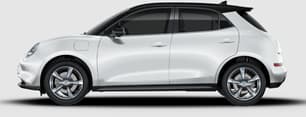
Yep, as a step-up from the Ora Ultra, the GT’s main selling point is its styling. For a car with a 400km driving range, it’s so non-threatening it looks like it would get beaten up and have its lunch money stolen by dual-cabs if it left the city - but cute works, just ask Mini or Fiat.
Its headlights have a splash of Porsche 911 in them. There are some angles that even look a little like someone had an Abarth explained to them then tried to draw it. More than one friend has told me it reminds them of a VW Beetle.
None of that bothers me in particular, but the GT-specific additions to the Ora make it feel like a deeply unserious car.
The fake carbon trim is tacky on a car that has no performance improvement over its base variant sibling, the red strip under the number plate looks like a tongue poking out under an overbite, the wheels look like Tony Stark designed them, and the rear ‘wing’ and diffuser just don’t feel at home.
One thing that didn’t bother me as much as I thought it would was the lack of ‘traditional’ tail-lights, instead a light bar under the rear window takes that role.
The rest of the Ora range is cute, fun, and looks at home in the city where the Ora is at its best. The GT’s features are mostly the same as the Ultra, so the extra $3000 for the GT exterior doesn’t really feel like value.
Inside, however, the design is less in-yer-face. A tidy set-up features a Mini-style row of switches (for some of the climate control) under a bar that spans the dash with the vents integrated.
The steering wheel is big, arguably too big, behind it is the 10.25-inch driver display attached to the central multimedia display. Everything’s very tidy and minimalistic inside, even the gear selector is a round dial.
It looks like a reasonably fashionable interior, but when it comes to the functionality, it starts to fall apart.
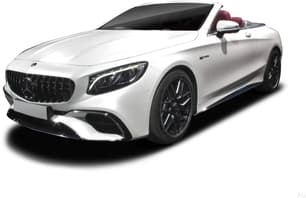
I swear it has been facelifted, and the changes are bigger than they might appear. There is no doubt that the S-Class shape is largely unchanged, but the German company has kept the modifications minimal in the scheme of things.
That doesn’t mean those changes are unnecessary, though. The new headlights, for example, are standard on every model, and are constructed with 84 LEDs (including three for the daytime running lights), and of course they’re adaptive with automated high-beam - meaning they’ll shield other road users from the glare of the lights at night. And the lights themselves will throw a main beam up to 650 metres, according to the company.
Other things are slightly more cosmetic, like the revised three-bar grille treatment, new front and rear bumper designs that feature broader sculpted sections to widen the stance of the car, and there are new LED tail-lights as well.
The smallest set of wheels used to consist of 18-inch rims, but now the base car rolls on 19s, while the rest of the expansive range sits on 20s.
The inside has seen some changes, too, but the appearance of things in the cabin isn’t the focal point - its the usability of the technology that's the big change.
Oh, but I should tell you there are now 64 ambient lighting colours to choose from, which is up from seven, and now you can also set the lighting in three different zones - so theoretically you can have blue, orange and green areas of the cockpit, if you’re gross.
I can see the appeal of the Ora, but there are some glaring issues that I suspect many will find frustrating over time during ownership.
I’ll start with the big one - Android Auto. Or the lack thereof. Apple CarPlay is available however, even wirelessly.
Being a car journalist in 2024 involves a lot of playing around with in-car tech, and it’s been an awfully long time since I wasn’t able to mirror my phone to a car’s central screen where those with an Apple iPhone could. About 70 per cent of the world uses a phone running Android, by the way. Mostly Samsungs, like mine, but pretty much anything else that isn’t an iPhone too.
It wouldn’t be as major an issue if there was a navigation function in the car’s native multimedia system, but there isn’t. Having only a Bluetooth connection and no map felt a little like taking a step back in time, with an old iPad tacked onto the dash. No Fruit Ninja though.
Smaller things come down to basic ergonomics. The touchscreen itself and the system on it are simple and easy enough to use, if a little unresponsive. The driver display is fairly simple and doesn’t fall too far into the trap of sub-menus on sub-menus.
Physically, the cabin is almost there - the seat and steering wheel adjustment, however, made it a little tricky for me to find a comfortable driving position.
I’m pretty much dead-on the average height of an Australian man, and the lack of tilt for the base of the seat meant no under-thigh support if I was to be the right distance to have a proper hold on the steering wheel - not telescopically adjustable, by the way.
Another interesting ergonomic fail is the placement of the drive mode select button (one of the GT’s few unique features) being to the right side of the steering column, near where you’d expect rarely-used controls like the headlight height adjust to be - or in this case a couple of centimetres from the button that kills the power to the battery if pressed while not in motion.
This caused severe embarrassment at a set of lights while searching for the drive mode switch, with no obvious way to start the car again, short of opening and closing the driver door.
Oh, and switching through the drive modes elicits a unique videogame-style chime or jingle for each mode. Gimmicky at first, potentially rather irritating after some time.
A positive of the interior layout, however, is the space in the rear seats is fairly generous for a small car - at almost six-feet tall behind my own seating position, I wasn’t lacking space to move and the seat itself is comfortable enough for a decent trip.
Behind that, a relatively limited 228-litre boot is probably less useful for a decent trip, though its 858L of space with the rear seats folded down is more handy in a pinch.
If you’re buying a Mercedes-Benz S-Class there’s a good chance you’re more interested in the back seat than the front: you could be buying it for a business, or you could like to be driven around - and there are definitely worse places you could be.
We would suggest, though, that the best place you could be if that’s your caper is in the back of a long-wheelbase S-Class model, which has extra legroom.
And if you happen to be in a LWB model with the 'Business Class Package', you’ll enjoy two individual rear seats rather than a three-seat bench, folding tables for your bento box or laptop, and an ‘executive seat’ on the passenger side that features a foot rest and allows you to slide the front seat forward to liberate more room. Deluxe.
No matter if you are in one of the stretched models demarcated as such by the ‘L’ suffix or not, you will enjoy excellent seat comfort and good head- and shoulder-room. Legroom in the regular models isn’t as plentiful as you might expect: much more affordable cars like the Hyundai Sonata give the S-Class a run for its money in that regard.
There are good storage options for odds and ends, with the back seat featuring a fold-down armrest with pop-out cupholders and a storage box, as well as map pockets - and the boot space varies depending on the model, but the S 350 d has a 510-litre cargo capacity (VDA). All four doors have bottle holsters, and a bit of extra room besides. Of course there are rear-seat air-vents, and if you’re kids are lucky enough to ride around in a S-Class, the two ISOFIX/three top-tether points will be welcome.
Up front there are two cupholders between the seats, and a new wireless phone charger in the centre console (Qi compatible phones only). There are two USB ports as standard in most models, while models with the rear seat entertainment package fitted get rear USBs.
The huge screen that runs across two-thirds of the dashboard has seen the noticeable join marker removed for this update, with the monitors being upgraded to a higher resolution and the graphics have been reworked, too. The codpiece-style controller of the Comand media interface remains, and while it still isn’t as simple as other controllers, it is reasonably easy to get used to.
So … what about Beyonce?
She comes in as part of the Energizing Comfort Control system, which is standard in some models and a $1400 option in those that don’t have it fitted.
Essentially it allows you to choose between different set moods: 'Joy', 'Freshness', 'Vitality', 'Warmth', 'Comfort' and 'Training', the latter of which offers three different stretching/exercise programs that last for 10 minutes to stop fatigue. The instructions are given by voice over the sound system.
Each of the moods will adjust the temperature and ventilation (the Freshness setting offers ‘gusts’ of fresh air as if you’re at the beach!), ambient lighting, air fragrance and intensity, and the massage function for the seats. And the music bit - there are predefined songs the system can cue up to suit the mood, or it can identify songs on a hard-drive or USB that suit the programs by analysing the tempo of the tune. Amazing, right?
The new steering wheel looks a lot sportier than the one in the pre-update car, and it has finally done away with the awkward cruise control stalk in favour of steering wheel buttons for the adaptive cruise control system.
The GWM Ora GT was once a mid-$50K car, once you got it on the road. Its former sticker price of $51,990 before on-roads has, along with every other variant in the range, been dramatically knocked into a more budget-friendly shape: $46,990 drive-away.
That’s pretty cheap for a top-spec electric car, or for an electric car in general in Australia, but it’s still $11,000 more expensive than the entry-level Ora Standard Range ($35,990 DA).
The Ora GT also shares most of the key draw cards on its features list with the Ultra.
Its panoramic sunroof, electric tailgate, heated and ventilated seats with massage function and its heated steering wheel are all available in the Ultra for $3000 less.
One of the only things the GT has in terms of functionality in the cabin is a light for the driver visor vanity mirror.
There are a couple of differences when it comes to driving functionality, and we’ll get to that in a later section of this review, but the rest of the tech in the cabin is standard across the range.
The 10.25-inch touchscreen and same-sized driver display, six-speaker sound system, wireless phone charger, electrically adjustable synthetic leather seats - it’s all in the base-level Ora.
What is missing, very notably, is Android Auto functionality. The Ora does however feature wireless Apple CarPlay.
If you can call a car that starts near two-hundred grand good value, then you have much more money than I do. But there is no escaping it: the new S-Class 2018 range is better value than before.
The starting point in the range is entry-grade S 350 d, which is $195,900 plus on-road costs.
Standard kit for that model includes 19-inch alloy wheels, leather trim, heated and cooled front seats, nappa leather-wrapped steering wheel, those great new headlights and the new ambient lighting system, a panoramic sunroof, head-up display, dark brown 'Eucalyptus' trim, auto-dimming rear-view and side mirrors, a wireless phone charging system, keyless entry and push-button start. The entire S-Class range now gets auto-closing doors and an electric boot lid, too.
The media system in the S 350 d includes sat nav with traffic monitoring, a 13-speaker Burmester sound system, digital TV, DAB+ digital radio, Apple CarPlay and Android Auto, and the 'Comand Online' system with internet capability.
Next up the model range is the S 400d L (at $222,500), and the S 450 L ($227,500) - both of which are specified identically. Over the base model car they feature the extended wheelbase, as well as electronically adjustable rear seats with memory function, side window blinds, a rear blind, rear climate control, and 20-inch wheels.
The S 560 sees the price head north to $270,000 (for the short-wheelbase model, which loses the abovementioned stuff in the L models), or $295,000 for the S 560 L. It adds the following nice features: nappa leather, brown burr walnut trim, a wood/leather steering wheel, 'Energizing Comfort Control', different (five-spoke design) 20-inch wheels, laminated glass and an anti-theft protection package. The S 560 L has luxury rear head restraints - they’re more like pillows, honestly - an individual rear-seat entertainment system and two wireless headsets.
The top of the regular S-Class model range is the Mercedes-AMG S 63 L, which is a princely $375,000. It builds on the kit offered in the models below, and pushes the sports luxury aspect further, with a full AMG body kit, 20-inch AMG wheels, AMG specific drive programs, AMG brakes, an uprated exhaust, sports steering and retuned suspension. Inside there are model-specific elements, special wood trim, front seats with active bolstering, and heated and ventilated rear seats.
If you’re shopping at this end of the market, then you’ll likely also be tossing up between a BMW 7 Series, or maybe a Bentley Flying Spur. An all-new Lexus LS will arrive in April 2018, and the all-new Audi A8 isn’t far away, either.
All four variants of the Ora have the same outputs from its front-mounted electric motor - 126kW and 250Nm. Yes, even the GT.
What the GT does have over at least the base model is a larger battery shared with the Long Range and Ultra variants, but despite having the same weights and outputs, the GT is, on paper, claimed to be a tenth of a second slower to 100km/h than the rest of the range: 8.5 seconds versus 8.4sec for the cheaper models.
The big news for the majority of S-Class buyers is the new engine in the S 350d, which is a 2.9-litre in-line six-cylinder turbo-diesel with 210kW of power and 600Nm of torque. It has a nine-speed automatic and is rear-wheel drive (RWD).
That same diesel engine is wicked up in the S 400d L, with that model churning out 250kW and 700Nm, and remains rear-drive with a nine-speed auto.
The petrol model range is opened by the S 450 L with a 3.0-litre six-cylinder twin-turbo mill producing 270kW/520Nm. Again, nine-speed auto, RWD.
The S 560 and S 560L run the same 4.0-litre twin-turbo V8 petrol with 345kW of power and 700Nm of torque. Nine-speed auto, rear-drive - naturally!
The AMG-fettled S 63 has a thumping twin-turbo 4.0-litre V8 petrol engine with 450kW and 900Nm, with a nine-speed MCT multi-clutch auto and - you guessed it - RWD.
That aforementioned larger battery is a 63kWh lithium-iron phosphate (LFP) battery, over the 48kWh unit in the Standard Range base variant.
According to GWM’s brochure, the GT’s electric driving range under WLTP is 400km, 20km less than the Long Range and Ultra (and like the acceleration time, for no obvious reason).
With a 400km claimed range and 63kWh battery, the Ora GT should return a power consumption figure of around 15.75kWh/100km, though on test we saw 16.4kWh.
GWM claims charging with 11kWh AC power will take 6.5 hours to jump from 10 to 80 per cent charge, while 80kW DC charging takes 50 minutes to do the same.
The diesel models are - unsurprisingly - the most frugal in the range, with the entry-level S 350 d using a claimed 5.4 litres per 100km across a range of disciplines.
The S 400 d L - which uses a higher-output version of the same diesel drivetrain as the model above - uses only a minuscule amount more: its claim is 5.5L/100km.
The most frugal of the petrols is the S 450 L, with its six-pot petrol twin-turbo using a claimed 8.4L/100km.
Every model has stop-start - including the AMG - and the V8 petrols also feature cylinder deactivation when in 'Eco' mode.
That cylinder deactivation system helps the S 560 achieve an incredibly low claimed consumption of 8.5L/100km. So does the longer, slightly heavier S 560 L.
The higher-out Mercedes-AMG S 63 L uses 9.0L/100km, according to its claim. Amazing for the outputs of the engine.
As is the case with the GT’s outputs and features, there’s nothing to suggest the GT would be fundamentally better to drive than any other variant. Unless all those kids at school were right about red bits making cars go faster.
The Ora’s front-drive layout paired with relatively immediate electric torque delivery, however, means you probably wouldn’t want it to be much more powerful with this particular mechanical setup.
The Ora, as a city car, does its job reasonably well in standard drive modes, though its sport mode is possibly a little too eager for day-to-day affairs - and the way it quite conservatively understeers on corners suggests there’s not much ‘sport’ driving to be done in this cute EV.
The steering itself feels fairly numb (again, fine day-to-day) and becomes heavier or lighter in different drive modes, but with no real advantage - the wheel itself is also a little on the large side.
Its suspension tune is comfortable enough for the low-speed streets on which this car is likely to find itself most often, where most city cars aren’t exactly riding on clouds, though can more obviously start to feel a little underdone on rougher roads at high speed.
It’s not a light car, after all, a hatchback that weighs 1580kg and has a short wheelbase isn’t going to be a dynamic masterpiece, though it does at least feel stable enough through corners thanks to its low centre of gravity.
It’s not going to encourage any heroic driving, but it’s also more likely to deter rather than outright punish any silly behaviour behind the wheel.
Smooth. It wasn’t even because I’d chosen the Energizing Comfort Control mood to elicit that vibe. It’s smooth - and so it should be.
Whether it’s the near-silent new six-cylinder diesel, which hauls the near two-tonne sedan along with less fuss than a medical centre receptionist dealing with a room full of coughing patients. There is no fuss. You just hand over control to the engine, and trust it will get you where you need to be.
The V8 petrol in the S 560 also has a bit of a silent killer vibe to it. There’s perhaps not as much noise as a V8 fan might want, but the mumbo is there, and in both cars the gearshifts are sublimely timed and super smooth.
Admittedly, the stiff-sided run-flat tyres on both the 19- and 20-inch wheels can exhibit a slight terseness over sharp edges, but when it comes to rolling over pockmarked surfaces or rougher country backroads, the ride offered up by the air suspension with variable dampers is superb. Put it in Sport mode and it stiffens up to the degree you’d expect, but Comfort is no doubt the best place to be.
The steering is super light but accurate, meaning it’s easier than you’d think to pilot this behemoth of a sedan through corners. The grip on offer is excellent, too, even if traction can be an issue - I had a full couple of seconds of strobe light action from the traction control light when I buried the throttle in the S 560.
I didn’t get a chance to drive the six-cylinder petrol S 450 L, or the S 400 d L. And, I’m really sad to report, there was no opportunity to drive the AMG S 63 L, either.
But the overall feeling of the updated range is that it remains a deluxe and delightful limousine - whether you have the good fortune of being in the driver’s seat or not.
The GWM Ora’s safety features are almost all standard across the range, which is great even if you don’t opt for the GT.
This means its seven airbags (dual frontal, side chest, curtain and centre) are all standard, as well as autonomous emergency braking, secondary collision avoidance, rear cross-traffic alert and forward collision warning, lane keep assist, traffic jam assist and even a surround-view parking camera. The Ultra and GT are the only variants with a front parking sensor and auto parking assist.
The features are all there, but some finer tuning when it comes to some driver assistance could be looked at - thus the slightly lower side of the scoring scale for a car that’s ticking all the boxes on paper.
Easily one of the safest cars, if not the safest car, on the road today if technology is anything to go by. Well, we can’t go by a crash test score, because the S-Class hasn’t been crashed by EuroNCAP or ANCAP. So I can’t really give it a 10/10 for safety…
But when the standard safety kit list is as lengthy as the S-Class’s, it seems a safe bet. Items fitted include a 360-degree camera system, parking sensors front and rear, auto emergency braking, active blind-spot monitoring, active lane-keeping assist, adaptive cruise control with active steering assist, drowsiness detection, crosswind assist, and pedestrian detection with evasive steering assist (which allows you to turn the wheel harder to avoid impact with a pedestrian).
Plus there are other items like the company’s Pre-Safe crash detection system which can flash the car’s hazard lights at other road users, and tighten the occupant’s seatbelt in anticipation of being hit. And if that happens, there are eight airbags (dual front, front side, rear side, curtain).
GWM offers a seven-year/unlimited kilometre warranty, as well as an eight-year/unlimited kilometre battery warranty. The former is quite decent for the industry, the latter relatively par when it comes to battery warranties.
Five years or 150,000km of roadside assistance is also included.
The Ora’s first five services, each coming in at 12 month/15,000km intervals, are capped price, all at $99.
Mercedes-Benz offers a standard three-year/unlimited kilometre warranty.
Servicing is due every 12 months or 25,000km on all engines except AMG drivetrains, which require servicing every year or 20,000km.
Mercedes-Benz has a (pricey!) capped-price servicing plan. The standard diesel and petrol models in the S-Class range cost $596 for the first service, and $1192 for the second and third visits. The costs for the sole AMG model is $736 for the first service, then the second and third visits are $1472 per.