What's the difference?
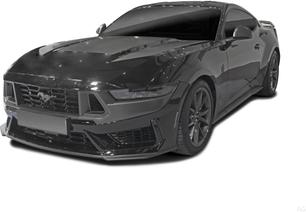
The new Ford Mustang GT was not designed for Paris.
Fighting through the morning peak hour rush (which seems to extend through the middle of the day and the afternoon), the new Mustang feels like a caged animal. Which is appropriate, given the car’s namesake is a wild horse that exists to roam the American wilderness.
But once we finally break the shackles of Parasian traffic we find ourselves getting to let this Mustang gallop across the French countryside and unleash its full potential. But more on that later…
The reason we're driving the Mustang in France is because the American brand wanted to connect it to its new racing program at the famous Le Mans sports car race (you know, the one in the Matt Damon movie, Ford v Ferrari).
No less than Bill Ford, great-grandson of the company’s famous founder, was on-hand to see the Mustang at Le Mans, such is the passion for performance.
Ford (the man, not the company) took the opportunity to declare that the Blue Oval brand is not only committed to internal combustion engines for the foreseeable future, but it will retain the V8 under the bonnet of the Mustang GT for as long as it can legally do so.
Australians will have to wait a few more weeks (maybe months) before the seventh-generation Mustang arrives, but here’s what you can expect when it lands on local roads.
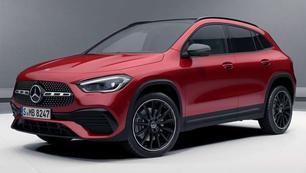
You have to feel a bit sorry for the Mercedes-AMG GLA 45 S. After all, it shares the same platform and engine as the A 45 S and CLA 45 S, but gets none of the limelight.
Maybe it’s because it’s a small SUV, and by virtue of pure physics, it will never be as fast or fun as its two cousins.
But what it does offer is practicality, thanks to a larger boot and comfort, due to its increased suspension travel.
Wouldn’t this make it a better buy then?
We spend some time behind the wheel of the second-generation Mercedes-AMG GLA 45 S to see if can truly have its cake, and eat it too.
Having driven the latest example of the Mustang GT, I hope Bill Ford is true to his word and keeps the V8-powered Mustang for as long as possible. It isn’t the most razor-sharp sports car or the most powerful muscle car, but it offers the kind of driving thrills and enjoyment that have made the car an icon.
The price increase is steep but the new technology inside drags the Mustang into the modern era and will add more youth appeal to a car that is largely unchanged in concept for the past 60 years.
But now that I’ve driven it in the USA and France, I can’t wait for it to finally reach Australia.
Note: CarsGuide attended this event as a guest of the manufacturer, with travel, accommodation and meals provided.
A performance SUV should be an oxymoron and is no doubt a niche product. Is it a high-riding hot hatch? Or a mega-potent small SUV?
Turns out the Mercedes-AMG GLA 45 S is a bit of both and delivers the thrills of a performance car without any of the packaging or comfort-related issues.
While it is getting a little expensive at over $100,000, its blend of space and pace is hard to beat.
While this is considered a ‘new generation’ Mustang, the reality is this is more of a major overhaul than a complete, blank sheet redesign. As such, there’s a lot of carry over to the design, but that’s not to say there aren’t some significant changes.
For example, it’s still clearly a Mustang in its silhouette, sharing that with the sixth-generation model it replaces, as well as the now-iconic 1960s Fastback models, but the details are noticeably different.
To try and create more differentiation between the GT and EcoBoost models, Ford has designed unique front ends for each. Both are characterised by a strong horizontal line across the front of the more angular grille that meets the new ‘tri-bar’ daytime running lights.
The EcoBoost has an upper grille similar in size to the out-going model, the GT is a much larger upper section which incorporates a pair of ‘nostrils’ as well as a bonnet vent - both of which are functional for cooling and aerodynamics.
Down the sides Ford has lowered the beltline and created a more defined rear fender ‘shoulder’ that helps create the impression of a wider car.
At the rear the famous ‘tri-bar’ lights remain and there are unique diffusers for each model, with the EcoBoost running two exhaust tips and the GT getting quad pipes.
But it’s inside where the biggest design changes have happened. The retro-inspired cabin of the sixth-generation - which features shiny silver plastic toggle-like switches and round air-con vents - has been overhauled.
The iconic ‘double brow’ design to the dashboard, which dates back to the original 1964 Mustang, has been dropped and replaced with a pair of digital screens. There’s a 12.3-inch display for the digital instrument cluster and a 13.2-inch multimedia touchscreen.
This change is designed to appeal to a younger audience but also allows for greater customisation and variety of displays, with Ford developing six different instrument panel options depending on the setting the driver chooses.
The primary three are the 'Normal', 'Sport' and 'Track' modes, which have been inspired by the GT supercar and the Mustang Mach-E electric SUV, while there’s also a 'Calm' setting, providing only the necessary data, such as speed, in a simplified format.
The final two have been created to tailor to fans of the brand’s 1980s ‘Fox Body’ Mustang, with digital versions of its round analogue dials in both a ‘Day’ and ‘Night’ mode, with the former using white graphics and the latter getting retro green dials.
The most obvious tell that the GLA 45 S is something a little special is the Panamericana front grille, an ode to the 1952 Mercedes 300 SL, which is found on all of the German brand's hot models.
But if that wasn’t enough to give it away, the reworked bumper with larger intakes, red-painted brake calipers, lower ride height, black exterior trim and 20-inch wheels should help.
Coming round to the rear, if the AMG and GLA 45 S badges aren’t enough to give away this car’s sporting intent, the quad-exhaust tips and diffuser are sure to give any tailgaters pause.
Our car also came with the optional 'Aerodynamics Package', which adds front fender flicks and a massive roof-mounted rear wing for an even racier look.
If you think the GLA 45 S looks a bit like a jacked up hot hatch, you aren’t far off. Overall, we reckon Mercedes has done a great job at translating the aggressiveness of its A 45 hatch to the larger, higher-riding GLA.
Without the aero package optioned, you might even call it a bit of a sleeper, and it’s certainly more subdued in styling compared to its Audi RS Q3 rival.
In fact, the GLA 45 S might be too subtle for such a hot SUV, at least for our tastes.
Whereas the A 45 S and CLA 45 S get bulky fenders and a hunkered-down, aggressive stance, the GLA 45 S could just blend into the sea of SUVs seen out on the streets, especially without the aerodynamics package added.
Your mileage will vary though, and for some, the subtler looks will be a positive.
Anyone who has sat in a recent small Mercedes should feel right at home in the GLA 45 S, and that’s because it shares much of its interior design with the A-Class, CLA and GLB.
As mentioned before, the 10.25-inch centre screen takes care of multimedia duties, but there are also clicky and tactile buttons underneath for climate controls.
Key to the interior design though is an all-digital instrument display, which is laid out on the high-definition 10.25-inch screen.
With two screens facing you, you might think it’s a bit of information overload, but you can tweak each display to show the information you want.
The digital instrumentation might not be as intuitive as Audi’s 'Virtual Cockpit', but the layout and design of the interior is easy to use and offers owners plenty of customisation to get it right.
The sixth-generation Mustang copped a lot of criticism for its interior look and feel, and while it certainly wasn’t at European levels of quality it was more affordable than any European V8-powered coupe.
The introduction of the new digital displays certainly adds a more premium impression to the cabin when you get inside, but you can still see a lot of the previous generation in this model, in particular the doors and centre console.
It’s pretty practical, for a sports car, with a pair of cupholders and a lidded centre console box for small item storage.
One noticeable issue with the screens is the control virtually everything to do with the multimedia, including the air-conditioning, so trying to make small temperature adjustments is more complicated than just pressing a physical button.
Not surprisingly space feels very similar to the outgoing Mustang with supportive and comfortable seating up front that made long stretches behind the wheel feel easy, which is nice for a sports car.
As for the rear seats, they remain incredibly tight for space and are better for soft item storage rather than squeezing people into.
Despite the largely carried over body and interior, the boot is slightly smaller than the previous model, with the coupe measuring 376 litres compared to the 408 litres offered previously.
The new-generation GLA 45 S has grown in all dimensions compared with its predecessor, making it much roomier and more practical than before.
For reference, it measures 4438mm long, 1849mm wide, 1581mm tall and features a 2729mm wheelbase, but still sports a roomy cabin for four adults, especially in the front seats.
Storage options include decent door pockets that will accommodate large bottles, a deep centre storage bin, smartphone cradle that doubles as a wireless charger, and two cupholders.
Being a small SUV, the rear seats also afford plenty of room for occupants, with more than enough space for head, shoulders and legs – even with the front seat adjusted to my 183 cm (6'0") frame.
There are decent door pockets, air vents, and USB-C ports that should keep passengers happy on long trips, but the GLA 45 S doesn’t have a fold-down armrest or cupholders for the rear seats.
The boot, however, is where the GLA 45 S really starts to make a case for itself compared to the A 45 S.
The boot boasts 435 litres of volume, and can expand to a massive 1430L with the rear seats folded – making it about 15 per cent bigger than the A 45 S – while the higher load height should make loading and unloading groceries a bit easier.
A downside of the GLA’s tech-focused interior, though, is that all the USB ports are now USB Type-C, meaning you’ll likely have to carry around an adapter to use your old cables.
Mercedes is generous enough to include one with the car, but given most device chargers are still USB Type-A, it is something to be aware of.
Ford Australia hasn’t confirmed the complete list of specifications for the seventh-generation Mustang range, but pricing has been locked in and we do know all three initial models - Dark Horse, GT and EcoBoost - will be offered here.
Having previously driven the Dark Horse in the USA in 2023, this time we sampled the GT and that’s the model we’ll focus on in this review.
We already know it will be priced from $77,002 for the six-speed manual and $80,902 for the 10-speed automatic coupe (both prices exclude on-road costs). The GT will be the only convertible option for Australians (and will only be available with the auto), priced from $86,102.
That’s a significant price rise from the out-going model, jumping up nearly $12,000 ($11,712 to be precise), which means it will be more expensive than the Nissan Z ($75,800) and closer to the BMW-based Toyota Supra (starting at $87,380).
On the plus side, this price increase is expected to come with a ramp up in standard equipment, including a new digital dashboard which features a pair of large screens, as well as the introduction of the line lock feature we missed on the previous model and the all-new 'Drift Brake'.
Priced at $107,035, before on-road costs, the GLA 45 S not only sits atop the Mercedes-Benz GLA range, but is also the priciest small SUV available in Australia.
For context, the second-most expensive GLA – the GLA 35 – costs $82,935, while the previous-generation GLA 45 was priced at $91,735 – meaning a $15,300 leap for the new-gen version.
The Mercedes-AMG GLA 45 S also easily blows away its Audi RS Q3 in the pricing department, but also for performance (more on that below).
For the price you are paying, you’d expect a long equipment list, and Mercedes doesn’t disappoint in this regard.
Highlights include an automatic tailgate, keyless entry, push-button start, wireless smartphone charger, illuminated door sills, electronically adjustable front seats with heating, LED headlights, and a panoramic glass sunroof. But at this price you are also paying for a kickass engine and prodigious performance.
As with many of Mercedes’ new models, the GLA 45 S makes use of the 'Mercedes-Benz User Experience' multimedia system, which is outputted across a 10.25-inch touchscreen.
Functions on this system include satellite navigation, digital radio, as well as Apple CarPlay and Android Auto support.
Users have many input options, too, from a central touchpad with haptic feedback, the touchscreen, capacitive touch buttons on the steering wheel, or with voice commands.
Being an AMG, the GLA 45 S also picks up a unique steering wheel with yellow contrast stitching, leather interior, snazzy sports seats, as well as unique instrumentation readouts such as engine oil temperature.
Our test car also came fitted with the optional 'Innovation Package', bundling a head-up display and an excellent augmented reality overlay that shows streets in real time on the multimedia screen.
During the top secret development of this seventh-generation model there were plenty of rumours that Ford was considering a hybrid system for this Mustang. Fortunately for lovers of old-school V8 engines that proved not to be the case.
Instead it’s powered by a 5.0-litre V8 that's an evolution of the ‘Coyote’ unit from the previous ‘Stang but now featuring some technical changes, including dual throttle-bodies and separate airboxes to help improve performance. In the GT it’s tuned to make 345kW and 550Nm.
It can be paired with either a six-speed manual gearbox or 10-speed automatic transmission, both sending all the power to the road via the rear wheels.
Powering the Mercedes-AMG GLA 45 S is a 2.0-litre turbocharged petrol engine, outputting a staggering 310kW/500Nm.
This means the new car jumps up 30kW/25Nm compared to its predecessor, explaining (at least in part) the price jump.
The GLA 45 S is also the top-spec version globally. The 285kW/480Nm GLA 45 which is available overseas would be more directly comparable to the old car.
The engine is also the most potent production 2.0-litre on earth, and is shared with the A 45 S and CLA 45 S.
Paired to the engine is an eight-speed automatic transmission, which sends drive to all four wheels via Mercedes’ '4Matic' system.
As a result, the GLA 45 S will accelerate from 0-100km/h in a frighteningly quick 4.3 seconds, and carry on to an electronically limited top speed of 265km/h.
This is 0.4s slower than its A 45 S sibling, in part due to its heftier 1807kg weight.
While it hasn’t been confirmed by Ford, the Federal Government's Green Vehicle Guide has the Mustang GT rated at 12.8L/100km. And while that’s quite a thirst for unleaded petrol, it shouldn’t come as a surprise given it’s a 345kW 5.0-litre V8 engine.
If you value efficiency in your American muscle car, the four-cylinder turbocharged EcoBoost is rated at 9.4L/100km. But based on previous evidence, Mustang buyers are likely to opt for power over saving petrol.
The claimed consumption figure translates to a driving range between fills of around 650km.
Official fuel consumption figures for the GLA 45 S are pegged at 9.6 litres per 100km thanks in part to an engine start/stop system.
We managed 11.2L/100km after a few days of testing around Melbourne’s inner city and winding country back roads, but those with lighter feet will no doubt come closer to the official figures.
A performance SUV that can ferry kids and groceries, out accelerate nearly everything else on the road, and sip around 10L/100km? That’s a win in our book.
As promised earlier, here’s how the Mustang GT felt powering through the French countryside…
But first, it’s worth acknowledging that, in truth, it wasn't hard work getting through the traffic even in the manual Mustang. While the clutch is on the heavier side, it’s got a smooth action and the engine's torque and flexibility make darting in and out of gaps in the traffic a breeze.
However, once out on the open roads the Mustang really could run free. The V8 engine sounded fantastic bellowing out across the fields and through the quaint little villages we passed through.
As you'd expect, the V8 provides plenty of grunt, it's an incredibly flexible engine pulling hard right across the rev range and makes us appreciate even more that this now remains the last of its kind since the demise of the V8-powered Chevrolet Camaro and Dodge Challenger.
Driving the Mustang in conditions like this makes you understand why it has been such a popular sports car not only in Australia but around the world for decades.
While the manual transmission has fallen out of favour with Aussie buyers, the truth is it's the pick for this GT. The fact it has less ratios to choose from than the 10-speed automatic means it feels more urgent and (again) the flexibility of the engine allows it to shine.
Not that the auto is bad, it does a fine job, it just lacks the buzz and engagement the manual ‘box provides.
What arguably impresses even more than the engine is the handling. Having driven the Dark Horse last year and being so impressed by its handling, particularly with the 'Performance Package', there was some concern prior to driving the GT that it would feel less impressive and, dare I say, duller.
But that's far from the case. Instead, the GT feels responsive and well sorted across a variety of road conditions. While it may lack the precise handling characteristics of a European sports car, it’s clear Ford has made this latest Mustang better suited for the rest of the world, not just America.
Not that Ford has made the Mustang too serious, as the introduction of the Drift Brake demonstrates. This rally-style electronic handbrake allows you to, as the name suggests, snap the car into a slide - when the circumstances allow.
Ford finally gave us our first (official) use of the Drift Brake when it paid us up with stunt driving expert, Paul Swift, who taught us how to slide the Mustang into a parallel park.
Obviously this is not designed for road use but for those who want to take their Mustang to the track it will no doubt lead to a lot of fun and some shredded tyres.
If the bespoke styling wasn’t enough of a giveaway, all it takes to realise you are behind the wheel of something special is to turn on the GLA 45 S.
The prodigious engine is fantastic in the A 45 S and CLA 45 S and is no different here.
With peak power coming in at a heady 6750rpm and maximum torque available from 5000-5250rpm, the GLA 45 S likes to rev and makes it feel a little like a naturally aspirated engine in character.
Don’t get us wrong, once the boost becomes available, you will feel that shove into the back, but it’s great that Mercedes has made the engine perform a little more predictably.
Paired to the engine is a smooth shifting eight-speed dual-clutch automatic transmission, which is one of the better versions I've experienced.
Many DCT bugbears, such as jerkiness at low speeds and clunkiness when putting into reverse, aren’t apparent here, and the transmission is up to the task when puttering around town or when driving spiritedly.
Speaking of which, the GLA 45 S’ different drive modes will easily change its character from tame to wild, with available options including ‘Comfort’, ‘Sport’, ‘Sport+’, ‘Individual’ and ‘Slippery.’
Each mode will tweak the engine response, transmission speed, suspension setting, traction control and exhaust, while each can also be mixed and matched in the ‘Individual’ drive mode.
However, a missing feature for the GLA 45 S that is found in its A 45 S and CLA 45 S siblings is a drift mode.
Sure, how many small SUV owners are going to take their car to a track to make use of it, but it still would have been nice to have the option.
With three levels of suspension setting, though, the GLA 45 S offers enough variability to be comfortable around town and soak up the bumps thanks to its long suspension travel, while also switchable for a more involved, driver-focused feel.
The GLA 45 S might never corner as hard or fast as its A45 S sibling, but being an SUV brings its own unique set of plus points.
Full safety specifications haven’t been announced, but in the US, where it’s already on sale, all models are equipped with at least a reversing camera, rear parking sensors, auto high-beam headlights as well as front, side and driver’s knee airbags.
There’s also a decent level of active safety gear with pre-collision assist with autonomous emergency braking and lane departure warning all standard. But adaptive cruise control, lane centring assist and intelligent speed assist are all optional.
Frankly, after my French experience I’d be hoping the lane centring assist is an optional locally because the overly sensitive system drove us crazy on our French test drive.
Repeated warnings to ‘put our hands on the wheel’ when our hands were firmly affixed to the tiller moved from just frustrating to borderline dangerous as the only way to trigger the system to stop making its request was to quite violently tug on the wheel and jerk the car in the lane.
It’s another case of poorly calibrated safety systems that make you question the value of the technology in the first place, especially when you find yourself turning it off because it’s safer to just pay attention as a responsible driver.
It will be interesting to see if ANCAP crash tests this new generation Mustang, especially considering how closely related it is to the previous model.
ANCAP famously (or infamously, depending on your point-of-view) crash-tested the previous Mustang and awarded it two from a possible five-star rating.
Despite the public criticism it didn’t seem to impact Ford’s sales of the pony car, which remained a best-seller.
Since the Mustang, ANCAP has not tested any of its rivals, with sports cars including the Toyota Supra, Nissan Z and Subaru BRZ all unrated by the safety authority.
At the time of writing, the new-generation GLA – including this GLA 45 S – has yet to be crash tested by ANCAP or Euro NCAP.
However, standard safety equipment extends to autonomous emergency braking (AEB), lane-keep assist, blind-spot monitoring, traffic sign recognition, adaptive cruise control and a surround-view monitor.
The GLA also has nine airbags spread throughout the cabin, as well as an active bonnet and driver attention alert.
There are no details confirmed at this stage but there’s no reason to believe the Mustang won’t be covered by Ford Australia’s usual five-year/unlimited kilometre warranty.
Similarly, service intervals are likely to be 12 months/15,000km.
For reference, capped price servicing on the out-going Mustang GT came in at $299 for each of the first four services, up to four years/60,000km. Not bad.
Like all new Mercedes-Benz models, the GLA 45 S comes with a five-year/unlimited kilometre warranty with five years of roadside assist – the benchmark in the premium car space.
Service intervals are every 12 months or 20,000km, whichever occurs first, and the first five services are available to purchase for $4300.
This actually makes the new GLA 45 S cheaper to maintain over its first five years than the outgoing car, which costs $4950 over the same time period.