What's the difference?
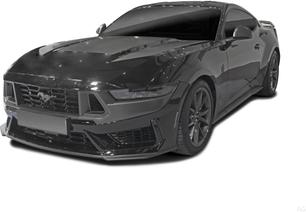
The new Ford Mustang GT was not designed for Paris.
Fighting through the morning peak hour rush (which seems to extend through the middle of the day and the afternoon), the new Mustang feels like a caged animal. Which is appropriate, given the car’s namesake is a wild horse that exists to roam the American wilderness.
But once we finally break the shackles of Parasian traffic we find ourselves getting to let this Mustang gallop across the French countryside and unleash its full potential. But more on that later…
The reason we're driving the Mustang in France is because the American brand wanted to connect it to its new racing program at the famous Le Mans sports car race (you know, the one in the Matt Damon movie, Ford v Ferrari).
No less than Bill Ford, great-grandson of the company’s famous founder, was on-hand to see the Mustang at Le Mans, such is the passion for performance.
Ford (the man, not the company) took the opportunity to declare that the Blue Oval brand is not only committed to internal combustion engines for the foreseeable future, but it will retain the V8 under the bonnet of the Mustang GT for as long as it can legally do so.
Australians will have to wait a few more weeks (maybe months) before the seventh-generation Mustang arrives, but here’s what you can expect when it lands on local roads.
Numerous commercial van manufacturers are adding battery-electric vehicle (BEV) variants to their model line-ups.
Anecdotal evidence suggests these vehicles are best suited to city and suburban fleet duties, in which they cover short-loop daily driving distances that are comfortably within a manufacturer’s claimed battery range and return to depots each day to be recharged.
However, given that it’s still relatively early days for electric vans, potential buyers are faced with numerous potential deal-breakers compared to conventional internal combustion engine (ICE) equivalents.
These include higher purchase prices, limited driving ranges, longer 'refuelling' times, heavier kerb weights (due to their large batteries) and resulting smaller payload ratings. And they are usually not rated to tow.
However, they can also offer lower operating costs. And they produce zero tailpipe emissions, which according to Mercedes-Benz "creates a powerful marketing tool (for buyers) to demonstrate their commitment to operating sustainably".
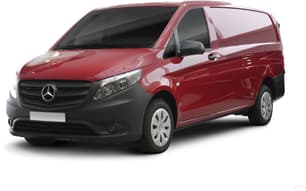
We recently trialled M-B’s Vito-based contender in this pioneering LCV market segment, to see how it measures up in Australia’s highly competitive medium-sized (2.5-3.5-tonne GVM) van market.
Having driven the latest example of the Mustang GT, I hope Bill Ford is true to his word and keeps the V8-powered Mustang for as long as possible. It isn’t the most razor-sharp sports car or the most powerful muscle car, but it offers the kind of driving thrills and enjoyment that have made the car an icon.
The price increase is steep but the new technology inside drags the Mustang into the modern era and will add more youth appeal to a car that is largely unchanged in concept for the past 60 years.
But now that I’ve driven it in the USA and France, I can’t wait for it to finally reach Australia.
Note: CarsGuide attended this event as a guest of the manufacturer, with travel, accommodation and meals provided.
It’s arguably the best-looking mid-size van on the market, particularly with the optional enhancements fitted to our example. And its longer (km-based) service intervals and capped-price servicing costs offer substantial savings compared to a diesel Vito equivalent.
However, the eVito has a much higher purchase price, smaller payload, shorter driving range, can’t tow a trailer and feels a tad under-powered at low speeds. Plus filling its battery with fresh charge takes much longer than filling a tank with diesel, which may or may not be an issue depending on planned usage.
Therefore, a buyer would need to have not only a sizeable purchasing budget but also very specific and resolute criteria for this vehicle to shine in a commercial role.