What's the difference?
You’re getting flooded with new electric mid-size SUVs from China, I know. But if you’re struggling to recall them all, just remember – this is the good-looking one.
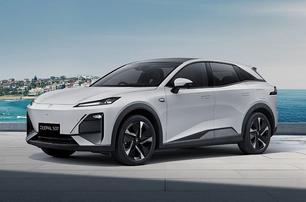
It’s the Deepal S07, the spearhead for the Deepal brand's new presence in Australia, and I reckon it looks damn sharp.
But is there substance to match the style? And can it take on the likes of the Kia EV5, Tesla Model Y and XPeng G6?
Let's find out, shall we?
Zeekr is a new electric brand and the X small SUV is one of its first cars to come to Australia.
Owned by the Chinese carmaker Geely, which also has a big stake in Volvo, the X is designed in Sweden, built in China and now sold here.
Rivals to this little electric SUV include the Smart #1, Volvo EX30 and Xpeng G6.
The Zeekr X line-up is currently very simple - there’s the rear-wheel drive version and the all-wheel drive we tested.
The Deepal S07 has the makings of a great family friendly EV, but with some quirks that really need to be ironed out.
The Zeekr X all-wheel drive surprised me in a great way. Not only is this the first Zeekr I've driven, it's also one of the best small electric SUVs I've ever driven. There's so much to like - from the good price and quality design to the high level of safety and how easy it is to drive.
If you’re left a little underwhelmed from the bland same-sameness of so many new SUVs, I reckon you’d like the Deepal S07 in the metal. Because boring it ain’t.
It’s sharp and purposeful and full of lovely creases and angles, and it stands out on the road — especially in this 'Sunset Orange' colour.
Deepal says it was designed in Turin, Italy, but I'm not sure that matters much. I mean, being in Italy doesn’t guarantee design success – just look to the modern Lancia range for proof – but I guess it’s something for a newish Chinese brand to hang its hat on.
Inside, the design is lovely, too. I like the materials used, the extended dash and the size of the central screen (though it tilting towards you or the passenger is probably overkill). And the flat-bottom wheel is a nice touch.
I'd like to know where the air con was designed, though. It feels massively underwhelming on a piping hot Sydney day. The main outlet is at the bottom of the dash, which is perfectly positioned to chill absolutely nothing, and you can’t really change the direction of the vents, either. Or, at least, I couldn't figure out how to.
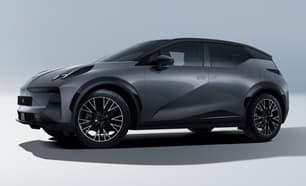
More than interesting, the design of the Zeekr X is intriguing with styling that ranges from 'ooohhhh' when you see it from the front to 'huh?' when you catch it in side profile.
The nose design, to me anyway, looks exquisite - Porsche-SUV-like in its sporty and luxurious shape and the way the LED running lights are embedded into the bonnet is different and so special it probably makes some prestige brands a bit envious.
That side profile also looks pretty pleasing to me, until I reach that rear quarter where suddenly I feel I’m looking at panel shapes so oddly combined it’s like a puzzle with just five pieces and all of them in the wrong place.
The rear of the X looks good, but more importantly unique compared to the same templated styling many SUVs tend to safely stick to.
Zeekr and Volvo are owned by the massive Chinese car manufacturer Geely and the X is closely related to Volvo’s EX30. Once you know this you’ll see the similarities in the looks, although the less conservatively styled X is more appealing to me.
The X is also 100mm longer and all of that extra length is in the wheelbase which is 2750mm. As for the rest of the key dimensions, the overall length is 4432mm, the height is 1572mm and the width is 1836mm. So, a fairly small car.
The X’s interior is as intriguing as its exterior with the AWD version on test fitted with the no-cost option 'Mulberry & Rose' two-tone upholstery - a colour combination of maroon and off-white which you don’t see often unless it's a bespoke choice in a high-end car.
No, it’s not leather, but I don’t think this upholstery doesn't feel cheap or ‘plasticky’ as some synthetic leather interiors do.
There are high quality touches throughout, from the dotted city scape of Hangzhou where Zeekr is headquartered that glows through the door trim fabric at night to the embossed Zeekr pull tabs on the seats.
The X’s interior feels luxurious and the styling is outstanding.
At just over 4.7m long and 1.9m wide, with a 2.9m wheelbase, the Deepal is a sizeable proposition, which means good passenger room and decent luggage space.
Starting at the boot, you’ll find 445 litres with the rear seats in place, but with the seats folded flat that number grows to 1385 litres. There’s a frunk up front, too, that holds another 125 litres.
In the back, the room is ample for full-size adults. When sitting behind my own 175cm driving position, I had more than enough knee and headroom to sit comfortably.
There’s also a heavy pulldown divider that’s home to twin cupholders, and there are two more up front, and USB connection points galore. Bonus points for the back seat riders being able to adjust their own air temps, too.
Small cars don’t generally have the practicality of larger ones because of the obvious space limitations but the Zeekr X has a long wheelbase for the class (longer than the Mitsubishi Outlander’s) making it roomy compared to rivals.
Second row head- and legroom is good and even at 189cm tall I can sit behind my driving position. Back there are two cupholders in the fold down centre armrest, directional air vents in the pillars and bottle holders in the doors.
Back seat downsides? No USB ports and the way the rear door sill kicks up means my two children (both under 10 years old) can’t see out of their windows well.
Up front space is good with plenty of elbow and foot room. Storage is good, too, with big door pockets, a couple of cupholders, a deep centre console bin and even a hook for a handbag or to hang a takeaway bag. There are USB ports up front and a wireless phone charger, too.
Front seat downsides? No glove box, and while we're at it the panoramic glass roof doesn’t have a sun shade and even though it is tinted I found that over summer in Australia the car heated up quickly and I’ve even had to wear a hat while driving to keep the sun off my head and face.
The Zeekr X has a decent-for-the-class 362L rear boot capacity and a tiny 21L front boot which is where the charging cable lives.
It’s easy picking in the Deepal range, given there’s one model with just the one trim level, simply called the S07.
It’s currently $58,521 drive-away in NSW, or $53,900 before on-road costs. And that’s probably about right. You can get an entry-level Kia EV5 for $56,770, though with less range and kit, or the XPeng G6 Standard Range for $54,800, though that’s before on-road costs. The new Model Y is a bit of a jump, at $63,400 on the road.
For that you get 19-inch alloys, a fixed sunroof with a sun shade, LED lighting all around and a powered boot.
Inside, there’s a giant 15.6-inch touchscreen that can swivel towards the driver or the passenger, wireless Apple CarPlay and Android Auto, a 14-speaker Sony stereo and wireless device charging.
There’s dual-zone air con, the seats (heated and ventilated up front) are trimmed in synthetic leather and there’s an interior camera with gesture control, so you can use a kind of sign language to take a photo, control the stereo or answer or hang up the phone. It's weird and makes you look like a turkey, which is why I used it once and once only, but you might like it.
The Zeekr X tested is the top-of-the-range all-wheel drive which lists for $64,900. The only other variant in the X model line-up is the rear-wheel drive which lists for $56,900.
Sure, $65K might seem a lot for what is a small SUV, but the X AWD is reasonably priced compared to rivals like the tinier Smart #1 for $58,900, its Volvo EX30 Performance Ultra twin for $69,990 and the Xpeng Long Range for $59,800.
We’ll get to the technical specs soon, but the all-wheel drive variant offers more than just AWD, there’s also more standard features than the RWD.
The RWD X comes with two-tone body colour with a black roof, a panoramic glass roof, a six-way power driver’s seat, an 8.8-inch digital instrument cluster and a 14.6-inch media screen.
There’s also Apple CarPlay and Android Auto, a seven-speaker audio system, dual-zone climate control and wireless phone charging.
The AWD has all of the RWD’s features and adds 20-inch alloy wheels, a 24.3-inch head-up display, an intelligent B-pillar which provides information on charging, a power adjustable front passenger seat, heated and ventilated front seats, a heated steering wheel, a 13-speaker Yamaha stereo and LED ambient lighting.
The RWD has just one motor while the AWD has two and more power, which we’ll cover soon.
The S07 is powered by a single 160kW/320Nm rear-mounted electric motor and it's rear-wheel drive. That’s enough output, says Deepal, to push the S07 to 100km/h in 7.9 seconds — not bad for a two-tonne-plus SUV.
On test is the all-wheel drive version of the Zeekr X which has two motors while the rear-wheel drive has just one.
Two motors brings the AWD variant more power and torque than the RWD. A lot more. Zeekr’s specs state the combined output for the AWD is 315kW and 543Nm, while the RWD has 200kW and 343Nm.
Good traction and plenty of grunt means the AWD can accelerate from 0-100km/h in 3.8 seconds, while the RWD gets there in a respectable time of 5.6 seconds.
Electric cars are known for their rapid acceleration but just to put those numbers in context, a new base model Porsche 911 ($280K) has 290kW and 450Nm and does 0-100km/h in 4.1 seconds.
The 79.97kWh ternary lithium battery delivers a claimed driving range of 475km. It is, however, set up for just 92kW DC fast charging, which means going from 30 to 80 per cent will take just over half an hour. That’s at an appropriate DC fast charger, of course. Your 7.0kW AC home wallbox will take 11 hours, or eight hours if you can draw 11kW.
The Zeekr X all-wheel drive has a range of up to 470km (WLTP), but if anything under 500km already has you twitching with anxiety, the rear-wheel drive's 540km range might alleviate some of that.
We found the range of the AWD to be fine for the city, but also learnt that we chewed through a lot of energy at an average of 18.4kWh/100km according to the trip computer.
Zeekr says after a combination of open and urban roads you’ll likely use 15.5kWh/100km, but you’d need to be a smooth driver that’s not tempted to test the acceleration at every traffic light and drain the battery.
Speaking of which, the Zeekr X has a 66kWh battery with a DC charging capacity of 150kW and at that rate can be charged from 10-80 percent in about 30 minutes.
Binging, bonging safety systems aside, the Deepal S07's drive experience is relatively peaceful.
It can feel heavy, and isn't dynamically perfect through tighter bends, and even in the city the suspension - which does a good job ironing out most road imperfections - can clang over sharper, bigger stuff, especially if you're too enthusiastic with a speed bump.
But provided you're not asking too much of it on some twisting pass, and you're gentle enough over really big bumps, the S07 behaves much as you'd expect a big, wafty electric SUV might.
That is, with a smooth flow of power, steering that isn't overly direct, but not overly sharp either and with comfort the order of the day.
There are some annoying quirks, though, that would seem easy enough to iron out. The safety systems are often intrusive – and other Chinese brands can get them to be far less annoying – but I also found the tech and user interface annoying and fiddly, which again would be easy enough to fix.
In short, the Zeekr X is outstanding to drive for the class - it’s composed, comfortable as well as easy and fun to pilot.
Everything feels good - from the steering and the pedals to the seats and visibility.
The tech works well - the head-up display is large and shows directions and speed clearly, and the shifter being on the steering column makes three-point turns and just getting out of car parking spaces easy.
The acceleration is ridiculously good, but that novelty wears off after you’ve shown everybody in your family, which is why it’s lucky it's not the only thing this small SUV does really well.
While it’s not as spacious as the other large SUV I was testing at the time - the Zeekr X’s short length means it was the car I picked if I needed to go somewhere close where I knew parking spaces would be a bit squeezy.
Handing out a low score for a five-star ANCAP car seems harsh, but bear with me.
All the major bases are covered, the standard spec including auto emergency braking (AEB) with car-to-car and 'vulnerable road user' (pedestrian, backover, cyclist, motorcycle) detection, blind-spot monitoring, lane-departure warning, lane keeping assist and more. And there are front, front side (chest), side curtain and front centre airbags.
But the single biggest drawback of the Deepal experience has to be the most annoying, infuriating active (crash-avoidance) safety systems I’ve ever come across. Honestly, it has to be experienced to be believed.
For one, whenever I wear sunglasses it gives me an “occlusion” warning, which I genuinely had to Google, but that’s nothing compared to the driver attention monitor, which seems rigged to go off if you so much as blink, sending chimes binging and bonging throughout the cabin, increasing in number like a bomb about to go off.
And if you have to turn them off every time you get in, you have to wonder if they have any business being there at all.
So yes, it wears a maximum five-star ANCAP rating from assessment in January this year, but it’s a tree falling in the forest, kind of vibe, like if a car has every active safety system known to man, and you want to switch them off every time you get in, is it any safer than a car that doesn’t have any systems at all?
The Zeekr X scored the maximum five-star ANCAP rating under the stringent 2024 criteria with a high 91 per cent for adult occupant protection and an impressive 87 per cent for child occupant protection.
The advanced safety tech is also impressive with AEB that not only detect pedestrians, cyclists and other cars on a straight road but also while turning at junctions and T intersections.
There’s lane keeping assistance, blind-spot warning, front and rear cross-traffic alert and airbags covering the front and rear occupants including a front centre airbag.
I used the Zeekr X to drive my own kids around and for child seats there are three top tether anchor points and two ISOFIX mounts in the second row.
The S07 is covered for seven years or 160,000km, while the battery is covered for eight years or 240,000km.
Servicing is required every 12 months or 10,000km, and the brand’s capped-price servicing program covers the first seven services (or eight, if you include the initial 5000km check-in, which is free), for a total $2981.43 (or an average of $426 per paid workshop visit).
The X is covered by Zeekr’s five-year, unlimited-kilometre warranty while the drive battery has an eight-year, 160,000km warranty. Roadside assistance and connected services are also offered for five years.
Servicing is recommended every two years or 40,000km.
Service pricing is $690 at two years/40,000km and $1420 at the four-year/80,000km mark, which covers the warranty period. For reference, the same $690/$1420 sequence is repeated at the six-year/120,000km and eight-year 160,000km intervals.